
AI tools like ChatGPT, Claude, and Gemini sit on almost every professional's desktop now, yet most people still get mediocre results from them. The difference between a frustrating AI experience and a genuinely useful one usually comes down to one skill: prompt engineering. This skill has quietly become one of the most valuable additions to a STEM professional's toolkit, and it costs nothing to learn beyond time and practice. For women in STEM building careers in research, engineering, healthcare, and leadership, prompt engineering offers a fast, practical way to get more value out of AI without needing a computer science degree. It does not require coding. It requires clarity, structure, and a willingness to experiment. This article breaks down exactly what prompt engineering is, why it matters, and how you can start building this skill today. What Is Prompt Engineering in AI? Prompt engineering is the practice of designing and refining the instructions you give an AI model to get the most accurate, useful, and relevant response possible. According to Google Cloud, prompt engineering is the art and science of designing and optimizing prompts to guide AI models, particularly large language models, towards generating the desired responses. Think of it as the bridge between what you actually want and what the AI delivers. Prompt engineering acts as a bridge between human intent and machine understanding for AI systems, particularly large language models. A vague prompt produces a vague answer. A specific, well-structured prompt produces a specific, useful answer. This matters because AI models do not read your mind. They respond to the words, structure, and context you give them. Prompt engineering is the process of making and refining requests to improve the accuracy, specificity, and usefulness of a generative AI tool's outputs. The same question, asked two different ways, can produce two completely different quality levels of response. According to IBM, the basic rule is that good prompts equal good results. That simple principle is the entire foundation of this skill. Why Prompt Engineering Matters Right Now AI adoption is accelerating across every industry, including STEM fields where women remain underrepresented in technical leadership. Building strong prompt engineering skills gives you a practical, visible way to demonstrate AI fluency without needing deep technical training. This matters for several reasons: It saves time: A well-crafted prompt gets you a usable answer on the first try, instead of five rounds of frustrated back-and-forth. It improves accuracy: Specific prompts reduce the chance of vague, generic, or incorrect responses. It builds visible expertise: Demonstrating strong AI skills positions you as forward-thinking in meetings, project work, and leadership conversations. It works across every tool: The same prompting principles apply whether you use ChatGPT, Claude, Gemini, or Copilot. As explored in our piece on Why Are Women Adopting AI at Lower Rates Than Men?, women adopt generative AI at significantly lower rates than men, often due to ethical concerns or fear of being judged. Learning prompt engineering is one of the most accessible ways to close that gap quickly and confidently. The Core Elements of a Strong Prompt Effective prompts share several common ingredients. Understanding these elements gives you a repeatable framework you can apply to almost any task. 1. Clear instructions State exactly what you want the AI to do. Avoid vague requests like "help me with this email." Instead, specify the tone, length, and purpose. 2. Context Give the AI the background information it needs. If you want a summary of a report, include the report or describe its key points first. 3. Format Tell the AI exactly how you want the output structured. Do you want a list, a table, a short paragraph, or a step-by-step guide? 4. Examples Show the AI what a good response looks like. Providing one or two examples dramatically improves output quality, a technique often called few-shot prompting. 5. Constraints Set boundaries. Specify word count, tone, audience, or anything else the AI needs to know to tailor the response correctly. Common Prompt Engineering Techniques Several specific techniques have emerged as particularly effective, and most professionals can learn all of them in under an hour. Zero-shot prompting You ask the AI to complete a task with no examples provided. This works well for simple, well-defined requests. Few-shot prompting You provide one or more examples of the desired output before asking the AI to complete a similar task. This significantly improves consistency and quality. Chain-of-thought prompting You ask the AI to explain its reasoning step by step before giving a final answer. This technique improves accuracy on complex problems, including calculations and multi-step reasoning. Role prompting You ask the AI to respond as a specific persona, such as "respond as an experienced biomedical researcher" or "respond as a career coach." This shapes the tone and depth of the response. Iterative refinement You treat the first response as a draft, not a final answer. You then ask follow-up questions to refine, clarify, or expand the output until it matches what you actually need. How Prompt Engineering Is Changing in 2026 The field continues to evolve quickly. Newer reasoning models handle more of the step-by-step thinking internally, which changes how much explicit guidance a prompt needs to provide. With the rise of reasoning models, the need for nuanced and effective prompts has shifted, as these models now do much of the step-by-step reasoning internally. At the same time, prompt engineering has expanded beyond simple text instructions. It now often includes structured output formats, tool integrations, and automated testing of different prompt versions to see which performs best. According to one technical guide, modern prompt engineering covers hand-written prompts, structured output schemas, tool definitions, and automated optimization loops. This does not mean the basics have become less important. Stronger AI models simply raise the floor of what is possible. The same guide notes that production reliability still depends on stable instructions, relevant examples, and clear output expectations, regardless of how advanced the underlying model becomes. Practical Ways to Practice Prompt Engineering Today You do not need a course or certification to start building this skill. Try these practical exercises this week: Take a task you already do regularly, such as drafting an email or summarising a document, and write three different versions of the same prompt. Compare the results. Add a specific example to a prompt you have used before and notice how much the output improves. Ask the AI to explain its reasoning before giving a final answer on a complex question. Specify a role for the AI, such as "respond as a senior project manager," and notice how the tone shifts. Refine a single response three times in a row, treating the first answer as a draft rather than a finished product. Each small experiment builds your intuition for what works and what does not. Why This Skill Matters for Women in STEM Specifically Many women in STEM hesitate to engage publicly with AI tools, often due to valid concerns around ethics, bias, or fear of being judged for relying on assistance. As explored in our piece on Breaking the AI Double Standard for Women in STEM, research shows that women are sometimes rated as less competent for using AI tools, even when producing identical work to male colleagues. Building strong, visible prompt engineering skills is one practical way to push back against that double standard. Demonstrating clear command over how you use AI, rather than hiding it, positions you as a strategic thinker who understands the tool rather than someone who simply relies on it. Teaching the skill to colleagues, documenting your process, and sharing outcomes are all ways to build that visibility intentionally. Frequently Asked Questions Do I need a technical background to learn prompt engineering? No. Prompt engineering relies on clear writing and structured thinking, not coding. Anyone who can write a clear instruction can learn it. What is the difference between a prompt and prompt engineering? A prompt is the single instruction you give an AI tool. Prompt engineering is the broader practice of designing, testing, and refining prompts to consistently produce better results. Can prompt engineering improve accuracy on technical tasks? Yes. Techniques like chain-of-thought prompting, which asks the AI to reason step by step, have been shown to improve accuracy on complex reasoning and calculation tasks. Is prompt engineering still useful as AI models improve? Yes. Stronger models raise the baseline of what AI can do, but clear instructions, relevant examples, and well-structured requests remain essential for consistent, reliable results. Conclusion Prompt engineering is not a niche technical skill reserved for engineers and data scientists. It is a practical, learnable communication skill that anyone can apply immediately to get more value from the AI tools already sitting on their desktop. What Is Prompt Engineering in AI

AI tools like ChatGPT, Claude, and Gemini sit on almost every professional’s desktop now, yet most people still get mediocre results from them. The difference between a frustrating AI experience and a genuinely useful one usually comes down to one skill: prompt engineering. This skill has quietly become one of the most valuable additions to a STEM professional’s toolkit, and it costs nothing to learn beyond time and practice.

For women in STEM building careers in research, engineering, healthcare, and leadership, prompt engineering offers a fast, practical way to get more value out of AI without needing a computer science degree. It does not require coding. It requires clarity, structure, and a willingness to experiment.

This article breaks down exactly what prompt engineering is, why it matters, and how you can start building this skill today.
AI tools like ChatGPT, Claude, and Gemini sit on almost every professional's desktop now, yet most people still get mediocre results from them. The difference between a frustrating AI experience and a genuinely useful one usually comes down to one skill: prompt engineering. This skill has quietly become one of the most valuable additions to a STEM professional's toolkit, and it costs nothing to learn beyond time and practice. For women in STEM building careers in research, engineering, healthcare, and leadership, prompt engineering offers a fast, practical way to get more value out of AI without needing a computer science degree. It does not require coding. It requires clarity, structure, and a willingness to experiment. This article breaks down exactly what prompt engineering is, why it matters, and how you can start building this skill today. What Is Prompt Engineering in AI? Prompt engineering is the practice of designing and refining the instructions you give an AI model to get the most accurate, useful, and relevant response possible. According to Google Cloud, prompt engineering is the art and science of designing and optimizing prompts to guide AI models, particularly large language models, towards generating the desired responses. Think of it as the bridge between what you actually want and what the AI delivers. Prompt engineering acts as a bridge between human intent and machine understanding for AI systems, particularly large language models. A vague prompt produces a vague answer. A specific, well-structured prompt produces a specific, useful answer. This matters because AI models do not read your mind. They respond to the words, structure, and context you give them. Prompt engineering is the process of making and refining requests to improve the accuracy, specificity, and usefulness of a generative AI tool's outputs. The same question, asked two different ways, can produce two completely different quality levels of response. According to IBM, the basic rule is that good prompts equal good results. That simple principle is the entire foundation of this skill. Why Prompt Engineering Matters Right Now AI adoption is accelerating across every industry, including STEM fields where women remain underrepresented in technical leadership. Building strong prompt engineering skills gives you a practical, visible way to demonstrate AI fluency without needing deep technical training. This matters for several reasons: It saves time: A well-crafted prompt gets you a usable answer on the first try, instead of five rounds of frustrated back-and-forth. It improves accuracy: Specific prompts reduce the chance of vague, generic, or incorrect responses. It builds visible expertise: Demonstrating strong AI skills positions you as forward-thinking in meetings, project work, and leadership conversations. It works across every tool: The same prompting principles apply whether you use ChatGPT, Claude, Gemini, or Copilot. As explored in our piece on Why Are Women Adopting AI at Lower Rates Than Men?, women adopt generative AI at significantly lower rates than men, often due to ethical concerns or fear of being judged. Learning prompt engineering is one of the most accessible ways to close that gap quickly and confidently. The Core Elements of a Strong Prompt Effective prompts share several common ingredients. Understanding these elements gives you a repeatable framework you can apply to almost any task. 1. Clear instructions State exactly what you want the AI to do. Avoid vague requests like "help me with this email." Instead, specify the tone, length, and purpose. 2. Context Give the AI the background information it needs. If you want a summary of a report, include the report or describe its key points first. 3. Format Tell the AI exactly how you want the output structured. Do you want a list, a table, a short paragraph, or a step-by-step guide? 4. Examples Show the AI what a good response looks like. Providing one or two examples dramatically improves output quality, a technique often called few-shot prompting. 5. Constraints Set boundaries. Specify word count, tone, audience, or anything else the AI needs to know to tailor the response correctly. Common Prompt Engineering Techniques Several specific techniques have emerged as particularly effective, and most professionals can learn all of them in under an hour. Zero-shot prompting You ask the AI to complete a task with no examples provided. This works well for simple, well-defined requests. Few-shot prompting You provide one or more examples of the desired output before asking the AI to complete a similar task. This significantly improves consistency and quality. Chain-of-thought prompting You ask the AI to explain its reasoning step by step before giving a final answer. This technique improves accuracy on complex problems, including calculations and multi-step reasoning. Role prompting You ask the AI to respond as a specific persona, such as "respond as an experienced biomedical researcher" or "respond as a career coach." This shapes the tone and depth of the response. Iterative refinement You treat the first response as a draft, not a final answer. You then ask follow-up questions to refine, clarify, or expand the output until it matches what you actually need. How Prompt Engineering Is Changing in 2026 The field continues to evolve quickly. Newer reasoning models handle more of the step-by-step thinking internally, which changes how much explicit guidance a prompt needs to provide. With the rise of reasoning models, the need for nuanced and effective prompts has shifted, as these models now do much of the step-by-step reasoning internally. At the same time, prompt engineering has expanded beyond simple text instructions. It now often includes structured output formats, tool integrations, and automated testing of different prompt versions to see which performs best. According to one technical guide, modern prompt engineering covers hand-written prompts, structured output schemas, tool definitions, and automated optimization loops. This does not mean the basics have become less important. Stronger AI models simply raise the floor of what is possible. The same guide notes that production reliability still depends on stable instructions, relevant examples, and clear output expectations, regardless of how advanced the underlying model becomes. Practical Ways to Practice Prompt Engineering Today You do not need a course or certification to start building this skill. Try these practical exercises this week: Take a task you already do regularly, such as drafting an email or summarising a document, and write three different versions of the same prompt. Compare the results. Add a specific example to a prompt you have used before and notice how much the output improves. Ask the AI to explain its reasoning before giving a final answer on a complex question. Specify a role for the AI, such as "respond as a senior project manager," and notice how the tone shifts. Refine a single response three times in a row, treating the first answer as a draft rather than a finished product. Each small experiment builds your intuition for what works and what does not. Why This Skill Matters for Women in STEM Specifically Many women in STEM hesitate to engage publicly with AI tools, often due to valid concerns around ethics, bias, or fear of being judged for relying on assistance. As explored in our piece on Breaking the AI Double Standard for Women in STEM, research shows that women are sometimes rated as less competent for using AI tools, even when producing identical work to male colleagues. Building strong, visible prompt engineering skills is one practical way to push back against that double standard. Demonstrating clear command over how you use AI, rather than hiding it, positions you as a strategic thinker who understands the tool rather than someone who simply relies on it. Teaching the skill to colleagues, documenting your process, and sharing outcomes are all ways to build that visibility intentionally. Frequently Asked Questions Do I need a technical background to learn prompt engineering? No. Prompt engineering relies on clear writing and structured thinking, not coding. Anyone who can write a clear instruction can learn it. What is the difference between a prompt and prompt engineering? A prompt is the single instruction you give an AI tool. Prompt engineering is the broader practice of designing, testing, and refining prompts to consistently produce better results. Can prompt engineering improve accuracy on technical tasks? Yes. Techniques like chain-of-thought prompting, which asks the AI to reason step by step, have been shown to improve accuracy on complex reasoning and calculation tasks. Is prompt engineering still useful as AI models improve? Yes. Stronger models raise the baseline of what AI can do, but clear instructions, relevant examples, and well-structured requests remain essential for consistent, reliable results. Conclusion Prompt engineering is not a niche technical skill reserved for engineers and data scientists. It is a practical, learnable communication skill that anyone can apply immediately to get more value from the AI tools already sitting on their desktop. What Is Prompt Engineering in AI

What Is Prompt Engineering in AI?

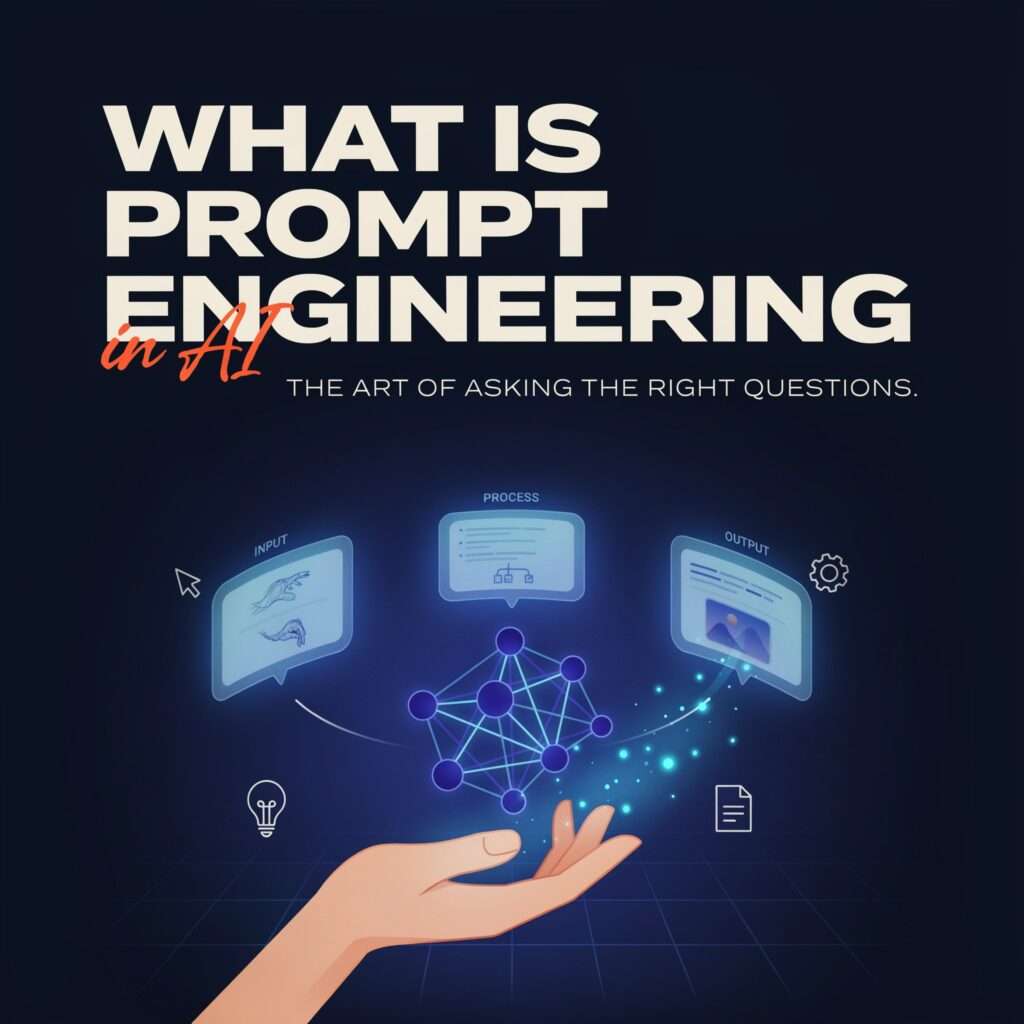
Prompt engineering is the practice of designing and refining the instructions you give an AI model to get the most accurate, useful, and relevant response possible. According to Google Cloud, prompt engineering is the art and science of designing and optimizing prompts to guide AI models, particularly large language models, towards generating the desired responses.

Think of it as the bridge between what you actually want and what the AI delivers. Prompt engineering acts as a bridge between human intent and machine understanding for AI systems, particularly large language models. A vague prompt produces a vague answer. A specific, well-structured prompt produces a specific, useful answer.

This matters because AI models do not read your mind. They respond to the words, structure, and context you give them. Prompt engineering is the process of making and refining requests to improve the accuracy, specificity, and usefulness of a generative AI tool’s outputs. The same question, asked two different ways, can produce two completely different quality levels of response.

According to IBM, the basic rule is that good prompts equal good results. That simple principle is the entire foundation of this skill.

Why Prompt Engineering Matters Right Now

AI adoption is accelerating across every industry, including STEM fields where women remain underrepresented in technical leadership. Building strong prompt engineering skills gives you a practical, visible way to demonstrate AI fluency without needing deep technical training.

This matters for several reasons:

  • It saves time: A well-crafted prompt gets you a usable answer on the first try, instead of five rounds of frustrated back-and-forth.
  • It improves accuracy: Specific prompts reduce the chance of vague, generic, or incorrect responses.
  • It builds visible expertise: Demonstrating strong AI skills positions you as forward-thinking in meetings, project work, and leadership conversations.
  • It works across every tool: The same prompting principles apply whether you use ChatGPT, Claude, Gemini, or Copilot.

As explored in our piece on Why Are Women Adopting AI at Lower Rates Than Men?, women adopt generative AI at significantly lower rates than men, often due to ethical concerns or fear of being judged. Learning prompt engineering is one of the most accessible ways to close that gap quickly and confidently.

The Core Elements of a Strong Prompt

Effective prompts share several common ingredients. Understanding these elements gives you a repeatable framework you can apply to almost any task.

1. Clear instructions 

State exactly what you want the AI to do. Avoid vague requests like “help me with this email.” Instead, specify the tone, length, and purpose.

2. Context 

Give the AI the background information it needs. If you want a summary of a report, include the report or describe its key points first.

3. Format 

Tell the AI exactly how you want the output structured. Do you want a list, a table, a short paragraph, or a step-by-step guide?

4. Examples 

Show the AI what a good response looks like. Providing one or two examples dramatically improves output quality, a technique often called few-shot prompting.

5. Constraints 

Set boundaries. Specify word count, tone, audience, or anything else the AI needs to know to tailor the response correctly.
Common Prompt Engineering Techniques

Several specific techniques have emerged as particularly effective, and most professionals can learn all of them in under an hour.

Zero-shot prompting 

You ask the AI to complete a task with no examples provided. This works well for simple, well-defined requests.

Few-shot prompting 

You provide one or more examples of the desired output before asking the AI to complete a similar task. This significantly improves consistency and quality.

Chain-of-thought prompting 

You ask the AI to explain its reasoning step by step before giving a final answer. This technique improves accuracy on complex problems, including calculations and multi-step reasoning.

Role prompting 

You ask the AI to respond as a specific persona, such as “respond as an experienced biomedical researcher” or “respond as a career coach.” This shapes the tone and depth of the response.

Iterative refinement 

You treat the first response as a draft, not a final answer. You then ask follow-up questions to refine, clarify, or expand the output until it matches what you actually need.

How Prompt Engineering Is Changing in 2026

The field continues to evolve quickly. Newer reasoning models handle more of the step-by-step thinking internally, which changes how much explicit guidance a prompt needs to provide. With the rise of reasoning models, the need for nuanced and effective prompts has shifted, as these models now do much of the step-by-step reasoning internally.

At the same time, prompt engineering has expanded beyond simple text instructions. It now often includes structured output formats, tool integrations, and automated testing of different prompt versions to see which performs best. According to one technical guide, modern prompt engineering covers hand-written prompts, structured output schemas, tool definitions, and automated optimization loops.

This does not mean the basics have become less important. Stronger AI models simply raise the floor of what is possible. The same guide notes that production reliability still depends on stable instructions, relevant examples, and clear output expectations, regardless of how advanced the underlying model becomes.

Practical Ways to Practice Prompt Engineering Today

You do not need a course or certification to start building this skill. Try these practical exercises this week:

  • Take a task you already do regularly, such as drafting an email or summarising a document, and write three different versions of the same prompt. Compare the results.
  • Add a specific example to a prompt you have used before and notice how much the output improves.
  • Ask the AI to explain its reasoning before giving a final answer on a complex question.
  • Specify a role for the AI, such as “respond as a senior project manager,” and notice how the tone shifts.
  • Refine a single response three times in a row, treating the first answer as a draft rather than a finished product.

Each small experiment builds your intuition for what works and what does not.

Why This Skill Matters for Women in STEM Specifically

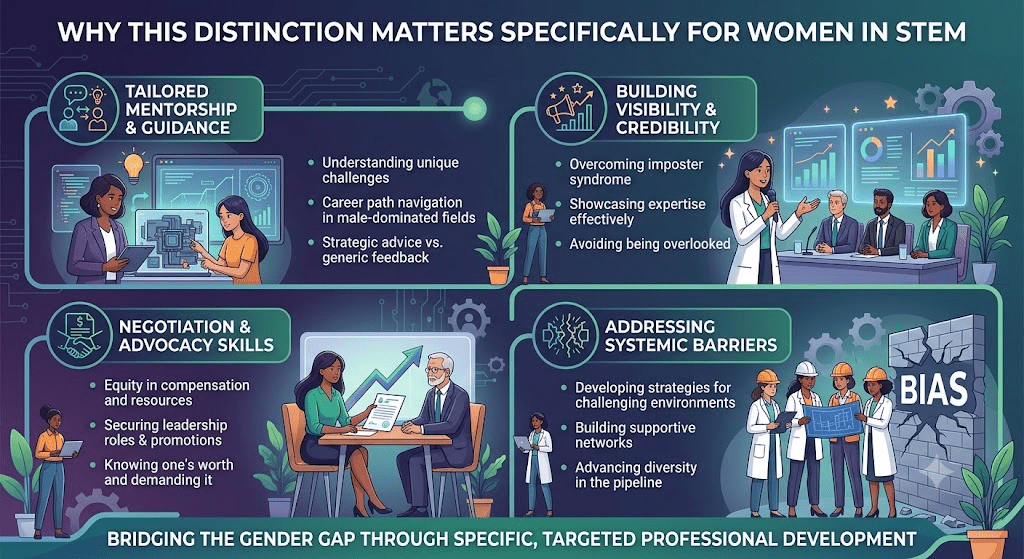
Many women in STEM hesitate to engage publicly with AI tools, often due to valid concerns around ethics, bias, or fear of being judged for relying on assistance. As explored in our piece on Breaking the AI Double Standard for Women in STEM, research shows that women are sometimes rated as less competent for using AI tools, even when producing identical work to male colleagues.

Building strong, visible prompt engineering skills is one practical way to push back against that double standard. Demonstrating clear command over how you use AI, rather than hiding it, positions you as a strategic thinker who understands the tool rather than someone who simply relies on it. Teaching the skill to colleagues, documenting your process, and sharing outcomes are all ways to build that visibility intentionally.

Frequently Asked Questions

Do I need a technical background to learn prompt engineering? 

No. Prompt engineering relies on clear writing and structured thinking, not coding. Anyone who can write a clear instruction can learn it.

What is the difference between a prompt and prompt engineering? 

A prompt is the single instruction you give an AI tool. Prompt engineering is the broader practice of designing, testing, and refining prompts to consistently produce better results.

Can prompt engineering improve accuracy on technical tasks? 

Yes. Techniques like chain-of-thought prompting, which asks the AI to reason step by step, have been shown to improve accuracy on complex reasoning and calculation tasks.

Is prompt engineering still useful as AI models improve? 

Yes. Stronger models raise the baseline of what AI can do, but clear instructions, relevant examples, and well-structured requests remain essential for consistent, reliable results.

Conclusion

Prompt engineering is not a niche technical skill reserved for engineers and data scientists. It is a practical, learnable communication skill that anyone can apply immediately to get more value from the AI tools already sitting on their desktop.

For women in STEM navigating a rapidly changing professional landscape, prompt engineering offers a low-barrier, high-impact way to build visible AI fluency. Start small. Experiment with structure, examples, and clear instructions. Treat every response as a draft you can refine. Over time, this skill compounds, just like every other strategic capability worth building.


Leave a Comment

Your email address will not be published. Required fields are marked *

Your email address will not be published. Required fields are marked *

Recent Post

Scroll to Top