
For over 30 years, Dr. Wanjiru Golly has been doing work that most organisations fund poorly, talk about loudly, and understand only on the surface: the real, deeply personal, structurally complex work of bringing people’s full identities into professional spaces as strengths rather than liabilities.
In Episode 064 of the Lunch with Leaders podcast, Adaeze Iloeje-Udeogalanya sits down with Dr. Wanjiru, founder of Cultural Synergy Solutions, to unpack what cultural synergy actually means, why it goes further than most diversity and inclusion efforts, and what it takes for women in STEM, especially immigrants and women of colour, to stop shrinking their identities to fit the rooms they are in. This conversation is personal, rigorous, and full of practical insight that applies immediately, whether you lead an organisation, navigate one, or are somewhere in between.
Listen to Episode 064: Dr. Wanjiru Golly: The Power of Cultural Synergy
What Cultural Synergy Actually Means
Most professionals have heard the term diversity, equity, and inclusion. Fewer have heard of cultural synergy, and even fewer understand what distinguishes the two.
Dr. Wanjiru traces the concept back to the work of Nancy Adler at McGill University. Cultural synergy starts from the premise that every person brings a constellation of identities into any professional or social space. Those identities include the obvious ones, such as race, gender, and ethnicity, but they also include the less visible ones: age, socioeconomic background, educational history, family structure, immigration status, and much more.
DEI frameworks, as Dr. Wanjiru explains, are essential. They give organisations the language, policies, and accountability structures to examine whether their workforce reflects the communities they serve and whether people across different identities have equitable access to opportunity. That work is necessary and ongoing.
Cultural synergy goes further. It moves from the systemic and policy level into the individual level, asking not just whether diverse people are represented but whether the full complexity of their identities is being seen and treated as a source of strength rather than difference to be managed.
The shift in framing is significant. When identity is viewed as a strength, the conversation changes from one of tolerance and accommodation to one of genuine leverage. What do you bring that nobody else in this room does? How does your particular combination of lived experiences make you better at the work? How can the team become stronger precisely because of the diversity in the room rather than despite it?
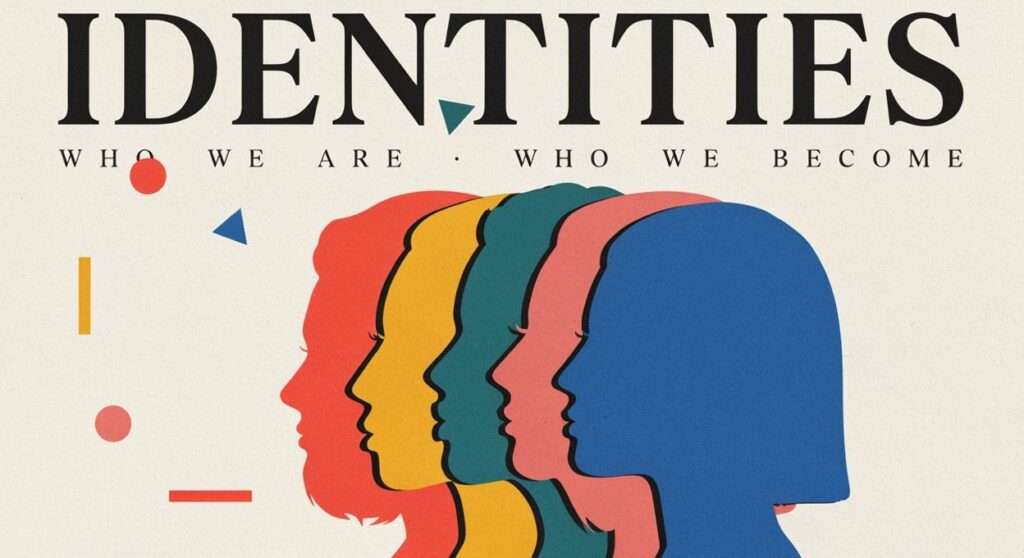
The Identities You Cannot See Are Shaping Everything
One of the most important threads running through this episode is the role of invisible identities, the ones that do not announce themselves on sight but shape how someone thinks, what they assume, and how they move through professional spaces.
Dr. Wanjiru gives an example from her own life. She grew up in Nairobi in a middle-to-upper-class family, attended Catholic school, and had access to resources and opportunities that many Kenyans did not. When she moved to the United States in 1993, she carried that background with her, but the American professional environment saw her through a different set of lenses: Black, African, immigrant, woman. None of those four identities, in the environments she navigated, were treated as carrying privilege.
The dissonance was real and disorienting. Her upbringing did not match how she was being perceived. And for years, she internalised the gap rather than questioning it.
Adaeze adds her own layer. She grew up in Nigeria with educated parents, studied engineering, and moved to the United States as an adult. The shift from environments where she was confident, capable, and heard into environments where her credentials and voice were regularly discounted was jarring and gradual.
This is the invisible cost of ignoring non-obvious identities. When organisations focus only on the identities they can see, they miss the full picture of who someone is, what they carry, and what assumptions are shaping both how that person shows up and how others receive them. Socioeconomic background is one of the most underexamined of these invisible identities. As Adaeze notes, the advantages of a paid-off family home, of parents who had the resources to invest in private schooling and enrichment, compound across generations in ways that are nearly impossible to see from the outside but profoundly shape outcomes.
Why Women in STEM Hide Their Credentials
This is the moment in the episode that will land hardest for many listeners, and it deserves to be named directly.
Dr. Wanjiru holds a PhD in industrial and organisational psychology. For years, she hid it. She would introduce herself with a master’s degree in social settings. Also, She took jobs that did not require a doctorate so she would not have to mention it. She watched male colleagues lead every introduction with “Doctor” while she buried the same credential beneath layers of discomfort she had not yet learned to name.
The messaging that produced that discomfort arrived early.
Growing up in Kenya in the late 1980s and early 1990s, she was actively discouraged from pursuing a PhD. The warnings were specific: you will not find a husband. People will think you are superior. The social fallout will not be worth it. The noise persisted even as she completed the programme. Her mother crucially told her to ignore all of it. But she still carried the shame of her achievement into professional spaces that should have celebrated it.
The breaking point came in a meeting where she was the lead on a project, the only person in the room with a PhD, and the only Black woman at the table. Every time she answered a question, the room turned to her white female manager to confirm what she had said. Something shifted. She looked around the room and understood clearly for the first time: she had been minimising herself in spaces where she was, by credential and by contribution, the most qualified person present. That was the last time.
Adaeze reflects on a similar moment. A boss tried to announce to the team that she had passed her professional engineering exam. She told him not to. She did not even understand where the resistance came from until she examined it. The instinct to shrink achievement, to avoid being seen as boastful, to pre-empt the judgment of others, is deeply embedded in many women in STEM from a young age, compounded by cultural context, immigration, and environments that consistently reward others more visibly for the same level of work.
Hear Dr. Wanjiru share her breaking point in full: Listen to Episode 064 of Lunch with Leaders
The Cultural Identity Wheel: A Practical Starting Point
Dr. Wanjiru introduces a concrete tool for beginning this work individually: the cultural identity wheel.
The exercise is straightforward. The wheel contains up to 20 different identity categories, ranging from the obvious to the less visible. You choose five that feel most significant to you personally, not the most professionally acceptable five, not the ones that seem safest, but the ones you actually identify with most strongly.
Then you go deeper. For each identity you selected, you ask two questions:
- What does this identity mean to me?
- Am I actually showing up in ways that reflect it?
The second question is where the real work begins. Dr. Wanjiru realised through this process that she had intellectually claimed her PhD as part of her identity while simultaneously hiding it in every professional interaction. The identity was there on paper. The strength it represented was not making it into the room.
She then adds another layer: look at the identities you did not select. Ask why. Sometimes an identity is missing from your list because it feels neutral or unremarkable. Sometimes it is missing because it carries shame, guilt, or discomfort that you have not examined yet. Both of those are worth investigating.
This exercise works best in conversation, whether with a coach, a trusted colleague, or a close friend. Looking at yourself alone is hard. Having another person reflect back what they observe in you, the credentials they see you downplay, the strengths they watch you deny, the moments when you are clearly the most capable person in the room and somehow still the quietest one, adds a layer of honesty that solo reflection struggles to reach.
How Cultural Synergy Works
Dr. Wanjiru does this work not just with individuals but with organisations, and her approach to the organisational work is grounded in a principle that most DEI initiatives miss entirely: systems do not change without the people inside them changing first.
She is specific about where to begin. The work starts with the top leadership. Not middle management. Not a staff workshop. The most senior leader in the organisation sits down first to examine their own cultural identity, their own assumptions, their own lens, before anything else happens.
The reason is practical. When a new leader arrives, the organisational culture shifts to match them. Everyone knows this from experience. The culture of an organisation is not a document. It is the accumulated assumptions, behaviours, and norms of the people who lead it. If the leader has not done the work of understanding their own identity and the ways it shapes how they see and treat others, no policy or procedure will compensate for that gap.
Dr. Wanjiru uses a cultural synergy continuum assessment tool to begin this process with leaders. It helps them assess where they currently are in their understanding of their own identity and their capacity for genuine cultural synergy, and where they want their organization to move. From there, the work expands outward into team development and organizational transformation.
The critical distinction, and the one that explains why so many DEI initiatives produce no lasting change, is the difference between training people and shifting individuals. A workshop that people attend and leave is an event. Cultural synergy work is a process. It is slow, personal, and iterative. And it requires the willingness of the people with the most power in the room to be the first ones to examine themselves.
Storytelling, Authenticity, and the World Dr. Wanjiru Wants to Build
When Adaeze asks about legacy, Dr. Wanjiru offers an answer that is both simple and quietly radical. She wants a world where she can walk into a room and simply be herself. No pre-emptive adjustment of how she presents to avoid triggering someone else’s assumptions or game-playing. Just showing up, and being received for the full person she is.
She is clear that this is not naive. She knows that world does not exist yet. The work she does every day is precisely because it does not exist. But the vision of it matters, because it names what we are building toward and why the incremental, difficult, individual work of identity examination and cultural synergy is worth doing.
The path to that world runs through authenticity, and authenticity runs through self-knowledge. You cannot show up fully as yourself if you have not examined who that self actually is, which identities you have been hiding, which strengths you have been downplaying, and which stories you have been telling about yourself that were handed to you by others and never quite fit.
This connects to the futures-building conversation in Episode 061: Anatola Araba: Imagination as Innovation and World Building for the Future, where Anatola described the power of imagining a world that does not yet exist as the essential first step toward building it. Dr. Wanjiru and Anatola are working from different disciplines toward the same destination: a world where people can bring their full selves to the work of changing it.
Your Action Steps This Week
- Try the cultural identity wheel. Choose five identities that feel most significant to you. Write down what each one means to you personally and whether you are genuinely showing up in ways that reflect it as a strength.
- Notice what you are hiding. Over the next week, pay attention to moments where you downplay a credential, qualification, or achievement. Ask yourself where that instinct comes from and whether it is actually serving you.
- Introduce yourself fully. The next time you introduce yourself in a professional setting, include your highest credential. Do not qualify it. Do not minimise it. Say it and let it land.
- If you lead an organisation, start the cultural synergy work with yourself before taking it to your team. Take the cultural synergy continuum assessment through Cultural Synergy Solutions and get honest about your own lens before you design anyone else’s development experience.
- Connect with Dr. Wanjiru. Reach out on LinkedIn or visit culturalsynergysolutions.com to learn more about the assessment and coaching work.
Conclusion
Dr. Wanjiru Golly spent years hiding a PhD she had every right to lead with. She spent decades in rooms where her voice was confirmed by someone with less expertise and fewer credentials, simply because that person looked more like what those rooms expected authority to look like.
She is not hiding anymore. And this episode makes a clear, compelling, personal case for why you should not be either.
Cultural synergy is a framework for the deeply human work of understanding who you are, what you bring, and how you can create spaces where everyone in the room is able to do the same. It is slow, personal and requires intention and honesty and the willingness to sit with discomfort long enough to find out what is underneath it.
Start with your five identities. Ask what they mean. Ask whether you are showing up as the person they describe. And stop waiting for a room that was not built for you to decide when you are allowed to take up space in it.
Listen to the full conversation with Dr. Wanjiru Golly: Episode 064: The Power of Cultural Synergy
Connect with Dr. Wanjiru:
Catch up on these connected episodes: