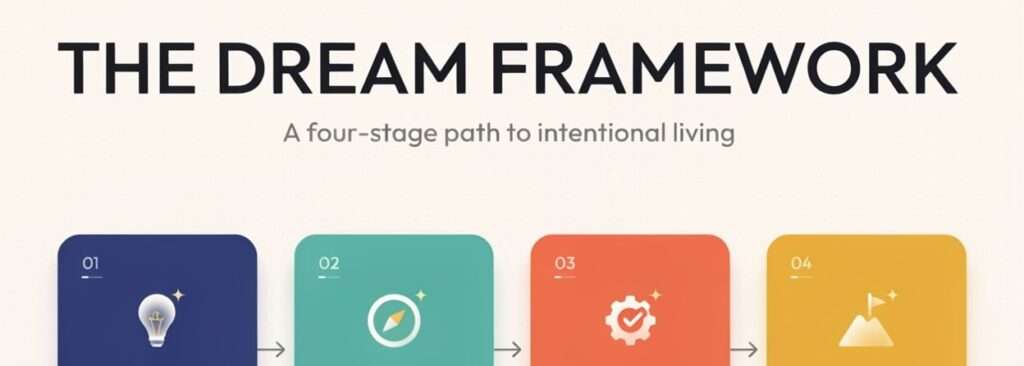
What if the most powerful tool available to women in STEM is not a new software platform, a funding round, or a technical certification? What if it is something far more fundamental, something every human being is born with and most of us spend our adult lives suppressing? In Episode 061 of the Lunch with Leaders podcast, Adaeze Iloeje-Udeogalanya sits down with Anatola Araba, Forbes 30 futurist, filmmaker, and founder of Reimagine Story Lab, to make exactly that case.
Anatola’s sci-fi short film Afro Algorithms became the world’s first science fiction film sent to the moon on a NASA mission. She has advised the United Nations on digital innovation and presented at the Smithsonian, South by Southwest, and the Dubai Future Forum. Her work sits at the intersection of AI, art, neuroscience, and social transformation. And the animating force behind all of it is imagination.
This episode is unlike any other in the season. It does not offer a career framework or a negotiation strategy. Instead, it offers something rarer: a rigorous, science-backed case for why imagination is humanity’s greatest untapped leadership tool, and what happens when you learn to use it deliberately.
Listen to Episode 061: Anatola Araba: Imagination as Innovation and World Building for the Future
Knowledge Is the Lego. Imagination Is What Builds the City.
Anatola opens with a metaphor that reframes everything that follows. Knowledge, she explains, is like a pile of Legos spread across a table. You can have every piece you need and still build nothing without the animating force that turns those pieces into something. Imagination is that force. It is what decides what the pieces become.
This distinction matters enormously for women in STEM. Technical training, professional experience, and domain expertise are the Legos. They are necessary. They are not sufficient. The professionals who create the most meaningful impact are not always the ones with the most pieces. They are the ones with the clearest vision of what to build with them.
Anatola traces this principle back to the history of science fiction itself. Star Wars planted the seed of holographic communication that engineers later built into reality. Visionaries who imagined living on Mars drove the engineering and logistical problem-solving that is now making it conceivable. The imagination came first. The technical execution followed. That sequence is not an anomaly. It is how most significant innovation actually happens.
For women in STEM who have been taught to value technical rigour above creative thinking, this reframe is both liberating and practically important. Your technical skills are the foundation. Your imagination is what determines how high you build.
Creativity and Technical Skill Are Not Opposites
One of the most persistent myths in STEM culture is the idea that you have to choose between being technical and being creative. Anatola challenges this directly, and Adaeze adds her own experience as an engineer who encountered this false binary early in her career.
The best portrait painters use mathematical precision to measure the angles of a face. Immersive theatre productions succeed because of rigorous timing, measurement, and execution. Art restoration at the highest level now requires deep knowledge of chemistry and materials science. The worlds of art and science have never been fully separate. They are increasingly inseparable.
Anatola calls this the future engineering mindset: the capacity to see current problems not as fixed realities but as opportunities to reinvent, redefine, and reimagine. This mindset applies whether you are designing infrastructure, building a healthcare system, developing an AI product, or creating a film that ends up on the moon.
For women navigating STEM careers in 2026, the message is practical. Do not suppress your creative instincts to fit a cultural expectation of what a serious technical professional looks like. Those instincts are not a liability. They are a differentiator. The professionals who will shape the next decade of innovation are the ones who bring both rigour and imagination to the table simultaneously.
Hear Anatola explain the future engineering mindset in full: Listen to Episode 061 of Lunch with Leaders
The Resistance to Hopefulness and Why It Matters
When Anatola first began her work at the intersection of imagination and futures thinking, the pushback she received was not about her methodology or her credentials. It was about her hope. People told her she was too hopeful. Too optimistic. Not realistic enough.
She now understands that resistance as a symptom of something much larger. Only about 8% of stories told globally are about the future. Of those, the vast majority are dystopian. Science fiction, news cycles, political discourse, and cultural narratives overwhelmingly rehearse collapse, destruction, and failure. And as Anatola explains, what we rehearse in our cultural narratives shapes what we can imagine as possible, and what we can imagine as possible shapes what we are likely to build.
When darkness is the default narrative, we lose access to pathways toward something different. We stop being able to see what else could be true. The hopeful narrative is not naive. It is strategically necessary. Without it, we literally cannot perceive the routes toward the futures we actually want.
Three reasons hopeful narratives matter for women in STEM:
- They expand the range of possibilities you can perceive and pursue in your own career
- They shape the products, systems, and technologies you choose to build and how you build them
- They communicate a vision that attracts collaborators, funders, and communities who want to build alongside you
Hope Is an Equation, Not a Feeling
This is one of the most important reframes in the episode, and one that Adaeze responds to with immediate recognition. Anatola introduces a framework from Visions 2030 that defines hope not as wishful thinking but as a structured formula with three components:
A specific vision you can see clearly enough to feel Action taken consistently toward that vision A pathway that connects where you are now to where you are trying to go
All three elements together create genuine hope. Remove any one of them and you get something else. A vision without action is fantasy. Action without a vision is busyness. A pathway without a vision is just movement in an unspecified direction.
This reframe is particularly powerful for women in STEM who have been conditioned to be sceptical of anything that sounds aspirational. Hope, properly understood, is not sentimental. It is strategic. It is the engine that makes sustained effort toward a meaningful goal possible in the face of uncertainty, setbacks, and the very real structural barriers that women navigate in technical careers.
Anatola connects this to what she has observed about uncertainty. Human beings are hardwired to avoid uncertainty, and often prefer a definitive bad outcome over an unknown one, because uncertainty itself generates anxiety. But uncertainty is also where possibility lives. When the ending has not been written, you have the power to write it. That is not a reason for fear. It is a reason for agency.
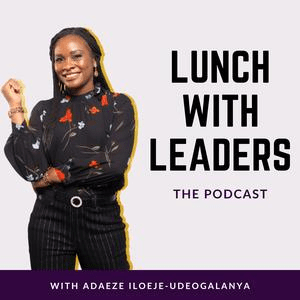
The DREAM Framework: Designing the Future Deliberately
Over three years of global research, Anatola asked thousands of people from middle and high school students in San Antonio to artists in Santa Barbara to historically marginalised communities in Stockholm to describe their dream civilisation. She collected and analysed these responses through AI-assisted tools and distilled the recurring themes into a framework she calls DREAM.
DREAM stands for Designing Regenerative, Equitable, and Abundant Models.
The five pillars of the DREAM framework are:
- Deep nature wisdom: designing cities, communities, and systems inspired by the intelligence and patterns of the natural world, including biophilic architecture, curved spaces, and buildings that work with rather than against ecological systems
- Regenerative technologies: technologies that bring human beings together rather than fragment them, and that empower individual agency rather than eroding it
- Embodied learning: recognising that play is as biologically essential as sleep, and building immersive, game-based learning experiences that teach AI literacy, futures thinking, and civic engagement through lived experience rather than passive consumption
- Aesthetics of awe: incorporating beauty, colour, and wonder into the environments where people live, work, and learn, because the aesthetic dimension of space shapes the quality of thought and connection that happens within it
- Mission-driven values and perhaps the most striking finding of all: when Anatola asked hundreds of middle and high school students what value they most wanted to see in their dream future, over 78% answered with one word. Love.
That finding is not sentimental. It is a data point about what the next generation actually wants from the world they are inheriting. If the values embedded in our technologies, institutions, and systems reflected that answer, the outcomes would be fundamentally different from what we are currently building toward.
The full framework is available at reimagine.io/dream and includes a synthesis report on the global research findings.
Success Defined Over a Billion Years
One of the most memorable moments in this episode comes from Anatola’s account of being asked to submit her biography for a lunar museum project. The catch was that the technology would be engraved on an indestructible nickel disc designed to last one billion years in space.
Faced with that timescale, she found that all the usual markers of professional success, the magazine features, the brand name institutions, the awards and accolades, became irrelevant. She could not imagine why any civilisation reading that disc in the year 1,000,002,026 would care about a magazine that no longer existed or an institution whose name had long since been forgotten.
What remained when she stripped all of that away was her mission. Her stories, heritage and vision of a future built on imagination and equity. Also, Her experience of never quite belonging to any single culture and using that displacement to create an entirely new world.
The moral she draws from this experience is direct: in a billion years, your story and your mission are what will matter. Not the shiny things or the metrics. Not the credentials that signalled status in your specific moment in history.
This reframe connects directly to the visibility and positioning work explored throughout this season. As Adaeze examined in Episode 057 — The 3 Pillars of Career Advancement: Visibility, Sponsorship, Positioning, building a career that matters requires clarity about what you are building toward, not just what you are performing in the present. Anatola’s billion-year lens is an extreme version of that same question: strip away the performance, and what is actually left?
Legacy as Seeds for a Garden You Will Never See
When Adaeze asks Anatola about legacy, she shares a line from a high school friend that she has carried ever since: legacy is planting seeds for a garden you will never get to see.
Everything Anatola builds, her digital museum, her immersive media studio, her AI consulting work, her research into futures and imagination, points toward a world she is actively designing without knowing exactly when or whether it will arrive. She describes it as world building in the most literal sense: not building within an existing world but imagining and prototyping a new one.
The world she is building toward has cities with fruit trees on rooftops. Buildings made from mycelium and alternative materials. Governance structures that actually serve the people they govern. Technologies designed to empower human imagination rather than replace it. Communities where everyone, regardless of background, can bring their creativity to life and contribute to the shared civilisation.
She calls it founding a new civilisation. And she invites everyone listening to live there with her.
This vision connects to the legacy work explored in Episode 060 — Dr. Antonia Arnold-McFarland: The United Shades of STEM, where Dr. Tony described the griot’s role as someone who preserves and passes forward the stories and wisdom that make future generations possible. Anatola and Dr. Tony are doing the same essential work from different directions: one through history, one through futures, both rooted in the belief that the stories we tell determine the worlds we build.
What Anatola Is Building Now
Anatola closes the episode by sharing several current projects that give practical shape to the DREAM framework:
- A project visualising sustainable cities and communities through augmented reality
- An initiative helping regenerative business leaders tell stories using AI in ethical, empowering ways
- A creative hub where people can build protopian stories set in the year 2200, embodying the seventh generation principle of making decisions with seven generations ahead in mind
- Immersive installations and IP that can be deployed across museums, cultural spaces, and brand partnerships
Each of these projects is an invitation to collaborate. Anatola is not building in isolation. She is building with anyone who shares the vision.
Connect with Anatola at anatolaaraba.com, follow her on LinkedIn, and on Instagram.
Conclusion
Anatola Araba does not fit neatly into any single category, and that is precisely the point. She is a futurist, a filmmaker, a researcher, an educator, an adviser, and a world builder, and none of those labels fully captures what she is actually doing, which is using imagination as a precision instrument to expand what humanity can conceive of as possible.
For women in STEM, her episode offers a permission that the culture of technical professionalism rarely gives: the permission to lead with your full creative capacity, to take hope seriously as a strategic tool, to build toward a vision even when you cannot see the endpoint, and to understand that the stories you tell, about yourself, your work, and the future you want to create, are not separate from your technical contributions. They are what give your technical contributions their direction, their meaning, and their lasting impact.
The ending has not been written. Lead with curiosity. Plant your seeds. Trust the garden.
Listen to the full conversation with Anatola Araba: Episode 061: Imagination as Innovation and World Building for the Future
Connect with Anatola:
Catch up on these connected episodes: