
The corporate ladder is gone. It did not bend or wobble. It collapsed entirely, and most professionals are still trying to climb something that no longer exists. In Episode 058 of the Lunch with Leaders podcast, Adaeze Iloeje-Udeogalanya sits down with Nikki Barua, award-winning entrepreneur and AI transformation expert, to talk about what replaced it and what that means for every woman in STEM navigating her career right now.
Nikki’s message is direct and urgent. AI has not just changed specific jobs. It has changed the entire architecture of organisations, careers, and leadership itself. The professionals who thrive in this new structure are not the ones who waited for permission to adapt. They are the ones who started reinventing themselves before anyone told them to.
This episode gives you the framework to do exactly that.
Listen to Episode 058: Nikki Barua: How to Lead Hybrid Human-AI Teams
The Corporate Ladder Is Dead
Nikki opens the conversation with a reframe that challenges the assumption most career advice still rests on. Organisations no longer operate as rigid, hierarchical pyramids where you climb steadily from one rung to the next. AI has restructured them into agile, molecular teams of builders who move fast, adapt constantly, and operate across fluid boundaries.
The old model rewarded patience and tenure. You put in the years, demonstrated loyalty, and eventually the promotion arrived. That model depended on organisations remaining structurally stable long enough for the climb to pay off. AI ended that stability. Organisations now restructure faster than five-year career plans can account for.
The professionals who keep waiting for the ladder to reappear are not being cautious. They are falling behind.
Why Experienced Leaders Secretly Resist AI
One of the most honest moments in this episode comes when Nikki addresses something most AI adoption conversations avoid entirely: why high-achieving, experienced professionals quietly resist AI transformation even when they know it matters.
The resistance is not about technology. It is about identity.
Women in STEM spend years, sometimes decades, building deep expertise in their fields. That expertise becomes a core part of how they understand their own value and professional worth. Then AI arrives and starts doing versions of that expertise faster and more cheaply than any human can. For many experienced professionals, engaging fully with AI feels like agreeing that everything they worked to build no longer matters.
That fear is understandable. It is also the most expensive career mistake you can make right now.
Your expertise does not disappear when AI can replicate parts of it. Your judgment, your creativity, your accountability, and your ability to read human context do not get automated. What changes is that the routine parts of your work no longer need to consume your time and energy. The question is whether you release those routine tasks to AI and redirect your energy toward the high-value work only you can do.
As explored in our piece on Why Are Women Adopting AI at Lower Rates Than Men?, the hesitation to engage with AI is widespread among women in STEM. Nikki’s insight adds an important layer: the hesitation is often less about the tool and more about what using the tool feels like it says about your worth. Naming that fear is the first step to moving past it.
The People Squared Movement
Nikki introduces her core framework through a concept she calls People Squared. The idea is simple and powerful. AI makes individual humans exponentially more capable, but only when those humans understand their own irreplaceable strengths clearly enough to direct AI effectively.
People Squared is not about learning to code or becoming a machine learning engineer. It is about identifying the human qualities that no AI can replicate, including creativity, judgment, empathy, and accountability, and then partnering with AI to amplify those qualities at a scale that was never possible before.
To help professionals identify their starting point, Nikki offers the FlipFactor diagnostic, available at flipfactor.ai. This tool helps you understand your AI readiness archetype, including where you currently stand on the spectrum from resistant to fully agentic, and what your unique human contribution actually is.
Your magic sauce, the things only you bring, typically includes:
- Creative problem-solving that draws on lived experience
- Judgment calls that require human context and values
- Accountability to people, teams, and communities
- Emotional intelligence and relationship depth
- Strategic thinking that connects disparate ideas across domains
These are not soft skills. They are the highest-value professional capabilities in an AI-enabled workplace, and they are worth far more when AI handles everything else.
Three Pillars of Intentional Reinvention
Nikki outlines three specific qualities that define the professionals who navigate AI transformation successfully. These are not personality traits you either have or do not have. They are practices you can develop deliberately.
Curiosity
Curiosity means actively seeking out what you do not yet know rather than defending what you already do. In an AI-enabled workplace, the most dangerous position is the one where you have stopped learning because you have already arrived. Curiosity keeps you moving forward when every external signal says to stay still.
Humility
Humility means accepting that your current expertise does not fully prepare you for what comes next. It means asking questions that reveal gaps rather than hiding them. It means treating AI not as a threat to your competence but as a collaborator that reveals new possibilities. Level 5 leaders, as Bradley Hunt discussed in a previous episode, combine exceptional talent with genuine humility. That combination matters more now than it ever did before.
Bravery
Bravery means acting before you feel fully ready. It means experimenting with AI tools in your actual work rather than waiting for your organisation to train you. It means claiming space in the AI conversation at work instead of watching from the sidelines while others define how the technology gets used.
These three pillars work together. Curiosity surfaces what needs to change. Humility makes you willing to change it. Bravery makes you act on that willingness before perfect conditions arrive.
Five-Year Plans Are Dead. Here Is What Works Instead.
Nikki is direct on this point. Five-year career plans made sense in stable organisational environments where you could predict what the next level would look like and build toward it steadily. That stability no longer exists.
AI changes job descriptions faster than five-year plans can account for. Roles that did not exist three years ago now matter enormously. Roles that seemed permanent are disappearing. Building a rigid five-year plan in that environment is not strategic. It is wishful thinking.
Nikki offers a two-part alternative that actually fits the current landscape:
Set a ten-year North Star
This is not a specific job title or salary target. It is a directional commitment to continuous learning, expanding impact, and remaining genuinely useful in a changing world. The North Star gives you a consistent direction without locking you into a path that may not exist by the time you reach it.
Execute in 90-day cycles
Within that directional framework, work in short, agile sprints. Set specific, achievable goals for the next ninety days. Assess what you learned. Adjust. Repeat. This approach keeps you moving forward without betting your entire career trajectory on predictions about a future that is genuinely unpredictable.
How to Lead Hybrid Human-AI Teams
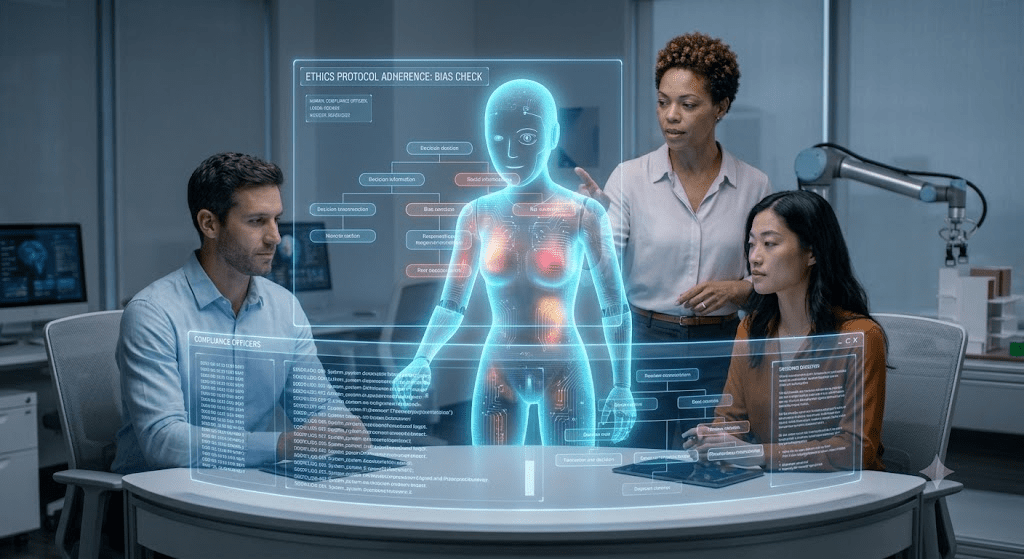
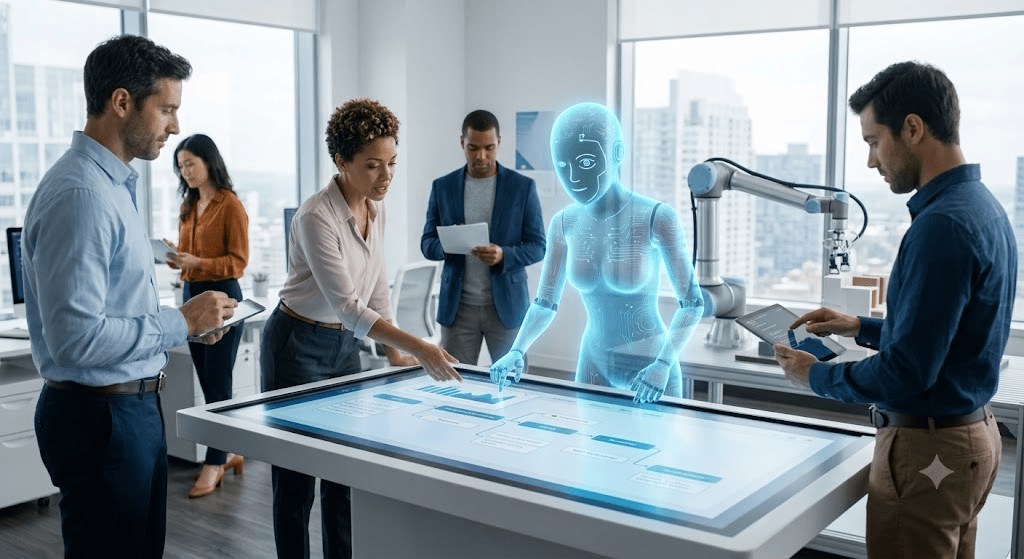
This is the section of the episode that defines what leadership actually looks like in 2026. Nikki is clear: a hybrid team is not a metaphor. It is a literal description of how many organisations already operate.
A hybrid team in 2026 consists of both human employees and autonomous AI agents. The AI agents handle specific, defined tasks within workflows. The human employees bring judgment, creativity, and accountability. The leader manages both.
Managing AI agents requires a different skill set than managing people. AI agents need clear context, well-defined tasks, and specific output expectations. They do not need motivation or emotional support, but they do need precise direction. A leader who cannot communicate clearly enough for an AI agent to act effectively is a leader whose team will underperform regardless of how talented the human members are.
This is where prompt engineering, as explored in our piece on Breaking the AI Double Standard for Women in STEM, becomes a genuine leadership skill rather than a technical curiosity. Leaders who can direct AI agents effectively through clear, structured instructions can accomplish far more than leaders who rely solely on their human team members.
What hybrid team leadership requires:
- Clear task definition that AI agents can execute without ambiguity
- Strong judgment about which tasks belong to humans and which belong to AI
- Accountability systems that cover both human and AI outputs
- Communication skills that work across human and machine team members
- Comfort with continuous iteration as AI capabilities evolve
Stop Waiting for Permission
Nikki names a specific archetype that holds many experienced professionals back: the Guardian. The Guardian waits for their organisation to train them on AI. They wait for leadership to signal that AI experimentation is sanctioned. They wait for a formal programme to tell them exactly what to learn and when.
While the Guardian waits, the organisational landscape shifts around them. By the time permission arrives, the learning curve has steepened and the gap has widened.
The alternative is to start building hands-on AI skills today, within your current role, using the tools already available to you. You do not need organisational approval to experiment with AI on tasks you already own. You need curiosity, bravery, and the willingness to be a beginner in public.
Your Action Steps
- Take the FlipFactor diagnostic at flipfactor.ai to identify your AI readiness archetype and your unique human strengths.
- Replace your five-year plan with a ten-year North Star and a focused 90-day action cycle.
- List the tasks you still do the old-school way. Delegate those to AI this week and redirect that time toward high-judgment, high-creativity work.
- Audit your Guardian tendencies. Identify one area where you have been waiting for permission to build AI skills, and start building them today without it.
- Connect with Nikki Barua at nikkibarua.com and follow her on LinkedIn for the Reinvention Roadmap.
Conclusion
The professionals who thrive in an AI-enabled workplace are not the ones who knew the most before AI arrived. They are the ones who reinvented themselves with curiosity, humility, and bravery after it did. The corporate ladder is gone. The hybrid human-AI team is here. And the leaders who will matter most in the next decade are the ones who stopped waiting for permission and started building today.
Listen to the full conversation with Nikki Barua: Episode 058 — How to Lead Hybrid Human-AI Teams