Every leader in STEM has experienced it: the email that goes unanswered for three days and suddenly feels like a statement. The meeting where two people talk past each other for forty minutes and leave more frustrated than when they arrived. The colleague whose feedback lands like criticism even when it was meant as support. These moments of friction are not inevitable. They are the result of unchecked assumptions, unexamined reactions, and communication habits that prioritise being understood over understanding others.
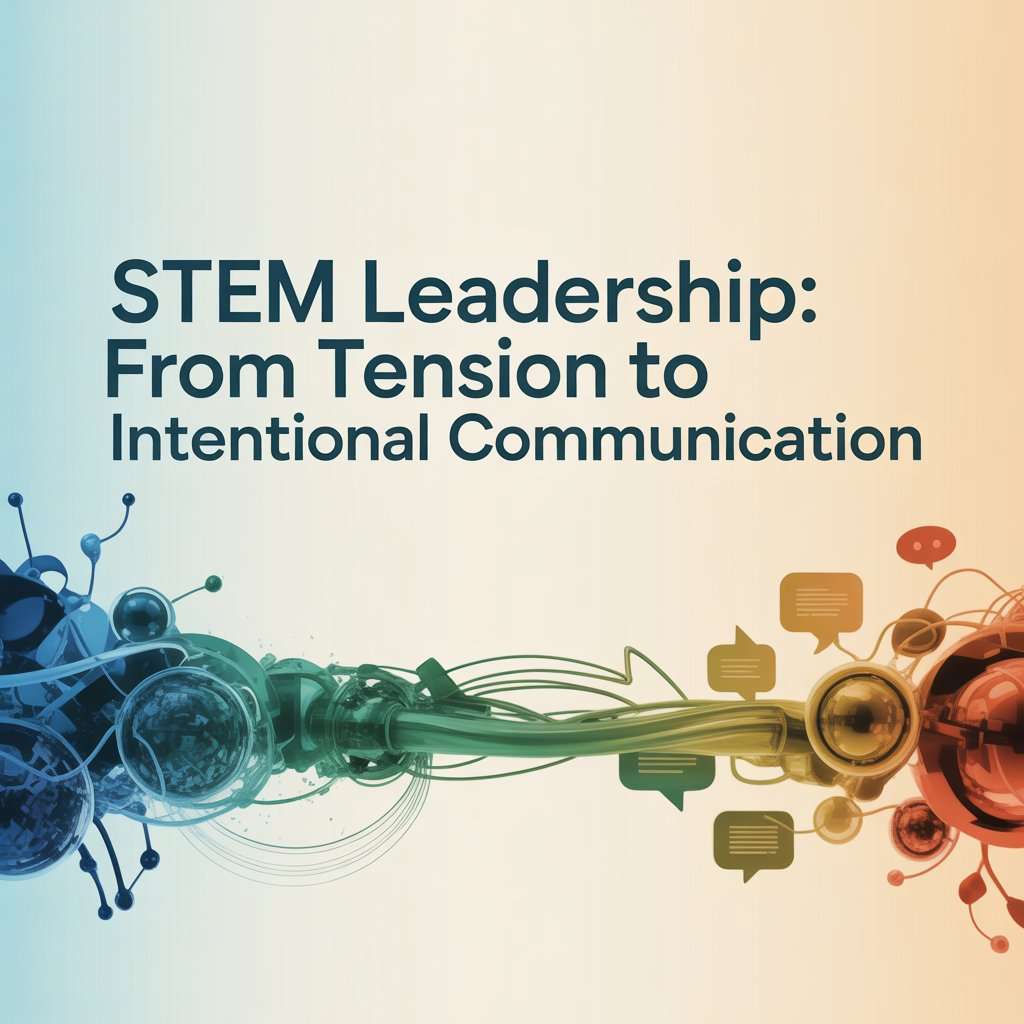
In Episode 050 of the Lunch with Leaders podcast, Adaeze Iloeje-Udeogalanya sits down with DeeDee Fisher, leadership strategist, TEDx speaker, and founder of the CPL Framework, to explore how intentional communication transforms leadership effectiveness in STEM environments. Drawing on emotional intelligence, proactive empathy, and a deeply practical approach to self-awareness, DeeDee offers tools that every leader can apply immediately, regardless of seniority or technical background. This conversation arrives at exactly the right moment, as the demand for emotionally intelligent leadership in high-stakes STEM workplaces has never been higher.
Listen to Episode 050: DeeDee Fisher: STEM Leadership: From Tension to Intentional Communication
Step 1: Understand the CPL Framework and Why It Changes Everything
The CPL Framework is the foundation of DeeDee Fisher’s leadership work, and understanding it is the starting point for everything else in this episode. CPL stands for Compassion, Process, and Learning. Together, these three elements create a structured approach to pausing reactive responses and choosing more constructive paths through tension and conflict.
Compassion does not mean being soft or avoiding difficult conversations. In the CPL Framework, it means extending the benefit of the doubt before drawing conclusions. When something feels frustrating or threatening, compassion asks you to consider a neutral or positive explanation before assuming the worst. That single practice, applied consistently, saves enormous amounts of emotional energy and prevents the escalating misunderstandings that damage working relationships over time.
Process refers to the deliberate steps you take before responding in high-stakes situations. Rather than reacting from the first emotion that surfaces, process invites you to pause, define the outcome you actually want, and choose a response that moves toward that outcome rather than away from it.
Learning centres the entire framework around growth rather than judgment. Every difficult interaction becomes a source of data about yourself, your patterns, and your communication habits. That orientation transforms friction from something to endure into something to mine for insight.
How to apply this: The next time you feel tension rising in a professional interaction, name the three elements out loud, even silently. Ask yourself: where is my compassion in this moment? What process am I following? What am I learning about myself and this situation? That brief internal check slows the reactive impulse and creates space for a more intentional response.
Step 2: Stop Telling Yourself a Negative Story First
One of the most immediately actionable insights DeeDee shares in the episode centres on what she calls the story we tell ourselves when communication breaks down. The example she uses is a familiar one: you send an important email and receive no response for three days.
Most professionals fill that silence with a story. The recipient is ignoring you. They disagree with your proposal. In addition, they are unhappy with your work. They do not respect your time. None of these interpretations may be accurate, but the story feels real, generates real emotional responses, and shapes the tone of every subsequent interaction with that person.
DeeDee’s invitation is to tell a compassionate story instead, even before you know what is actually true. Perhaps the recipient is overwhelmed. OR the email arrived during a particularly difficult week. Perhaps it was accidentally buried in a crowded inbox. None of these explanations require you to abandon accountability for following up. They simply prevent you from burning emotional energy on a narrative that may be entirely fictional.
This practice is not about being naively optimistic. It is about being strategically efficient with your emotional resources. Negative stories cost you focus, drain your energy, and colour subsequent interactions with unnecessary tension. Compassionate stories preserve your clarity and keep the relationship intact until you have actual information to work with.
How to apply this: Identify one current professional situation where you are carrying a negative story about someone else’s behaviour. Write down the story you have been telling yourself. Then write down two alternative, compassionate explanations for the same behaviour. Notice how each version makes you feel, and notice which one leaves you better positioned to engage productively.
Step 3: Apply Emotional Intelligence to High-Stakes Meetings
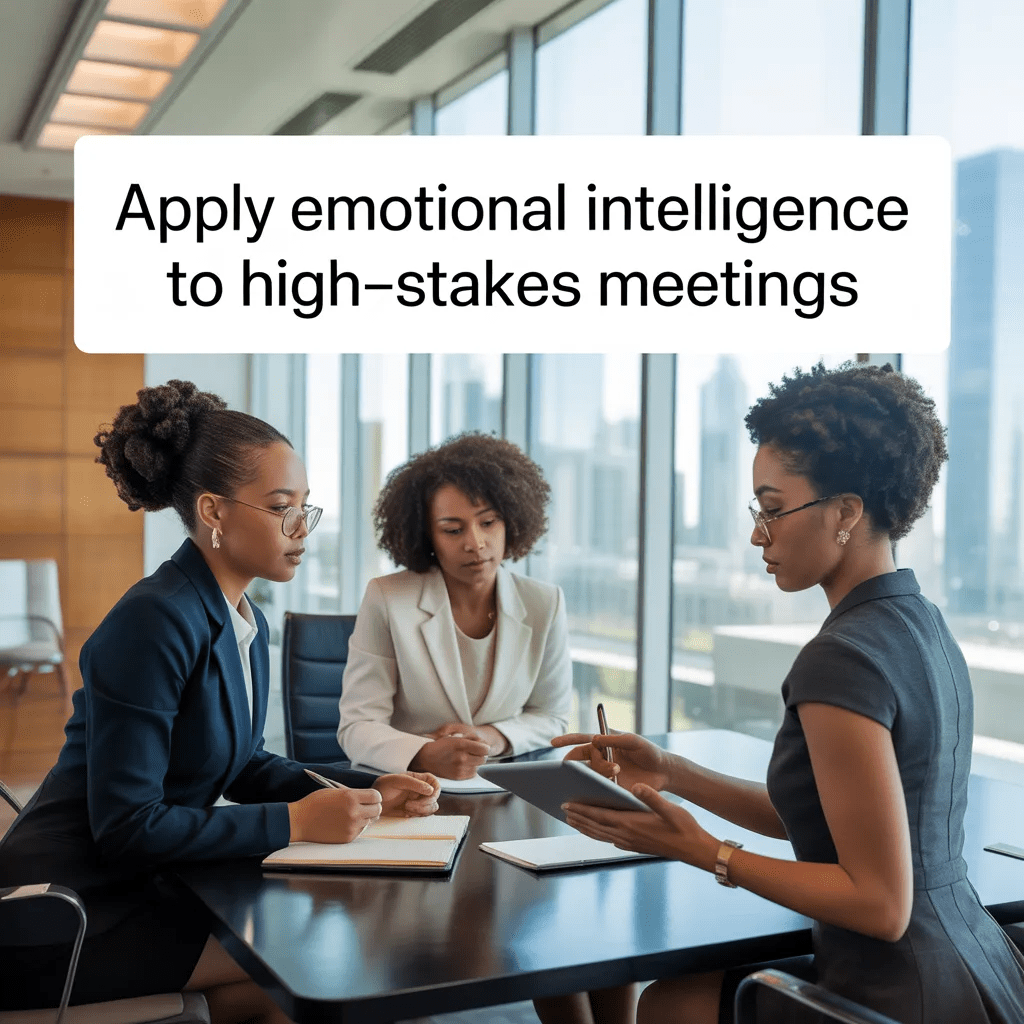
High-stakes meetings in STEM environments, including budget discussions, performance reviews, project post-mortems, and strategic planning sessions, generate some of the most emotionally charged communication in professional life. Technical expertise and strong data do not automatically translate into productive outcomes when the emotional temperature in the room is high.
DeeDee offers a precise and practical preparation strategy for navigating these moments: before the meeting, define the desired outcome for both yourself and the other party. Not just what you want to walk out with, but what a successful outcome looks like from the perspective of everyone in the room.
This preparation does something subtle and powerful. It shifts your orientation from positional to relational. Instead of entering the meeting focused on winning your argument, you enter it focused on finding an outcome that genuinely works. That shift is immediately perceptible to the people across the table, and it consistently produces better results than positional negotiation.
Additionally, emotional intelligence in high-stakes meetings means managing your own physiological responses as they arise. When you feel defensiveness, frustration, or anxiety surfacing, that is the moment to apply the CPL Framework: extend compassion, follow your process, and stay in learning mode rather than switching to self-protection mode.
How to apply this: Before your next high-stakes meeting, spend five minutes writing down two things: the outcome you need from the meeting, and the outcome the other party likely needs. Then identify at least one area where those outcomes are compatible. Walk into the meeting with that compatibility in mind, and lead from it when the conversation gets difficult.
Hear DeeDee break down the CPL Framework in full: Listen to Episode 050 of Lunch with Leaders
Step 4: Ask “How Did You Get There?” Instead of Pushing Back
This single question, introduced by DeeDee in the episode, may be the most practically powerful tool in the entire conversation. When someone presents a perspective, a decision, or a conclusion that you disagree with, the instinctive response is to counter it. You present your own perspective, defend your position, or challenge their reasoning. The result is almost always a conversation that moves further from resolution rather than toward it.
Asking “How did you get there?” does the opposite. It signals genuine curiosity rather than opposition. It invites the other person to share the reasoning, experience, and assumptions that produced their conclusion. And in doing so, it almost always reveals information that either changes your perspective, changes theirs, or identifies the specific point of divergence that actually needs to be addressed.
This question works because it is disarming without being submissive. Asking how someone arrived at their position does not mean agreeing with it. It means understanding it well enough to engage with it meaningfully rather than simply reacting to it. That distinction changes the entire character of a difficult conversation.
For leaders in STEM, where disagreements about technical decisions, project direction, and resource allocation are constant and consequential, this question is an invaluable tool. It transforms potentially adversarial exchanges into genuinely collaborative ones, and it produces better decisions because better information is on the table.
How to apply this: In your next meeting where disagreement arises, commit to asking “How did you get there?” before presenting your counter-position. Listen to the full answer before responding. Then decide whether your original counter-position still stands, or whether the information you just received changes your view.
Step 5: Use “I Never Thought of It That Way” as a Leadership Mantra
DeeDee introduces a phrase that functions as a genuine pattern interrupt for defensive communication: “I never thought of it that way.” Simple, sincere, and immediately transformative in the right moment.
When someone challenges your approach, questions your decision, or offers feedback that stings, the defensive reflex is almost universal. You want to explain, justify, or deflect. That reflex is natural. It is also consistently counterproductive, because it signals to the other person that their perspective did not land, which usually makes them push harder.
“I never thought of it that way” does something entirely different. It signals that their perspective was received. Also, it creates a moment of genuine openness, even if you ultimately do not change your position. It de-escalates the tension in the exchange and makes space for actual dialogue rather than parallel monologues.
Crucially, using this phrase does not require you to agree. It requires only that you genuinely consider the perspective being offered before responding. That consideration, even brief, consistently produces better outcomes than reflexive defence.
How to apply this: Practise this phrase in low-stakes situations first. The next time a colleague offers an unexpected perspective in a team meeting, respond with “I never thought of it that way” before saying anything else. Notice how the conversation shifts. Then carry that practice into higher-stakes interactions as it becomes more natural.
Step 6: Interview Your Circle to Discover Your Magic Sauce
One of the most resonant concepts in DeeDee’s conversation with Adaeze is what she calls the magic sauce: the unique contribution you bring to every room you enter, which you are often too close to your own experience to see clearly.
Self-awareness is the foundational leadership competency. Without it, every other leadership development effort lacks a stable base. And yet genuine self-awareness is among the hardest things to develop independently, because our blind spots are definitionally invisible to us. We cannot see what we cannot see.
DeeDee’s practical solution is to ask. Specifically, she recommends approaching three trusted colleagues or friends and asking them a direct question: “What do you think is my unique contribution to the world?” The answers will sometimes surprise you. They will often reveal strengths you have been taking for granted, impact you have been undervaluing, and qualities that others experience as remarkable but that feel unremarkable to you precisely because they come naturally.
This exercise connects directly to the visibility and positioning work explored in Episode 045 — The Broken Rung: Visibility and Support for Women in STEM. You cannot position yourself effectively if you do not know clearly what you bring. Interviewing your circle gives you the raw material for that positioning, grounded in how others actually experience you rather than how you imagine they do.
How to apply this: Identify three people whose judgment you trust and who know your work well. Send them a brief message this week with one question: “What do you think is my unique contribution?” Sit with the answers before responding. Look for the patterns across all three. What they tell you is your magic sauce, and it is the most authentic foundation for the leadership brand you are building.
Step 7: Shift From POV Statements to Genuine Dialogue
The final strategic shift DeeDee introduces is the distinction between delivering point-of-view statements and engaging in genuine dialogue. Most professional communication, especially in high-stakes environments, defaults to the former. Each party states their position. The other party hears it, waits for a gap, and states their own position. The exchange feels like a conversation but functions like parallel broadcasting.
Genuine dialogue requires something more demanding: the willingness to include the “why” behind your position and to actively seek the “why” behind others’. When you understand why someone holds a position, not just what that position is, you gain the context to engage with it meaningfully. And when you share the why behind your own positions, you give others the same opportunity.
This shift is particularly important for women in STEM navigating environments where their credibility is sometimes questioned before they have spoken and where the bar for clear, compelling communication is higher than it is for their male peers. As Adaeze explored in Episode 044 — Rich Belsky: Humanity in Leadership and Bridging the Entrepreneurial Isolation Gap, authentic communication and genuine human connection are the foundations of leadership that endures. DeeDee’s work extends that principle into the specific mechanics of how conversations unfold moment by moment.
How to apply this: Audit your communication in your next three professional meetings. Notice how often you make POV statements versus asking questions that invite the other person’s reasoning. Then deliberately shift the ratio. For every position you state, ask at least one question that helps you understand the reasoning behind a different position. Notice what changes in the quality of the conversations that follow.
Conclusion
DeeDee Fisher’s conversation with Adaeze is a masterclass in the kind of leadership that STEM environments most urgently need and most rarely develop: emotionally intelligent, communication-driven, and grounded in genuine self-awareness.
The CPL Framework is not a soft skills add-on to technical excellence. It is a precision tool for reducing the friction that costs organisations time, talent, and trust every single day. Telling compassionate stories instead of negative ones. Asking how people got to their conclusions instead of immediately countering them. Shifting from POV statements to genuine dialogue. Discovering your magic sauce through the eyes of the people who work alongside you. Each of these practices is immediately applicable, and each one compounds in impact over time.
Technical expertise opens the door to leadership. How you communicate, how you manage tension, and how you develop the people around you determines whether you stay in the room and how much you can achieve while you are there.
Start with one practice from this episode. Apply it consistently for two weeks. Then add another. That is how intentional communication becomes a leadership identity rather than an occasional effort.
Listen to the full conversation with DeeDee Fisher: Episode 050 — DeeDee Fisher: STEM Leadership | From Tension to Intentional Communication