
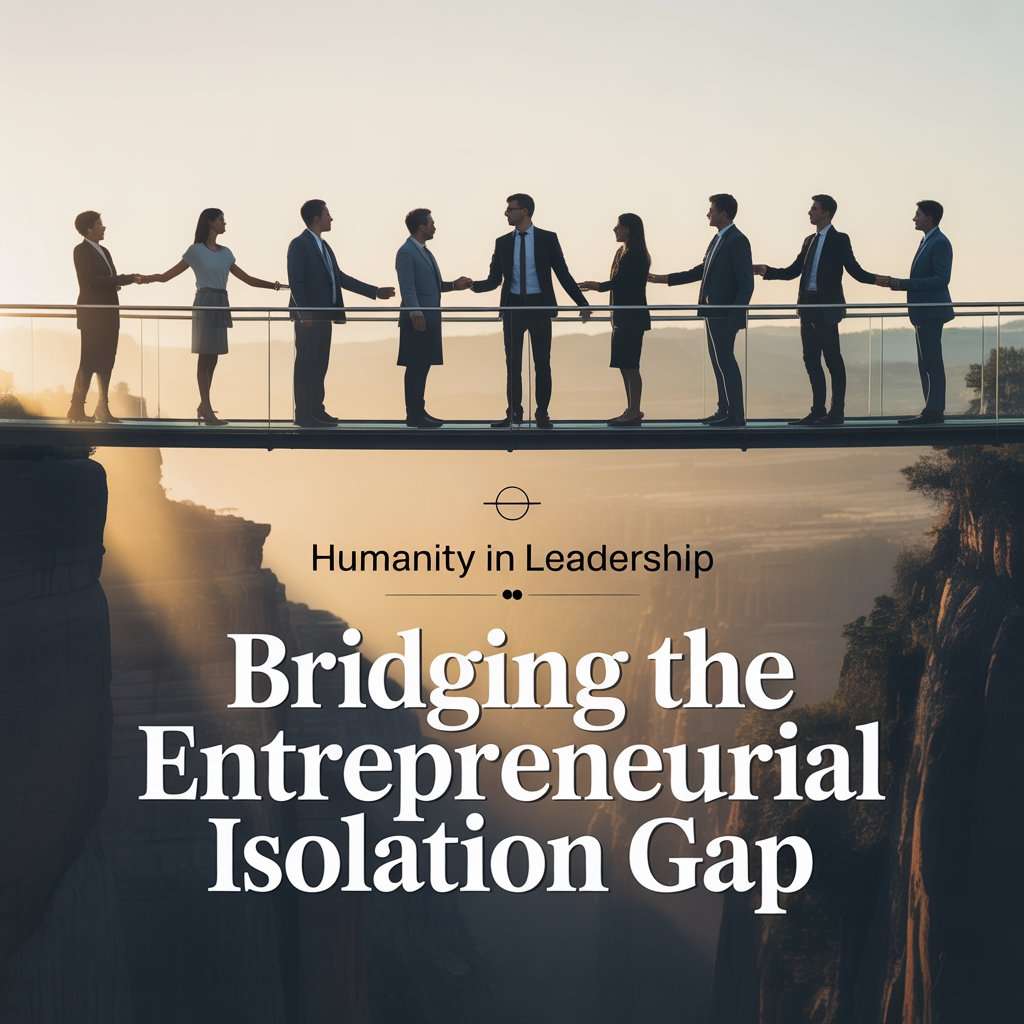
Nobody warns you about the loneliness. You prepare for the long hours, the hard decisions, the funding rejections, and the market uncertainty. What catches most founders and senior leaders off guard, however, is the profound isolation that settles in once they reach the top. There is nobody left to talk to honestly, nobody who fully understands the weight of the decisions, and nobody safe enough to share the fear with.
In Episode 044 of the Lunch with Leaders podcast, Adaeze Iloeje-Udeogalanya sits down with Rich Belsky, a five-time founder and executive coach, to confront this unspoken crisis head-on. Together, they dismantle the toxic mythology of the invincible leader, explore the real reasons startups fail, and offer practical tools for building the kind of human-centred leadership that actually sustains organisations over time. This conversation is essential for every founder, executive, and high-performing woman in STEM who has ever felt completely alone at the top.
Listen to Episode 044: Rich Belsky: Humanity in Leadership and Bridging the Entrepreneurial Isolation Gap
The Loneliness Nobody Talks About
Ask any founder what surprised them most about leadership, and the honest ones will tell you the same thing: the loneliness. Not the workload. Not the pressure. The loneliness.
Rich Belsky knows this from firsthand experience across five ventures. Despite building successful companies and coaching executives at the highest levels, he identifies isolation as the most shocking and least discussed reality of entrepreneurial life. Yet the professional culture around leadership actively discourages founders from naming it.
The unspoken rule in most investor and board relationships is that the CEO must project confidence at all times. Admitting struggle signals weakness. Expressing doubt raises red flags. Sharing fear risks losing funding or credibility with the team. So founders learn to perform certainty in every room, carrying their real experience in private, with no outlet and no support.
This performance is exhausting, and over time, it becomes dangerous. Leaders who cannot process their own stress accumulate it. That accumulated stress shapes decisions, damages relationships, and quietly corrodes the culture of entire organizations from the top down.
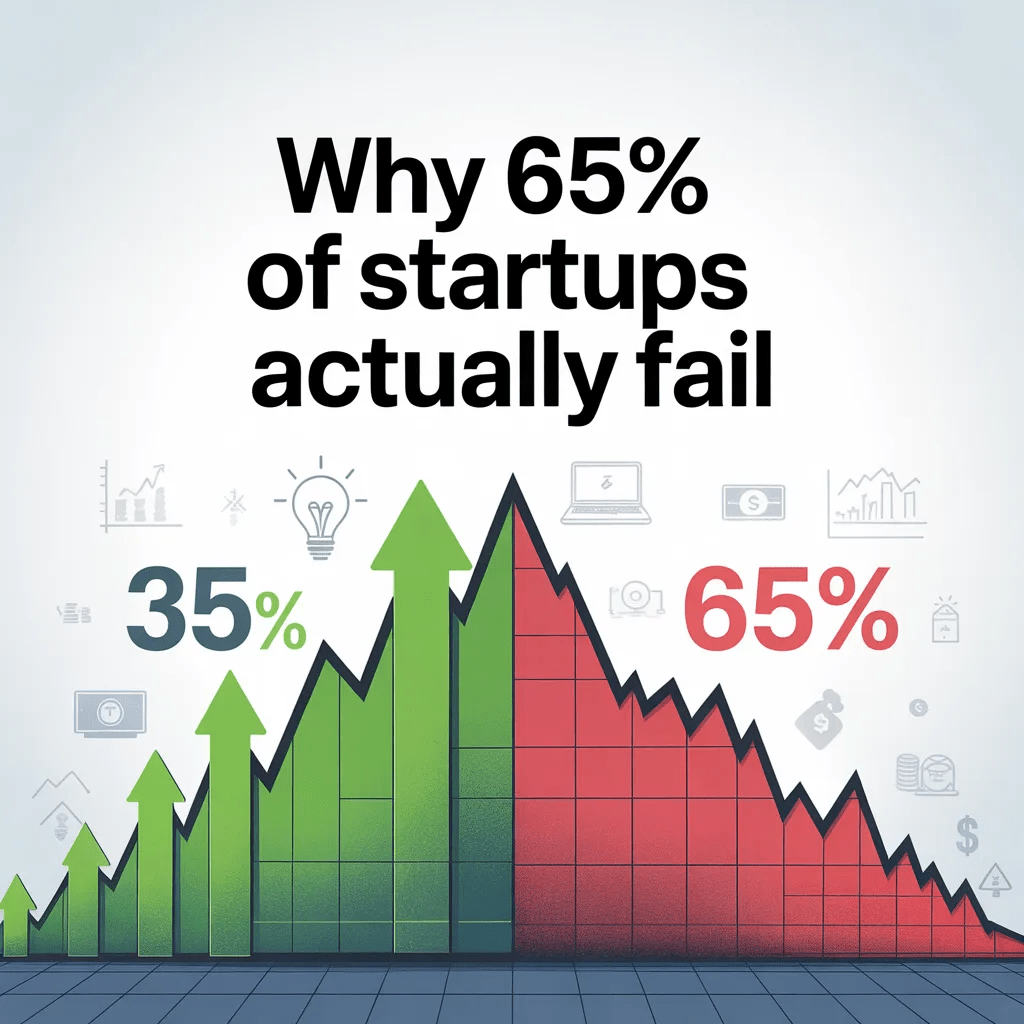
Why 65% of Startups Actually Fail
Most conversations about startup failure focus on the usual suspects: bad product-market fit, poor timing, insufficient capital, or ineffective marketing. Rich Belsky, citing Harvard Business School research, points to something far more fundamental.
Sixty-five percent of startups fail within their first five years due to human dynamics issues. Not business mechanics. Not market conditions. Human dynamics. Co-founder conflicts that escalate beyond repair. Leadership teams paralysed by unspoken tension. Cultures that quietly rot as resentment builds and communication breaks down. Founders burning out and making increasingly reactive decisions from a place of chronic stress.
These are not soft issues. They are the primary cause of startup mortality, and they receive a fraction of the attention that product strategy and fundraising do. Investors scrutinise financial models with extraordinary precision while largely ignoring the human systems that determine whether those models will ever be executed effectively.
The implication for leaders is clear. Technical excellence and strategic brilliance matter. However, without healthy human dynamics underneath them, neither is enough to sustain a growing organisation through the inevitable pressures of building something from nothing.
The Wartime CEO Myth and Why It Needs to End
The “wartime CEO” archetype has become deeply embedded in startup culture. It celebrates the leader who operates in permanent crisis mode, who drives their team with relentless intensity, who treats vulnerability as a liability, and who equates suffering with seriousness of purpose.
Rich Belsky challenges this mythology directly. The wartime CEO model does not produce resilient organisations. It produces cultures built on fear, teams that perform compliance rather than contribute authentically, and founders whose personal identity becomes so fused with their company’s performance that any setback becomes an existential threat to their sense of self.
Separating a founder’s personal identity from their company’s success is central to Rich’s work as a coach. A company can fail, pivot, or struggle without that outcome defining the worth or capability of the person who built it. However, when identity and company are fused, every obstacle becomes personal, every criticism becomes an attack, and the psychological cost of leadership becomes unsustainable.
Beyond the individual, this fusion damages the organisation. Teams can sense when their leader’s ego is bound up in the company’s performance. It creates an atmosphere where bad news gets buried, problems go unreported, and honest feedback disappears. The result is a leadership team operating on incomplete information, making decisions in a vacuum of manufactured optimism.
Hear Rich and Adaeze challenge the wartime CEO myth in full: Listen to Episode 044 of Lunch with Leaders
Understanding the Response Gap
One of the most immediately actionable frameworks Rich introduces in this episode is what he calls the Response Gap: the space between a stimulus and your reaction to it.
Every high-pressure leadership environment generates constant triggers. A difficult investor call. A team member’s resignation. A product failure. A public criticism. In each of these moments, your nervous system generates a response before your rational mind has fully processed the situation. If you act from that initial response, driven by elevated cortisol and unprocessed stress, you make reactive decisions that often create more problems than they solve.
The Response Gap is the practice of creating space between the trigger and the response. That space allows your nervous system to regulate, your rational mind to engage, and your values to inform your decision rather than your fear. Even a few seconds of conscious breathing can shift you from a reactive, cortisol-driven state to a grounded, considered one.
Rich frames this not as a wellness practice but as a leadership competency. The ability to regulate your nervous system under pressure is the difference between a leader who makes thoughtful decisions in crisis and one who compounds problems through reactive behaviour. At the level of a founding team or executive leadership, that difference shapes outcomes across the entire organisation.
How to apply this: Build one small nervous system regulation practice into your daily leadership routine. A three-minute breathing exercise before a difficult meeting. A brief walk between back-to-back calls. A moment of stillness before responding to a challenging message. These practices are not indulgences. They are precision tools for better leadership.

Building Safe Communities for Founders and Leaders
Rich’s methodology, which he calls Lonely at the Top, centres on creating peer communities where founders can share their genuine experiences without fear of judgment, loss of credibility, or professional consequence.
The structure matters. Peer groups for founders only work when the participants share enough common context to understand each other’s reality, when the environment is explicitly safe for honesty, and when the culture actively normalises struggle rather than rewarding performance. General networking events do not create this. Curated, intentional communities with clear norms do.
For women in STEM navigating leadership roles in industries that were not built for them, this kind of community carries particular significance. The isolation that founders generally experience is compounded for women by the additional weight of navigating gender bias, imposter syndrome, and the expectation to perform twice as competently while showing half as much emotion. Finding a community of people who understand that specific experience is not just personally valuable. It is professionally essential.
This connects directly to what Christelle Mombo-Zigah explored in Episode 042 — Christelle Mombo-Zigah: Bridging the Gap, AI Governance and Cultural Representation, where she emphasised the power of coalitions and the importance of building with community rather than in isolation. The principle is the same whether you are navigating AI governance or entrepreneurial loneliness: community shortens the learning curve, reduces the cost of mistakes, and makes bold moves feel survivable.
How to apply this: Identify or build one peer community that operates with genuine psychological safety. Look for startup groups, professional circles, or organisations like the African Women in STEM network where honest conversation is the norm rather than the exception. Show up consistently, contribute authentically, and allow yourself to receive support as well as give it.
What AI Cannot Replace in Leadership
Rich and Adaeze address a question that surfaces repeatedly in leadership conversations right now: given how rapidly AI capabilities are advancing, what remains irreplaceably human in leadership?
Rich’s answer is precise. AI cannot replicate human empathy grounded in lived experience. It cannot sit with someone in the specific texture of their fear and reflect it back with the kind of understanding that only comes from having felt something similar. Likewise, it cannot hold the nuance of a relationship built over years of shared context. It cannot sense the unspoken tension in a room or read the micro-expressions that signal that a team member is struggling beneath a composed exterior.
These capacities are not peripheral to leadership. They are central to it. The ability to make people feel genuinely seen and understood is what builds the trust that sustains teams through difficulty. It is what creates cultures where people bring their best work rather than their safest work. No algorithm replicates it, regardless of how sophisticated the model becomes.
As Adaeze explored in Episode 043 — Breaking the AI Double Standard for Women in STEM, AI functions powerfully as a force multiplier for human expertise. However, the human expertise itself, the judgment, the empathy, the relational intelligence, remains the irreplaceable core. Rich’s episode reinforces this from the leadership development side: the future of strong leadership is more human, not less.
How to apply this: Invest deliberately in developing the capacities that AI cannot replicate. Practice listening at a level that goes beyond information gathering. Build the relational skills that make people feel genuinely understood. Develop your emotional range so that you can be present with others in difficulty rather than deflecting into problem-solving mode. These are leadership skills, and they compound over time in ways that technical skills alone never will.
Practical Steps for Leaders Ready to Build Differently
Rich closes the episode with concrete action steps for leaders who want to move from isolated performance to sustainable, human-centred leadership:
- Build a support network deliberately. Seek out local startup groups, curated peer circles, or communities like African Women in STEM where genuine peer support exists. Do not wait until you are in crisis to find your people. Build the community before you need it urgently.
- Regulate your nervous system daily. Incorporate breathwork, meditation, or even brief moments of stillness into your routine. Start with three minutes before your most demanding meetings and build from there. Consistency matters more than duration.
- Create transparent communication systems. Build channels within your team where honest feedback flows freely in both directions. When employees feel seen, heard, and understood, resentment does not accumulate and cultural decay does not set in quietly.
- Seek experienced guidance proactively. Connect with mentors, executive coaches, or organisations like the Real Mental Health Foundation before you hit a wall. Proactive support is significantly more effective than crisis intervention, and it signals to your team that investing in human health is a leadership priority, not a sign of weakness.
Frequently Asked Questions
Why do so many founders feel lonely even when surrounded by people?
Founders occupy a unique position where sharing genuine struggle carries real professional risk. Investors may lose confidence. Teams may feel destabilised. That structural reality forces many founders into a performance of certainty that isolates them from authentic connection, even in rooms full of colleagues and supporters.
What is the Response Gap and how does it help leaders?
The Response Gap is the space between a trigger and your reaction to it. Practising nervous system regulation creates that space, allowing leaders to respond from a grounded, values-led place rather than from a reactive, cortisol-driven one. Over time, this practice fundamentally changes the quality of decisions made under pressure.
Is vulnerability a weakness in leadership?
No. Research and practice consistently show that leaders who model appropriate vulnerability build higher-trust teams, make better decisions, and sustain healthier cultures. The belief that vulnerability signals weakness is a legacy of the wartime CEO mythology, and it actively damages the organisations that operate by it.
Why do human dynamics cause more startup failures than business mechanics?
Business mechanics, such as product strategy, financial modelling, and market positioning, are learnable and adjustable. Human dynamics, including co-founder conflict, communication breakdown, burnout, and cultural erosion, are harder to see coming and far more difficult to repair once they deteriorate. Most founders invest heavily in business skills and barely at all in the human skills that determine whether those business skills ever get deployed effectively.
How do I find the right peer community as a founder or senior leader?
Start by looking for communities where the norms explicitly support honest conversation rather than performance. Ask whether the group creates psychological safety for sharing struggle, not just celebrating wins. The African Women in STEM network, local startup circles, and methodologies like Rich’s Lonely at the Top offer structured environments designed for exactly this kind of authentic connection.
Can AI help with leadership development?
AI can support certain aspects of leadership development, such as providing frameworks, summarising research, or helping leaders prepare for difficult conversations. However, the core capacities that make leaders genuinely effective, including empathy, relational intelligence, and the ability to hold space for others in difficulty, develop through human experience and human connection, not through AI interaction.
Conclusion
Rich Belsky’s conversation with Adaeze is a necessary counterweight to the culture of invincibility that dominates leadership narratives in entrepreneurship and STEM. The loneliness is real. The human dynamics failures are the leading cause of startup mortality. The wartime CEO model is producing burned-out leaders and broken cultures. And the solution is not more resilience training. It is more humanity.
Building human-centred leadership means naming the isolation, creating space for authentic community, regulating the nervous system as a daily practice, and separating personal identity from professional outcomes. None of these are soft strategies. They are the hard work of building something that lasts, not just something that scales.
You do not have to carry this alone. You were never supposed to.
Listen to the full conversation with Rich Belsky: Episode 044 — Rich Belsky: Humanity in Leadership and Bridging the Entrepreneurial Isolation Gap
Catch up on these connected episodes too: