
The best technology is not built in a boardroom. It is built from lived experience, from a problem so personal and so urgent that the builder cannot imagine not solving it.
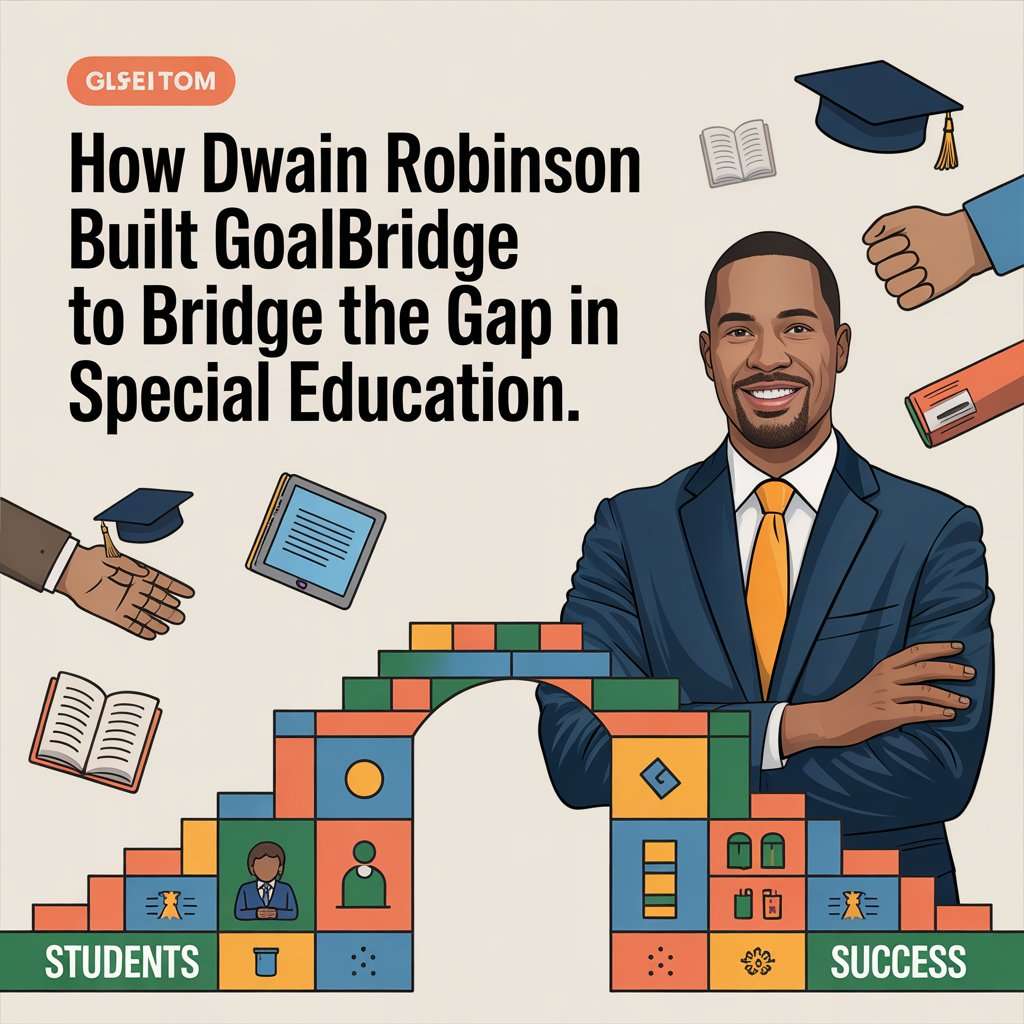
That is exactly how GoalBridge came to exist. In Episode 040 of the Lunch with Leaders podcast, Adaeze Iloeje-Udeogalanya sits down with Dwain Robinson, senior software engineer and founder of GoalBridge, a platform designed to improve communication and collaboration between parents, educators, and providers around student goals and Individualized Education Programs. Dwain’s story moves from a small town in North Carolina to tech leadership, and from personal frustration as a father of an autistic son to building a solution that could change how thousands of families navigate special education.
This episode is about more than technology. It is about empathy, mentorship, community, and what it looks like to use your skills to serve something bigger than yourself.
Listen to Episode 040: Dwain Robinson: Bridging the Gap in Special Education
Step 1: Own Your Story
Dwain Robinson did not grow up with a clear roadmap into tech. He came from a small town in North Carolina, where the path to becoming a senior software engineer was not obvious, paved, or widely modelled. And yet that background, rather than being something to overcome or set aside, became a foundational part of how he shows up as a leader and a builder.
This is the first lesson his episode offers: your story is not a liability. It is a resource. The experiences that shaped you, including the ones that felt like disadvantages, are exactly what give you the perspective to see problems that others miss and the motivation to solve them in ways that actually matter to real people.
For women in STEM from backgrounds that the industry was not originally built to include, this is a particularly important reframe. The instinct is often to minimise where you came from, to present only the polished, credentialed version of yourself in professional spaces. But the parts of your story that feel most personal are often the parts most likely to connect, inspire, and lead to impact.
Step 2: Let Personal Experience Point You Toward the Problem Worth Solving
GoalBridge did not begin as a business idea. It began as a father’s frustration.
Dwain’s son is autistic. And like many parents of children with special needs, Dwain experienced firsthand the communication gap that exists between home and school. Parents send their children to school every day and often have little visibility into what is actually happening during the hours their child spends with educators and providers. IEP goals get set in meetings, but the daily reality of how those goals are being tracked, addressed, and progressed is frequently opaque to the families who care most about the outcomes.
Dwain had the technical skills to build something. And he had the personal experience to know exactly what needed building. GoalBridge is the result: a platform that creates an analytical system of record for IEP activities, giving parents real-time visibility and improving collaboration between families and the educators and providers working with their children.
This is technology at its most purposeful. Not built to impress investors or chase a trend, but built to solve a specific, painful, real problem for a community that has been underserved by existing tools.
Step 3: Build With the Community, Not Just For Them
One of the things that distinguishes GoalBridge from generic edtech solutions is that it was built by someone inside the experience, not observing it from the outside. Dwain is not a developer who identified special education as an interesting market. He is a father who lived the problem and then applied his technical expertise to address it.
This distinction matters enormously in how technology gets built and whether it actually serves the people it is intended for. Solutions built without genuine proximity to the problem often miss the most important details — the ones that only become visible when you are living them rather than studying them.
For women in STEM who are building, founding, or leading in spaces that intersect with their own communities, this is both a validation and an encouragement. Your insider perspective is not a conflict of interest. It is your most valuable asset. It is what allows you to build with nuance, with empathy, and with the kind of specificity that makes a product genuinely useful rather than merely functional.
How to apply this: If you are building something, ask yourself how close you are to the people you are building for. Are you talking to them regularly? Are their voices shaping your decisions, or are you making assumptions about what they need? The closer you are to the lived experience of the problem, the better your solution will be. Proximity to the problem is not a nice-to-have. It is a design requirement.
Hear Dwain share the full story of GoalBridge: Listen to Episode 040 of Lunch with Leaders

Step 4: Redefine What Mentorship Actually Requires
Dwain’s reflections on mentorship in this episode are some of the most grounded and honest you will hear on the subject. He does not frame mentorship as a transactional exchange of advice. He frames it as a practice of empathy and presence.
His point is precise: effective mentorship begins not with what you know but with what you are willing to understand. Before you offer a solution, before you share what worked for you, before you give the advice that feels most relevant, you need to understand what the person in front of you actually needs in that specific moment. Not what you assume they need. Not what you needed when you were in a similar situation. What they need, now, given who they are and where they are.
How to apply this: The next time you are in a mentorship conversation, whether you are the mentor or the mentee, start with a question rather than a statement. If you are mentoring, ask: what does this person actually need from me right now? Is it advice or Is it a sounding board? Also, is it a connection? Is it simply someone who will listen without judgment? Getting that answer first will make everything you offer afterward significantly more useful.
This theme connects to what was explored in Episode 039 — The 10% Rule: Why Hard Work Alone Won’t Get You Promoted in Leadership, where Adaeze emphasises the importance of strategic relationships as a core driver of career advancement. Mentorship is one of the most powerful forms of strategic relationship, but only when it is approached with the kind of intentionality and empathy Dwain describes.
Step 5: Do Not Underestimate the Power of Community
One of the quieter but most important threads running through Dwain’s episode is his emphasis on community. Not networking in the transactional sense, but genuine community, the kind where people know you, want to see you succeed, and show up for you when the road gets hard.
His message is direct: do not live in isolation. The journey of building something, leading something, or navigating a career in a field that was not designed for you is too difficult to do alone. And it is also, frankly, unnecessary. There are people who share your experiences, your values, and your ambitions, and finding them, building with them, and creating spaces where all of you can show up authentically is both a personal and a professional imperative.
How to apply this: Audit your current community honestly. Do you have people around you who genuinely want to see you win? Do you have spaces where you can be honest about what you are struggling with, not just spaces where you perform competence and resilience? If the answer is no, building that community is not a luxury. It is a necessity. Start with one honest conversation with one person you trust, and build from there.

Step 6: Use Your Technical Skills in Service of Real-World Problems
Dwain’s career trajectory offers a compelling model for what it looks like when technical expertise meets purpose. He did not choose between being a skilled engineer and being a mission-driven founder. He used one to fuel the other.
For women in STEM who have deep technical expertise and also carry a sense of responsibility toward their communities, this is an important permission: you do not have to choose. The skills you have spent years developing are exactly the tools you need to build the solutions your community is waiting for. The gap between technical capability and community impact is not as wide as it sometimes feels. What bridges it is the willingness to turn your skills toward problems that matter personally, not just professionally.
This connects naturally to what Michelle Hamilton explored in Episode 038 — Human-First Leadership in AI Adoption, where she makes the case that the most valuable application of technology is one that centres the human experience. Dwain’s work with GoalBridge is a living example of exactly that principle: technology built not because it was technically interesting, but because it was humanly necessary.
How to apply this: Look at the communities you are part of, your professional community, your personal community, your family, your neighbourhood, and ask where your technical skills could create genuine value. You do not have to build a platform. You do not have to found a company. Sometimes it is a spreadsheet that saves a community organisation hours every week. Sometimes it is a tool that helps one family navigate a system more effectively. Start with the problem. Let the solution follow.
Step 7: Think Carefully About the Legacy You Want to Leave
Toward the end of his conversation with Adaeze, Dwain speaks about legacy. And his framing is not about achievements or accolades. It is about the kind of environment he wants to create for the people around him: safe spaces where people feel valued and capable of showing up as they genuinely are.
That is a particular kind of legacy. It is not measured in products shipped or revenue generated. Also, it is measured in the people who felt seen, supported, and equipped to grow because of their proximity to you. Additionally, it is measured in the students whose IEP goals were better supported because their parents had better information. It is measured in the mentees who found their direction because someone was willing to be present with them rather than simply instructive.
For leaders at any level, this is worth sitting with. The technical contributions matter. The business outcomes matter. But the human legacy, the culture you created, the people you invested in, the spaces you made safer and more equitable — that is what endures.
How to apply this: Ask yourself what you want people to say about what it felt like to work with you, to be mentored by you, to be in community with you. Not what they say about your outputs, but about your presence. That answer is your legacy in its earliest form. And you can start building it right now, in how you show up in every interaction, not just the high-stakes ones.
Conclusion
Dwain Robinson’s story is a reminder that the most powerful technology is built at the intersection of skill and lived experience. GoalBridge did not come from a market research report. It came from a father who sat in IEP meetings, felt the frustration of not knowing what was happening in his son’s school day, and decided to use everything he knew to build something better.
That is what purpose-driven leadership looks like. It is not separate from technical excellence. It is what technical excellence is for.
Whether you are a parent navigating the special education system, a technologist looking for a problem worth solving, a mentor wondering how to show up more effectively, or a leader thinking about the legacy you want to leave, this episode has something for you. Dwain’s clarity about why he builds, how he mentors, and what he wants his presence in the world to mean is the kind of grounding that every leader needs.
Own your story. Solve the problem you have lived. Build community. Mentor with empathy. And use your skills in service of something that genuinely matters.
Listen to the full conversation with Dwain Robinson: Episode 040 — Dwain Robinson: Bridging the Gap in Special Education
Catch up on these connected episodes too: