

You are exceptional at your job. You are the person your team calls when something needs to get done. Your work is consistently high quality, your output is reliable, and your manager depends on you. By every measure, you are performing well.
So why are you not moving forward?
In Episode 037 of the Lunch with Leaders podcast, Adaeze Iloeje-Udeogalanya names the uncomfortable truth behind this pattern: being too good at your current role can quietly become the very thing holding you back from the next one. This episode is for every high-performing woman in STEM who is stuck, overlooked, or simply plateauing, despite doing everything she was told would lead to success.
Listen to Episode 037: The Comfort Trap: How Being “Too Valuable” Can Stall Your Leadership and Career Growth
Step 1: Recognise That Comfort Is Not the Same as Progress
The first thing to understand is how the trap is set. It does not happen because you are lazy or complacent. It happens because you are good. You became the go-to person. You built a reputation for delivering. And somewhere along the way, delivering became the whole job.
As Adaeze puts it in the episode: “Being valuable gives you a level of comfort and made you believe that you’re doing the right thing and you’re on the right track.”
That feeling is real. And it is misleading.
Comfort in your current role creates a false signal that things are working. But while you are maintaining the status quo, the requirements for the next level are quietly changing around you. The skills that got you here, the technical mastery, the flawless execution, the deep expertise, are not the same skills that will get you to Director, VP, or beyond.
How to apply this: Sit with this question honestly. When did you last do something at work that genuinely stretched you? If your honest answer is that you cannot remember, that is the signal. Comfort is not the destination. It is a resting point that can easily become a holding pattern.

Step 2: Understand the “Too Valuable” Trap
This is the part that stings, and it is worth sitting with it rather than rushing past it.
Adaeze is direct about the organisational reality: “They have no incentive to promote you if they can get your high-level work products from you. They have no incentive or reason to promote you if all they see is this high performer.”
Think about what this means in practice. If you are the best person in your organisation at what you currently do, the system has every reason to keep you exactly where you are. Your excellence in your current role does not signal readiness for the next role. It signals indispensability in this one. And indispensable contributors do not get promoted. They get retained.
This is not about your organisation being malicious. It is about how systems work. Leadership looks for people who demonstrate that they can already operate at the next level, not just people who have perfected the current one.
How to apply this: Ask yourself what story your current work is telling about you. Is it telling a story about someone who is exceptional at executing tasks? Or is it telling a story about someone who thinks strategically, leads others, and operates with a broader organisational view? If it is the former, the work is not the problem. The story is.
Step 3: Make the Transition from Expert to Trusted Leader
This is the central shift the episode builds toward, and it is the one most high-performing women in STEM resist, often without realising it.
Moving from expert to leader is not just a title change. It is a complete reorientation of how you show up, what you prioritise, and how others experience you. As Adaeze frames it: “Have you made the transition from expert, from high performer to trusted leader? If you haven’t… then you have unintentionally set your career ceiling.”
The expert identity is comfortable because it is built on certainty. You know your field. You know the answers. You are valued precisely because of that knowledge. The leader identity requires something different: the willingness to operate in ambiguity, to think at a systems level, to influence without direct authority, and to be visible in ways that may feel uncomfortable.
How to apply this: Start behaving at the level above your current title before you have it. This does not mean overstepping. It means bringing strategic thinking to conversations where you might usually only bring technical answers. It means raising the question of direction and impact, not just delivery. It means making your perspective on the bigger picture visible, not just your ability to execute the immediate task.
As Adaeze says: “Don’t wait to be given the title and then grow into it. Challenge yourself to do the opposite, even if it means letting go of the things you’re comfortable with.”
This theme connects directly to Episode 035 — The Confidence Myth: Rethinking Leadership Mindset and Influence for Women in STEM, where Adaeze breaks down how leadership presence is built through specific, deliberate actions rather than waiting for a feeling of readiness to arrive.
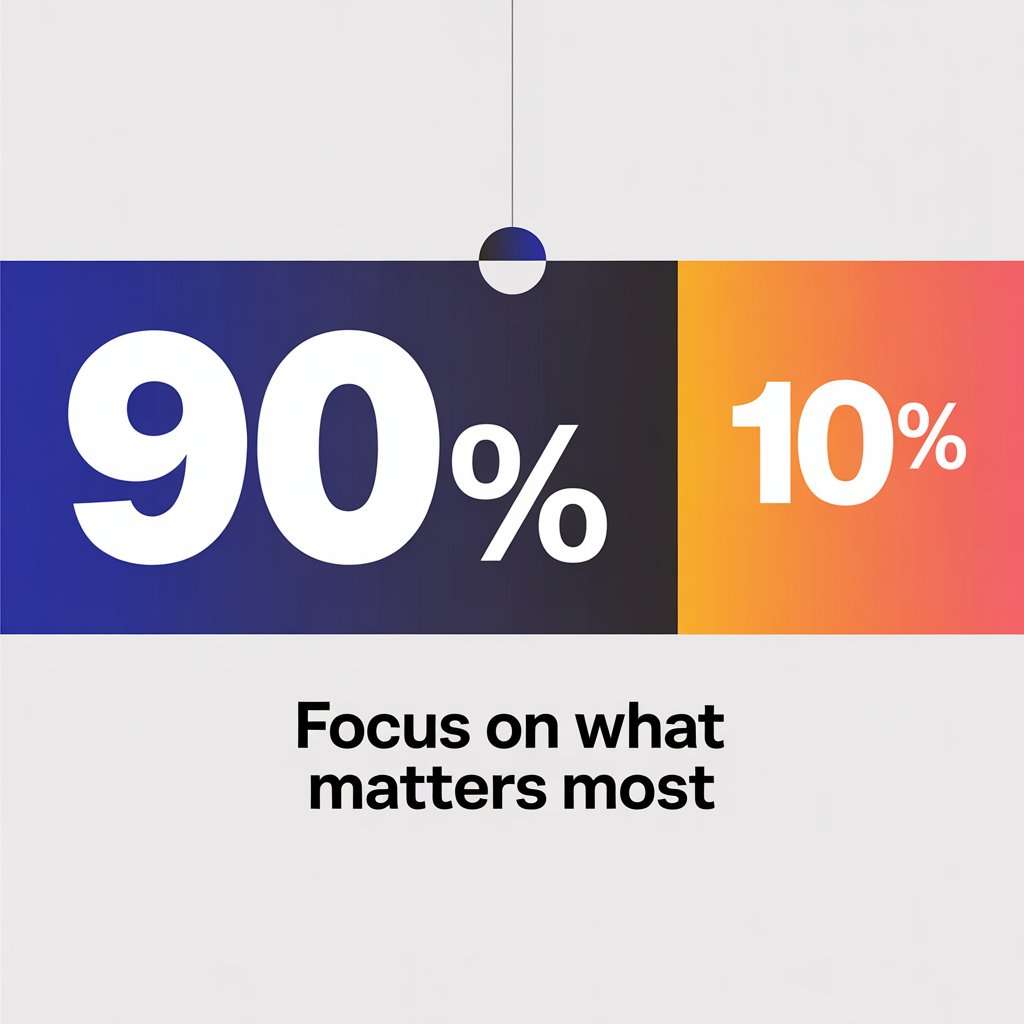
Step 4: Absorb the 90/10 Rule and Rebuild Your Priorities Accordingly
This is perhaps the most practically disruptive insight in the episode, and the one that most directly challenges the belief system of high-achieving STEM professionals.
Adaeze shares a striking breakdown of what actually drives career success at senior levels: “Productivity… only accounts for 10% of your success. The other 90% is focused on how you fully embrace building your personal brand, building relationships, seeking exposure and visibility.”
Read that again. Ten percent.
For women in STEM who have built their entire careers on the quality of their technical output, this can feel deeply counterintuitive. The implicit promise of STEM careers has often been that if you are good enough at the work, the work will speak for itself. But at senior levels, that promise breaks down. The people advancing are not necessarily the best technicians. They are the ones who have made their thinking visible, built strategic relationships across the organisation, and positioned themselves as leaders in how others experience them, not just in what they produce.
How to apply this: Audit how you currently spend your professional energy. What percentage of your time goes into delivering excellent work versus building relationships, seeking visibility, and shaping how others perceive your leadership potential? If the vast majority of your energy is in delivery, you are investing heavily in the 10% and leaving the 90% largely unattended. That is where the stagnation lives.
Hear Adaeze break down the comfort trap: Listen to Episode 037 of Lunch with Leaders
Step 5: Stop Hiding Under the Radar and Start Owning Your Visibility
Many high-performing women in STEM actively prefer to stay under the radar. There are understandable reasons for this. Visibility can feel like exposure. It can feel like arrogance. It can feel like inviting criticism or scrutiny that you would rather avoid. For women in particular, there are real cultural and social pressures that make self-promotion feel uncomfortable or unsafe.
But staying invisible has a cost that compounds quietly over time.
As Adaeze reminds us: “It’s not just what you do, it’s how you think, how you show up, and how others experience you. What gets you in the room?”
If the people who make decisions about your career advancement do not have a clear picture of how you think, what you stand for, and what you are capable of beyond your current role, they cannot advocate for you. They can appreciate you. They can rely on you. But they cannot see you as the obvious choice for what comes next.
How to apply this: Visibility does not have to mean self-promotion in ways that feel performative or inauthentic. It can start small. Sharing a perspective in a cross-functional meeting. Writing a short reflection on a project outcome and what it taught you about the broader business. Asking to be part of a conversation or initiative that sits slightly outside your current scope. Each of these is a small, deliberate act of visibility that builds a fuller picture of who you are as a leader.
For a practical framework on building visibility and personal brand authentically, revisit Episode 033 — Ginikanwa Frank-Durugbor: A Crisis Communication and Personal Branding Masterclass, which goes deep on how to own your narrative without losing yourself in the process.
Step 6: Break the Pattern of Over-Delivering and Under-Positioning
There is a specific behaviour pattern that sits at the heart of the comfort trap, and it is worth naming directly: over-delivering on execution while under-investing in positioning.
Over-delivering feels virtuous. It feels like the right thing to do. And in the short term, it is rewarded. But at senior levels, the leaders who advance are not the ones who did the most work. They are the ones who ensured that the right people understood the strategic value of their contribution, their thinking, and their leadership potential.
This does not mean doing less work. It means pairing excellent work with deliberate positioning. It means making sure that when you solve a hard problem, the people who need to know about it know about it. It means framing your contributions in terms of business impact, not just task completion. It means speaking the language of strategy, not just execution.
This connects to a pattern explored in Episode 032 — Stop Over-Explaining and Start Leading with Conviction. The habit of over-explaining, of justifying every decision in exhaustive detail, is often rooted in the same place as over-delivering: the belief that more is always better, that thoroughness is the same as leadership. It is not. Conviction, clarity, and strategic framing are what leadership communication actually requires.
How to apply this: The next time you complete a significant piece of work, before moving on to the next task, pause and ask: who needs to understand the impact of this, and how do I communicate it in a way that reflects strategic thinking rather than just task completion? That pause, repeated consistently, is where repositioning begins.
Step 7: Embrace the Discomfort of Growth Deliberately
Everything in this episode circles back to one underlying challenge: growth requires discomfort, and discomfort is something high-performers are often very good at avoiding, precisely because they have become so effective at their current level.
Adaeze names this clearly: “If you’re not afraid to try something new because you don’t want to fail, you also risk not growing. What got you here will not get you there.”
The skills, habits, and behaviours that built your current success are real. They are valuable. But they are not sufficient for the next level. The willingness to operate outside your area of certainty, to lead without having all the answers, to be visible before you feel fully ready, to position yourself for what you want rather than waiting to be recognised for what you have already done, these are the actual requirements of senior leadership.
How to apply this: Identify one area of deliberate discomfort to step into over the next 90 days. Not a vague intention to be more visible or think more strategically, but a specific, concrete action. A speaking opportunity. A cross-functional initiative. A conversation with a senior leader you have been putting off. A piece of writing that shares your perspective publicly. Choose one thing and commit to it, specifically because it stretches you.
Conclusion
Being good at your job is not enough to advance your career. That is not a criticism. It is a structural reality, and understanding it is the first step to working with it rather than against it.
The comfort trap is real, and it catches the most capable, most dedicated, most high-performing women in STEM, precisely because they have done exactly what they were told to do. They delivered. They specialised. They became indispensable. And then they found themselves stuck.
The way out is not to work harder at what you are already doing. It is to deliberately shift your identity from expert to leader, to invest in the 90% that drives senior-level advancement, to make your thinking and your potential visible, and to embrace the discomfort of growth as the only reliable path forward.
You have already proven you can perform. Now it is time to prove you can lead.
Listen to the full episode and start breaking out of the comfort trap: Episode 037 — The Comfort Trap: How Being “Too Valuable” Can Stall Your Leadership and Career Growth
Catch up on these connected episodes too: