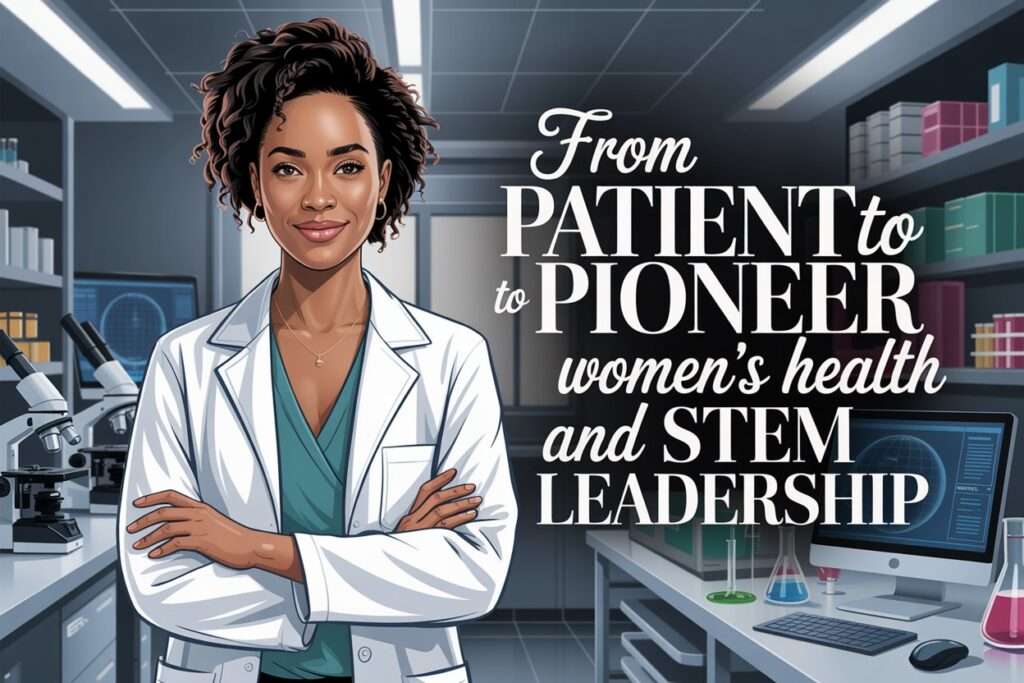
Most medical breakthroughs are built on research papers, clinical trials, and laboratory data.
Natasha Henry’s started with a collapse.
After years of debilitating symptoms dismissed by doctor after doctor, Natasha was hospitalised with a hemoglobin level of 2.4. For context, a healthy range for women sits between 12 and 16. At 2.4, the body is in critical danger. She had not been imagining the pain. She had not been overreacting. Her body had been in crisis for years while the medical system told her everything was fine.
That moment did not break her. It redirected her entirely.
Today, Natasha Henry is the founder of Myocurrent, a patent-pending, AI-powered health technology company that uses neuroscience to help women manage uterine fibroids. She is also a voice on women’s health equity, an advocate for intentional leadership, and living proof that the most powerful innovations often come from the people who have lived inside the problem.
When the System Fails You, You Build a Better One
Uterine fibroids affect an estimated 70 to 80 percent of women by the age of 50. That number is staggering. What is equally staggering is how consistently the condition goes unmanaged, misdiagnosed, or simply ignored by a healthcare system that has a long and well-documented history of dismissing women’s pain.
Natasha lived that dismissal for years. Her symptoms were real. Her pain was real. The crisis building inside her body was real. But because the medical system did not take it seriously, she had no framework for understanding what was happening to her or how to advocate for herself within a system that kept sending her home.
Her hospitalisation changed that. It forced a reckoning, not just with her health, but with the gap between what women with fibroids experience and what the medical system is currently equipped to offer them.
Myocurrent exists to close that gap. It translates complex patient data into a format that is actually interpretable, both for the women living with the condition and for the clinicians trying to help them. It brings neuroscience and AI together in service of a problem that has been underfunded and underresearched for far too long.
“Because something hasn’t been done doesn’t mean you can’t do it, right?”
That is the ethos behind Myocurrent. And it is the kind of thinking that drives the best innovation in health tech and beyond.

This Is a Global Issue, Not a Single Community’s Burden
There is a narrative that positions uterine fibroids primarily as a Black women’s health issue. The disparity is real and it matters. Black women experience fibroids at higher rates, at earlier ages, and with more severe symptoms. That reality deserves specific attention and targeted solutions.
But Natasha’s research, which forms the foundation of her upcoming book, makes something else equally clear. Fibroids affect women of all races across every continent. The dismissal of women’s pain is not contained to one community. It is structural. It is global. And solutions built only with one demographic in mind will always be incomplete.
This reframing has real implications. It means the work Myocurrent is doing is not niche. It is building infrastructure for women’s health equity at a scale that touches millions of lives across the world. And it means the advocacy required to change how the medical system treats women with this condition has to be broad, loud, and cross-cultural.
According to UNESCO’s research on gender equity, structural barriers for women in technical and scientific fields are deeply interconnected with the broader systems that dismiss women’s expertise and lived experience. Natasha’s story sits exactly at that intersection.
Natasha’s Story Deserves Your Full Attention
This is nearly fifty minutes of conversation that will shift how you think about women’s health, innovation, and what it means to turn personal crisis into professional purpose.
Listen to the full episode of Lunch with Leaders here.
Leadership Is Service, Not Command
Natasha does not talk about leadership in the conventional sense. She does not talk about influence strategies or executive presence or climbing the right ladders. She talks about something more fundamental.
In addition, She argues that leadership, at its core, is service. Not self-sacrifice. Not shrinking. Service. The willingness to show up for something bigger than your own advancement and to use your position to create conditions where others can thrive.
“You have to stop modeling the men you see. You have to lead in your own way.”
This is a direct challenge to the version of leadership that many women in STEM have been implicitly told they need to perform. The version that requires you to be harder, louder, more aggressive, more like the people who have historically held the rooms you are trying to enter.
Natasha’s argument is that this performance costs women something essential. It disconnects them from the leadership qualities they already carry. The ability to listen deeply. To build trust, hold space for complexity without rushing to resolve it and lead not from authority alone but from genuine investment in the people around them.
Women who lead from those qualities, rather than suppressing them to fit a mould that was never designed for them, tend to build something more sustainable and more human. And in a world navigating rapid technological change, that kind of leadership is not just admirable. It is necessary.
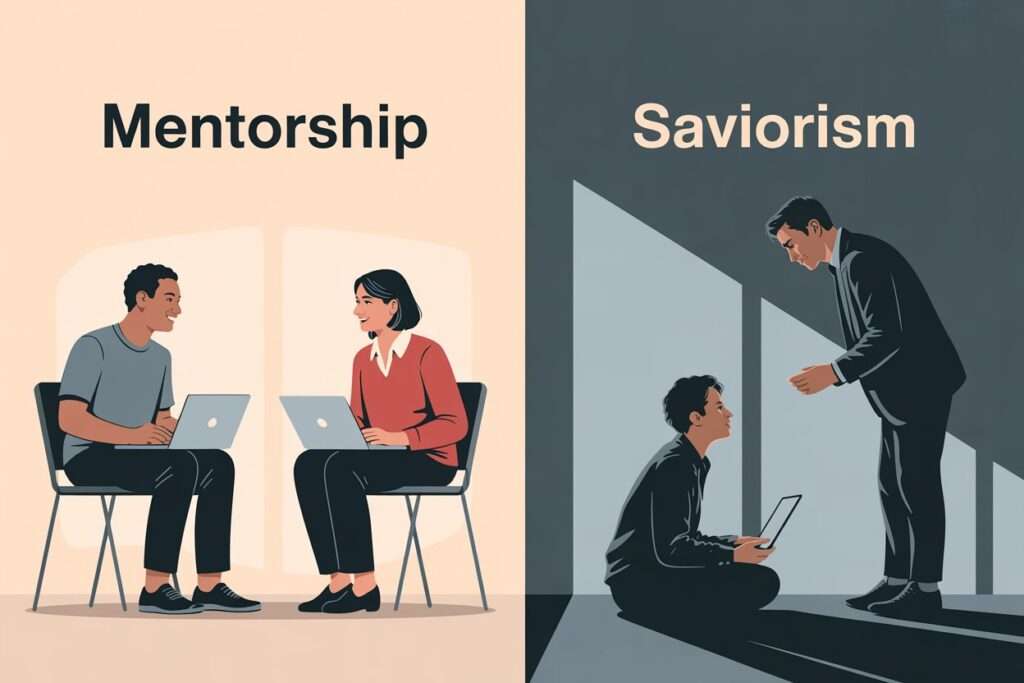
The Difference Between Mentorship and Saviorism
Natasha draws a line that does not get drawn often enough in conversations about professional development.
Effective mentorship is not about one person rescuing another. That dynamic, what she calls saviorism, ultimately disempowers the person it claims to help. It positions them as someone who needs saving rather than someone who needs support. And it often reflects the mentor’s need to feel needed more than the mentee’s actual growth.
Real mentorship is a two-way relationship. It requires the person seeking support to know what they actually need and to communicate it clearly. It requires them to bring something of value to the relationship, curiosity, commitment, follow-through. And it requires the mentor to invest with intention rather than just good intentions.
For women in STEM building their professional networks, this distinction matters practically. Know what you are looking for before you approach someone for mentorship. Be specific about the kind of support that would actually move you forward. And show up as someone who takes the relationship seriously enough to prepare for it.
Sponsorship is a separate and equally important piece. A sponsor does not just advise. They advocate. They put their name and their influence behind you in rooms you are not yet in. Building relationships with people willing to do that is one of the highest-return investments you can make in your career.
Find Your People
Natasha’s journey from dismissed patient to health tech founder did not happen in isolation. It happened because she found her voice, built her knowledge, and refused to stop asking questions. The African Women in STEM community exists to be part of that kind of support for you.
Join the membership here and build alongside women who are doing exactly the same.
Owning Your Power Starts Before the Boardroom
When the conversation turns to power, Natasha does not go where you might expect.
She does not talk about negotiation tactics or visibility strategies. She starts earlier. With self-knowledge.
“When it comes to owning your power, it’s getting to know who you are. Outside of what the world calls you…”
Before you can own a room, you have to know who you are outside of it. Outside of your title, your credentials, and the roles that other people have assigned to you. You have to build a sense of self that does not collapse when a system pushes back or when your expertise gets questioned by someone with more institutional authority than actual knowledge.
That kind of groundedness is not passive. It is something you build deliberately, through honest self-reflection, through understanding your values, and through the ongoing work of staying curious about who you are becoming.
Curiosity is something Natasha returns to repeatedly. Staying genuinely curious, about your field, about the problems you are trying to solve, about the people around you, keeps you adaptable in a way that no single skill or qualification can.
And in a professional landscape being reshaped by AI and automation, adaptability is one of the most valuable things you can cultivate.
Listen to the full episode and hear it in her own words.
Be an Advocate, Not Just a Bystander
Natasha closes with something that extends well beyond her own story. She asks listeners to become advocates.
For their own health. Women should push back when their symptoms are dismissed. They should seek second opinions. They should document their experiences and demand to be taken seriously by the systems built to care for them. Self-advocacy in healthcare is not optional. It is survival.
For women-led innovation. The work that women like Natasha are doing in health tech, AI, and beyond deserves amplification, investment, and active support. Not just admiration from a distance.
For equity. The systemic dismissal of women’s pain is not only a medical failure. It is a leadership failure, a policy failure, and a values failure. The people positioned to change it are not only doctors and researchers. They are leaders across every sector, including the women reading this right now.
You are one of those people. And the question Natasha’s story raises is a simple one.
What are you going to do with that?
Connect With Natasha Henry
- LinkedIn: Natasha Henry
- Myocurrent on LinkedIn: Myocurrent
- Email: natashahenry@nyu.edu