Most people solve problems by looking at the broken part.
Chioma Aso looks at the whole system.
That difference in perspective has taken her across industries that most people would never connect: manufacturing, aerospace, gaming, nonprofit leadership, and entrepreneurship. And it is the same perspective she is now passing on to the next generation of women in STEM through her nonprofit, STEAM Divas.
In this episode of Lunch with Leaders, Adaeze Iloeje-Udeogalanya sits down with Chioma Aso, systems engineer, entrepreneur, and founder of STEAM Divas, for a conversation that covers systems thinking, the power of cultural knowledge in tech, how to build teams that actually work, and why cutting off your creative side is costing you more than you realise.
This is a conversation full of frameworks you can use immediately. And it starts with a mindset shift that changes how you see everything.
Your Background Is Not a Liability
There is a persistent and damaging idea in STEM that the most valuable thing you bring to the table is your technical knowledge. Your degree. Your certifications. The hard skills that can be listed and measured.
Chioma challenges that directly.
She argues that your cultural knowledge, your life experiences, the way your specific background has taught you to see the world, are not extras sitting alongside your technical expertise. They are part of your technical expertise. They shape how you frame problems, which questions you think to ask, which solutions you are willing to consider, and which communities you are able to build trust with.
“When you bring in diverse talents, you are basically learning in a much broader field.”
Furthermore, this is not just a feel-good diversity talking point. It is a practical argument about the quality of solutions. Homogeneous teams solve problems within a narrow frame. Diverse teams, people who have genuinely different ways of seeing and thinking, expand that frame. They catch the blind spots, ask the uncomfortable questions and find the solutions that a room full of similar perspectives would never reach.
For African women in STEM, this reframe matters enormously. The experiences that made you different in certain rooms are not weaknesses to manage. They are assets to deploy.
What Systems Thinking Actually Means
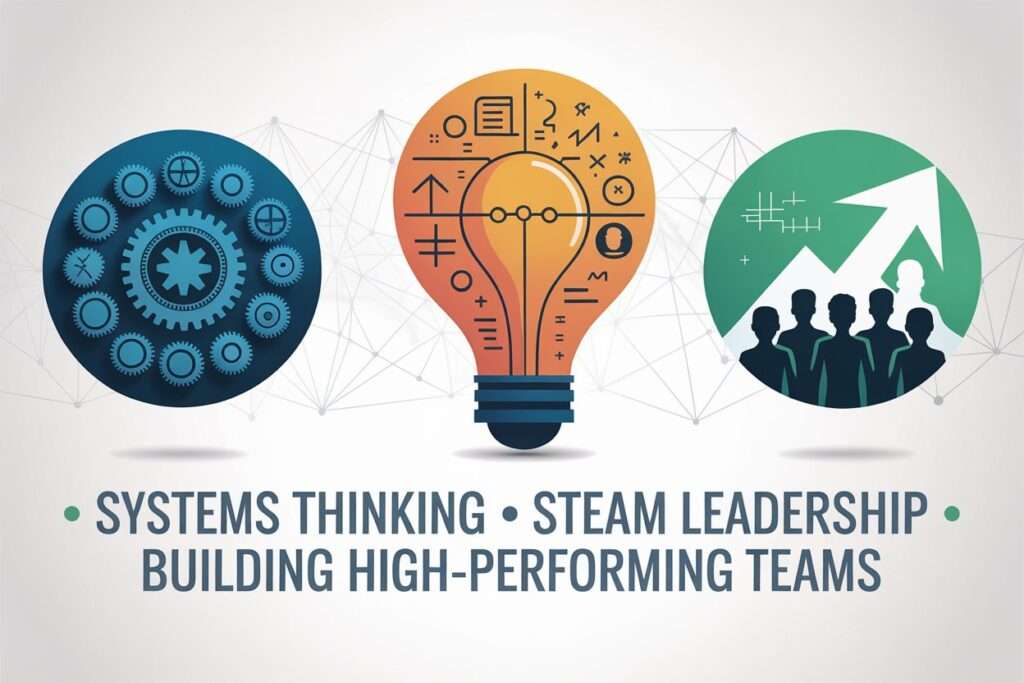
Chioma describes systems thinking as a holistic approach to problem-solving. Rather than isolating a single component and fixing it in isolation, systems thinking asks how all the parts of a system are connected and how a change in one place creates ripples across the whole.
“The whole world itself is the systems, and everything we do is systems.”
On the surface, that sounds abstract. But Chioma makes it concrete.
Likewise, when you join a new organisation and something is not working, the instinct is often to look for the broken part. The underperforming team member. The flawed process. The missing resource. Systems thinking asks a different question. It asks why that part is behaving the way it is, what pressures are acting on it, what incentives are shaping it, and what would actually have to change for the whole system to function differently.
That kind of thinking is what has allowed Chioma to move across industries that look completely different on the surface. Manufacturing and gaming do not seem related. But both are systems. Both have components, inputs, outputs, feedback loops, and points of failure. Once you understand how to read a system, the industry almost becomes secondary.
Listen to the full episode of Lunch with Leaders here.
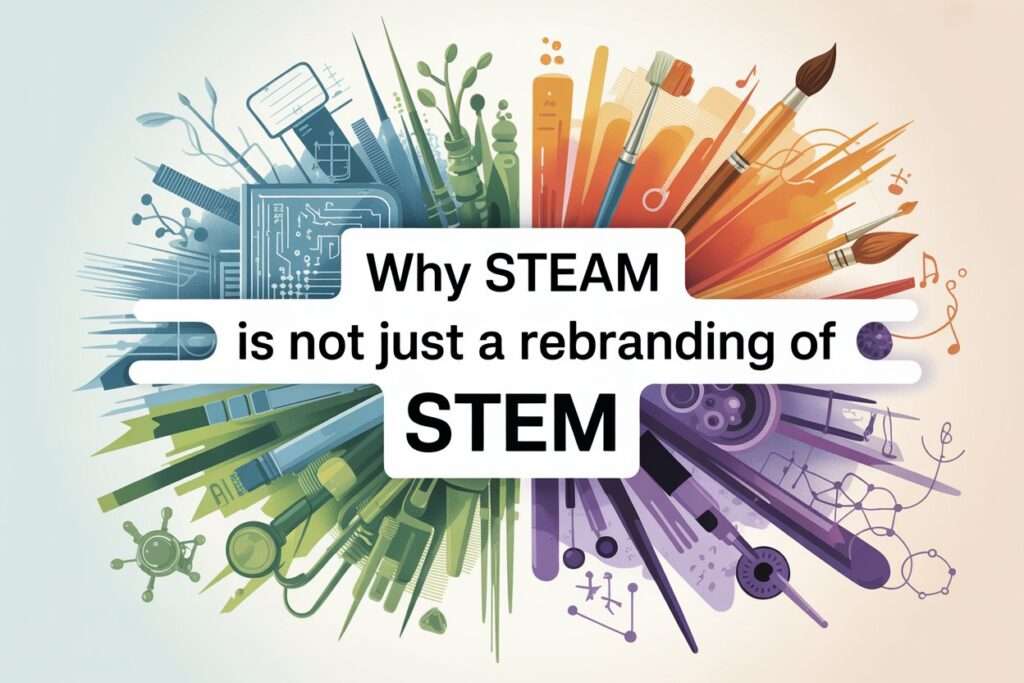
Why STEAM Is Not Just a Rebranding of STEM
Chioma is passionate about the arts in a way that might surprise you coming from a systems engineer. But her argument is grounded in something real.
She founded STEAM Divas, a nonprofit dedicated to empowering young girls by integrating the arts into STEM education, because she had watched what happens when the creative side gets cut off early.
It limits potential.
Innovation is not just a technical process. It is an imaginative one. The ability to envision something that does not yet exist, to design for human experience, to communicate complex ideas in ways that actually land, these are creative skills. And they are skills that STEM education, in its most narrow form, consistently undervalues.
“I call myself the gateway drug to STEM. I’m hoping that I can trick them into looking at STEM differently.”
Additionally, through hands-on workshops where girls build with electronics and explore the chemistry behind everyday products, Chioma watches something shift. Girls who came in uncertain leave as confident innovators. Not because they were taught that STEM is important. But because they experienced it as something that connects to who they already are.
The arts are not a distraction from STEM. They are what makes STEM human. And organisations that understand this build better products, communicate more effectively, and create environments where more people can thrive.
Three Productivity Personalities
One of the most immediately useful frameworks in this conversation is Chioma’s work on what she calls Productivity Personalities. It is the subject of her upcoming book, and once she explains it, you will start seeing it everywhere.
She identifies three distinct types:
Early Starters are the ideators. They come alive at the beginning of a project, generate energy, possibilities, and momentum. Also, they are the people who make a new initiative feel exciting and possible. But ask them to manage the detail-heavy middle of a long project and their engagement drops off fast.
Deep Divers are the specialists. They go deep on a single area with a focus and thoroughness that Early Starters rarely match. They are the people who actually understand the system at a technical level. But they can struggle with the ambiguity of the early stages and may find the finishing line as frustrating as the Early Starters find the middle.
Final Finishers are the implementers. They take things across the line. They have the discipline, the attention to detail, and the tolerance for the unglamorous work of completion that many people lack. Without them, most projects would die in the messy middle.
The insight Chioma draws from this is not just interesting. It is actionable.
Also, most team conflict and burnout does not come from people being lazy or incompetent. It comes from people being asked to operate consistently outside their natural productivity style. An Early Starter managing a project through its execution phase is going to struggle. A Final Finisher being asked to lead the creative visioning process is going to feel out of their depth.
Building a genuinely high-performing team means understanding which personalities you have in the room and building structures that let each of them contribute from their strengths rather than constantly fighting against their limitations.
This connects directly to the kind of intentional team leadership explored in the episode on Systems Thinking for Building Influence and High-Performing Leadership Teams, which is essential listening alongside this one.

When to Protect Your Ideas and When to Share Them
One of the most practically useful conversations in this episode is about intellectual property. A topic that many women in STEM avoid because it feels either too legal or too self-promotional to bring up comfortably.
Chioma is direct about it. If you are building something genuinely innovative, understanding when to protect your ideas and when to share them is not optional. It is part of responsible entrepreneurship and professional leadership.
Additionally, the short version of her framework is this: share concepts freely to build relationships, generate feedback, and create collaboration. Protect specifics, the methodology, the implementation, the unique approach, when the value you have created is specific enough to be replicated.
Knowing the difference between a concept worth sharing and an implementation worth protecting is a skill. And it is one that most STEM education and corporate training simply does not teach.
The Next Generation Is Watching How You Lead
Chioma’s vision for STEAM Divas is rooted in something she feels personally. The next generation of women in STEM is not just watching what women in the field have achieved. They are watching how those women carry themselves, how they treat creativity, how they talk about failure, and whether they make space for girls who do not fit the narrow mould of what a STEM person is supposed to look like.
Also, every woman in STEM who leads visibly, who speaks honestly about her journey, who advocates for the integration of creativity with technical skill, is doing something that matters beyond her own career.
She is changing what the next generation believes is possible for them.
That is the kind of legacy that does not show up on a performance review. But it is the kind that lasts.
Final Thoughts
Chioma also speaks honestly about the transition from corporate career to entrepreneurship. It is a path that many women in STEM consider and fewer actually take, often because the risks feel too high and the roadmap too unclear.
In addition, her perspective is grounded. The skills you build in corporate environments, systems thinking, project management, understanding how organisations work, are not wasted when you go out on your own. They are the foundation you build on.
What changes is the structure. In a corporate environment, the structure exists around you. As an entrepreneur, you have to build it. That shift requires a different kind of self-awareness and a different relationship with uncertainty.
But for women who have spent years operating effectively within systems they did not design, building their own is not as foreign as it might seem. They already understand how systems work. They just get to build one that actually fits what they are trying to create.
Chioma Aso is the kind of thinker who makes you want to go back and rethink things you assumed were settled.
Listen to the full episode of Lunch with Leaders now.
Connect With Chioma Aso
- Website: steamdivas.org
- LinkedIn: @steamdivas
- Instagram: @steamdivas
- Facebook: @steamdivas