
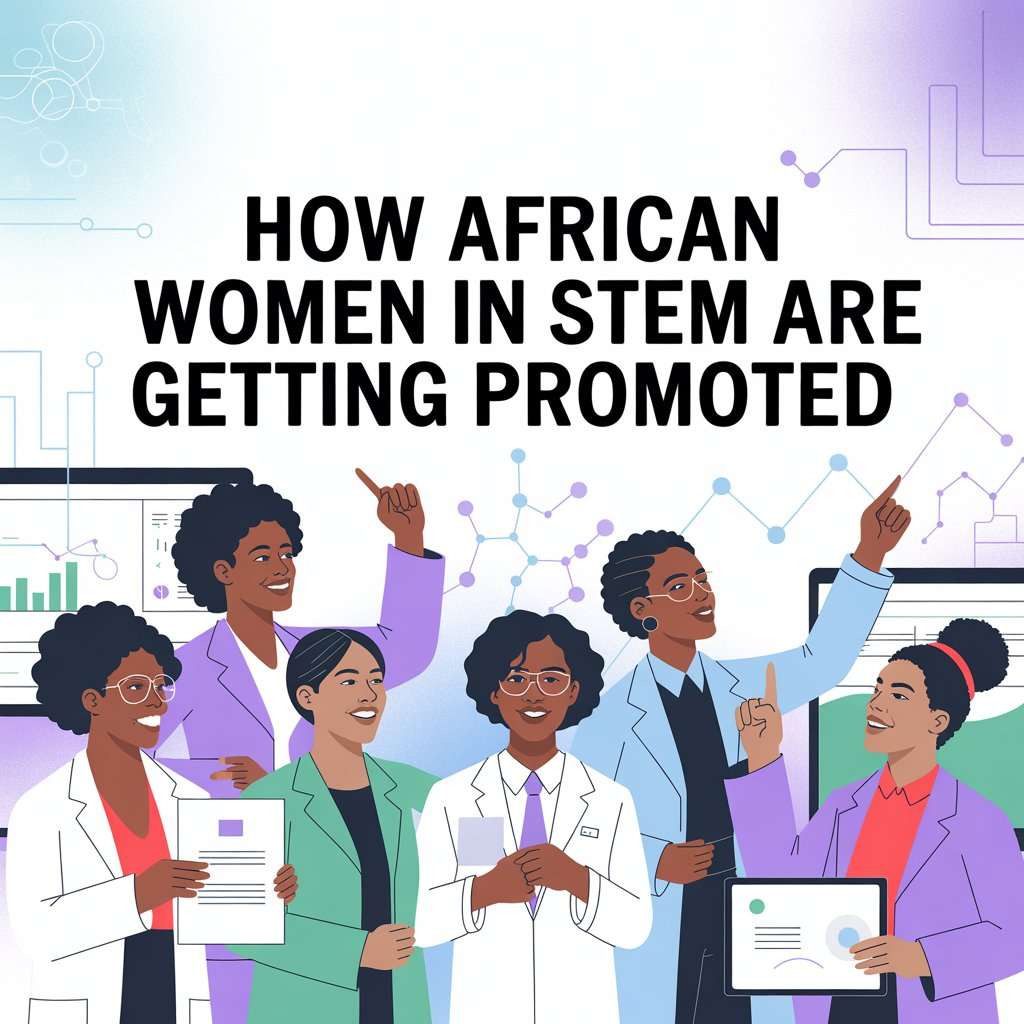
You know that feeling when you look around the leadership table and realize you’re still not sitting at it? When another round of promotions gets announced and your name isn’t on the list, even though you delivered three major projects this year while your colleague who got promoted delivered one?
If you’re a woman in STEM, especially in Africa, you’ve probably lived some version of this. You’ve watched less qualified colleagues get promoted while you keep being told to “wait your turn.” Also, you’ve been the only woman in the room so many times you’ve stopped counting. You’ve solved problems nobody else could solve, only to have someone else get credit.
Here’s what nobody tells you: excellence alone doesn’t get you promoted. Technical brilliance doesn’t automatically translate to influence. Being the best engineer, scientist, or mathematician in your department won’t necessarily land you in leadership.
This isn’t about working harder. You’re already working hard enough. It’s about understanding how influence actually gets built, how decisions about promotions actually get made, and what separates women who advance from those who stay stuck despite exceptional performance.
The Broken Rung Nobody Talks About
Research reveals something that African women in STEM know all too well: for every 100 men promoted to manager, only 81 women make that leap. For women of color, that number drops to just 77.
This isn’t a pipeline problem. Women are graduating from STEM programs. They’re entering the workforce. They’re performing well. The breakdown happens at that crucial first step into management, what researchers call “the broken rung.”
Once you fall behind at this stage, catching up becomes exponentially harder. Men get their first management experience earlier, building skills and networks that compound over time. Women keep waiting for their turn, not realizing the game has different rules than they thought.
Here’s the uncomfortable truth: the qualities that made you successful as an individual contributor can actually work against you when competing for leadership roles. Being the reliable person who gets things done, the one who says yes to every project, the team player who never makes waves? Those behaviors signal “great employee” not “future leader.”
What Actually Builds Influence
According to Harvard Business Review research, successful women in STEM employ six key strategies that differentiate them from peers who plateau: telegraphing confidence, being bold, leveraging networks, sponsoring others, remaining authentic, and honing personal brands.
Let’s break down what these actually mean in practice.
Telegraphing confidence doesn’t mean being loud or arrogant. It means speaking with conviction about your work, owning your achievements without qualifying them, and presenting ideas as solutions rather than suggestions. When you say “We should consider…” instead of “We could try…” you sound like someone managing a team, not joining one.
Being bold means volunteering for high-visibility projects even when you don’t feel 100 percent ready. It means speaking up in meetings even when you’re the only woman. It means asking for promotions before you think you’ve “earned” them because guess what? Your male colleagues are already doing exactly that.
Leveraging networks goes deeper than collecting LinkedIn connections. It’s about strategically building relationships with people who can advocate for you in rooms you’re not in. Every promotion decision involves conversations you’re not part of. Who’s speaking your name in those conversations?
The women advancing fastest aren’t necessarily the best engineers. They’re the ones who’ve mastered the unwritten rules about how influence gets built and demonstrated. Want to learn these strategies? Understanding leadership advancement frameworks specific to women in STEM provides the roadmap you need.
The Visibility Paradox
Here’s something that keeps many African women stuck: believing that good work speaks for itself. It doesn’t. Not in environments where your contributions are systematically undervalued, where you have to prove yourself repeatedly, where credit for your ideas goes to whoever repeats them loudest.
You need visibility. Not the uncomfortable, self-promotional kind that feels inauthentic. Strategic visibility that positions you for opportunities.
This means documenting your wins where decision-makers see them. It means speaking at conferences, writing thought leadership pieces, participating in company initiatives beyond your job description. It means ensuring your manager’s manager knows your name and what you’ve accomplished.
Many African women resist this, viewing it as political game-playing rather than genuine merit-based advancement. But here’s the reality: your male colleagues are already doing this. They’re grabbing microphones, claiming credit, making sure their wins get noticed. If you’re not doing the same, you’re invisible no matter how brilliant your work.
Visibility also means choosing the right projects. Not every assignment advances your career equally. The project that showcases your technical skills to senior leadership is more valuable than the project nobody sees. The cross-functional initiative that builds your network is more strategic than the solo work that keeps you isolated.
Want to learn how to build visibility without feeling inauthentic? Listen to conversations with women who’ve navigated this successfully on the Lunch with Leaders podcast.
Why Mentorship Isn’t Enough (But Sponsorship Changes Everything)
Most women in STEM have mentors. Fewer have sponsors. This distinction matters more than almost anything else for career advancement.
A mentor gives you advice. A sponsor uses their political capital to create opportunities for you. A mentor helps you navigate challenges. A sponsor fights for your promotion in meetings you’re not invited to. A mentor answers your questions. A sponsor recommends you for high-visibility projects without you asking.
Research shows that mentorship increases career progression by 30 percent. But sponsorship? That’s what gets you promoted.
The challenge for African women in STEM is that sponsorship relationships often form informally, through networks and social connections that systematically exclude us. Your male colleagues grab drinks after work with senior leaders. They play golf on weekends. They build relationships in spaces where women, especially women of color, aren’t present.
You need to create sponsorship relationships deliberately. This means identifying senior leaders whose support would actually move your career forward. It means delivering excellent work that makes them look good. It means explicitly asking for their advocacy, not just their advice.
Here’s what that conversation sounds like: “I’m interested in moving into management, and I’d value your support in getting there. Would you be willing to recommend me for leadership opportunities when they arise?” Most people never have this conversation. They hint around the edges, hoping someone will spontaneously become their sponsor. Sponsors rarely emerge that way.
Transformative leadership requires learning from those who’ve successfully navigated these dynamics. Discover 6 powerful lessons from Tamiko Nettles for women in STEM leadership that break down exactly how to build these crucial relationships.
The Strategic Network
According to McKinsey research on women in STEM leadership, one of the most effective strategies for advancement is building what they call “experience capital”: the combination of skills, networks, and opportunities that boost earning potential and career momentum.
Your network isn’t just nice to have. It’s career infrastructure. But not all networking is equally valuable. Coffee chats that never lead anywhere aren’t strategic. Collecting business cards isn’t strategic. What is strategic?
Building relationships with three specific groups:
Peers at your level who can become mutual advocates as you all advance. These relationships compound over time. The peer who becomes a VP in another department can open doors you didn’t know existed.
Leaders two levels above you who can see you as future leadership material rather than just good at your current job. These relationships give you visibility where promotion decisions happen.
People in adjacent fields who can recommend you for opportunities outside your immediate circle. Some of the best career moves come from unexpected sources.
The African Women in STEM community creates exactly these strategic networks. When you join, you’re not just getting access to other women at your level. You’re connecting with women who’ve already navigated the path you’re on, who understand the specific challenges African women face in STEM, and who can advocate for you in ways that accelerate your advancement.
Stop networking alone. Join a community that networks strategically.
The Authenticity Balance
One of the most exhausting aspects of building influence as an African woman in STEM is the constant negotiation between being authentic and being palatable. You’re told to “be yourself” while also getting feedback that you’re “too direct” or “too aggressive” or “too emotional” for behaviors that wouldn’t raise eyebrows from male colleagues.
Research shows that women leaders face a double bind: behaviors that demonstrate leadership competence (being direct, making tough decisions, speaking with authority) are often perceived negatively when women do them. Yet women who adopt stereotypically feminine behaviors are seen as lacking leadership qualities.
So what do you do?
Successful women in STEM find what Harvard Business Review researchers call “authentic leadership”: understanding what you stand for, being consistent with those values, and communicating in ways that feel genuine to you while also being effective in your organizational context.
This doesn’t mean compromising who you are. It means being strategic about how you show up. Just so you know, you can be direct without being harsh, collaborative without being a pushover. You can demonstrate confidence without mimicking male aggression.
Pay attention to women leaders you admire. Notice how they navigate this balance. What specific phrases do they use? How do they handle pushback? When do they choose to be diplomatic versus when do they draw hard lines?
Building influence authentically also means being unapologetic about bringing your full perspective to the table. Your experience as an African woman isn’t a deficit to overcome. It’s a viewpoint that’s missing from most STEM leadership teams. Companies are starting to recognize that diversity drives innovation. Use that.
The Promotion Conversation
Let’s talk about the actual moment that determines whether you get promoted: the conversation where you advocate for yourself.
Most women wait to be offered promotions. They believe that if they’re doing good work, someone will notice and reward them. Men ask for promotions 18 months before they’re “ready.” Women wait until they’re overqualified.
Here’s how to have the promotion conversation strategically:
Don’t ask if you’re ready for promotion. Asking signals uncertainty. Instead, communicate your interest: “I’m ready to take on more leadership responsibility, and I’d like to discuss a timeline for moving into a management role.”
Bring receipts. Document your impact in business terms. Not “I worked really hard on this project” but “I delivered this project 20 percent under budget, which saved the company $X and opened opportunities for Y initiative.”
Address the unspoken concerns directly. If you suspect stakeholders question whether you can handle leadership, don’t ignore it. Address it head-on: “I know I’d be the youngest person at this level. Let me share examples of how I’ve already demonstrated strategic thinking and team leadership.”
Ask what success looks like. If you’re not getting promoted now, get specific criteria for what would need to change. This prevents the goalposts from moving later.
Set a timeline. Don’t leave it open-ended. “I’d like to revisit this conversation in three months. What specific outcomes would demonstrate I’m ready for that next level?”
The women who advance fastest don’t take no as a final answer. They take it as information about what they need to demonstrate differently, who they need in their corner, and what timeline is realistic.
When to Stay vs. When to Leave
Sometimes the barrier to advancement isn’t you. It’s the organization.
If you’ve been in the same role for three years despite strong performance, if you’ve had the promotion conversation multiple times with no timeline, if you’re consistently passed over for people less qualified, if you’re one of very few women in technical roles with no path to leadership, it might be time to leave.
I know this is hard advice. You’ve invested time building expertise. You have relationships. You know the systems. Starting over somewhere else feels daunting.
But here’s what’s harder: staying in an organization that will never promote you while your career stagnates and your peers advance elsewhere. Every year you spend waiting is a year of compounded opportunity cost.
Some organizations genuinely don’t promote women into technical leadership. They hire women, keep them in individual contributor roles, and promote men around them. If you’re in one of these organizations, no amount of strategic networking or visibility will change that fundamental dynamic.
How do you know the difference between “not yet” and “not here”? Look at the women ahead of you. How many women are in senior technical roles? How long did it take them to get there? Are there women of color in leadership? If the answers are “none,” “twice as long as men,” and “no,” you’re likely in a “not here” situation.
This is where community matters most. The African Women in STEM community connects you with women navigating similar decisions, companies that actively recruit talented women, and opportunities you won’t find through traditional channels.
Don’t navigate this alone. Get support from women who’ve been exactly where you are.
Building Your Personal Brand
You are not just an engineer, scientist, or technologist. You are a brand. What you’re known for matters as much as what you can do.
Personal branding feels uncomfortable for many women, especially in technical fields where we’re taught that credentials and competence should speak for themselves. But in reality, people make quick judgments about your leadership potential based on how you show up, what you talk about, and what you’re known for.
What’s your professional narrative? Can you articulate in two sentences what problem you solve and what makes your approach distinctive? When people think of your name, what comes to mind?
Building a personal brand doesn’t mean becoming someone you’re not. It means being intentional about what aspects of your authentic self you emphasize professionally.
Maybe you’re known for solving problems everyone else finds impossible or you’re the person who bridges technical and business thinking. Maybe you build teams that consistently outperform expectations. Whatever it is, own it. Talk about it. Let it become part of how people describe you.
This shows up in how you introduce yourself at conferences, what you highlight in performance reviews, what projects you volunteer for, what you write about on LinkedIn. Consistency matters. The same narrative, reinforced through different channels over time, builds recognition.
Your personal brand also determines what opportunities come to you. If you’re known for specific expertise, people think of you when relevant opportunities arise. If your brand is “reliable team player,” you get more work but not necessarily more leadership opportunities.
The Long Game
Building influence and getting promoted isn’t about one big moment. It’s about consistent small actions over time that compound into career momentum. Also, it’s having strategic conversations every quarter, not just during performance reviews. It’s building your network one coffee chat at a time, volunteering for one high-visibility project per year and documenting your wins monthly so you remember them during promotion discussions.
Likewise, it’s also about patience balanced with urgency. Patience because real influence takes time to build. Urgency because waiting too long in the wrong environment costs you years you can’t recover.
Your next promotion doesn’t have to be years away.
Join African Women in STEM and start building the influence and connections that advance careers.