There is a question worth asking before you chase the next title, the next role, or the next level of recognition.
What are you actually building toward?
Not in the abstract, motivational poster sense. In the real, specific, personal sense. What do you want people to say about the way you led? What do you want to have created? What do you want the people closest to you to have experienced because of how you showed up?
Courtney Quarterman has thought about this deeply. And her answer is one of the most grounding things you will hear in a career conversation this year.
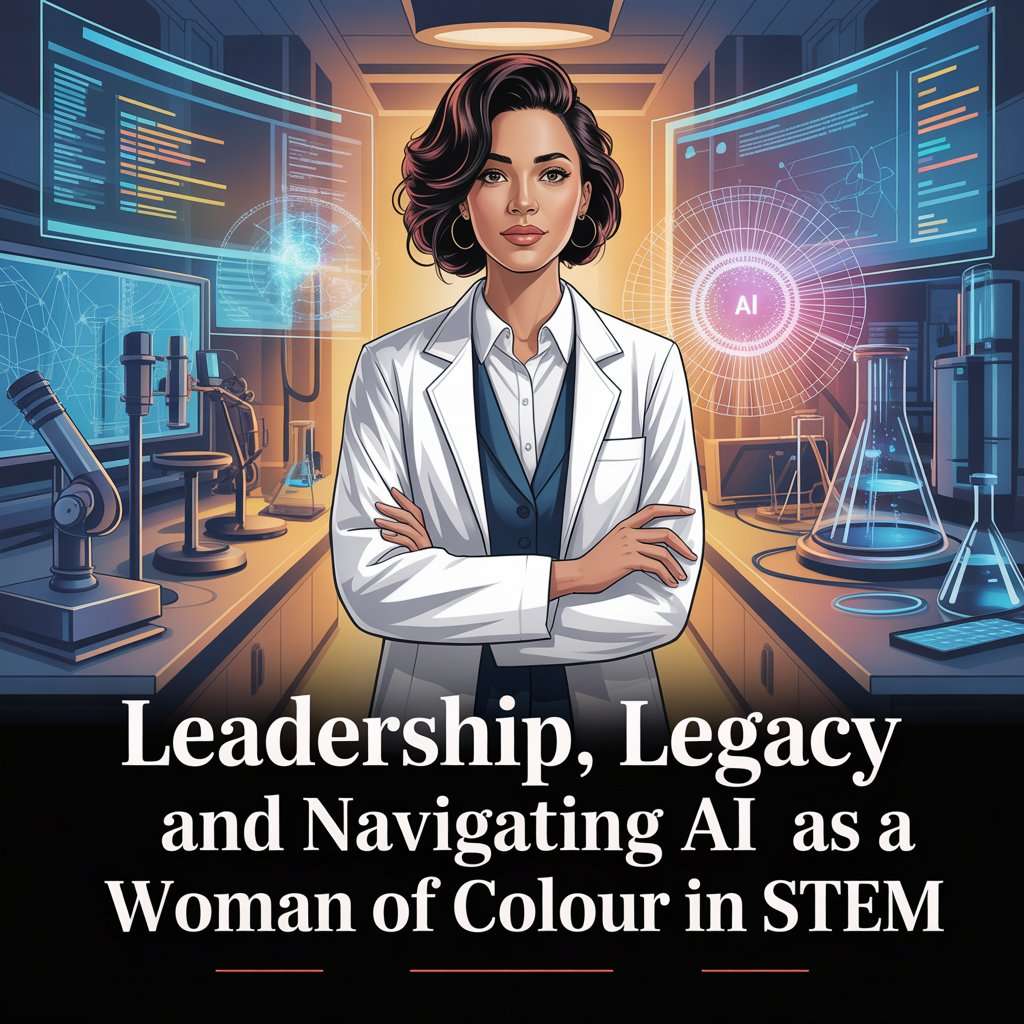
In this episode of Lunch with Leaders, Adaeze Iloeje-Udeogalanya sits down with Courtney, a twenty-year veteran in STEM education, PhD candidate in data science, and founder of the Sister Circle Collaborative, for a conversation about leadership, legacy, AI, and what it actually takes to build a career that means something.
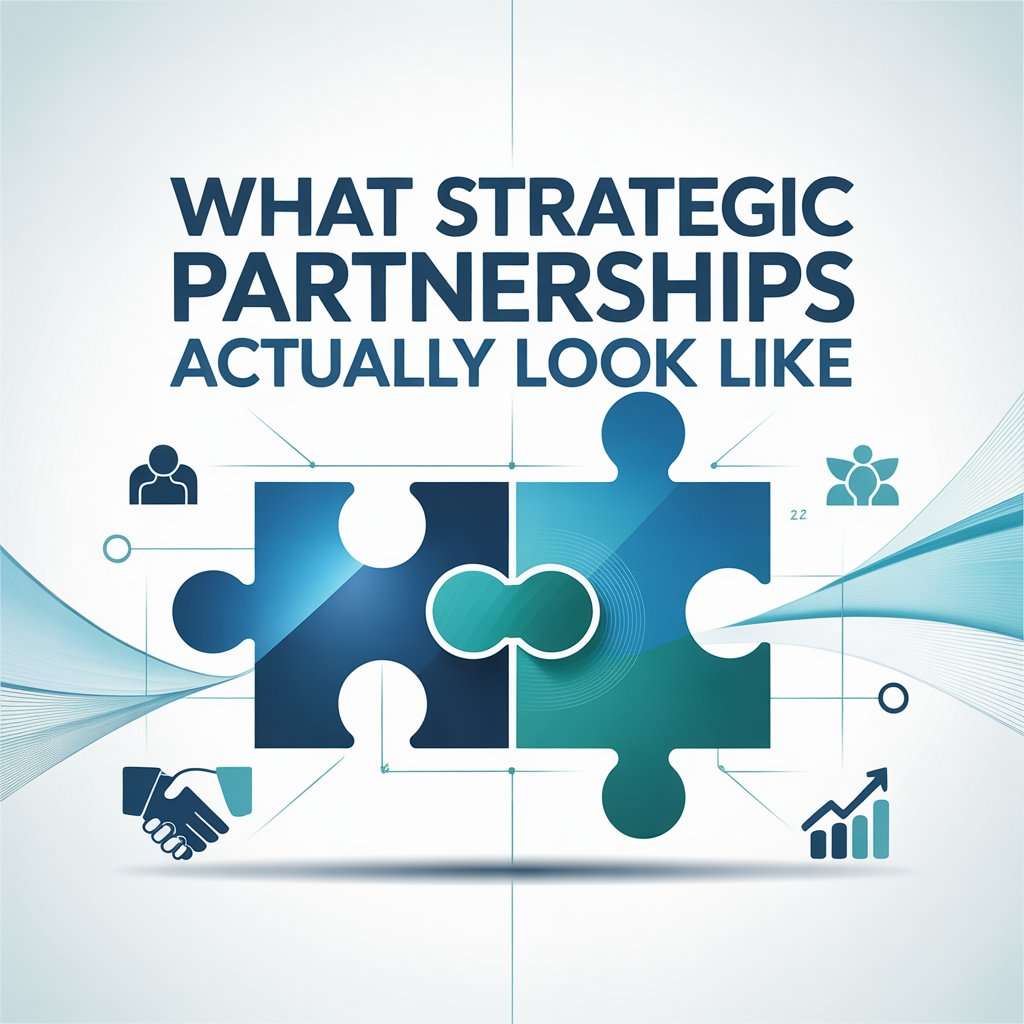
From 65% to 91%: What Strategic Partnerships Actually Look Like
Courtney’s understanding of leadership was not built in a boardroom. It was built in a school.
Early in her career, she served as Director of an alternative school in Savannah, Georgia. The graduation rate when she arrived was 65 percent. By the time she was done, it was 91 percent.
She did not achieve that by working harder alone. She achieved it by building what she calls the triangulation of community, institutions, and family support. She went outside the walls of the school and created intentional partnerships with the people and organisations that had a stake in those students’ futures.
“I really understood that strategic partnerships were key for workforce development.”
That early lesson has shaped everything she has built since. Real impact, the kind that actually changes outcomes, rarely comes from a single institution or a single person working in isolation. It comes from systems of support that are deliberately constructed and consistently maintained.
For women in STEM navigating organisations and trying to create change within them, this is a leadership model worth studying. The question is not just what you can do. It is who you can bring together and what becomes possible when you do.
Computational Thinking Is Not Just a Technical Skill
One of the most surprising and useful reframes in this conversation is Courtney’s argument about computational thinking.
Most people hear that phrase and think coding. Algorithms. Data pipelines. Technical work that requires a specific kind of training.
Courtney sees it differently. She breaks computational thinking into four pillars:
- Decomposition — breaking a complex problem into smaller, manageable parts
- Pattern recognition — identifying what is similar across different situations and using that to inform decisions
- Algorithmic thinking — developing a clear, repeatable process for reaching a goal
- Abstraction — focusing on what is essential and filtering out what is not
These are not just programming skills. They are strategic leadership skills. The ability to decompose a messy organisational problem into its component parts, to recognise patterns across different teams or initiatives, to build processes that are repeatable rather than reactive, and to stay focused on what actually matters rather than getting lost in noise.
Women in STEM who already think this way, whether or not they have ever called it computational thinking, are carrying a leadership toolkit that transfers across every industry and every level of seniority. The key is recognising it as such and applying it deliberately.
Listen to the full episode of Lunch with Leaders here.

You Are the Secret Sauce: AI Is the Tool.
The conversation about AI and what it means for women in STEM is one that generates more anxiety than it needs to. Courtney cuts through that anxiety with a clarity that is worth sitting with.
“AI cannot replace us. We bring relational capacity.”
“The magic is in us, because you can give two people the same tool and have completely different results.”
AI is powerful. It processes information at a scale and speed that no human can match. It can generate, analyse, summarise, and predict in ways that are genuinely useful. None of that is worth dismissing.
But the outputs of AI are only as valuable as the judgment, creativity, and relational intelligence of the person using it. Two people with identical access to the same AI tools will produce vastly different results based on what they uniquely bring to the interaction. Their strategic thinking. Their understanding of context. Their ability to ask the right questions. Their capacity to translate outputs into something that actually serves human needs.
“Let AI enhance your creative skillset. It’s not a replacement. It’s an enhancement.”
For women of colour in STEM specifically, Courtney is direct. The relational capacity, the creativity, the hard-won perspective that comes from navigating complex systems that were not designed for you, these are not soft extras sitting alongside your technical skills. They are the differentiators that no algorithm can replicate.
“We are the secret sauce to everything, particularly as Black women in STEM.”
Listen to Courtney Quarterman on Lunch with Leaders now.

The Bias Nobody Names Out Loud
Courtney addresses something in this conversation that most people either do not notice or do not feel comfortable naming.
Replicability bias.
“One of the hardest forms of bias to detect is replicability. People tend to promote people that look like them or sound like them.”
This is not the obvious, overt discrimination that is easier to call out. It is the quiet, unconscious tendency of decision-makers to see leadership potential in the people who most closely mirror their own image of what a leader looks like.
For women of colour in STEM, this bias operates as a structural headwind. It means that performing leadership excellently is sometimes not enough on its own, because the people with the power to recognise and reward that leadership are running it through a filter that may not include you.
Courtney’s response to this is not despair. It is strategy.
“People will only keep you as long as they value you. So just increasing our value proposition.”
The work is to make your value so clear, so specific, and so well-documented that it becomes difficult to overlook. That is not about performing more. It is about being visible in the right ways, to the right people, at the right times.
Visibility Is Intentional. So Make It That Way.
Courtney is practical about visibility in a way that moves the conversation beyond vague advice about “putting yourself out there.”
She offers concrete actions:
- Track your accomplishments consistently and specifically. Do not wait until performance review season to remember what you delivered. Build the habit of documenting wins as they happen.
- Build a dashboard that translates your work into the language of impact. Numbers. Outcomes. Before and after. The things that make your contribution legible to people who are not in the room when you do the work.
- Schedule quarterly stakeholder updates. Do not assume the right people know what you are doing. Create the touchpoints that keep your work visible to the people whose opinions of your capabilities matter most.
- Volunteer strategically. Not for everything. For the initiatives that give you visibility with senior stakeholders and that align with the direction you are trying to grow.
“When you stay ready, you don’t have to get ready.”
“Preparation plus opportunity meets success.”
Visibility is not about self-promotion in the uncomfortable sense. It is about ensuring that the work you are already doing is being seen by the people who need to see it. That requires intention. It does not happen by default.
For more on how to build the kind of strategic presence that actually moves your career forward, the episode featuring Dr. Nikki Harris on authentic leadership is essential listening alongside this one.
Build in Community
Courtney built the Sister Circle Collaborative because she understood that women thrive when they are in genuine community with each other. The African Women in STEM membership exists for exactly that reason.
Join us here and connect with women who are doing this work alongside you.
Internal Barriers Are as Real as External Ones
One of the most honest moments in this conversation is when Courtney talks about the internal work.
It is easy, and necessary, to name the external barriers. Bias. Systemic inequality. Structures that were not built with women of colour in mind. Those are real and they deserve to be named.
But Courtney also refuses to stop there. She is equally honest about the internal barriers that women carry, the self-doubt, the burnout, the tendency to pour into everyone else while neglecting the inner work that sustains long-term leadership.
“I don’t want that to be my story, that I led others but struggled internally.”
That sentence carries weight. Because it is the story of so many high-achieving women who have built impressive careers on the outside while quietly running on empty on the inside.
Courtney’s message is not to slow down your ambition. It is to build the internal infrastructure that makes your ambition sustainable. To recognise the seasons of your life and what each one requires. To prioritise the self-care that is not a luxury but a leadership necessity.
“Excellence just takes time.”
That is permission, if you need it, to stop rushing. To build something that lasts rather than something that looks impressive until it breaks.
Listen to Courtney Quarterman on Lunch with Leaders now.
True Leadership Has Nothing to Do With Your Title
Courtney’s view of leadership strips it back to something essential.
“True leadership is not about the title. It really is having a heart.”
This lands differently depending on where you are in your career. If you are early on and chasing the title, it sounds like the kind of thing people say when they want to soften your ambition. But Courtney is not softening anything. She is making a more rigorous argument.
The leaders who create lasting impact are not the ones who accumulated the most impressive titles. They are the ones who built teams that could carry a vision forward without them. Who developed other leaders rather than just delivering their own results. Who showed up with genuine investment in the people around them, not just in the outcomes those people could produce.
That kind of leadership is not less ambitious. It is more demanding. And it is the kind that leaves something behind.
Listen to Courtney Quarterman on Lunch with Leaders now.
What Legacy Actually Looks Like
Near the end of the conversation, Courtney shares what she wants her legacy to be. And she says it simply.
“My legacy, I want it to be that she made the most of everything that she was given.”
Not the biggest title. Not the longest list of achievements. Not the most impressive CV. Just a life and a career fully used. Every opportunity taken seriously. Every gift put to work. Every person in her orbit left better than she found them.
“The light that shines bright should be brightest to those that are closest to us.”
That is the standard. Not the room you impress. The people you actually touch.
It is a question worth sitting with. If that is the measure of a life well led, how are you doing?
Connect With Courtney Quarterman
- LinkedIn: Courtney Quarterman
- Sister Circle Collaborative: Find her community and connect with her work
- Also follow her work with: AUC Data Science Initiative and AI Workforce Development Corp