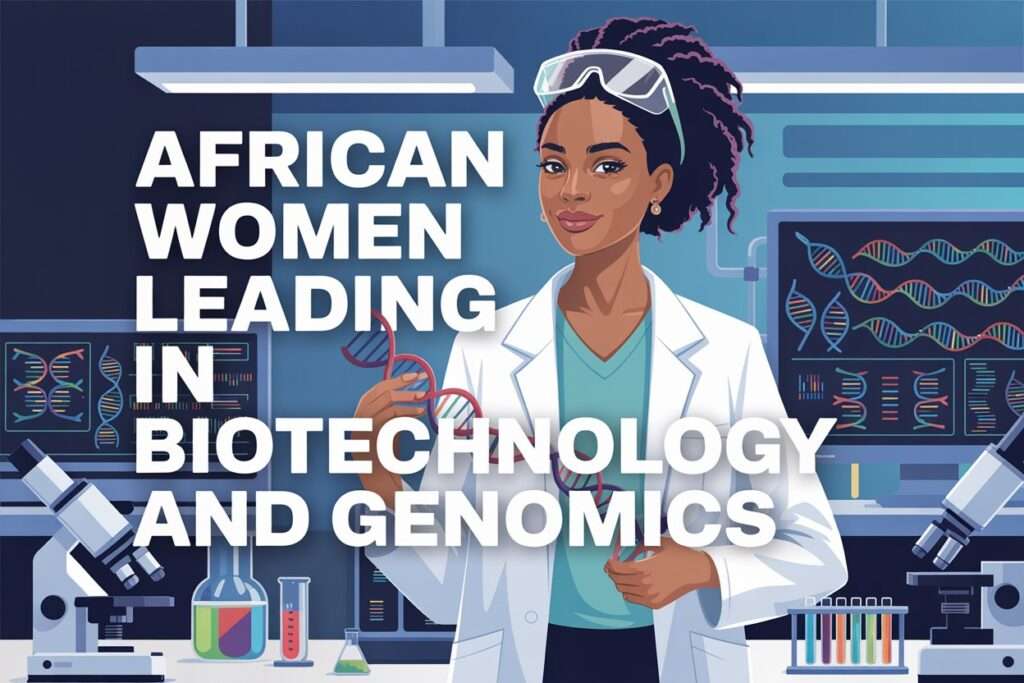
Science has a storytelling problem. For too long, the stories told about African science have been stories of absence — of what the continent lacks, what it needs, what it has yet to achieve. Those stories are not just incomplete. They are contradicted every single day by women like the six profiled in this post, who are running laboratories, founding biotech companies, sequencing genomes, and publishing research that the entire world is paying attention to.
Biotechnology and genomics — the sciences of manipulating living systems and reading the code written inside them — are among the most consequential fields of the 21st century. They will determine how we treat cancer, how we feed growing populations, how we respond to the next pandemic, and how we repair the human body when it breaks down. African women are not watching those fields from the sidelines. They are helping to lead them. Here are six of the most remarkable.
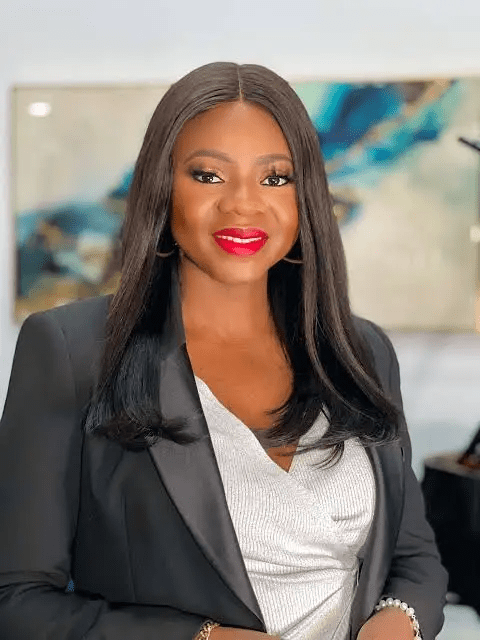
1. Dr. Adeola Olubamiji (Nigeria)
Most people, when they hear “3D printing,” think of plastic models or novelty keychains. Dr. Adeola Olubamiji thinks about bone. About cartilage. About what happens when you take living cells, suspend them in a special biological ink, and use a printer to build tissue layer by microscopic layer — tissue that a human body might one day accept as its own.
That is the field of biomedical engineering she has devoted her career to, and she has done so at the highest level. In 2016, she became the first Black person to earn a PhD in Biomedical Engineering from the University of Saskatchewan in Canada. That milestone was not the goal — it was a byproduct of going after a research question she genuinely cared about. But it matters, because it tells you something about the rooms she walked into and the doors she had to push open to get there.
Her doctoral and subsequent research focuses on 3D bioprinting and additive manufacturing — using precision technology to build biological structures like cartilage scaffolds and bone constructs from biocompatible materials. The idea is to create replacements for damaged or missing tissue that don’t require a donor match, don’t require the patient to wait on a transplant list, and are built to integrate naturally with the body over time. In healthcare systems where donor tissue is scarce and transplant surgery is economically out of reach for most people, the potential impact is enormous.
If you’re interested in other African women who are building and engineering at the frontier, check out our list of Top African Women in Engineering.
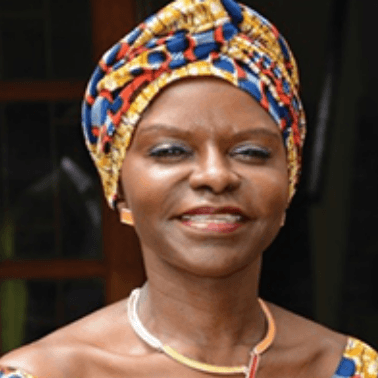
2. Dr. Francine Ntoumi (Republic of Congo)
If you had to design the ideal infectious disease scientist for Africa’s needs, you would probably describe someone who is technically rigorous, deeply collaborative, politically engaged enough to move institutions, and patient enough to build things that outlast individual careers. Dr. Francine Ntoumi is that person.
A molecular biologist based in Brazzaville, she has spent her career studying three diseases that have caused immeasurable suffering across the African continent: malaria, tuberculosis, and COVID-19. Her work on malaria alone spans decades. She has studied how the parasite responsible — Plasmodium falciparum — evolves genetic resistance to the drugs used to treat it, producing findings that have shaped treatment guidelines across Central Africa. When COVID-19 arrived and the world scrambled to understand which variants were spreading where, she organised genomic surveillance of SARS-CoV-2 across the Congo Basin, filling a gap that mattered enormously, because African variant data was dangerously underrepresented in global databases at the time.
But the work she may be most proud of is institutional rather than experimental. She founded the Congolese Foundation for Medical Research (FCRM), which exists for one reason: to keep talented Congolese scientists in Congo
She also co-leads the Africa COVID-19 Research and Innovation Initiative, coordinating genomic research across multiple African countries simultaneously. In a field where “capacity building” is often a line in a grant proposal rather than an actual commitment, Dr. Ntoumi has made it the centre of her professional life. The science and the institution-building are not separate projects for her. They are the same project.
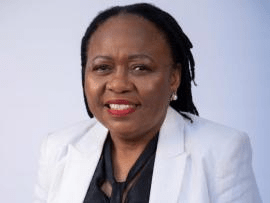
3. Prof. Keolebogile Shirley Motaung (South Africa)
There is a particular problem that plagues African biomedical research, and it is not a lack of ideas. The ideas are there. The publications are there. What is often missing is the bridge between a discovery made in a university laboratory and a treatment available to a patient in a clinic. That bridge requires someone willing to do the unglamorous work of commercialisation — navigating regulators, convincing investors, building manufacturing capacity — while still being credible as a scientist. Prof. Keolebogile Shirley Motaung has spent her career building that bridge.
Her scientific specialism is tissue engineering, which is the art and science of growing functional biological tissue outside the human body for therapeutic use. She focuses particularly on bone, cartilage, and connective tissue — the materials that hold the body together and that degrade, break, or disappear through disease, injury, and age. Her research explores how stem cells can be seeded onto biodegradable polymer scaffolds and guided to grow into tissue that, once implanted, behaves as the body expects tissue to behave. The clinical applications are significant: repairing articular cartilage damaged by arthritis, regenerating bone lost to infection or trauma, rebuilding connective structures without the need for donor grafts that may not exist.
She then took that research and did something most academics don’t: she started a company. Global Health Biotech (PTY) Ltd is a South African biotech firm she founded to translate her laboratory findings into real, commercially viable products.
To see more African women who are equally driven by both analysis and application, explore our guide to Top African Women in Mathematics.
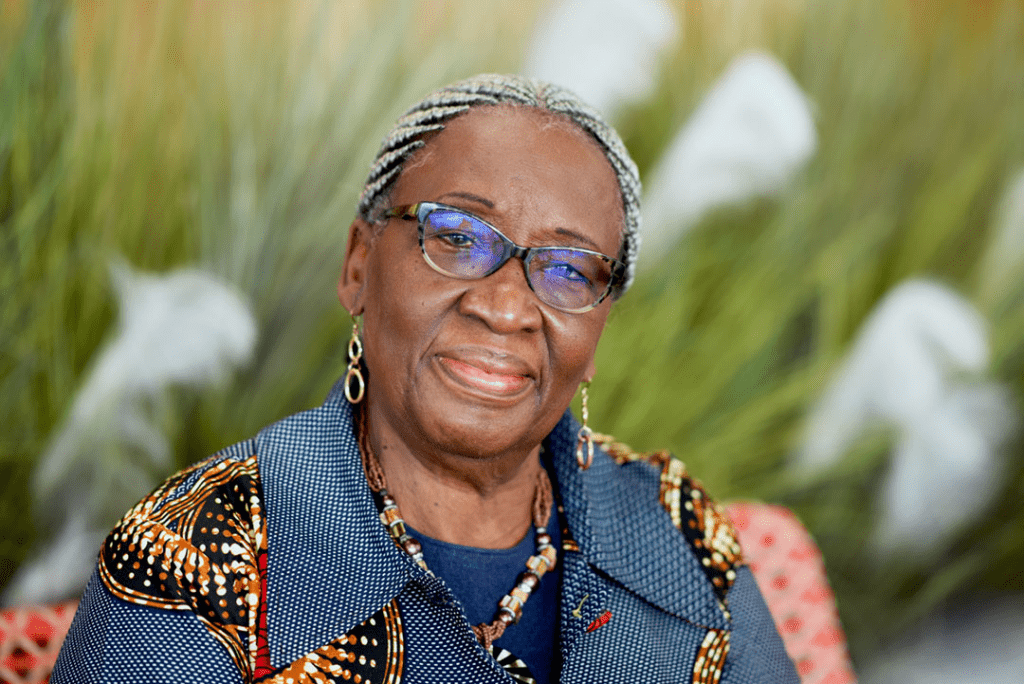
4. Dr. Rose Leke (Cameroon)
Malaria kills more than 600,000 people every year. The overwhelming majority are African children under five. It is one of the oldest, most studied, most funded infectious disease problems in the world — and it is still killing. Understanding why, and understanding what can actually stop it, requires the kind of deep immunological expertise that Dr. Rose Leke has spent four decades building.
A Professor Emeritus at the University of Yaoundé I in Cameroon, Dr. Leke is an immunologist who has devoted her career to understanding how the human immune system responds to Plasmodium falciparum — the most lethal malaria parasite — and how that response can be strengthened enough to protect the people most at risk. Her research has been particularly focused on pregnant women, who face a specific and devastating form of infection called placental malaria. In this condition, malaria parasites accumulate in the placenta, cutting off nutrients to the developing foetus, causing premature birth and low birth weight, and raising the risk of maternal death. Identifying the antibodies and immune mechanisms that provide protection during pregnancy is one of the core contributions of her career, and it feeds directly into the development of malaria vaccines and preventive treatment protocols.
Her influence runs through the institutions that set global health policy. She has served on advisory committees for the World Health Organisation, the Bill and Melinda Gates Foundation, and international research consortia, bringing Central African clinical data into rooms where the world’s malaria strategy gets decided.
If you are interested in meeting women of likemind, Join the African Women in STEM Community .
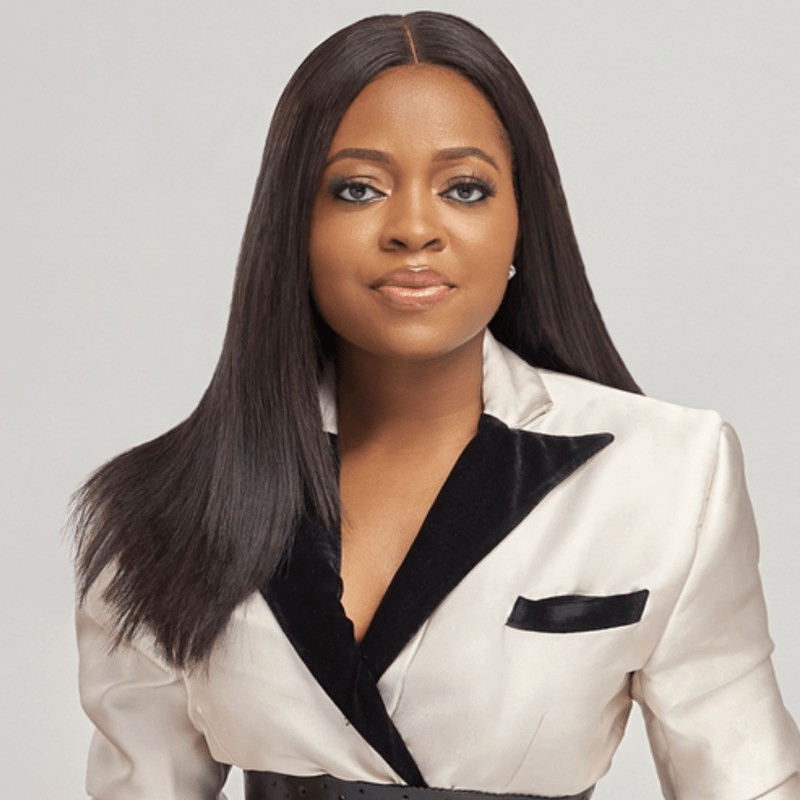
5. Ifeoluwa Dare-Johnson (Nigeria)
Most people in Nigeria who need a blood test have to do a series of calculations before they can get one. How far is the lab? Can I get there and back during work hours? Can I afford it? Will the results be trustworthy? For a significant portion of the population, the answer to enough of those questions is no — which means they simply don’t get tested. And when you don’t get tested, you don’t catch things early. And when you don’t catch things early in a country with stretched public health infrastructure, the consequences are severe.
Ifeoluwa Dare-Johnson looked at that problem and decided it was solvable. As a biochemist who understood both the science of laboratory diagnostics and the practical reality of Nigerian healthcare, she co-founded Healthtracka — a company that sends trained phlebotomists directly to your home to collect your sample, processes it at an accredited laboratory, and delivers your results digitally, usually within 24 hours. The test menu covers blood chemistry, hormone panels, reproductive health markers, infection screening, and more. It is clinical-grade science delivered at the point where people actually are, rather than at the point where institutions have decided to put laboratories.
The company has processed tens of thousands of tests and is expanding. It is the kind of biotech entrepreneurship that changes how healthcare actually functions for ordinary people — not just for the segment of the population that already has access. She is one of the most compelling examples of what happens when deep scientific knowledge meets a clearly identified human need and a founder willing to build the solution themselves.
6. Dr. Easter Syombua (Kenya)
Yam is not a fashionable research crop. The prestigious journals, the major international grants, the flagship programmes at elite institutions — they tend to follow maize, wheat, and rice. Those are the crops with global commodity markets behind them, the crops whose improvement is legible to investors and policymakers who think in terms of trade volumes and export revenues. Yam feeds more than 800 million people across West and Central Africa, the Caribbean, and parts of Asia, and it does not have any of that institutional backing. Dr. Easter Syombua chose it anyway.
Based at the International Maize and Wheat Improvement Center (CIMMYT) in Kenya and working in collaboration with the International Institute of Tropical Agriculture (IITA), Dr. Syombua specialises in yam genome editing — using molecular tools including CRISPR-based technologies to make targeted, precise changes to the yam genome in ways that improve the crop’s performance for the farmers who depend on it. The priorities are clear and urgent: disease resistance, nutritional improvement, and climate resilience.
What makes Dr. Syombua’s work especially significant is what it represents beyond the science itself. She is applying some of the most advanced molecular tools in modern biology to a crop that was, until recently, largely ignored by modern biology. That is not a compromise. That is a decision about what science is for. Her research demonstrates that genomics doesn’t have to follow prestige or commodity value — it can follow need. And in Africa, need points very clearly toward yam.
For more on African women leading through analytical and quantitative excellence, read our profile of Top African Women in Engineering.
These Six Women Are Not the Exception
There is a version of this post that frames these scientists as extraordinary individuals — rare exceptions in a landscape of absence. That framing is wrong, and it’s worth saying clearly. These six women are extraordinary, yes. But they are also early and visible representatives of a much larger pattern. Across the continent, in universities and research institutes and startup offices that rarely make international news, African women are doing serious science on serious problems and producing serious results.
What they need and what will determine whether the next generation reaches the same heights or greater — is the infrastructure of support that has historically been distributed very unequally: funding, mentorship, institutional backing, international networks, and communities of peers who understand both the work and the specific experience of doing it as an African woman.
If you want to get honest, unfiltered conversations with researchers and innovators across Africa. From groundbreaking discoveries to real challenges in STEM, each episode takes you behind the scenes. Listen to the African Women in STEM Podcast
Beyond the podcast, we’ve built a community where African women in STEM connect, collaborate, and support each other. Whether you’re a researcher, student, or simply passionate about science and technology, there’s a space for you here.