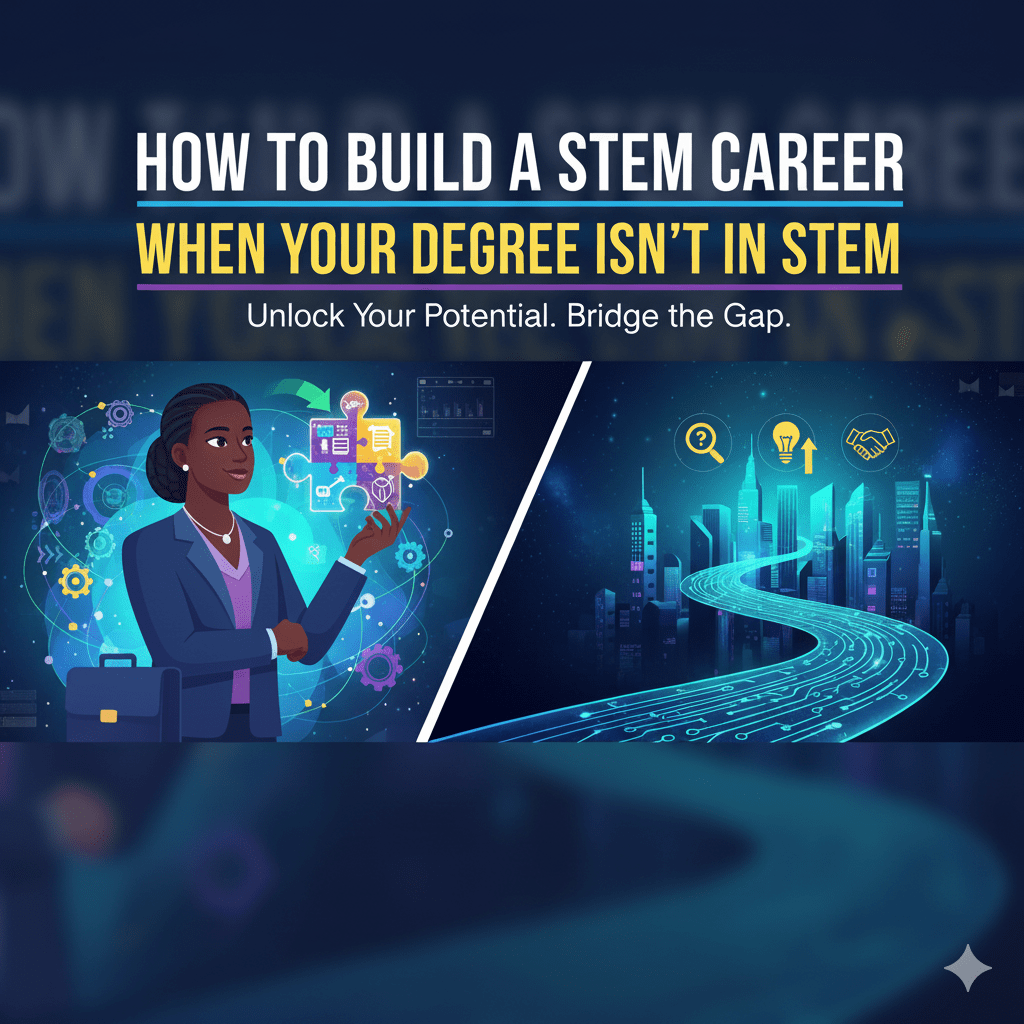
Many people dream of working in science, technology, engineering, or math but hold back because their degree isn’t in one of those fields. Maybe you studied business, communication, art, or even literature, and now you’re wondering if it’s too late to switch paths. The good news is that it’s not.
Your degree doesn’t define your potential or your future. What truly matters is your curiosity, your ability to solve problems, and your willingness to keep learning. STEM fields are constantly evolving, and they welcome people who bring fresh perspectives and different ways of thinking.
Today’s STEM industry values diversity, not just in gender or background, but also in skills and experiences. Teams made up of people with different viewpoints are often the ones driving the most creative solutions. That means your non-STEM background can actually be one of your biggest strengths.
In this post, we’ll walk through practical steps you can take to start or transition into a STEM career, even if your degree is in a completely different field. You’ll learn how to build credibility, develop relevant skills, and find your place in the ever-growing world of STEM. Whether you’re just getting started or looking to make a career change, this guide will help you see that your journey is not only possible but also full of exciting opportunities.
Why Non-STEM Backgrounds Are an Asset
If you come from a non-STEM background, you might think you’re at a disadvantage, but in reality, you bring something incredibly valuable to the table. STEM fields thrive on diversity of thought. When teams include people with different academic and cultural backgrounds, they tend to come up with more creative ideas and more effective solutions.
Think about it this way: innovation doesn’t happen in isolation. It happens when people with different perspectives look at the same problem and see different possibilities. That’s why your background, whatever it may be, is not a weakness—it’s an asset.
For example:
- A psychology graduate can bring deep insights into human behavior, which is crucial in fields like user experience (UX) design, artificial intelligence, or health technology.
- A business major might excel in data analytics, project management, or operations, bridging the gap between technical teams and business goals.
- Someone with a background in education or communications can play a key role in STEM outreach, science communication, or training, helping translate complex ideas into content that others can understand.
Your unique experiences shape how you approach problems, how you think, and how you collaborate with others. And in STEM, that’s gold.
At African Women in STEM, we believe that every perspective matters. Whether you’re an engineer or an artist exploring data science, our community helps you connect, learn, and grow in your STEM journey.
Identify Transferable Skills
Transitioning into STEM doesn’t mean starting from scratch. You already have valuable skills that can help you succeed, you just need to recognize and apply them in new ways. These are called transferable skills, which are abilities that can be used across different industries and roles.
Transferable skills include things like communication, critical thinking, creativity, project management, and data analysis. Even if you developed these in a non-STEM environment, they’re still highly relevant in science and technology fields.
Here are some examples of transferable skills that fit perfectly into STEM:
- Research and data handling: If you’ve ever conducted surveys, analyzed reports, or handled data in any form, you already understand how to gather and interpret information — a core part of STEM work.
- Analytical reasoning: The ability to break down problems, look at evidence, and make logical conclusions is crucial in coding, engineering, and scientific research.
- Problem-solving: STEM careers are built around finding solutions, whether it’s designing a system, improving efficiency, or solving real-world challenges.
- Collaboration and leadership: Working on group projects or leading a team shows you can manage diverse people and goals — essential skills for lab environments and tech teams.
- Digital literacy: Being comfortable with technology, whether through using spreadsheets, online tools, or data platforms, gives you a strong starting point for more advanced tech learning.
Take a few minutes to write down the skills you already have. Then, research STEM roles that need those abilities. For example, if you’re great at organizing data and spotting patterns, data analysis or quality assurance could be your entry point.
Join the African Women in STEM community to access tools and mentorship programs that help you identify your transferable skills and connect them to real STEM career opportunities.
Learn the Basics of Your Chosen Field
Once you’ve identified your transferable skills, the next step is to start learning the fundamentals of the STEM area you want to enter. The good news is, you don’t need to enroll in a full-time degree program right away. You can start small and build from there.
Begin with introductory online courses that cover the essentials of your chosen field. For example, if you’re curious about technology, you could explore beginner courses in coding, data analysis, or artificial intelligence. If you’re drawn to science, try classes in environmental studies, biotechnology, or statistics. The goal isn’t to become an expert overnight, but to understand the basic concepts and language of the field.
There are many accessible and affordable places to learn:
- Coursera and edX offer beginner-friendly courses taught by top universities.
- YouTube and Khan Academy have excellent tutorials that break down complex topics into simple explanations.
- Local STEM meetups or community workshops can give you hands-on learning experiences.
For example, if you studied communications, you can bridge into the tech space by learning data storytelling or digital marketing analytics. These areas combine creativity, data, and strategy and are in high demand in today’s job market.
Focus on building a strong foundation. Learn the basics first, such as how to read data, use key tools, or understand basic scientific or coding principles. As your confidence grows, you can move on to more advanced topics or certifications.
Get Hands-On Experience
One of the best ways to prove your potential in STEM is by getting practical experience. Employers and mentors value people who can apply what they know, not just talk about it. You don’t have to wait for the “perfect” job to start gaining experience — there are plenty of small, meaningful ways to begin right where you are.
Start by volunteering for tech or science-related projects in your community. You could help collect environmental data for a local research group, assist in setting up a community tech hub, or mentor students in basic coding. These experiences show initiative and help you build real-world problem-solving skills.
You can also join hackathons or innovation challenges, which are great for learning teamwork, creativity, and practical application. These events bring together people from different backgrounds to solve real problems and you don’t always need to be a technical expert to contribute.
Another option is to contribute to open-source projects online. Platforms like GitHub allow you to collaborate on coding or research projects while learning from professionals around the world.
If possible, look for internships or short-term collaborations in STEM organizations, even if they’re unpaid or part-time at first. Every small project helps you build a portfolio that demonstrates your skills and commitment.
Build a Portfolio That Tells Your Story
Your portfolio or LinkedIn profile is one of the most powerful tools you can use to show your growth and potential in STEM. It’s not just a collection of achievements, it’s your story. It helps people understand who you are, what you’ve learned, and how you apply your skills to real problems.
Start by including completed online courses or certifications. These show your dedication to learning and staying up to date with industry trends. Even short courses or workshops matter because they prove that you’re taking intentional steps toward building your STEM expertise.
Next, highlight projects, reports, or case studies that show your practical experience. Whether it’s a small coding project, a data analysis task, or a design prototype, explain what you did, what you learned, and what the outcome was. You can also include presentations, research summaries, or volunteer work that connects to your field.
Don’t forget to add testimonials from mentors, supervisors, or collaborators. A short note from someone who has worked with you can add credibility and make your profile stand out.
When building your portfolio, focus on storytelling. Explain what inspired you to transition into STEM and what challenges you’ve overcome along the way. This personal touch helps people connect with your journey and see your passion for growth.
Through the Thrive Hub Accelerator, we help women like you develop strong professional profiles that reflect both your technical and leadership growth. Our programs are designed to give you the knowledge, skills, and confidence you need to shine in your STEM career and inspire others along the way.
Find Mentorship and a Support Network
One of the best ways to grow in STEM, especially if your degree isn’t in the field, is to find mentors and build a supportive network. Mentorship bridges the gap between where you are and where you want to be. A good mentor helps you focus your learning, avoid common mistakes, and connect with people and opportunities that align with your goals.
Why mentorship matters:
When you’re transitioning into STEM, it can feel overwhelming to figure out what to learn next or how to apply your skills. Mentors offer real-world insight and encouragement. They can help you tailor your learning path, refine your portfolio, and prepare for interviews or project opportunities. Having someone who believes in your potential can make a huge difference in your confidence and progress.
Where to find mentors:
- LinkedIn groups: Engage in STEM-focused discussions and connect with professionals who inspire you.
- University alumni networks: Many alumni are happy to share career advice or introduce you to industry contacts.
- Mentorship programs: Join structured programs like African Women in STEM’s 6-Month Mentorship Circles, where one mentor works closely with two or three mentees. This small group setup encourages collaboration, shared learning, and strong peer connections.
Tip: Surround yourself with people who are already in STEM. When you spend time with curious, motivated individuals, their energy and knowledge will inspire you. You’ll start learning faster, gain confidence, and see new possibilities for your career that you might not have noticed before.
Start Applying for Entry Points
Once you’ve built some foundational knowledge and practical experience, it’s time to take the leap and start applying for entry-level STEM opportunities. The goal isn’t to land your dream job right away—it’s to get your foot in the door and continue learning as you grow.
Types of roles to look for:
- STEM-related support or assistant roles: These give you exposure to real projects and technical workflows without needing deep specialization at first.
- Data entry or research support positions: Perfect for building experience with data tools, analysis methods, and research processes.
- Technical communications, project coordination, or lab support jobs: These roles combine organizational or communication skills with technical contexts, ideal for career changers.
How to stand out:
- Highlight your transferable skills and hands-on experience. Show how your past experiences (even in non-STEM fields) prepared you to analyze data, solve problems, or manage projects.
- Show enthusiasm for continuous learning. Employers love to see curiosity and initiative—mention the online courses, workshops, or projects you’ve completed recently.
- Mention your recent upskilling or projects in your cover letter. Briefly share a story of how you learned something new and applied it to achieve results.
Tip: Don’t wait to feel “fully ready.” Many successful STEM professionals started with imperfect resumes but a strong growth mindset. Each application is a learning opportunity in itself.
Keep Learning and Growing
Once you’ve started your journey in STEM, the most important thing you can do is keep learning. The world of science, technology, engineering, and math changes quickly, and the best professionals are those who stay curious and adaptable. Continuous learning doesn’t just keep you relevant — it helps you stay confident, creative, and open to new opportunities.
Why continuous learning matters:
STEM fields evolve rapidly. New tools, methods, and discoveries appear all the time. If you stay up to date, you’ll not only stay employable but also become the kind of professional who brings fresh ideas and solutions wherever you go.
Ideas for ongoing growth:
- Join STEM-focused online communities. Being part of groups like African Women in STEM helps you exchange ideas, learn from others, and discover emerging trends.
- Attend webinars, workshops, or short bootcamps. These are great ways to deepen your skills without committing to long-term programs.
- Subscribe to STEM newsletters or podcasts. A few minutes of learning each week can keep you inspired and informed about what’s next in your field.
Tip: Treat every new project or task as an opportunity to grow your confidence and skillset. Whether you’re learning a new software tool or working on a team challenge, take note of what you’ve learned and celebrate your progress.
Conclusion
You don’t need a STEM degree to make an impact in science, technology, engineering, or math. What truly matters is your curiosity, persistence, and willingness to learn. Every background — whether it’s in business, arts, communications, or the social sciences, brings a valuable perspective that helps solve real-world problems in new ways.
Here’s the truth: You already have skills that can open doors in STEM. Your past experiences have taught you how to think critically, collaborate with others, and adapt to change, all essential traits for success in this field. When you pair those strengths with continuous learning and mentorship, you’re setting yourself up for real, lasting growth.
So, if you’ve ever thought, “I’d love to be part of the STEM world, but my degree isn’t in STEM,” remember this, your background isn’t a barrier, it’s a bridge.