

Mentorship is one of the most powerful tools for building successful STEM careers. Across Africa, many women continue to face barriers such as gender bias, limited access to resources, and the lack of visible role models. These challenges can make it difficult for women to advance in science, technology, engineering, and mathematics, even though their talent and potential are undeniable.
This is where mentorship becomes transformative. A mentor not only provides guidance but also serves as a source of inspiration, encouragement, and opportunity. Through mentorship, women can find support to navigate challenges, build confidence, and step into leadership roles. For those who choose to mentor, it is an equally rewarding journey that strengthens leadership, expands perspectives, and leaves a lasting impact on the future of STEM in Africa.
The purpose of this article is to highlight why becoming a mentor matters, the qualities of an effective mentor, and the benefits of mentoring in STEM.
Why Mentorship Matters in STEM
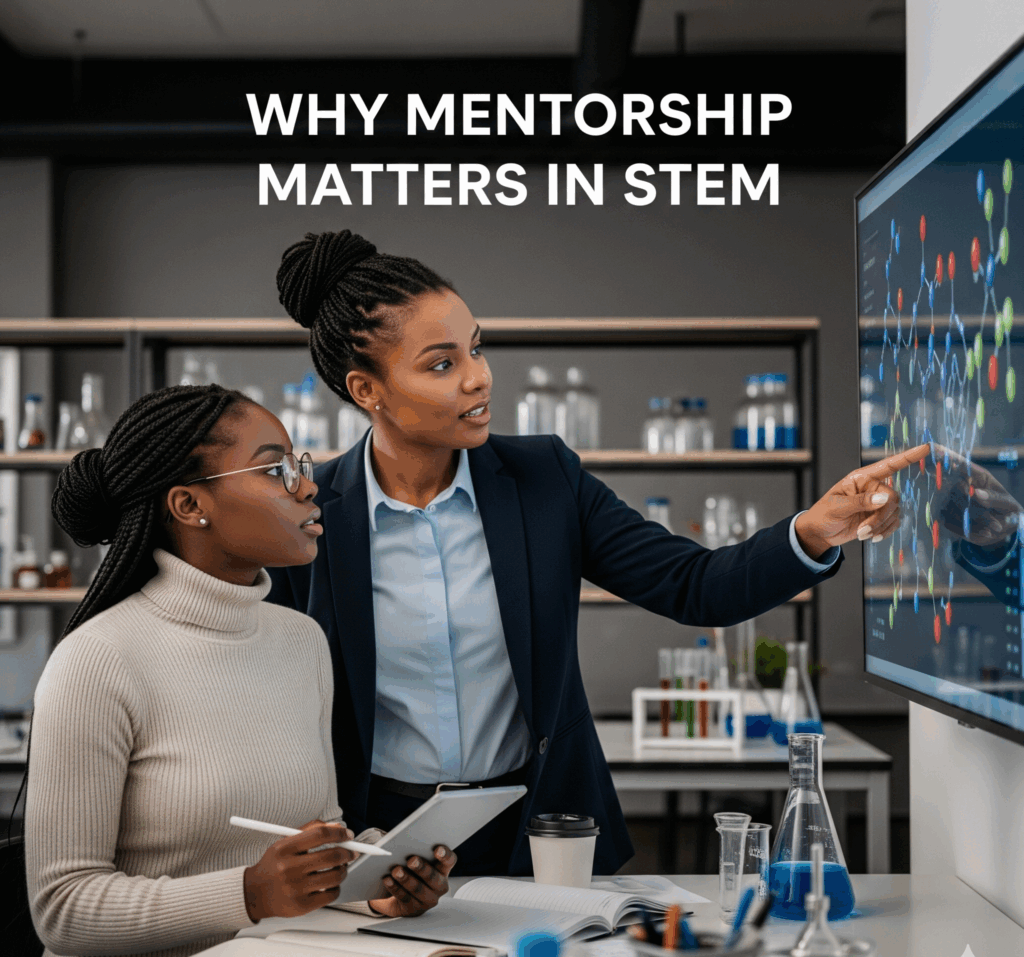
1. Bridging the Gender Gap
STEM fields in Africa remain heavily male-dominated, especially in engineering, technology, and leadership positions. Women mentors play a critical role in changing this reality. By guiding, training, and advocating for other women, mentors help open doors that have traditionally been closed. This not only empowers individuals but also strengthens Africa’s innovation capacity by ensuring diverse voices are represented in shaping solutions for the continent.
2. Breaking Isolation
Many young women entering STEM careers often feel like they are navigating uncharted waters with little or no support. Being the only woman in a classroom, lab, or workplace can be discouraging. A mentor provides a safe space where these women feel understood, supported, and encouraged to keep pushing forward. The simple reassurance that “you are not alone” can make all the difference in sustaining motivation and resilience.
3. Career Acceleration
Mentorship provides practical career guidance that can fast-track professional growth. Mentors can help mentees identify research opportunities, improve their technical skills, build strong professional networks, and prepare for promotions. They also share insights into workplace dynamics, helping mentees avoid common pitfalls and make informed career decisions. This type of support can shorten the learning curve and create faster pathways to leadership.
4. Personal Impact for Mentors
Mentorship is not only beneficial for mentees. Mentors also experience growth and transformation through the process. They strengthen their leadership skills, gain fresh perspectives from the next generation, and experience personal fulfillment by contributing to the advancement of women in STEM. Many mentors describe the experience as rewarding because they can directly see the lives and careers they are helping to shape.
5. Building Stronger Communities
Beyond individual relationships, mentorship helps build thriving STEM communities. When women mentor other women, they create a ripple effect that extends across classrooms, workplaces, and industries. A culture of support and collaboration begins to replace competition and isolation. This collective strength builds a foundation for systemic change, where more women are encouraged to pursue STEM careers and more young girls see role models they can aspire to become.
Qualities of a Great STEM Mentor
1. Empathy and Patience
A great mentor understands that many young women in STEM are not only learning technical skills but also navigating barriers such as gender bias, lack of confidence, and limited opportunities. Empathy allows mentors to put themselves in the shoes of their mentees, while patience ensures that they guide without judgment. This combination creates a safe and supportive environment where mentees feel comfortable asking questions, making mistakes, and growing at their own pace.
2. Experience and Expertise
Mentorship is most effective when it is grounded in real-life knowledge. Great mentors draw from their own journeys in STEM, sharing both successes and failures. They provide practical advice on how to solve problems, succeed in research, or move forward in professional careers. Their expertise gives mentees access to insights and lessons that cannot be found in textbooks, helping them avoid common pitfalls and focus on strategies that work.
3. Communication
Effective communication is the backbone of mentorship. It is not just about giving advice, but also about listening actively to the concerns, goals, and aspirations of mentees. A great mentor asks thoughtful questions, provides clear guidance, and gives constructive feedback that motivates rather than discourages. By fostering open communication, mentors build trust and ensure that mentees feel heard and valued.
4. Commitment
Consistency matters. A mentorship relationship cannot thrive on occasional check-ins alone. A great mentor commits to dedicating time and effort over the mentorship period, whether that is through regular meetings, email check-ins, or project collaborations. This commitment demonstrates reliability and shows mentees that their growth is a priority. For programs like the African Women in STEM six-month mentorship initiative, this commitment is essential for building lasting impact.
5. Championing Others
Perhaps one of the most powerful qualities of a mentor is the willingness to advocate for their mentee. This means celebrating their progress, highlighting their achievements in professional spaces, and opening doors to new opportunities. A mentor who champions others not only helps mentees grow in confidence but also increases their visibility in the STEM community. By becoming vocal supporters, mentors play a key role in ensuring that women in STEM are seen, respected, and recognized.
Benefits of Becoming a Mentor
1. Strengthening Leadership Skills
Mentorship provides a unique opportunity to grow as a leader. By guiding a mentee, mentors practice coaching techniques, sharpen their management abilities, and refine their communication skills. They learn how to give constructive feedback, how to inspire growth, and how to adjust their approach to meet the needs of different individuals. These skills are highly valuable not only in mentorship relationships but also in the workplace, where leadership is often measured by the ability to support and develop others.
2. Expanding Professional Networks
Becoming a mentor opens doors to a wider community of professionals. Mentors often connect with fellow mentors, mentees, and industry leaders who are also part of the program. In the African Women in STEM mentorship network, this means access to a growing pan-African community of innovators, researchers, and professionals. These connections can lead to collaborations, research opportunities, and professional partnerships that extend well beyond the mentorship period.
3. Personal Fulfillment
One of the most rewarding aspects of being a mentor is the personal satisfaction that comes from knowing your guidance has made a difference. Watching a mentee gain confidence, succeed in their studies, or achieve career milestones is deeply fulfilling. Many mentors describe mentorship as a way to “pay it forward” by giving back to the community and creating opportunities they may not have had when starting their own careers. This sense of impact can be just as valuable to the mentor as it is to the mentee.
4. Shaping Africa’s STEM Future
Every mentor contributes to building a stronger, more inclusive STEM ecosystem in Africa. By empowering women to lead, mentors are actively helping to break barriers and close the gender gap in science, technology, engineering, and mathematics. The ripple effect of mentorship is powerful: when one woman rises, she inspires and lifts others. Mentors are not only shaping individual careers but also contributing to systemic change that positions Africa to thrive in the global STEM landscape.
Join us as a mentor and help shape the future of women in STEM.
African Women in STEM Mentorship Program
1. Program Structure
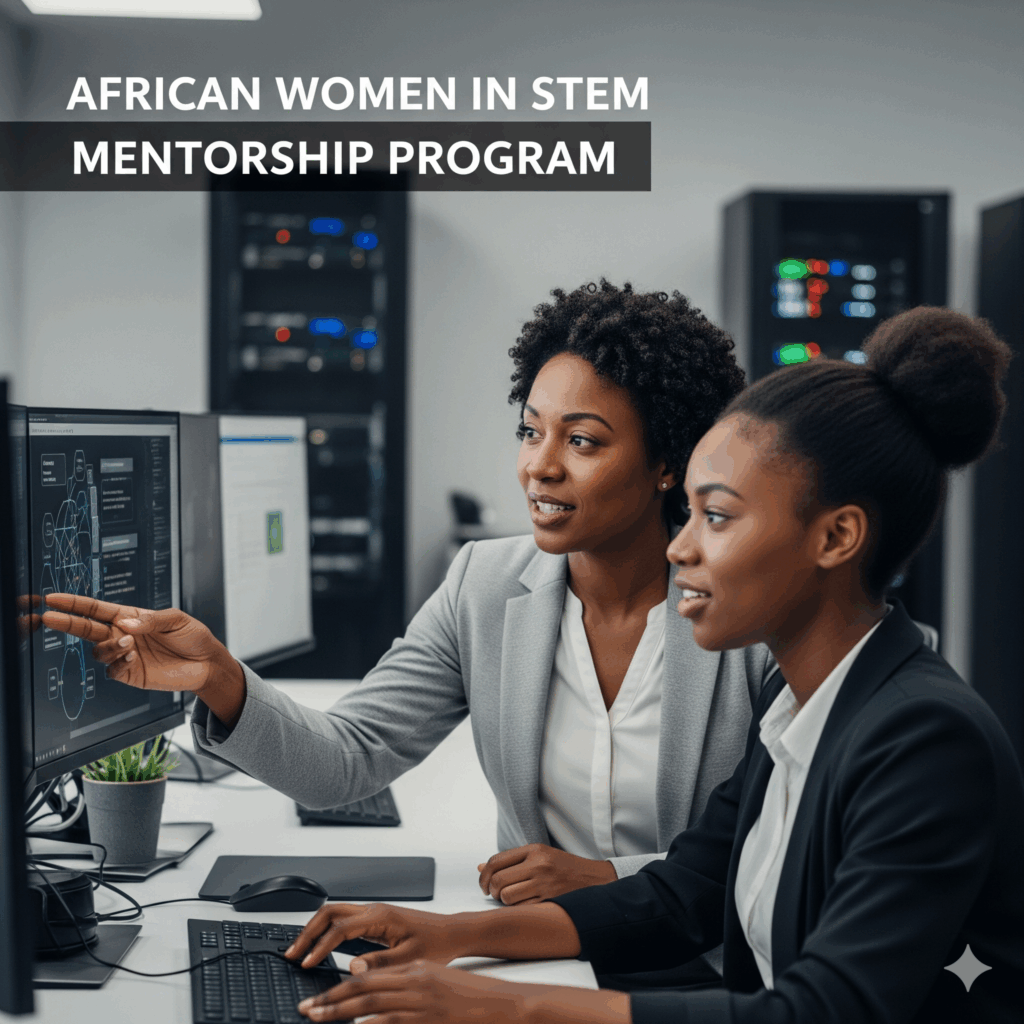
The African Women in STEM Mentorship Program is designed as a structured six-month journey where mentors are paired with mentees who are pursuing careers in different STEM fields across the continent. This structure allows both mentor and mentee to build a strong relationship over time, set achievable milestones, and track progress together. The six-month timeline ensures that there is enough time for meaningful engagement, consistent guidance, and tangible outcomes that help mentees move forward in their academic or professional paths.
2. Mentor’s Role
Mentors play a vital role in shaping the experience of their mentees. Their responsibility goes beyond giving advice. Mentors help mentees navigate career challenges, clarify long-term goals, and build the confidence needed to thrive in male-dominated environments. They provide insights based on their own experiences, share professional opportunities, and serve as role models. Most importantly, mentors encourage mentees to believe in their potential and push past barriers that may limit their growth.
3. Support for Mentors
The program does not leave mentors on their own. Every mentor is equipped with training sessions, resources, and a supportive community to ensure they succeed in their role. This includes mentorship toolkits, access to workshops, and regular check-ins with program coordinators. Mentors also receive peer support from other experienced mentors in the network, making the journey collaborative and enriching. By supporting mentors, the program ensures that they, too, are learning and growing as leaders.
4. Cross-Border Connections
One of the unique strengths of the African Women in STEM Mentorship Program is its cross-border approach. Mentors and mentees are often matched across different countries and STEM disciplines. This creates opportunities for cross-cultural exchange, knowledge sharing, and collaboration beyond local networks. A mentee in Kenya might be paired with a mentor in South Africa, or a Nigerian mentor might guide a mentee in Ghana. These connections help build a continental community of women in STEM who can collaborate on research, innovation, and solutions that address African challenges.
5. Lasting Impact Beyond the Program
The mentorship experience does not end after six months. Many mentors and mentees continue their relationship informally, staying connected as collaborators, colleagues, or lifelong supporters. The program also encourages graduates to give back by becoming future mentors themselves, creating a cycle of empowerment. This ripple effect strengthens the African STEM ecosystem by ensuring that each woman who benefits from mentorship has the tools, confidence, and network to help others rise as well.
Join us as a mentor and help shape the future of women in STEM.
How to Become a Mentor with Us

Eligibility
The African Women in STEM Mentorship Program welcomes experienced professionals, academics, researchers, and practitioners from all STEM fields. Whether you are a scientist, engineer, data analyst, medical researcher, or educator, your knowledge and journey hold immense value. What matters most is your willingness to share your expertise, guide others through challenges, and serve as a role model for the next generation of women in STEM.
Application Process
Applying to be a mentor is simple and straightforward. Interested mentors complete an online application form through the African Women in STEM platform. This form captures information about your professional background, area of expertise, and mentoring goals. The program team carefully reviews applications to ensure that mentors are matched with mentees who will benefit most from their experience. This thoughtful matching process helps build strong, meaningful mentor-mentee relationships that drive real impact.
Commitment
Mentors commit to a six-month program where they are paired with one or more mentees. During this time, mentors are expected to check in regularly, provide feedback, and make themselves available for guidance. This does not require full-time availability, but it does require consistency and dedication. The most important part of the commitment is showing up for your mentee, offering encouragement, and helping them navigate challenges in their STEM journey.
If you are ready to mentor, guide, and champion others. If you are ready to strengthen your leadership and expand your perspective. We would love for you to apply as a mentor. Your expertise and insights can transform lives.
Conclusion
Mentorship is far more than giving advice. It is about opening doors, creating opportunities, and breaking barriers for women who are striving to grow in STEM fields across Africa. By stepping into the role of a mentor, you play a part in shaping a future where African women are seen, heard, and celebrated in science, technology, engineering, and mathematics.
Every mentor who steps forward helps rewrite the story of STEM in Africa. Your voice, your encouragement, and your guidance can help more women rise into leadership positions, pursue groundbreaking research, and inspire future generations. Mentorship is both a gift to others and a journey of growth for yourself.
Join us as a mentor and help shape the future of women in STEM.