Most women do not experience major life transitions as a single dramatic moment. There is no lightning bolt, no obvious turning point, no clear before and after. Instead, there is a slow accumulation of moments where something feels increasingly misaligned. A career that no longer fits. A caregiving responsibility that reshapes everything around it. A health change that nobody at work accounts for. An identity that has quietly shifted while the professional persona stayed frozen in place.
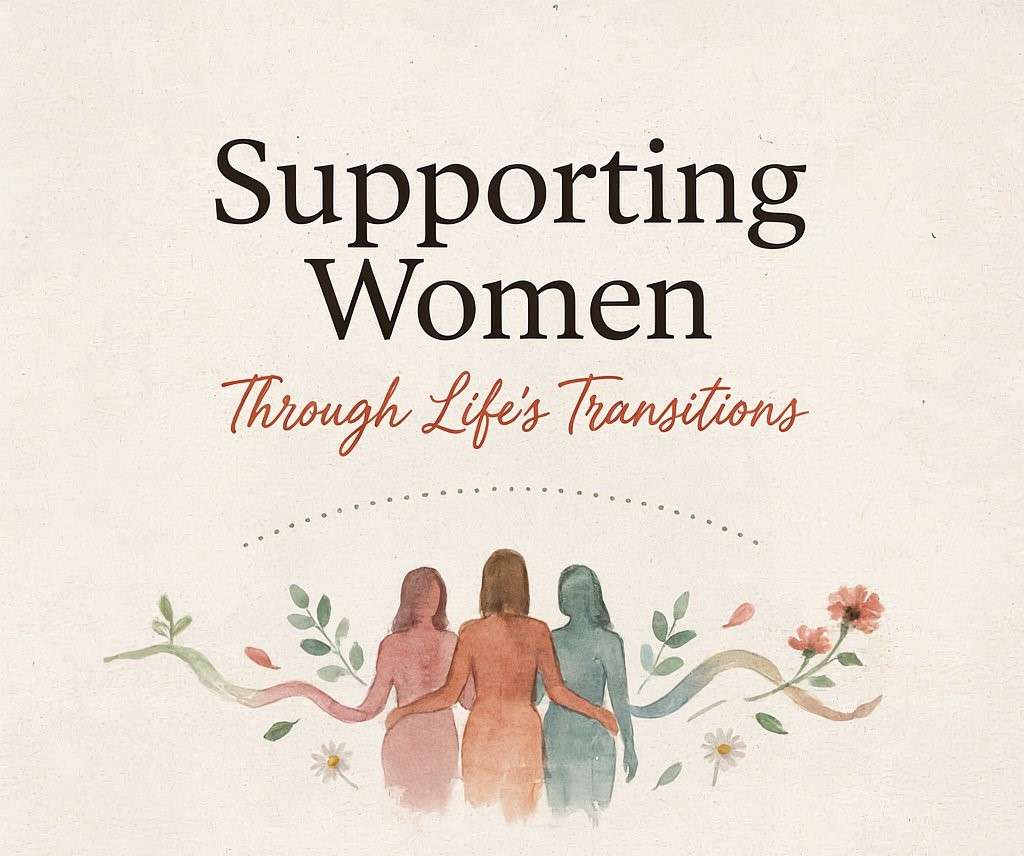
In Episode 065 of the Lunch with Leaders podcast, Adaeze Iloeje-Udeogalanya sits down with Stephanie Georges, veteran strategist and founder of the Meraki Dignity Project, to explore what women actually need during these transitions and why most existing platforms, systems, and technologies are failing to provide it. This is a conversation about dignity, about the interconnected nature of women’s challenges, and about what becomes possible when technology and community are designed with women’s full lives in mind from the beginning.
Listen to Episode 065: Stephanie Georges: The Power of Dignity — Supporting Women Through Life’s Transitions
Transitions Are a Build-Up
One of the most important reframes Stephanie offers early in this conversation is the way she describes how transitions actually happen for most women. The popular narrative around major life change tends to centre the dramatic moment: the day you quit, the diagnosis, the conversation that changed everything. In reality, most transitions build slowly over time, accumulating pressure across multiple dimensions of life simultaneously until something has to give.
For women in STEM and professional environments, this slow build often goes unacknowledged for a long time. You keep performing, keep delivering and you keep showing up in all the ways you are expected to. But underneath the performance, something is shifting: the role no longer fits who you are becoming, the caregiving demands at home are reshaping your energy and availability in ways your workplace has no framework to recognise, or the health changes that arrive in your 40s are affecting your capacity in ways you feel but cannot easily name in a performance review.
The danger of the slow build is that it normalises itself. Because nothing changes dramatically in a single day, you keep adjusting, keep absorbing, keep telling yourself you will address it when things settle. But things do not settle. The gap between who you are and how you are living just keeps widening.
Stephanie’s work with the Meraki Dignity Project starts from the recognition that these transitions are not individual failures to be managed privately. They are shared experiences that require shared support, dignified acknowledgment, and holistic tools designed for the full complexity of women’s lives.
The Interconnected Nature of What Women Navigate
One of the most distinctive aspects of Stephanie’s framework is her insistence on the interconnected nature of the challenges women face during major transitions. Most support systems, whether professional coaching, healthcare, financial planning, or career development tools, address one dimension at a time. You get career advice from one source, health support from another, financial guidance from a third, and emotional or community support from somewhere else entirely.
The problem is that for women, none of these dimensions operate in isolation. A health change affects career capacity. A caregiving responsibility affects finances, career trajectory, and physical health simultaneously. An identity shift changes what kind of work feels meaningful, which changes career decisions, which changes financial planning. Everything is connected, and addressing any one piece without acknowledging the others produces incomplete and often inadequate support.
Stephanie describes the Meraki platform as holistic by design, built to hold multiple dimensions of a woman’s life at once rather than siloing support into separate categories. The goal is not to solve each problem separately but to help women make intentional choices across all the dimensions of their lives simultaneously, with full awareness of how each one affects the others.
This is a meaningful departure from how most women’s platforms and professional development tools are built, and it is one of the reasons Meraki has resonated so strongly with women in their 30s and 40s, not just the 50-plus demographic that women’s transition resources often target by default.
Hear Stephanie describe the Meraki framework in full: Listen to Episode 065 of Lunch with Leaders
Why Dignity Is the Right Framework
The word dignity appears throughout this episode, and Stephanie is deliberate about why she chose it as the organising principle for her work. Dignity is not a soft concept. It is a precise one.
Systems and spaces violate a woman’s dignity when they fail to see, value, or account for her full identity and range of experience. Workplaces violate it when they treat caregiving responsibilities as personal problems rather than shared human realities. Healthcare violates it when data models underlying diagnostic and treatment tools are built primarily on male physiological data and applied to women without adjustment. Hiring and performance evaluation systems violate it when they embed assumptions about availability, working hours, and professional behaviour that ignore the realities of women’s lives.
Centering dignity as a framework for women’s equity is powerful because it names something universal. Every person understands the experience of being seen or unseen, of being treated as a full human being or as a variable to be managed. Dignity does not require extensive explanation. It resonates immediately because most women have experienced its violation in ways they recognised clearly even when they lacked the language to describe what was happening to them.
When technology is designed without dignity as a value, the results are predictable. Algorithms that replicate gender bias in hiring outputs. Health queries that return advice calibrated to male bodies. Career guidance tools that assume a linear, uninterrupted professional trajectory that most women do not and cannot have. These are not minor inconveniences. They are systemic failures that produce real harm at scale.
This connects to the cultural identity work explored in Episode 064 — Dr. Wanjiru Golly: The Power of Cultural Synergy, where Dr. Wanjiru made the case that identity must be seen and valued as strength rather than managed as difference. Stephanie’s dignity framework is the technological and platform expression of the same principle: systems that do not see women’s full humanity cannot serve it.
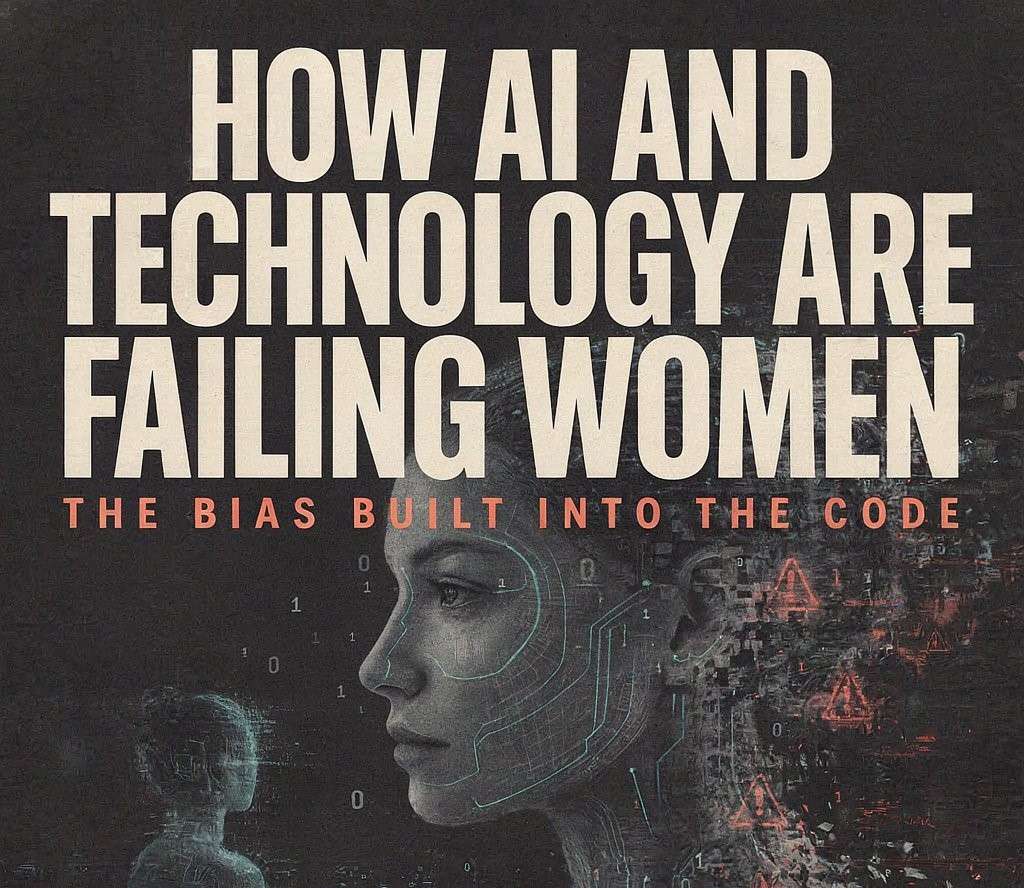
How AI and Technology Are Failing Women
Stephanie is specific about the ways in which current AI and algorithmic systems replicate and sometimes amplify the gender biases that already exist in the data they are trained on.
When a woman searches for health information, the guidance she receives is often calibrated to research conducted primarily on male subjects. Also, when she navigates hiring algorithms, those systems are trained on historical hiring data that encodes decades of gender-biased decision-making. When she uses career development tools, the pathways and milestones those tools recommend reflect professional trajectories that assume an uninterrupted, caregiving-free career arc.
The problem is not that the technology is intentionally discriminatory. The problem is that the data it was built on reflects a world where women’s full experience was systematically excluded or minimised. Garbage in, garbage out. And because the systems appear neutral and objective, their bias is harder to challenge than the human bias it replaces.
Stephanie’s response through Meraki is to build from different data. The platform is designed to curate woman-informed data and provide AI-enabled guidance that is specifically calibrated to the realities of women’s lives, not retrofitted from models that were never designed for them in the first place.
For women in STEM who are building AI systems, leading technology teams, or making decisions about what tools their organisations adopt, this conversation is directly relevant. The question of whose experience the technology was built for is not a peripheral concern. It is a foundational design question that shapes every output the system produces.
The Safe Space Women Are Not Getting Anywhere Else
Stephanie makes a point in this episode that is simple and significant: most women do not have access to a space where they can be honest about the full complexity of what they are navigating without fear of professional or social judgment.
In workplaces, women learn quickly that certain forms of vulnerability carry cost. Admitting that caregiving is affecting your capacity risks being seen as less committed. Acknowledging a health challenge risks being seen as less reliable. Describing the identity confusion that accompanies a major life transition risks being seen as unstable. So women learn to compartmentalise. They perform competence and certainty in the professional spaces that reward it, and they carry the complexity privately.
The cost of that compartmentalisation is exactly what Episode 063 surfaced in detail. Annelies Richmond’s work on breathwork and nervous system regulation is rooted in the same observation: women are carrying chronic stress loads that accumulate because they have no safe mechanism for releasing them. As explored in Episode 063 — Annelies Richmond: From Ballet Burnout to Breathwork and Building Resilience That Lasts, the body keeps score. And women who cannot speak honestly about their full experience are paying that cost in their health.
Meraki’s community design addresses this directly. The platform is built as a non-judgmental space where women can access peer wisdom, share their actual experience, and receive support that accounts for all dimensions of their life without being expected to present only the curated, professionally acceptable version.
Women’s Collective Power
One of the more energising threads in this episode is Stephanie’s discussion of the collective economic and social power that women now hold, and the gap between that power and how effectively it is being mobilised.
Women now control or significantly influence the majority of household spending decisions. Women represent a growing share of advanced degree holders, senior leaders, and entrepreneurial founders. Women’s spending power, networking capacity, and leadership influence are collectively substantial. And yet, the tools, platforms, and systems most commonly available to women were largely built by people who did not design them with women’s specific needs and realities in mind.
The moment to build differently is now. The collective resources, influence, and leadership capacity of women create genuine leverage for demanding better platforms, better technology, better organisational policies, and better support systems during transitions. Not as a charitable ask but as a market reality: women are a significant and underserved constituency whose needs are not adequately met by current offerings.
Stephanie frames this as an opportunity and a responsibility. The women who have navigated major transitions successfully, who have found their way through the slow build of misalignment and come out the other side with greater clarity and agency, have something to offer the women who are still in the middle of it. Community is not just emotional support. It is collective intelligence. It is the acceleration of individual learning through shared experience.
What Intentionality Actually Requires
The thread that runs through everything Stephanie describes is intentionality. Not passive hope. Not waiting for transitions to resolve themselves or not adjusting indefinitely to environments that were not designed for your full humanity. Intentional choice-making about what you want your life to look like and deliberate action toward that vision.
This sounds straightforward. In practice, it requires several things that most women are not systematically supported to develop.
It requires honest self-assessment about where misalignment exists across all dimensions of your life simultaneously. Not just your career, not just your health, not just your relationships, but all of them together and the ways they interact.
It requires access to information and peer wisdom that is calibrated to your actual situation rather than a generic professional template. This is where community and holistic platforms become tools rather than luxuries.
It requires dignity. The sense that your full experience is worth accounting for, that your transitions are legitimate rather than inconvenient, and that the support available to you sees you as a whole person rather than a variable to be optimised.
And it requires the willingness to claim agency over your own story. As explored in Episode 062 — The Story They Tell: Transforming How Decision Makers See You, the narrative that others hold about who you are and what you are capable of shapes the opportunities available to you. Intentionality means refusing to let that narrative be written entirely by others and actively building the story you want to be living.
Your Action Steps This Week
- Name where the misalignment is. Across your career, health, finances, caregiving, and identity, where does something feel increasingly off? Write it down without judgment. Name the slow build before it names you.
- Assess what your current support covers. Are you getting holistic support that accounts for all dimensions of your life simultaneously, or are you addressing each dimension separately and absorbing the cost of the gaps between them?
- Join Meraki. Visit mymeraki.ai and access a community built around dignity, peer wisdom, and intentional choice-making for women navigating major transitions.
- Ask the AI question. For any technology tool you currently use for health, career, or financial guidance, ask: was this built on data that included women’s full experience? If the answer is unclear, treat its outputs with appropriate scepticism and seek out woman-informed alternatives.
- Consider your collective power. What platforms, communities, and organisations are you currently investing time and money in? Are they designed with your full humanity in mind? Redirect your attention and resources toward the ones that are.
Conclusion
Stephanie Georges is building something that the women navigating major life transitions most urgently need: a space where their full experience is seen, their dignity is honoured, and the support available to them is designed for the actual complexity of their lives rather than a simplified version that fits neatly into existing categories.
The transitions women face are real, interconnected, and rarely dramatic. They build slowly. They touch everything at once. And the systems that are supposed to support women through them, from workplace policies to healthcare technology to career development platforms, were mostly built without women’s full experience in mind.
Meraki is a direct response to that gap. So is the broader work this season of Lunch with Leaders has been documenting: the work of building visibility, claiming identity as strength, regulating the nervous system, and refusing to let incomplete narratives define what is possible.
Your transitions are not failures. They are not personal problems to be managed privately. They are shared human experiences that deserve dignified, holistic, and genuinely supportive responses. Demand that. Build that. Join the communities that are already doing it.
Listen to the full conversation with Stephanie Georges: Episode 065 — The Power of Dignity: Supporting Women Through Life’s Transitions
Connect with Stephanie and Meraki:
Catch up on these connected episodes: