
Most high-achieving women in STEM know what burnout feels like in theory. Far fewer have found a practical, science-backed way to prevent it from quietly dismantling their health, their clarity, and their capacity to lead. In Episode 063 of the Lunch with Leaders podcast, Adaeze Iloeje-Udeogalanya sits down with Annelies Richmond, international breathwork teacher, master meditation trainer, and International Director of Sky Campus Happiness, to change that.
Annelies spent 15 years as a professional ballerina in New York City before a devastating injury redirected her toward a practice that she credits with transforming not just her career but her entire relationship with stress, pressure, and performance. Since then, she has taught over 25,000 students, trained more than 1,500 instructors globally, and brought her work to institutions including Yale, MIT, Columbia, and Google.
This episode is about what happens when you stop normalising the cost of pressure and start building the internal infrastructure to carry it without breaking.
Listen to Episode 063: Annelies Richmond: From Ballet to Breathwork
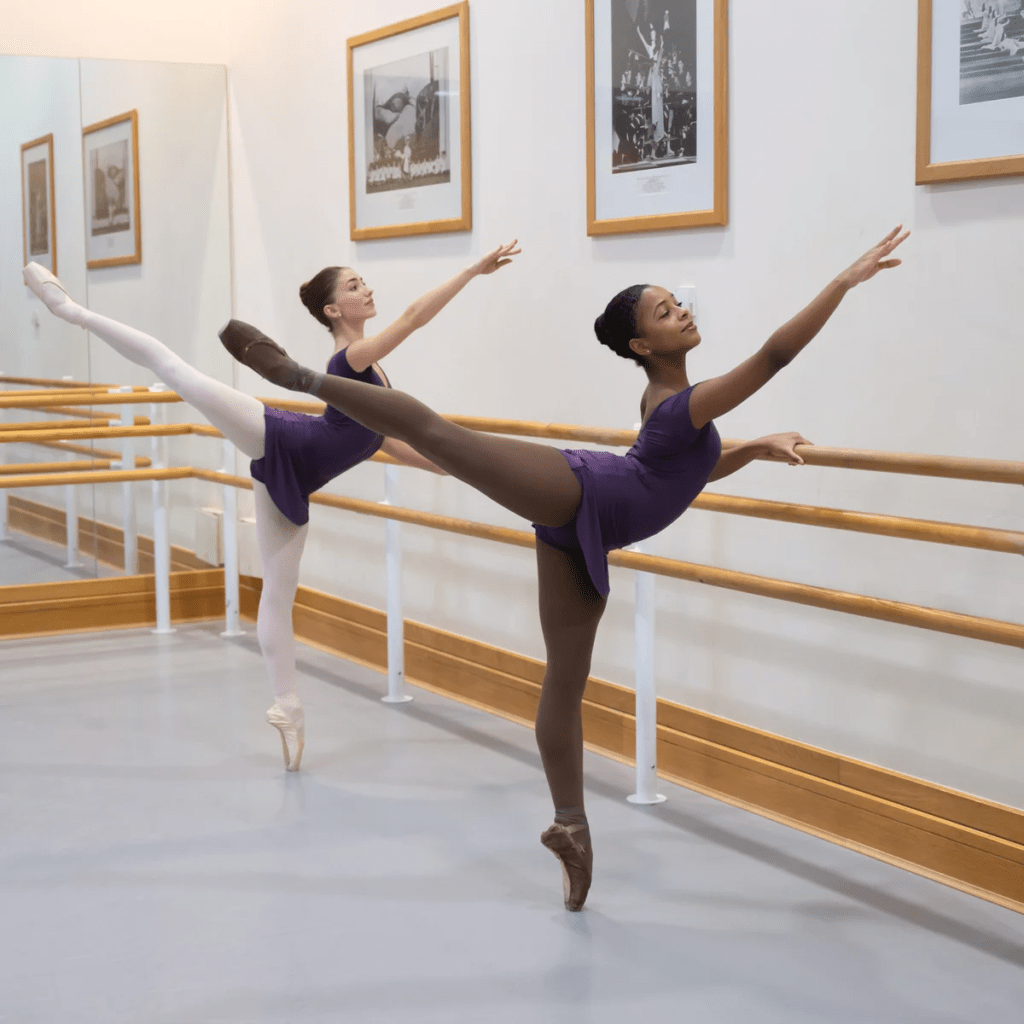
What Ballet Taught Her About Burnout
The ballet world and the STEM professional world have more in common than most people realise. Both demand constant high performance. Both reward precision and endurance above almost everything else. Both normalise overextension as simply the cost of being serious about your craft.
Annelies describes her years in the ballet company as constant overtaxing of both body and mind. There were no recovery days built into the schedule. No science-informed rest protocols. Just more rehearsals, more performances, more pressure. The overuse injuries that eventually followed were not accidents. They were the predictable result of a system that treated human capacity as unlimited.
The parallel for women in STEM is immediate and uncomfortable. Most professional women have been operating in environments that make the same assumption. You keep going. You absorb more. You push through. And because the consequences accumulate slowly rather than arriving all at once, you normalise what is happening until something forces you to stop.
For Annelies, that something was an injury so severe she could not walk for a year. For many women in STEM, it is a health diagnosis, a burnout collapse, or a moment like the one Adaeze described in Episode 053, where the body simply refuses to continue.
The lesson Annelies draws from her ballet years is precise: if you do not have tools to deeply reset your mind and nervous system on a regular basis, you are accumulating a debt that will eventually collect itself.
The Discovery That Changed Everything
During her year of not being able to walk, Annelies began asking bigger questions about what she actually wanted and what her career was costing her. That searching led her to the Art of Living Foundation and her first encounter with SKY Breath Meditation.
The experience was immediate and significant enough to change the direction of her life. When she returned to dancing after her recovery, she had a practice that she credits with extending her professional career by seven or eight years. The auditions that used to cut the atmosphere like a knife no longer produced the same level of anxiety. The politics, competition, and pressure that used to drain her became things she could navigate with greater ease.
Then September 11, 2001 happened. Annelies was in New York, teaching Art of Living courses as a volunteer. The founder of the organisation gave permission to teach for free across the city for an entire year. People arrived at those courses in shock, visibly depleted, barely present. After three or four days of practices, their faces came back to life.
That transformation was what confirmed for Annelies that these practices were not just about relaxation. They were about removing deep-seated stress and trauma from the system so people could return to their full capacity. She transitioned to teaching full-time, and has not looked back.
How Breathwork Actually Works
Annelies explains the mechanics of breathwork in a way that makes the science feel immediately useful rather than abstract.
Your nervous system operates in two primary modes. Sympathetic mode is fight or flight. Your body thinks it is running from a predator, even when the predator is a high-stakes presentation or a difficult performance review. Parasympathetic mode is rest and digest. Your system is calm, focused, and capable of the kind of nuanced thinking that good leadership requires.
Most professionals in high-pressure careers spend the majority of their working lives in sympathetic mode. The problem is that you cannot sustain clear decision-making, creative thinking, or genuine connection with others from inside a stress response. You are too busy surviving to actually lead.
Breathwork can shift you from sympathetic to parasympathetic mode quickly, sometimes in minutes. For in-the-moment stress, a simple technique practiced right before a high-stakes meeting or a difficult conversation can centre you enough to change the quality of everything that follows.
The deeper value, however, is in building a regular practice. When you practice consistently, your nervous system learns to maintain a state of calm focus even when pressure is high. Stress starts to bounce off rather than soak in. Your baseline shifts, and that shift is cumulative.
Hear Annelies explain the neuroscience in her own words: Listen to Episode 063 of Lunch with Leaders
The Warning Signs You Are Probably Ignoring
One of the most valuable parts of this episode is Annelies’s breakdown of how to recognise that your nervous system is overloaded, particularly if you have become skilled at pushing through signals that most people would stop for.
Watch for these signs:
- Persistent daily exhaustion that does not improve with sleep
- Recurring headaches that you have started treating as normal
- Snapping at people over small things that would not normally bother you
- Dreading the day rather than approaching it with any sense of energy or possibility
- Emotional reactivity that your intellect recognises as disproportionate but cannot seem to prevent
That last one is particularly telling. When small things set you off, it is a reliable signal that you have reached or are approaching your stress threshold. Your system is full. It has run out of capacity to absorb more without spilling over.
Annelies offers a useful analogy: if you do not do the dishes for a few days, the sink eventually becomes unmanageable. The same happens with accumulated stress. A daily or regular practice is the equivalent of doing the dishes every day, clearing the accumulation so nothing builds to an unmanageable level.
The story Adaeze shares in this section lands hard. A friend of hers spent years having the same cluster of symptoms at the same time every year without connecting them to anything. It took an outside conversation for her to realise that the headaches, the fatigue, and the irritability all arrived together because that was when her workload peaked. She had normalised a stress response so thoroughly that she no longer experienced it as a response at all. She experienced it as just how she was.
That is how chronic stress operates. Quietly. Cumulatively. Until the body decides to have the conversation the mind has been avoiding.
SKY Breath Meditation: What the Research Shows
For women in STEM who need more than a concept to engage with a practice, the research behind SKY Breath Meditation is worth knowing.
Annelies shares findings from a Yale study comparing three well-being programs: SKY Breath Meditation, a mindfulness program, and an emotional intelligence program. The SKY program produced significant results across six dimensions:
- Anxiety significantly decreased
- Depression significantly decreased
- High stress levels significantly decreased
- Pleasant emotions throughout the day significantly increased
- Sense of social connection significantly increased
- Overall mental health significantly improved
The mindfulness group did not show significant results in those six dimensions. The emotional intelligence group showed one significant result: an increased sense of mindfulness during the day.
Beyond the Yale study, other research on SKY Breath Meditation shows that it changes gene expression. You can be genetically predisposed to certain conditions, but what determines whether those conditions manifest is whether the gene expresses itself. Regular practice can influence that expression.
It also produces measurable changes in brain wave activity. Focus waves increase. Calm waves increase simultaneously. You reach a state of alert, aware, and calm that most people experience only rarely and cannot sustain. For leaders who need to run high-pressure meetings, manage complex stakeholder relationships, and make nuanced decisions under uncertainty, that brain state is not a luxury. It is a performance requirement.
Cortisol, the primary stress hormone, drops and stays lower in consistent practitioners. Feel-good hormones, including what Annelies describes as the connection hormone, increase. Leaders who practice regularly report feeling more connected to the people they lead, which changes the quality of every relationship in their professional environment.
Breathwork and Intuition
One of the more surprising threads in this episode is the connection Annelies draws between a regular practice and the development of intuition.
She explains that intuition operates at a finer, more subtle level than logical thought. It is the quiet whisper underneath the noise of analysis, to-do lists, and reactive thinking. When the thought layer is constantly busy and loud, you cannot hear the intuitive layer beneath it. The signal gets drowned out.
Meditation and breathwork quiet the thought layer. They make the mind more transparent, more able to observe thoughts without being swept away by them. As that happens, the intuitive layer becomes more accessible.
Annelies shares the example of investment bankers she taught in New York who maintained a 20-minute daily practice even in their notoriously demanding schedule. Colleagues asked how they stayed so calm. They said the practice was not a self-care indulgence. It was a professional tool. They made better decisions. They trusted their read of situations more. They saved time by listening to their intuition rather than second-guessing every choice.
For women in STEM making high-stakes decisions under uncertainty, this is significant. The data matters. The analysis matters. And the quiet internal signal that something is or is not right matters too. Building a practice that gives you access to all three is a genuine competitive advantage.
This connects to the storytelling and self-knowledge work explored in Episode 061 — Anatola Araba: Imagination as Innovation and World Building for the Future, where Anatola discussed following curiosity and the internal vision with enough trust to keep moving forward even without a clear roadmap. That kind of trust is easier to access from a regulated, practiced nervous system than from a depleted, reactive one.
The Victory Breath Exercise
One of the highlights of this episode is the guided breathwork session Annelies leads partway through the conversation. She teaches Ujjayi breath, also called Victory Breath, a technique from the yogic tradition that shifts the nervous system from sympathetic to parasympathetic mode in minutes.
The technique involves breathing with a soft sound at the back of the throat, like a gentle snore made consciously. The sound and the slow, deep rhythm of the breath activate the vagus nerve, which governs the entire nervous system including the lungs, heart, and digestive system. When the vagus nerve is stimulated, the body moves into a state of calm focus.
Adaeze reports that during the exercise she lost track of her thoughts entirely, which Annelies explains is actually the goal. The moment of forgetting the constant mental chatter is a brief reset that allows the system to clear and return to a cleaner baseline.
If you want to try this practice, the guided session is in the episode itself starting at the 39-minute mark.
What This Means for Your Career and Health
The evidence Annelies presents in this episode is not just interesting. It is urgent, particularly in the context of what Episode 053 and the broader wellness conversation this season have surfaced about the health of women in STEM.
Adaeze notes that autoimmune disease is rising among women in demanding careers. The research connecting chronic stress, code-switching, and systemic bias to physical health outcomes is growing. And the conventional response, which is to keep pushing and treat the symptoms as they arise, is not working.
A daily breathwork and meditation practice is not a complete solution to systemic problems that require structural change. But it is a concrete, evidence-based tool that you can start today, that costs nothing, and that has been shown across rigorous research to reduce the very stress markers that are driving the health crisis Adaeze has been documenting throughout this season.
Your Action Steps This Week
- Try the Victory Breath: Go to the 39-minute mark of Episode 063 and follow the guided Ujjayi breathwork session. Notice how you feel before and after.
- Audit your stress signals: Over the next three days, notice whether any of the warning signs Annelies describes, persistent fatigue, headaches, disproportionate reactivity, apply to you. Treat them as information rather than normal.
- Start with five minutes: If a full practice feels like too much to begin, commit to five minutes of conscious breathing each morning before you look at your phone or email. Build from there.
- Explore a deeper program: Visit artofliving.org to find a course near you, or skycampushappiness.org if you want to bring these practices to your team or campus.
- Connect with Annelies: If something in this episode resonated, reach out to her directly on LinkedIn or Instagram. She is actively looking to collaborate with organisations committed to well-being in the workplace.
Conclusion
Annelies Richmond’s episode arrives at exactly the right moment in this season. After weeks of conversations about visibility, positioning, AI fluency, and career advancement, this episode asks a quieter but equally urgent question: what is the condition of the person doing all of that work?
The answer, for many women in STEM, is that the condition is not sustainable. The pressure is real. The bias is real. The invisible tax is real. And none of it gets lighter if you keep absorbing it without a practice that clears it out on a regular basis.
The body will eventually have the conversation the mind has been avoiding. A daily breathwork practice is one of the most practical and evidence-backed ways to make sure that conversation happens as a choice rather than a crisis.
Start with five minutes today. Let the evidence do the rest.
Listen to the full conversation with Annelies Richmond: Episode 063
Connect with Annelies:
Catch up on these connected episodes: