You keep your head down. You deliver great work. You hit every deadline. You solve every problem your team throws at you. Then promotion season arrives, and the role goes to someone else, someone with a thinner track record but a louder presence in the right rooms.
This pattern repeats across STEM careers every single day, and it rarely happens by accident. In Episode 057 of the Lunch with Leaders podcast, Adaeze Iloeje-Udeogalanya names the problem directly and refuses to soften it. Passive patience does not build careers. It quietly stalls them while you wait for a recognition that was never coming on its own. She breaks the entire advancement puzzle down into three specific, measurable pillars, and she gives you a fast diagnostic to find out exactly where you stand on each one right now.
This episode runs under twenty minutes. The shift it can create in how you approach your next twelve months lasts far longer than that.
Listen to Episode 057: The 3 Pillars of Career Advancement: Visibility, Sponsorship, Positioning
If You Do Nothing, Nothing Changes
Adaeze opens with this line, and it sets the tone for the entire conversation.
Most professionals never consciously choose to stay stuck. They simply stop choosing to act. They tell themselves they will network next quarter. They tell themselves the right opportunity will show up eventually. They tell themselves that hard work speaks for itself, so they keep their heads down and wait.
None of that holds up under scrutiny. Doing nothing is still a decision. That decision carries a real cost, and the cost compounds every single month you delay action.
Three signs you have slipped into passive patience:
- You wait for feedback instead of asking for it directly
- You assume your manager already understands your full impact
- You delay networking until you urgently need a new job
If any of these sound familiar, you have already found your starting point for change.
The “Put Your Head Down” Myth
Many women in STEM grew up hearing a familiar piece of advice: work hard, stay humble, and the results will speak for themselves eventually.
That advice collapses completely at senior levels. Adaeze explains exactly why. Hard work becomes the baseline expectation, not the differentiator that separates you from everyone else. Every single person at your level already works hard. The people who actually advance pair that hard work with visibility, sponsorship, and clear positioning.
Staying quiet does not protect your reputation. It just makes you invisible to the people who decide your next career move.
Asking for Help Is Not Weakness
Adaeze uses a sharp analogy here. Elite athletes never train alone. They hire coaches. They study film obsessively. They actively seek help to sharpen every weakness they carry.
Yet professionals often treat asking for career help as a confession of incompetence. That belief alone holds people back more than any actual skill gap ever could.
Reframe how you see the ask:
- Elite athletes use coaches. You can use mentors.
- Top executives use advisors. You can use sponsors.
- High performers request feedback constantly. You can too.
Asking for support is not weakness. It is a deliberate strategy that every high performer who reaches the top actually uses.
Hear Adaeze break this down in full: Listen to Episode 057 of Lunch with Leaders
Systems Working Against You Do Not Pause
Here is the part that should create real urgency for you. The broken rung, the AI skills gap, and the sponsorship gap never wait for you to feel ready. They keep widening every single day you delay.
Women already face the broken rung, the first missed promotion to manager that compounds at every level above it. Women also adopt AI at lower rates than men, and that gap creates a second, newer disadvantage layered on top of the first. Add a sponsorship gap on top of both, and the math turns brutal fast. Every month of inaction stacks three disadvantages on top of each other simultaneously.
This connects directly to the argument Adaeze made in Episode 055 — The High Cost of Passive Hope. Waiting feels safe in the moment. It is not safe. It is an active decision, and it carries a measurable cost that grows larger the longer you wait.
The Best Time to Network Was Seven Years Ago
Adaeze shares a statistic that should reshape how you think about relationship-building right now: 85% of jobs get secured through networking, not job boards or cold applications.
Most people only start networking when they desperately need something. By then, it is already too late. Strong networks take years to build properly, and they only deliver real value when the relationship existed long before you needed anything from it.
Start building your network today, not the day you need a job:
- Reach out to one former colleague this week, just to check in
- Comment thoughtfully on a senior leader’s post instead of scrolling past it silently
- Attend one industry event this quarter, even when you do not “need” anything from it
- Schedule one coffee chat per month with someone outside your immediate team
Small, consistent actions compound steadily over time. Waiting does not compound anything at all.
Understanding the Broken Rung
The broken rung describes the first missed step into management. Fewer women secure that first management promotion compared to men at the same level. That single missed step then compounds aggressively at every level above it.
By the time you reach senior leadership, the gap created at that first rung has multiplied many times over. Fixing it requires deliberate action long before you ever reach that first promotion decision point.
You cannot wait for your organisation to fix this structural issue on your own timeline. You need to actively manage your own visibility, sponsorship, and positioning to counteract it starting now.
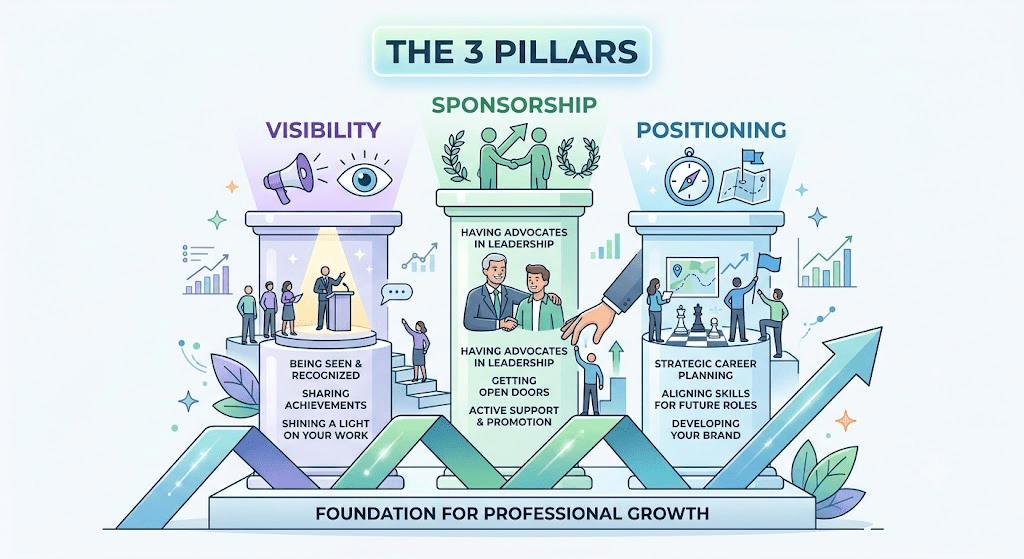
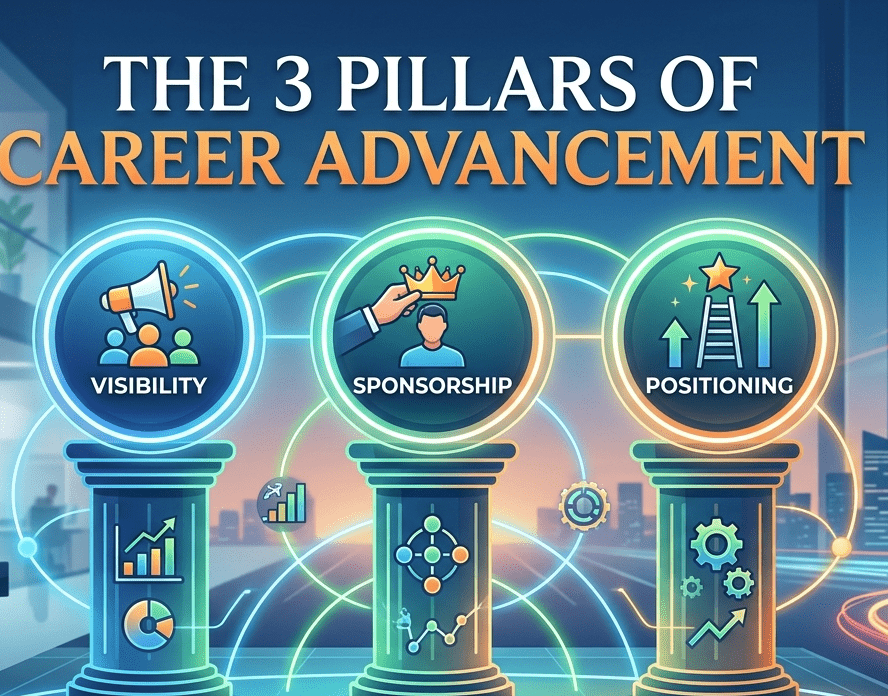
The 3 Pillars: Visibility, Sponsorship, Positioning
Adaeze condenses the entire framework into three pillars. Each one answers a distinct question about your current career standing.
Pillar 1: Visibility
The question: Do the people who make decisions about your future actually know who you are and what you deliver?
Visibility means your impact reaches the right people consistently and clearly. It never happens by accident. You build it deliberately by sharing your wins, framing your contributions around business outcomes, and showing up in rooms where decision-makers are physically present.
Track three accomplishments every month. Share them with the right stakeholders before performance review season forces the conversation. Decision-makers cannot advocate for impact they have never actually seen.
Pillar 2: Sponsorship
The question: Does someone with real influence advocate for you when you are not in the room?
A mentor talks to you directly. A sponsor talks about you to other people. Sponsorship requires someone with genuine organisational power to put your name forward for opportunities you simply cannot access on your own.
Identify two potential sponsors in your organisation right now. Build the relationship deliberately by sharing your goals clearly and making your impact easy for them to repeat and champion elsewhere.
Pillar 3: Positioning
The question: Do you know exactly what it takes to reach the next level, or are you simply guessing?
Positioning means you understand the explicit criteria for the role you actually want. Stop guessing entirely. Ask your manager directly. Ask people who already hold that role what got them there. Get real clarity, then build toward it with intention.
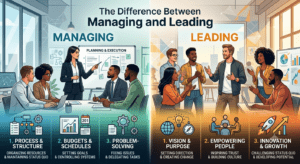
This framework builds directly on the leadership lessons explored in Episode 056 — Bradley Hunt: The Difference Between Managing and Leading, where the distinction between assigned authority and earned influence becomes especially relevant here. Positioning yourself well requires earning trust deliberately, not simply waiting for a title to validate you.
The 15-Minute Career Audit
Adaeze introduces a fast, practical audit you can run on yourself in fifteen minutes flat. Grab a notebook and answer these questions honestly:
Visibility check:
- Can you name three senior leaders who know your specific impact in detail?
- When did you last share a concrete win with someone above your direct manager?
Sponsorship check:
- Can you name one person with real influence who actively advocates for you?
- Have you told that person clearly what you actually want next?
Positioning check:
- Do you know the exact criteria for the role you want next?
- Have you asked someone who already holds that role how they got there?
If you answered no to most of these, you now have a clear, specific map of exactly where to focus your energy next.
The Leadership Edge Diagnostic
Beyond the quick self-audit, Adaeze offers a free tool built specifically for this exact purpose: the Leadership Edge Diagnostic.
This five-minute assessment measures your current standing across authority, influence, and positioning with far more precision than a self-guided checklist alone. It identifies your specific gaps and gives you a starting point for closing them strategically rather than randomly.
How to access it: Visit link.africanwomeninstem.com/leadership to take the free diagnostic. Email your results to Adaeze for personalised insight into your next move.
Why Waiting Costs More Than Acting
Every pillar in this framework requires the same underlying shift: moving from passive waiting to active building. None of these three pillars develop themselves automatically while you focus exclusively on your technical output.
Visibility requires you to speak up deliberately. Sponsorship requires you to build relationships before you need them. Positioning requires you to ask direct questions instead of guessing quietly in the dark. Each pillar demands action, and none of them reward passive patience no matter how excellent your underlying work happens to be.
The systems working against women in STEM, the broken rung, the AI adoption gap, and the sponsorship gap, do not pause while you build courage slowly. They keep moving regardless of your readiness. Closing the gap they create requires you to move just as consistently, starting today rather than next quarter.
Conclusion
Three pillars hold up every successful career advancement story: visibility, sponsorship, and positioning. None of them happen automatically, and none of them reward people who wait quietly for recognition that may never arrive on its own.
Stop guessing about your standing. Run the fifteen-minute audit today. Take the Leadership Edge Diagnostic this week. Identify one sponsor to build a relationship with this month. Ask directly what the next role actually requires instead of assuming you already know.
The systems working against you will not pause for your readiness. Match their pace. Start now.
Listen to the full episode: Episode 057 — The 3 Pillars of Career Advancement: Visibility, Sponsorship, Positioning
Take the Leadership Edge Diagnostic: Visit link.africanwomeninstem.com/leadership