
There is a career story that almost never gets told.
Not the polished highlight reel. Not the LinkedIn announcement that makes everything look inevitable in hindsight. The version where someone loses a job they thought was secure, sits in the uncertainty of not knowing what comes next, and has to figure out who they are on the other side of that disruption.
That is the story Charis Loveland tells. And it is one of the most honest, useful, and empowering conversations to come out of Lunch with Leaders this year.
Charis works at the intersection of emotional intelligence and artificial intelligence. That combination sounds unusual at first. But once she explains it, it sounds completely essential.
In this episode, host Adaeze Iloeje-Udeogalanya sits down with Charis for a conversation that covers career transitions, the real meaning of AI, the leadership skills that matter most right now, and what it looks like to build a human-centred career in a world moving very fast.
https://www.listennotes.com/podcasts/lunch-with-leaders/charis-loveland-navigating-lCoMHyj1G36
From English Literature to AI Leadership
Charis did not take a straight line to where she is today.
She started as an English literature major. That is about as far from a typical AI career path as you can get. And that, it turns out, is exactly what makes her perspective so valuable.
Her journey proves that the skills that matter most in the AI era do not always come with a technical degree. Reading people. Communicating clearly. Understanding context and nuance. Asking the right questions. Charis carried these skills from her humanities background straight into a leadership role in one of the most technical spaces of our time.
But the path was not without disruption.
Charis experienced a layoff. She describes it as a disruptive event, what she calls a life quake. It shook her sense of professional identity. It forced her to reckon with questions she had been too busy to ask.
What followed was the messy middle. The space between what was and what will be. The period where most people either contract in fear or expand into possibility.
Charis chose expansion. She used the disruption to launch her own business. She built the work she now does around AI for human flourishing.
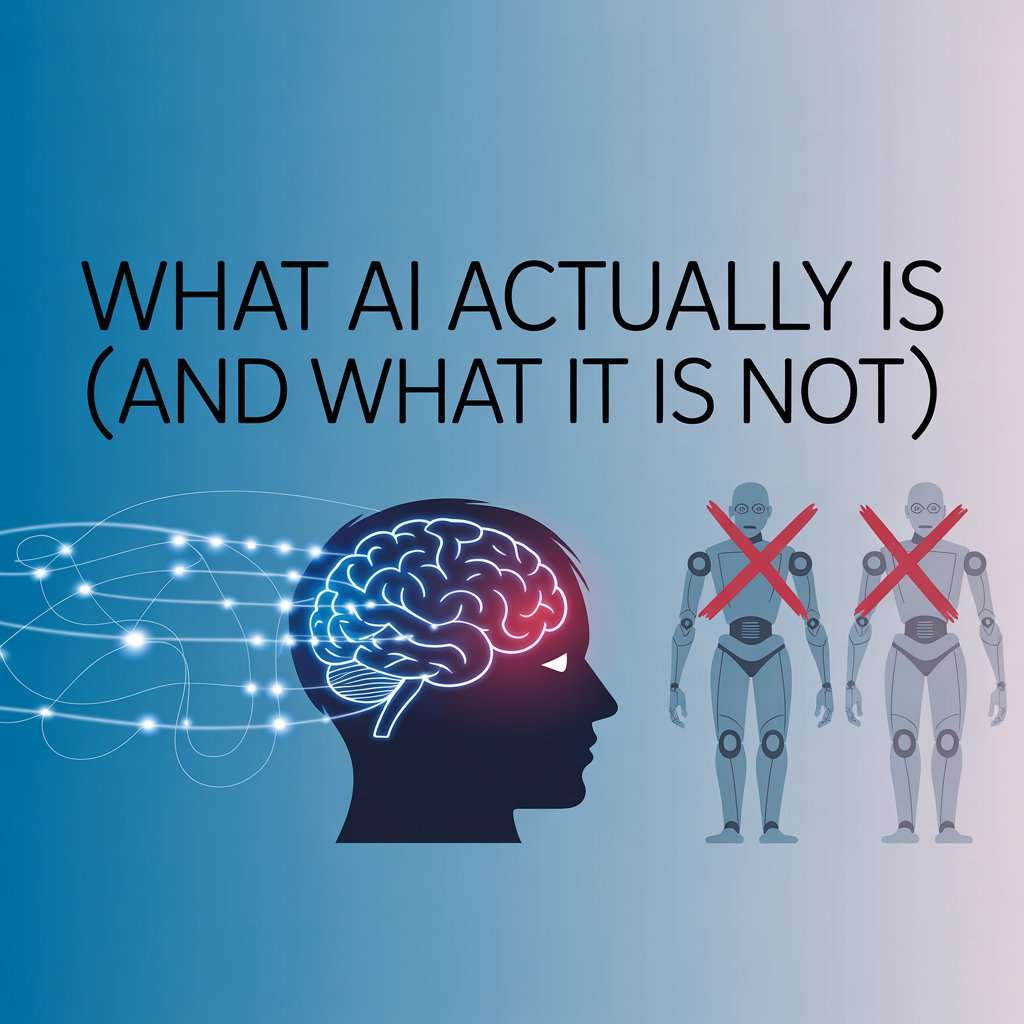
What AI Actually Is (And What It Is Not)
One of the most clarifying moments in this conversation is when Charis defines artificial intelligence simply and cleanly.
AI is the application of statistical techniques to data to make predictions.
That is it. It is not magic. Also, it does not replace human judgment. It is a tool and it takes in information and produces outputs based on patterns it has been trained to recognize.
That framing matters. When people understand what AI actually is, they stop being blindly excited or unnecessarily afraid. They engage with it as what it is: something powerful, something that needs guidance, and something only as good as the human thinking behind it.
Emotional intelligence works differently. It is about understanding and managing your own emotions and the emotions of others. Charis breaks it into four clear quadrants:
- Self-awareness — knowing what you feel and why
- Self-management — regulating your emotions and responses
- Social awareness — reading the room and understanding others
- People management — leading and influencing with empathy and intention
These two things seem like they belong in completely separate conversations. But Charis argues they are inseparable. As AI takes over transactional and predictive tasks, emotional intelligence becomes the differentiator no algorithm can replicate.
The Messy Middle Nobody Prepares You For
Most career advice skips straight over transitions. It jumps from the problem to the solution without sitting in what actually happens in between.
Transitions are uncomfortable by design. They are supposed to be. The discomfort does not mean something has gone wrong. It means something is changing.
Charis is honest about her layoff being hard. It disrupted her sense of self in the way that only professional setbacks can, especially when your identity and your work are tightly connected. But she is equally honest about what she found on the other side.
She describes the messy middle as the phase where you do the real work. Likewise, you figure out what you actually value, get clear on what you want and decide what you are willing to build, not the career you landed in, but the one you would choose.
For women in STEM navigating transitions, whether that is a role change, an industry shift, redundancy, or re-entry after time away, the messy middle is not a detour. It is part of the path.
Here is what actually helps during that phase:
- Reflect honestly on your values and what kind of work energises you
- Get clear on the skills you carry that transfer, even when they are not obvious on paper
- Lean into community instead of retreating into isolation
- Stay open to the possibility that what comes next might be better than what came before
Charis covers a lot of ground in this episode. She does it with warmth and honesty that makes the whole thing feel like a conversation with someone who has actually lived what they are talking about.
Listen to the full episode of Lunch with Leaders here.

Human Connection Is the Most Underrated Career Skill Right Now
The world is moving toward more automation, more digital communication, and more AI-assisted everything. It would be easy to assume the technical skills are what matter most right now.
But Charis pushes back on that assumption.
The leaders who will thrive in this environment are not necessarily the ones with the deepest technical knowledge. In addition, they are the ones who build genuine human connection in digital spaces. Also, they communicate with transparency and empathy. They create environments where people feel seen and valued.
That is not soft. That is strategic.
The research backs it up. Emotional intelligence drives stronger leadership outcomes, better team performance, and greater career resilience. And in an economy increasingly shaped by AI, the premium on human skills keeps rising.
This connects directly to the work Charis has built at AI for Human Flourishing. It is a framework and toolkit that centres human dignity, rights, and well-being in AI development. If you are thinking about how to engage with AI in a values-driven way rather than just a trend-driven one, it is worth exploring.
The Responsibility That Comes With Being in the Room
One of the strongest threads in this conversation is about leadership responsibility. Specifically, the responsibility women in STEM carry to shape how AI gets developed and used.
Charis is direct. Responsible AI does not happen by accident. It requires intentional work across three areas:
- Bias testing — actively examining AI systems for the ways they can perpetuate or amplify existing inequalities
- Transparency — being honest about how AI tools work, what data they use, and what their limitations are
- Diverse voices in the room — ensuring that the communities most affected by AI systems help design those systems
For women in STEM, this is not just a professional consideration. It is a values one. If you hold a position where you can influence how technology gets built or deployed, that position carries real weight.
The skills that make you effective in that role are not only technical. They are deeply human. Developing emotional intelligence is not an optional extra on top of your expertise. It is foundational to the kind of leadership that actually creates change.
https://www.listennotes.com/podcasts/lunch-with-leaders/charis-loveland-navigating-lCoMHyj1G36
What Charis Wants You to Take Away
Near the end of the conversation, Adaeze asks Charis about legacy. What does she want to leave behind?
The answer sits in her tagline: bringing charisma back with charisma intelligence.
It is a play on her name. But it points to something real. True charisma does not come from performance. It comes from genuine emotional presence. Also, from knowing yourself. From being fully in the room and leading with humanity in a world increasingly tempted to automate its way around it.
That is a legacy worth building toward.
Listen to the full episode and hear Charis tell it in her own words. Navigating Career Transitions and Building AI Influence in STEM — available now on Lunch with Leaders.
Connect With Charis Loveland
If this conversation resonated, here is where to find Charis and go further:
- LinkedIn: Charis Loveland
- Substack: Hello Adversity — her writing on navigating hard things with honesty
- AI for Human Flourishing: aiforhumanflourishing.com — her framework for values-driven AI engagement
- Coaching Circle: Confident and Connected 2026 — structured support if you are ready for it
- Book a conversation with Charis: Schedule here