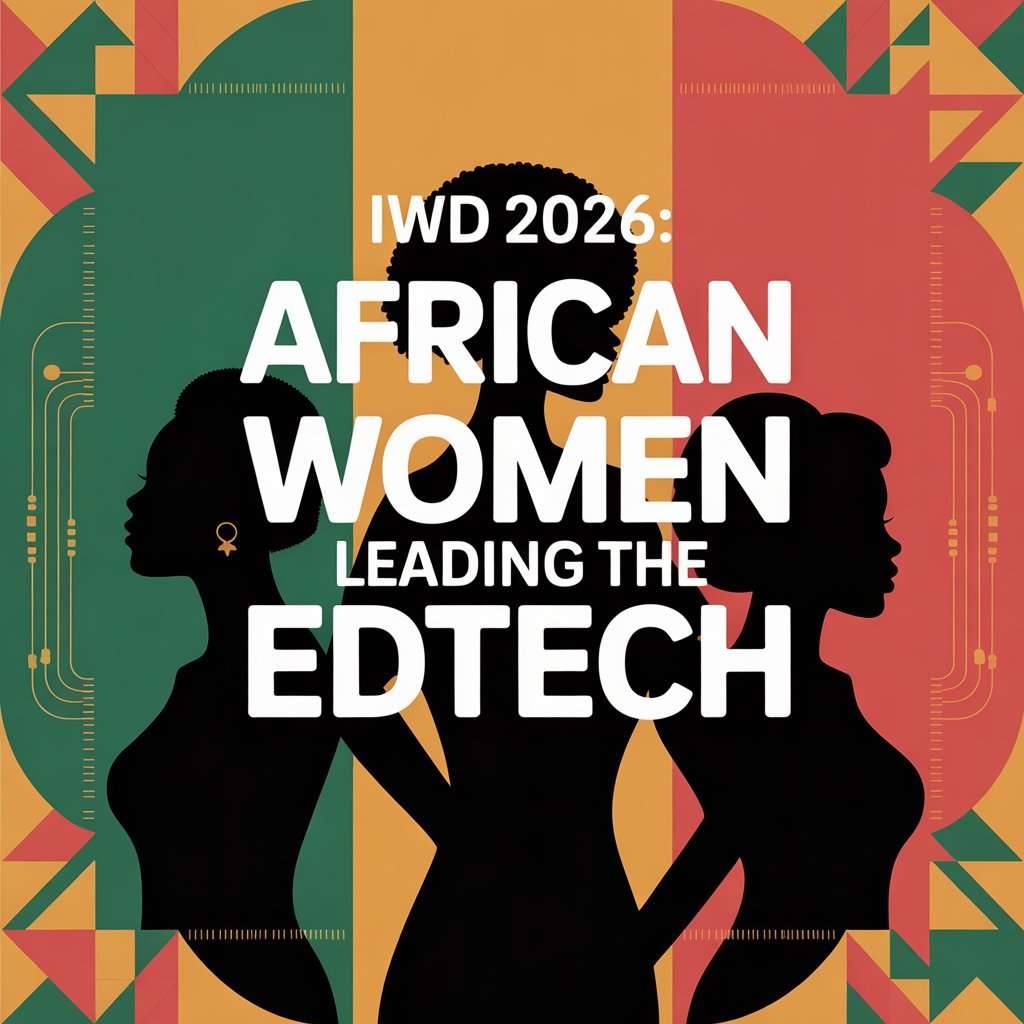
Education transforms lives. Technology amplifies that transformation. When the two combine through educational technology, they create unprecedented opportunities for learning, skill development, and economic empowerment across Africa.
This International Women’s Day 2026, we celebrate seven Nigerian women who are leading Africa’s educational technology revolution. These are women who saw millions of students locked out of learning during the COVID-19 pandemic and built digital solutions to bridge the gap. Women who recognized that traditional education systems were failing to prepare Africans for technology careers and created training programs that change lives.
Their companies provide personalized learning to students, teach coding to women transitioning into tech, offer free digital literacy training, and place thousands in jobs that provide economic stability. Through their work, they are not just building businesses. They are reshaping how an entire generation learns, develops skills, and accesses opportunities.

1. Ope Bukola: Building Africa’s Online STEM University
Ope Bukola founded Kibo School, an online university providing STEM education specifically designed for African students. Kibo addresses a critical challenge: many talented African students cannot access quality STEM education due to cost, location, or limited university capacity. By delivering education online, Kibo makes STEM degrees accessible regardless of where students live.
Before founding Kibo School, Ope led the Product team for Google Classroom, one of the world’s most widely used educational technology platforms. She previously worked as a Product Manager at Amplify Education and managed partnerships at CK-12 Foundation, building deep expertise in educational content and platform development.
Beyond Kibo School, Ope serves as an angel investor and member of Pipeline Angels, an angel network supporting female entrepreneurs at early stages. She is founding Board Chair of the Black Art Futures Fund and a board member of Zeta, a network of high-performing schools in New York.
Ope holds a bachelor’s degree in economics from New York University and brings both technical and business expertise to transforming African higher education through accessible, online STEM degrees.

2. Ada Nduka Oyom: Empowering 20,000 Women Across Africa
Ada Nduka Oyom founded She Code Africa, a tech academy that has empowered over 20,000 women and girls across Africa. The organization provides training, mentorship, and networking opportunities, helping to bridge the gender gap in technology. She Code Africa recognizes that women face specific barriers entering tech careers and creates targeted support to overcome those obstacles.
Through the organization, Ada has inspired thousands of women to pursue technology careers and created a supportive community helping them thrive. She Code Africa operates across multiple African countries, creating a pan-African network of women technologists who support each other’s growth.
Ada also co-founded Open-Source Community Africa, promoting participation in open-source software development across the continent. Open-source contributions build technical skills while creating visibility for African developers in the global technology community.
Before founding She Code Africa, Ada served as Developer Relation Ecosystem Community Manager at Google, building and supporting developer communities across Africa. She also worked as Developer Relations Lead at Interswitch, one of Africa’s leading fintech companies.
Similar to other notable African women in technology, Ada demonstrates how building platforms and communities creates impact far beyond individual achievement, transforming entire ecosystems.

3. Gloria Ojukwu: Providing Tuition-Free Tech Training
Gloria Ojukwu founded HerTechTrail, an edtech platform providing tuition-free digital and technical literacy to women building sustainable tech careers. By offering free training, HerTechTrail ensures that financial constraints don’t prevent talented women from acquiring digital skills needed for technology careers.
According to Gloria, HerTechTrail’s mission is to support, inspire, and educate women to succeed in tech. The organization provides technical training alongside mentorship and confidence-building that help women thrive in technology roles. This holistic approach recognizes that skills alone aren’t enough without support systems.
Gloria is a tech Project Manager with extensive knowledge of user experience and software development and practical experience building web and mobile applications. This technical background ensures HerTechTrail’s curriculum teaches skills actually in demand in the job market.
She holds a bachelor’s degree in computer science from Niger Delta University and currently serves as Senior Product Manager at Organizely. By continuing to practice the skills she teaches while building HerTechTrail, Gloria ensures the training remains relevant to current industry needs and employer expectations.

4. Bisola Alabi: Training Women in High-Demand Tech Skills
Bisola Alabi founded Heels n Tech, an academy training women in viable tech skills to bridge the gender gap in Africa’s technology industry. Heels n Tech offers courses equipping women with practical, high-demand skills in product design, data analysis, UX/UI design, project management, and more.
The curriculum focuses on skills that lead directly to employment opportunities, ensuring students can transition into tech roles after completing training. Her mission is to make technology careers accessible for women interested in transitioning into tech roles, particularly in Africa where gender gaps remain significant.
Beyond Heels n Tech, Bisola has over 8 years of experience building startups with a combined portfolio of over $12.5 million. This entrepreneurial experience gives her insight into what skills startups actually need, ensuring Heels n Tech graduates are prepared for real-world technology work.
She holds a bachelor’s degree in economics from Obafemi Awolowo University, demonstrating that technical careers are accessible to people from diverse educational backgrounds. Understanding how African women engineers build successful careers provides context for why training programs like Heels n Tech matter for creating pathways into technology fields.

5. Oladiwura Oladepo: Advancing Human Capital Development
Oladiwura Oladepo serves as Executive Director at Tech4Dev and Co-founder of Taltrix. Tech4Dev is a non-profit social enterprise creating access to decent work and entrepreneurship opportunities for Africans through digital skills empowerment and advocacy.
According to Oladiwura, her work at Tech4Dev is about “using technology to advance sustainable human capital development in Africa.” This vision connects individual skill development to broader economic development goals, recognizing that technology skills are increasingly essential for economic participation.
The organization provides training programs across multiple African countries, helping thousands acquire the digital skills needed for employment in technology sectors. Tech4Dev partners with companies and organizations to ensure training aligns with actual job market needs.
Oladiwura holds a master’s degree in advanced management from Yale University, bringing both strategic thinking and management expertise to her role leading Tech4Dev’s programs. Her academic background combined with practical program management experience enables Tech4Dev to scale impact effectively across Africa.

6. Blessing Abeng: Training 100,000 Youth Through Ingressive for Good
Blessing Abeng co-founded Ingressive for Good with Maya Horgan Famodu and Sean Burrowes, creating a non-profit organization focused on increasing youth earning power through tech training.
In just three years, Blessing led Ingressive for Good’s growth from zero to 250,000 community members, training over 100,000 people. The organization has placed thousands in jobs and led multiple cohorts of women-focused tech training, attracting major partners like Coursera, DataCamp, Facebook, Figma, and Alphabet.
Before Ingressive for Good, Blessing co-founded Disha, a tech startup that attracted attention from Flutterwave, one of Africa’s unicorn companies, leading to a successful acquisition. Her expertise as former CMO of Disha contributed significantly to its growth and eventual acquisition.
She has received numerous honors including Forbes 30 Under 30, listing among UN 100 Most Influential People of African Descent, recognition as one of Nigeria’s 100 most powerful youth by YNaija, and celebration at UK Africa Achievers Awards. These accolades reflect her significant impact on technology education and youth empowerment across Africa.

7. Victoria Oladosu: Building Product Skills Across Africa
Victoria Oladosu founded Product Hub Africa, an edtech company providing skills and resources to individuals transitioning into technology. Product Hub Africa was created to achieve a world where Africans are “equally recognized and represented in the tech space.”
The organization offers tech bootcamp training, accelerator programs, mentorship programs, and job placements. Product Hub Africa also runs the STEM-A-SCHOOL initiative for students, recognizing that building Africa’s technology future requires starting with young students and creating early exposure to technology careers.
Victoria is a data product manager and serial volunteer in several non-profit organizations including Product School and NigerianYouthSDGs. Her volunteer work demonstrates commitment to using her expertise for community benefit beyond her business ventures.
She holds a BSc from the University of Ilorin in Nigeria and is pursuing a master’s in data science at the University of East London. Her combination of technical expertise in data science and commitment to training others demonstrates how individual skills can be leveraged to create opportunities for entire communities across Africa.
Why EdTech Matters for African Women and Girls
These seven women are addressing one of Africa’s most critical challenges: the gender gap in technology education and careers. Their work matters profoundly for both individual women and Africa’s broader economic development.
The Education Gender Gap in Sub-Saharan Africa
According to UNESCO research, the gender gap in digital skills remains stark in sub-Saharan Africa. For every 100 men with spreadsheet skills in the region, only 40 to 44 women have the same proficiency. Additionally, in most African countries, fewer than one in three STEM graduates are women.
These statistics reveal why the work of edtech leaders like Honey, Ope, Ada, Gloria, Bisola, Oladiwura, Blessing, and Victoria matters so much. They are directly addressing the barriers that keep women from acquiring digital skills and pursuing technology careers.
Economic Impact of Closing the Gap
Research shows that doubling the share of women in the tech workforce by 2027 could boost global GDP by 600 billion euros. For Africa specifically, closing gender gaps in education and employment could significantly increase economic growth.
When women acquire technology skills, they don’t just benefit individually. They earn higher incomes, support their families, start businesses, employ others, and contribute to economic development. The ripple effects of technology education extend throughout communities.
Role Models Create Possibility
When girls see women like these building successful edtech companies, they learn that entrepreneurship is possible. Also, when they see women creating impact at scale, they recognize that success can include lifting others up.
According to World Economic Forum research on education, progress in closing education gender gaps in Africa has been significant but incomplete. Girls now complete primary education at higher rates than boys in many African countries, but gaps persist at secondary and tertiary levels, particularly in STEM fields.
The women leaders profiled here are working to close those persistent gaps by making technology education accessible specifically to women and girls who have been historically excluded.
Join the African Women in STEM Community
We understand that the edtech sector can feel especially challenging for women. You’re building technology solutions while also navigating education systems and trying to create social impact.
As such, the African Women in STEM community provides space to connect with women who understand these unique challenges. Find mentors who have built education companies, peers who are solving similar problems, and allies who can support your work.
Join the African Women in STEM Membership Today
Follow on Social Media
- Follow African Women in STEM on LinkedIn
- Follow African Women in STEM on Instagram
- Follow Adaeze Iloeje-Udeogalanya on LinkedIn
Explore More Resources
What Community Membership Provides
When you join African Women in STEM, you access:
Mentorship from women in education and technology who can provide guidance on building edtech solutions, fundraising, scaling impact, and navigating the unique challenges of education entrepreneurship.
Opportunities designed for women in STEM, including funding opportunities for education ventures, partnerships with organizations supporting women in tech, and visibility for your work.
A network that amplifies your edtech impact, helping ensure your educational innovations reach the students and communities that need them most.
Support during critical business decisions, whether you’re deciding to start an edtech company, considering expansion strategies, or navigating funding rounds.
Celebration of your educational impact, from launching your first program to training your thousandth student, ensuring your achievements inspire others.
This International Women’s Day, Choose Community
The women featured in this article achieved remarkable things, but none did it in isolation. They had mentors, supporters, funding partners, and communities that believed in their vision and helped them build.
You deserve the same support system. Don’t build your edtech solution or advance your career in isolation when a community could accelerate your success.
Join the African Women in STEM Membership Today