

Starting a career in STEM can be both exciting and challenging. Many graduates step into the workforce with solid technical knowledge but soon realize that becoming an industry leader requires much more than knowing how to code, analyze data, or run experiments. The journey from being a skilled professional to becoming someone who inspires, manages, and drives innovation takes intention and growth.
The truth is, the STEM industry needs more leaders who not only understand technology but also know how to work with people, manage complex projects, and create meaningful impact. Leadership in STEM is about combining technical excellence with communication, creativity, and vision.
In this article, we’ll explore how you can move from being a STEM graduate to becoming a respected industry leader.
Understanding the STEM Career Journey
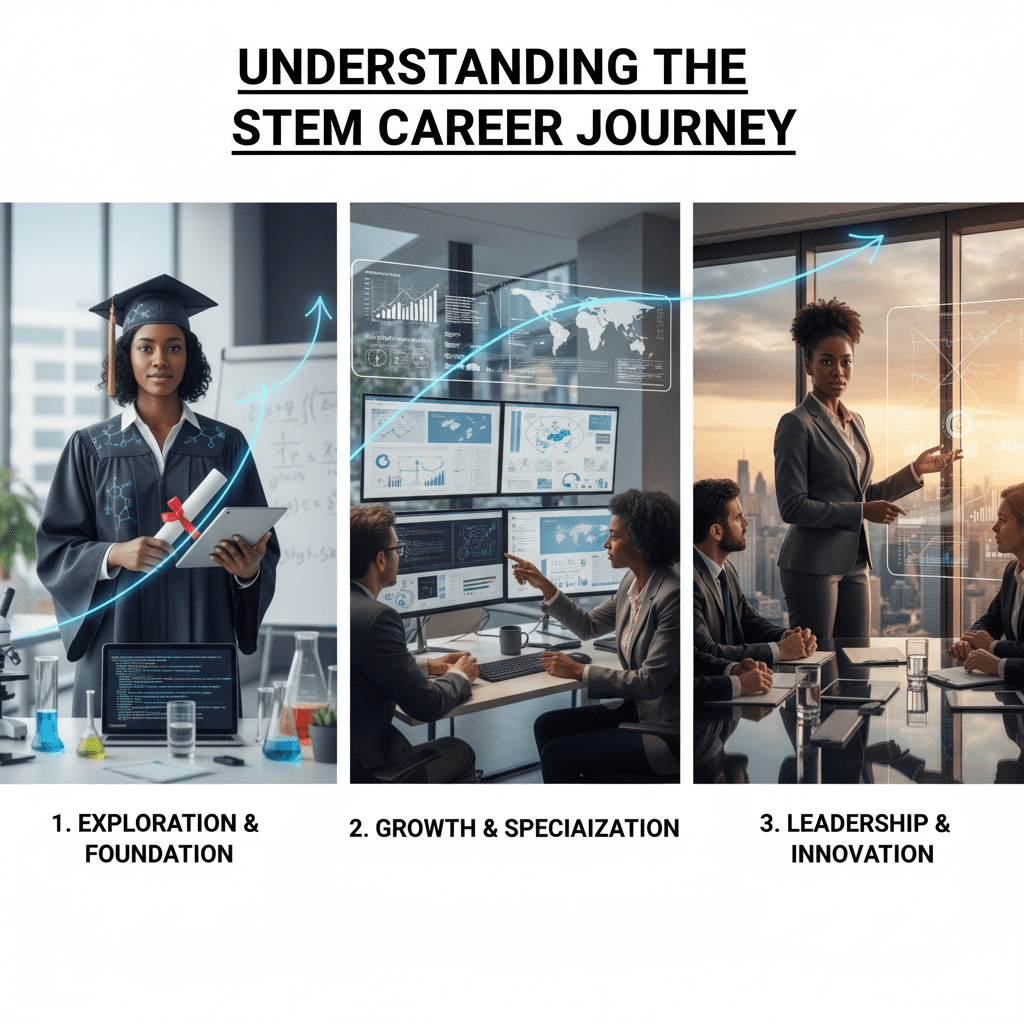
The path from graduate to industry leader usually follows recognizable stages. Each stage has different priorities, skills to build, common challenges, and signals that you are ready to move to the next level. Below is a detailed breakdown to help you map your own journey.
Early stage: gaining technical competence and practical experience
This is where most graduates start. The main goal is to turn academic knowledge into reliable, repeatable workplace ability. Typical features of this stage include:
- Learning by doing: You apply classroom theory to real systems, whether in a lab, on a codebase, or in a field deployment. Small wins here matter more than big claims.
- Building tool fluency: You become comfortable with the software, hardware, lab methods, or instruments used in your field. Examples include learning Python and Git, mastering lab protocols, or understanding CAD tools.
- Delivering dependable outputs: Employers notice people who meet deadlines, produce clean work, and follow good engineering or scientific practice.
- Seeking feedback and iteration: Regular feedback from supervisors, peers, or mentors accelerates growth more than solitary study. Use feedback to refine techniques and improve quality.
Actions that accelerate progress in this stage: volunteer for hands-on tasks, keep a log of practical achievements, publish small projects on GitHub or institutional repositories, and ask for concrete goals from your manager. Typical timeline: months to the first two or three years of your career.
Mid stage: developing influence through collaboration and innovation
Once you can do the technical work reliably, the next phase is about impact and visibility. Mid-stage professionals expand their influence by working across teams and leading smaller initiatives. Key characteristics include:
- Leading projects and subprojects: You take ownership of modules, experiments, or product features and coordinate others to deliver.
- Cross-functional collaboration: You work with design, product, business, or policy teams and learn to translate technical trade-offs into business or social value.
- Driving improvements and small innovations: You propose process changes, optimize workflows, or prototype feature ideas that save time or create new value.
- Mentoring juniors: Coaching interns or newer colleagues proves you can teach and scale knowledge.
- Building a professional brand: You present at internal tech talks, write blog posts or papers, and engage in professional networks.
Practical steps to move through the mid stage: ask for stretch assignments, document measurable impacts of your work, seek leadership training, and expand your network inside and outside the organization. Typical timeline: around 2 to 7 years, depending on role and opportunity.
Leadership stage: managing teams, leading strategy, and shaping industry impact
Leadership-stage roles require you to shift focus from individual contribution to enabling others and setting direction. The work becomes less about writing code or running experiments and more about shaping outcomes at scale. Common features are:
- Team leadership and people management: You set goals, hire or develop talent, manage performance, and create a healthy team culture.
- Strategic thinking: You translate long-term vision into roadmaps, decide where to invest resources, and balance short-term delivery with long-term research or product bets.
- Stakeholder influence: You communicate with executives, funders, customers, or regulators and advocate for technical directions with clarity and credibility.
- Impact measurement and accountability: You define success metrics for teams, track outcomes, and take responsibility for results.
- Shaping the field: Senior leaders often influence industry standards, mentor rising leaders, and represent their organizations externally at conferences and policy forums.
To prepare for and succeed in leadership roles, focus on people skills, systems thinking, and financial or program management basics. Seek coaching, formal leadership training, and opportunities to lead cross-organizational initiatives.
Key insight: leadership is not just expertise but growth in mindset, communication, and vision
Technical mastery is necessary but not sufficient for leadership. The difference between a competent engineer or scientist and an industry leader is a change in focus and habits:
- Mindset: Leaders think in terms of systems and outcomes, not tasks. They tolerate ambiguity, embrace iteration, and convert failure into learning.
- Communication: Leaders explain complex ideas simply. They listen to diverse perspectives, build consensus, and persuade stakeholders with evidence and empathy.
- Vision: Leaders see the bigger picture. They align technical work to strategic goals, anticipate future trends, and inspire others to follow a shared direction.
Signs you are ready to transition into leadership include consistent delivery of measurable results, frequent requests for your guidance, invitations to represent your team, and the ability to influence decisions beyond your immediate work. To accelerate the transition, set clear development goals, measure progress, and seek mentors who have walked the path. Practical actions include shadowing managers, leading small cross-functional pilots, taking short leadership courses, and asking for explicit feedback on your readiness.
By recognizing these stages and intentionally developing the non-technical skills that matter, STEM graduates can move confidently from doing the work to leading the work.
Building a Strong Technical and Professional Foundation
Every great STEM leader begins with a solid foundation. Before you can manage teams or shape strategy, you need to prove your technical competence and build a reputation for excellence. This stage is all about learning deeply, staying curious, and showing that you can apply your skills to real-world challenges.
- Strengthen your technical depth and stay updated
Recruiters and employers look for professionals who not only understand the basics but also stay ahead of emerging trends. Whether you work in data science, biotechnology, renewable energy, or software engineering, continuous learning is essential. Read industry reports, follow thought leaders, and attend workshops or conferences. When you stay informed about new technologies, you naturally position yourself as someone who can lead with insight and relevance.
- Get certifications or take short courses
Professional certifications and online courses are great ways to boost your credibility. They show that you are proactive about learning and serious about your career growth. Platforms like Coursera, Udemy, and LinkedIn Learning offer specialized programs designed for working professionals. Choose certifications that align with your field — for example, data analytics, project management, cloud computing, or sustainable engineering. These help you stand out and give you the confidence to lead with authority.
- Apply your skills in projects, internships, and research
Knowledge is valuable only when applied. Join research projects, internships, or community initiatives that challenge you to solve real problems. This is where you start connecting theory to practice. Every project you complete becomes proof of your ability to deliver results, and every challenge teaches you something about teamwork, problem-solving, and decision-making — all essential for leadership. Document your work in a portfolio or digital profile so others can see the depth of your experience.
- Communicate your technical work clearly
Leadership in STEM is not just about knowing the science; it is about being able to explain it. Learn how to communicate complex technical concepts in a simple and engaging way, especially when speaking to non-technical audiences such as managers, investors, or clients. Clear communication builds trust and helps others see the value of your ideas. You can practice this skill by presenting at team meetings, writing summaries of your work, or explaining projects to peers outside your field.
At African Women in STEM, our 6-month mentorship program is designed exactly for this purpose. Each participant joins a mentor circle — one mentor with two or three mentees — to create a supportive learning environment. In this space, you share experiences, learn collaboratively, and gain feedback that helps you grow faster.
Developing Leadership and Soft Skills
Becoming an industry leader in STEM takes more than technical knowledge. It is also about how well you work with people, communicate your ideas, and make thoughtful decisions. These “soft skills” are what help you move from being a good professional to an inspiring leader.
- Communication: Learn to present ideas clearly and confidently
Great leaders know how to make complex information easy to understand. Whether you are explaining a technical project to your team, presenting to senior management, or pitching an idea, clarity matters. Practice speaking and writing in ways that connect with your audience. You can start by explaining your work to someone outside your field or joining public speaking or presentation workshops. Strong communication builds trust and helps others see the value of your ideas.
- Teamwork: Practice collaboration across departments and disciplines
No STEM leader works in isolation. Projects today often involve teams with diverse expertise — engineers, data analysts, designers, researchers, and business professionals. Learn how to collaborate, listen actively, and respect different perspectives. Effective teamwork means knowing when to lead and when to support. It also teaches you patience, flexibility, and the power of collective problem-solving.
- Decision-making: Develop the ability to make informed, strategic choices
As you grow into leadership, you will need to make decisions that impact projects, budgets, and people. Strong decision-making comes from a mix of knowledge, experience, and intuition. Take time to analyze situations, gather data, and weigh the pros and cons before choosing a direction. Even when mistakes happen, treat them as learning opportunities. Leaders who make thoughtful and confident decisions earn the respect of their teams.
- Empathy and Emotional Intelligence: Understand how to lead people, not just projects
Leadership is about people. Emotional intelligence helps you connect with your team, understand their challenges, and motivate them to do their best work. Show empathy by listening, offering support, and recognizing effort. When your team feels valued, they are more creative, productive, and loyal. A leader who understands both the technical and human side of work creates an environment where everyone thrives.
Programs like Thrive Hub Accelerator provide leadership workshops, coaching sessions, and real-world projects that help STEM professionals grow into confident managers. You learn how to lead diverse teams, communicate effectively, and make strategic decisions, all within a supportive community of like-minded women.
In short, leadership is built step by step. The more you practice communication, teamwork, decision-making, and empathy, the stronger your foundation becomes. Combine these skills with your technical expertise, and you will be well on your way to becoming a leader who inspires others and creates lasting impact in STEM.
Gaining Visibility and Building Your Professional Brand
Becoming an industry leader is not just about what you know, it is also about who knows you and what you are known for. Building a strong professional brand helps you stand out, attract opportunities, and position yourself as a trusted voice in your field. Visibility is how you turn quiet expertise into recognized leadership.
Attend and speak at conferences, webinars, or STEM panels
Start showing up where your industry gathers. Attend conferences, workshops, and online events to learn and connect with others. When you are ready, take the next step — share your own insights by speaking on a panel or hosting a webinar. Public speaking builds confidence and credibility. It shows others that you have valuable knowledge to contribute and that you are passionate about your work.
Publish research papers or share thought leadership articles online
Sharing your work publicly helps you build authority. If you are in research, publish your findings in journals or online science platforms. If you are in tech or engineering, write blog posts or LinkedIn articles about your experiences, lessons, or new trends. The goal is to make your voice heard. Thought leadership opens doors to collaborations, partnerships, and even job offers.
Use platforms like LinkedIn to share insights and connect with peers and industry experts
LinkedIn is a powerful tool for building your professional image. Keep your profile updated with your achievements, skills, and projects. Engage with posts, share your thoughts on industry news, and connect with mentors or recruiters. When people see your name regularly linked with insightful content, they start recognizing you as someone to follow and trust in your field.
Volunteer for leadership positions in professional or community organizations
Taking up leadership roles in professional associations, university clubs, or STEM networks helps you practice real-world leadership. It is also a great way to meet other professionals and learn how to manage teams, organize events, and solve problems collaboratively. These experiences strengthen your resume and show employers that you are committed to growth and service.
So you know, mentorship plays a key role in helping you become visible in your industry. Through programs like African Women in STEM’s mentorship initiative and the Thrive Hub Accelerator, you can connect with experts who introduce you to new networks, recommend you for opportunities, and help you grow your influence with confidence.
Learning to Lead Projects and People
Leadership in STEM is not something that happens overnight. It begins with small steps — taking initiative, managing responsibilities, and learning how to work with and inspire others. To grow from being a team member to a leader, you must learn how to balance technical expertise with people skills.
Start by leading small project teams or mentoring junior colleagues
You do not need a big title to start leading. Begin by volunteering to lead a small project or by mentoring interns and junior colleagues. These opportunities teach you how to organize tasks, delegate responsibilities, and motivate others. Leadership is about influence, not position. The more you practice it in everyday situations, the more natural it becomes when you step into bigger roles.
Learn project management basics (Agile, Scrum, or PMP)
Strong leaders know how to manage time, people, and resources effectively. Learning project management principles such as Agile or Scrum can help you coordinate tasks, set realistic goals, and keep projects on track. Even if you are not a certified project manager, understanding these methods helps you communicate better with your team and deliver results efficiently.
Observe how leaders in your organization manage conflict, motivation, and results
Pay attention to how experienced leaders around you operate. How do they resolve disagreements? How do they motivate teams during stressful projects? Observation is one of the best ways to learn leadership. Take notes, ask questions, and reflect on what kind of leader you want to be. Learning from others’ successes and mistakes helps you build your own authentic leadership style.
Take ownership — leadership begins with accountability
True leaders take responsibility for outcomes, whether things go right or wrong. If a project fails, analyze what happened and suggest solutions. If it succeeds, celebrate your team’s effort and give credit where it is due. Accountability earns you trust and respect, two traits that define every great leader.
Through the Thrive Hub Accelerator, you get the chance to experience leadership in real-world STEM settings. The program offers practical leadership challenges, hands-on projects, and personalized coaching that help you grow into a confident, capable leader. You also get to work with mentors who guide you through team management, problem-solving, and strategic decision-making.
Expanding Your Network and Collaborations
In STEM, success often comes down to more than just what you know — it is also about who you know and how you connect with them. Building strong professional relationships opens doors to opportunities, collaborations, and mentorship that can accelerate your career growth.
Join professional associations or global STEM communities
Becoming a member of professional organizations gives you access to industry news, training, and conferences. These groups also provide platforms where you can meet leaders, innovators, and peers who share your interests. Whether it is an engineering society, a science network, or a technology group, joining these communities helps you stay visible and informed about trends in your field.
Collaborate with professionals across disciplines and countries
Innovation often happens when ideas from different fields come together. Collaborate with professionals from other STEM areas or even non-STEM sectors to broaden your thinking. Working on cross-disciplinary projects also helps you develop flexibility, creativity, and communication skills that leaders need. Collaboration across borders brings new perspectives and solutions to complex challenges.
Seek opportunities for international research or innovation projects
Do not be afraid to think globally. Apply for international programs, research exchanges, or innovation challenges. These experiences expose you to advanced technologies, diverse work cultures, and global networks. They also strengthen your ability to adapt and lead in multicultural environments — a skill that is increasingly valuable in today’s global STEM industry.
Stay connected with mentors, peers, and former colleagues for continuous support
Networking is not just about meeting new people; it is also about nurturing existing relationships. Stay in touch with your mentors and colleagues even after changing jobs or completing a project. Regular check-ins, sharing updates, or offering help can keep your network active and meaningful. These relationships often lead to new collaborations, recommendations, or leadership opportunities.
Through the African Women in STEM mentorship and Thrive Hub Accelerator programs, you can connect with a vibrant community of women across different countries and STEM disciplines. These programs are designed to help you form genuine, cross-border collaborations that expand your reach and influence. Whether you are joining virtual meetups, group mentorship circles, or joint innovation projects, you are not just building a network — you are becoming part of a movement that uplifts women in STEM across Africa and beyond.
Overcoming Common Barriers in Leadership Transition
Moving from a technical role to a leadership position can be exciting, but it also comes with challenges that many STEM professionals face. Understanding these barriers — and knowing how to navigate them, can make your transition smoother and more rewarding.
Imposter Syndrome: Build Confidence Through Mentorship and Measurable Progress
Many emerging leaders in STEM struggle with self-doubt, feeling like they are not qualified or experienced enough to lead. This feeling is common, especially in high-achieving environments. The key is to focus on your progress rather than perfection. Celebrate small wins, track your achievements, and remind yourself that leadership is a skill developed over time.
Mentorship plays a huge role here. Having someone who believes in you, provides honest feedback, and shares their own journey can help you see how far you have come. Over time, this builds confidence and resilience.
Gender Bias or Lack of Representation: Find Communities That Support Women in Leadership
Women in STEM often face additional hurdles such as unconscious bias, limited representation, or unequal access to leadership opportunities. One powerful way to overcome this is by joining supportive communities where women empower each other through shared experiences and mentorship.
These spaces remind you that you are not alone. They also help you find role models who have broken barriers and can show you strategies for doing the same. Communities like African Women in STEM provide the encouragement, connections, and visibility needed to grow as a leader.
Balancing Technical and Managerial Duties: Learn When to Delegate and Focus on Strategy
As you move into leadership, your responsibilities shift. You are no longer just executing tasks, you are guiding people, shaping strategy, and driving results. It can be difficult to balance technical work with managerial duties at first.
The secret is learning when to delegate. Trust your team with the technical details so you can focus on vision, planning, and communication. Leadership is not about doing everything yourself; it is about empowering others to do their best work while you guide the bigger picture.
Limited Opportunities: Create Your Own Through Innovation and Visibility
Sometimes, opportunities to lead are not clearly offered — you have to create them. Volunteer to lead a small project, start a research initiative, or propose a new idea in your workplace. When you take initiative, you demonstrate leadership potential before you even have the title. Sharing your work publicly, whether through LinkedIn, events, or publications, also builds visibility. The more people see your skills and contributions, the more doors will open.
Continuous Growth and Lifelong Learning
Becoming a STEM leader is not a destination, it is an ongoing journey. The industries you work in will continue to evolve, technologies will advance, and the demands on leaders will change. Staying ahead requires a mindset of continuous growth and a commitment to lifelong learning.
Keep upgrading both technical and leadership skills
Even as you take on leadership responsibilities, your technical skills remain important. Stay current with new tools, software, and methods in your field. At the same time, continue building leadership abilities such as team management, strategic planning, and conflict resolution. A leader who balances technical expertise with strong leadership skills is more effective and influential.
Attend executive education programs or specialized leadership courses
Formal learning can accelerate your development. Executive programs, professional certifications, or specialized leadership courses help you gain new knowledge, frameworks, and strategies for leading teams and projects. These programs also provide networking opportunities with peers and experts, which can open doors to collaboration and career advancement.
Reflect regularly on your goals and progress
Self-reflection is a critical habit for leaders. Take time to assess what you have achieved, what challenges you faced, and where you want to grow. Reflection allows you to make adjustments, set realistic goals, and track progress in both technical and leadership areas. Journaling, mentoring sessions, or peer discussions are all effective ways to reflect meaningfully.
Stay curious — leaders are lifelong learners
Curiosity drives innovation. Seek out new ideas, technologies, and approaches. Attend webinars, read industry publications, and engage in discussions with peers from different disciplines. Curiosity keeps your thinking fresh, adaptable, and forward-looking, qualities that are highly valued in STEM leadership.
Mentorship is a cornerstone of continuous growth. A mentor provides guidance on industry trends, emerging leadership practices, and personal development strategies. Through African Women in STEM’s mentorship program, you can stay aligned with evolving standards, receive feedback on your progress, and gain encouragement to pursue new learning opportunities.
Conclusion
Transitioning from a STEM graduate to an industry leader involves more than technical knowledge. It requires vision, strong communication, emotional intelligence, strategic thinking, and the willingness to learn continuously. Leadership is built step by step, through experience, reflection, and guidance.
Every STEM graduate has the potential to become a leader. With the right mindset, access to mentorship, supportive communities, and opportunities to practice leadership, you can overcome challenges and inspire others in your field. Leadership is a journey, and each step you take shapes not only your career but also the future of STEM.