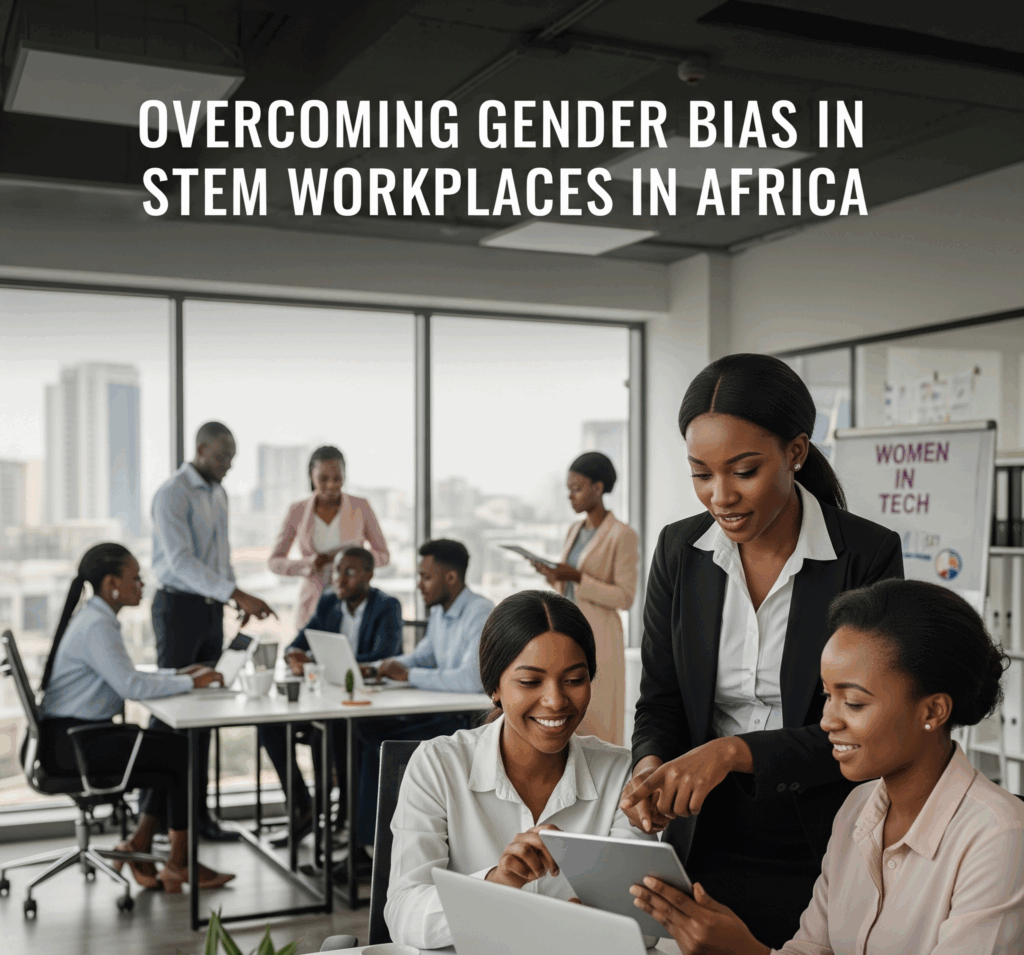
STEM fields are expanding rapidly across Africa. From groundbreaking innovations in renewable energy to advances in artificial intelligence and biotechnology, the continent is becoming a hub for scientific and technological growth. Yet, within this promising landscape, women remain significantly underrepresented. Many African women pursuing careers in science, technology, engineering, and mathematics still encounter persistent gender bias that can limit their opportunities and silence their contributions.
This matters for more than individual careers. Gender bias holds back Africa’s full innovation potential. When women are excluded from leadership positions, research teams, or funding opportunities, entire industries lose out on diverse perspectives and problem-solving approaches that could drive progress. Closing the gender gap in STEM is not only about fairness but also about unlocking the creativity and talent that Africa needs to thrive in the global knowledge economy.
The purpose of this article is to explore how African women can navigate, challenge, and overcome gender bias in STEM workplaces. We will also highlight the power of mentorship and community as essential tools for building resilience, boosting confidence, and ensuring that women are not only present in STEM fields but leading them.
Understanding Gender Bias in African STEM Workplaces
Gender bias refers to the unequal treatment of individuals based on their gender. In STEM workplaces, this bias often favors men over women, sometimes in ways that are subtle and other times in ways that are very obvious. It can show up in daily interactions, organizational practices, or even in policies that are meant to be neutral but end up creating barriers for women.
According to UNESCO, women make up approximately 30 percent of researchers globally, and in sub-Saharan Africa the figure hovers just under that, depending on the country and the field. For example, in many African nations women represent fewer than 20 percent of engineering professionals, and in some sub-Saharan regions that figure is even lower—sometimes under 10 percent. These statistics reveal how deeply gender bias affects the STEM pipeline, from education through to professional careers.
Understanding the problem is the first step. By recognizing how bias operates in the workplace, African women in STEM can begin to find strategies to address it, while organizations and communities can push for systemic changes that create a more inclusive environment.
Common Challenges Women Face in STEM Workplaces

Even after earning their qualifications and proving their abilities, many African women in STEM still face challenges that make it difficult to grow and thrive in their careers. These challenges are often rooted in long-standing social and institutional biases that create an uneven playing field.
Representation Gap
One of the most visible challenges is the lack of representation. In many STEM workplaces across Africa, women often find themselves as one of very few female colleagues on a team or in an entire department. The scarcity of women in leadership positions means younger professionals have limited role models to look up to. This absence can reinforce the false perception that women do not belong in high-level STEM careers and can discourage more girls from pursuing these fields in the first place.
Workplace Stereotypes
Another challenge is how women are perceived. Too often, women in STEM are judged on their gender before their competence. Their skills and achievements may be questioned, while male colleagues are assumed to be capable by default. Women are sometimes expected to take on administrative or supportive tasks rather than technical or leadership roles, which minimizes their contributions and limits their opportunities for advancement.
Pay and Promotion Inequities
Across Africa, as in much of the world, gender pay gaps remain a pressing issue. Women in STEM often earn less than their male counterparts, even when they hold the same qualifications and perform the same tasks. Promotions are also slower for women, with leadership positions disproportionately occupied by men. This inequity not only affects women financially but also undermines their professional confidence and long-term career growth.
Balancing Work and Family Expectations
For many women, societal expectations add another layer of difficulty. African women are often expected to balance demanding careers with family responsibilities, from childcare to household management. While male colleagues may be celebrated for focusing on their careers, women are sometimes criticized for doing the same. This double standard creates additional stress and can make it harder for women to dedicate time to research, networking, or leadership opportunities that are essential for career progression.
These challenges are not insurmountable, but they require deliberate strategies and supportive communities to overcome. Recognizing these barriers is the first step toward breaking them down and ensuring that African women in STEM have the same opportunities to excel as their male counterparts.
Strategies to Overcome Gender Bias as an African Woman in STEM
Gender bias in the workplace can be discouraging, but it does not have to define your career. By using practical strategies, African women in STEM can navigate these challenges, demonstrate their value, and continue to grow professionally. The following approaches can help turn obstacles into opportunities for empowerment.
1. Build Confidence and Own Your Expertise
Confidence is one of the most powerful tools in overcoming bias. Speak up in meetings and make sure your voice is heard, even if you are the only woman in the room. Share your accomplishments openly rather than waiting for others to notice them. Advocating for yourself is not arrogance; it is a recognition of the hard work you have put into developing your skills. Over time, consistently presenting yourself with confidence helps shift the perception of women in STEM and shows that you are just as qualified and capable as your peers.
2. Document Your Work and Impact
One way to counter bias is to use evidence. Keep a record of your projects, the results you delivered, and any positive feedback from colleagues or clients. Having measurable data on your performance can be very helpful during performance reviews or promotion discussions. This documentation ensures that your work speaks for itself, even if others attempt to overlook your contributions. It also gives you a personal reminder of how much you have achieved, which is valuable for maintaining confidence.
3. Seek Allies and Advocates
No one should have to face workplace bias alone. Building relationships with both male and female colleagues who believe in equality can make a big difference. Allies can amplify your ideas in meetings, recommend you for opportunities, or speak up when they notice unfair treatment. Advocates in leadership positions can also play a crucial role in opening doors that might otherwise remain closed. Surrounding yourself with supportive people creates a network of protection and encouragement.
4. Educate and Challenge Stereotypes
Gender bias often thrives because it goes unchallenged. When stereotypes or biased assumptions arise, it is important to address them in a respectful but firm manner. This does not mean engaging in arguments but rather pointing out inaccuracies and offering a new perspective. For example, if someone implies that engineering is better suited for men, you can respond with examples of women leading major engineering projects across Africa. Educating others in this way helps break harmful patterns and creates awareness that benefits not only you but also future generations of women in STEM.
5. Keep Learning and Upskilling
Continuous growth is essential in STEM fields, where new technologies and methods emerge rapidly. By actively pursuing training, certifications, and advanced knowledge, you strengthen your expertise and credibility. This makes it harder for bias to diminish your contributions because your skills and results become undeniable. Upskilling also positions you for leadership roles and ensures you remain competitive in a fast-changing job market.
Together, these strategies form a strong foundation for overcoming gender bias. They empower African women in STEM to stand tall, build resilience, and open pathways for themselves and those who will follow.
The Role of Community in Breaking Bias
While individual strategies are important, true change often happens when women come together as a community. A strong community creates opportunities for learning, support, and collective action, making it one of the most effective tools to dismantle gender bias in STEM workplaces.
Collective Voice is Louder
It is easy for one woman to be dismissed or ignored when she raises concerns about bias, but when a group of women speak up together, their voice becomes much harder to overlook. Communities give women the power to advocate collectively for fairer policies, better representation, and more equitable opportunities. By standing as a unified front, women in STEM across Africa can influence institutions, industries, and even governments to recognize and address gender-based challenges.
Shared Resources
A community is also a place to share resources and strategies. Whether it is access to mentorship programs, workshops on leadership development, or toolkits for handling workplace discrimination, communities allow women to learn from one another’s experiences. Instead of facing challenges alone, members can adopt proven approaches that have already helped others succeed. This sharing of knowledge not only saves time but also equips women with the practical tools they need to thrive in their careers.
Safe Space for Storytelling
Perhaps one of the most powerful aspects of a community is the safe space it provides for storytelling. Many women in STEM feel isolated when they encounter gender bias, believing that they are the only ones facing such barriers. In a supportive community, women can share their stories openly, knowing they will be heard and understood. This storytelling process is empowering because it validates individual experiences and reminds women that they are not alone. It also builds solidarity and fosters resilience, as women realize they are part of a larger movement working toward the same goal.
By offering collective strength, shared wisdom, and emotional support, communities play a vital role in breaking bias. They ensure that women do not just survive in STEM but find ways to grow, lead, and make lasting contributions to Africa’s scientific and technological future.
How African Women in STEM Mentorship Helps
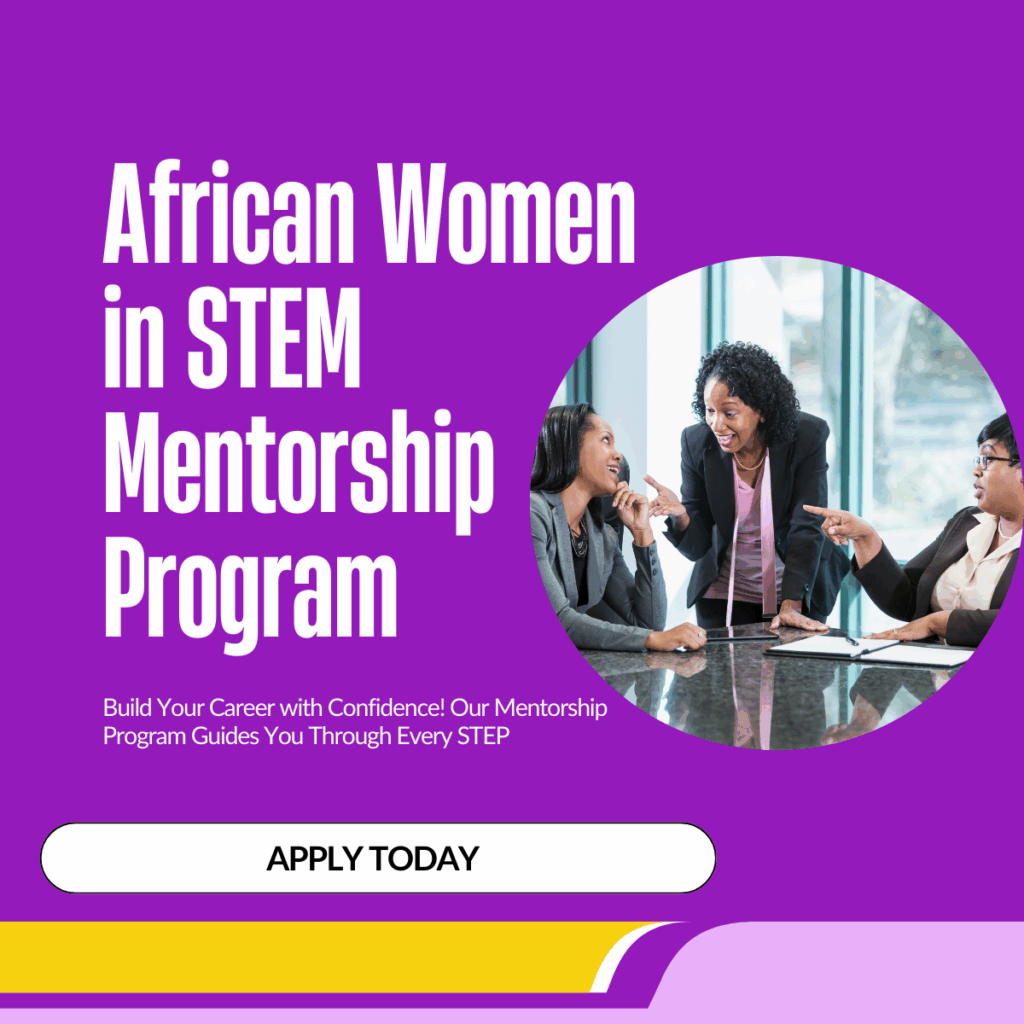
Mentorship is one of the most powerful tools for overcoming gender bias in STEM careers. It bridges the gap between challenges and solutions by connecting women who are just starting out with those who have already walked the path. The African Women in STEM mentorship program was designed to address the unique struggles women face in workplaces across the continent and to provide the support needed to thrive.
Breaking Isolation
One of the hardest parts of facing gender bias is feeling like you are the only one going through it. Mentorship solves this by pairing early-career women with mentors who have experienced the same struggles and successfully navigated them. Hearing how others overcame challenges creates a sense of belonging and proves that obstacles can be conquered. Instead of feeling isolated, mentees become part of a support system where their voices matter.
Career Navigation Tools
Mentors share practical strategies that are often not taught in school or formal training. This includes guidance on negotiating salaries fairly, handling microaggressions in the workplace, and positioning yourself for promotions or leadership roles. Learning these strategies from someone who has already applied them gives women a roadmap to follow, helping them avoid common pitfalls and move forward with clarity and confidence.
Confidence Building
A mentor is more than a guide. They are also a source of encouragement. Regular feedback and reassurance from a mentor helps women recognize their own worth and abilities. Many women struggle with self-doubt because of the stereotypes they encounter in STEM fields, but mentorship provides a consistent reminder that they belong and are capable of succeeding. This boost in confidence can make all the difference in seizing opportunities and pushing through barriers.
Community Support
The African Women in STEM mentorship program is not limited to one-on-one connections. It also offers a wider network of women who uplift each other across borders, industries, and STEM fields. This community becomes a space where women can share resources, celebrate wins, and collaborate on opportunities. It is a living example of how collective support can break down systemic barriers and open new doors.
Conclusion
Gender bias in African STEM workplaces is a reality, but it is not unbreakable. With confidence, clear strategies, strong mentorship, and the support of a united community, women can not only survive in these spaces but thrive and lead.
Every woman who rises in STEM opens doors for others to follow. Each act of courage, each shared story, and each mentoring relationship creates ripple effects that extend far beyond one career. Together, African women are not only overcoming bias, they are reshaping the future of science, technology, engineering, and mathematics across the continent.