Across Africa and around the globe, the fields of Science, Technology, Engineering, and Mathematics collectively known as STEM are shaping the future. Yet, despite making up half the population, women remain dramatically underrepresented in these spaces. For African women in STEM, the obstacles are even steeper: fewer role models, less access to resources, and the double bind of gender and racial bias. Still, there are trailblazers who are challenging the odds and changing the story for all of us.
Why do these stories matter? Because visibility is powerful. When African women in STEM are celebrated, it sends a message: you can do this too. It breaks the myth that excellence in science, engineering, or technology is reserved for others. This inspires girls to dream bigger and helps boys see their sisters and classmates as equals and collaborators. It challenges outdated norms and expands what is possible for our entire continent.
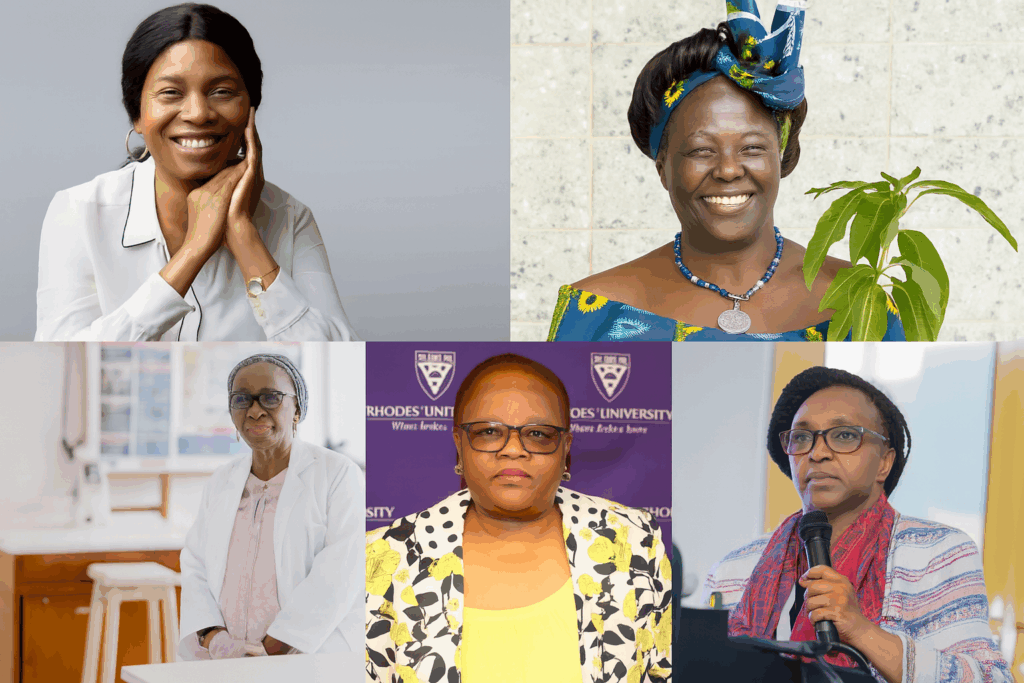
Here are five African women in STEM whose stories you should know. Their journeys prove that with vision, strategy, and support, it is possible not only to break barriers but also to build new bridges for those who follow.
1. Dr. Tebello Nyokong (South Africa)
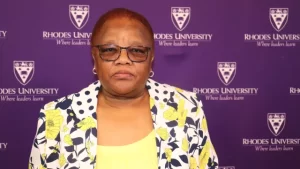
Dr. Tebello Nyokong stands as a beacon for African women in STEM, both in her native South Africa and globally. As a distinguished professor of Chemistry at Rhodes University, Dr. Nyokong’s research in photodynamic therapy has pushed the boundaries of cancer treatment. Her work uses light-sensitive drugs to target and destroy cancer cells. This offers hope for therapies that are less invasive and potentially more effective.
Her story is also one of perseverance. Growing up in Lesotho, Dr. Nyokong faced significant obstacles. From poverty, limited educational resources, and a society that did not expect girls to pursue science. Despite these challenges, she excelled in school. Infact, she earned scholarships that took her from Lesotho to South Africa and then abroad. She has spoken openly about the extra hurdles African women in STEM must clear, from being underestimated in classrooms to the constant pressure to prove themselves.
Dr. Nyokong’s accolades are many. Among them is the L’Oréal-UNESCO Award for Women in Science, which recognized her groundbreaking research and her commitment to supporting young scientists, especially women. As a mentor, she is known for her open door policy and her willingness to champion the next generation. She believes that scientific excellence is possible in Africa and that African women must be central to that story.
Her journey reminds us that talent exists everywhere, but opportunity does not. That is why African Women in STEM works to expand opportunities through mentorship, access to resources, and community support so that more women can follow in Dr. Nyokong’s footsteps.
2. Dr. Rose Leke (Cameroon)

Few scientists have done as much as Dr. Rose Leke to fight malaria, a disease that still claims hundreds of thousands of lives every year, mostly in Africa. As a professor and researcher at the University of Yaoundé, Dr. Leke has spent decades unraveling the mysteries of malaria transmission, immunity, and treatment. Her work has shaped international policy and saved countless lives.
But Dr. Leke’s impact is not limited to the laboratory. She has been a vocal advocate for women in science. Dr. Leke is serving as president of the Federation of African Immunological Societies and working with the World Health Organization to empower female scientists and public health leaders. She has spoken out about the barriers facing African women in STEM. She speaks about lack of mentorship to discrimination and the constant juggle of family and professional responsibilities.
Growing up in Cameroon, Dr. Leke was encouraged by her parents to pursue education. She later earned her PhD in the United States, then returned home to build both her career and her country’s scientific capacity. Her commitment to mentoring young scientists, especially young women has created a ripple effect, empowering a new generation to carry the torch forward.
3. Dr. Wangari Maathai (Kenya)
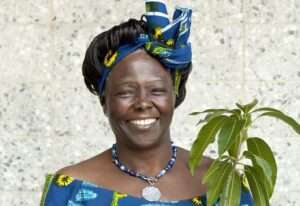
Dr. Wangari Maathai is a name synonymous with resilience, courage, and environmental activism. Born in Kenya, she became the first African woman to win the Nobel Peace Prize in 2004. Her pioneering work focused on environmental conservation, women’s rights, and sustainable development, most famously through the Green Belt Movement, which has planted millions of trees across Africa.
As a scientist, Dr. Maathai studied biology in the United States before earning her PhD in veterinary anatomy at the University of Nairobi, becoming the first East African woman to earn a doctorate. Her academic achievements alone would have been historic, but she went further. Dr. Maathai recognized the connection between environmental health, economic justice, and women’s empowerment. She believed that when women are given the tools to take care of their land and communities, everyone benefits.
Dr. Maathai faced fierce opposition throughout her career, including political harassment and imprisonment. Yet she remained steadfast, inspiring generations to combine scientific understanding with activism. Her leadership has transformed environmental policy not only in Kenya but around the world, and her courage continues to motivate young women to pursue STEM with purpose.
4. Dr. Francisca Nneka Okeke (Nigeria)

When you think of trailblazers in African physics, Dr. Francisca Nneka Okeke’s name stands out. A renowned geophysicist, Dr. Okeke’s research on the ionosphere and its impact on Earth’s climate has brought her international acclaim. Her work is especially important as Africa faces climate challenges that require local expertise and global collaboration.
Dr. Okeke broke new ground as the first female Dean of the Faculty of Physical Sciences at the University of Nigeria, Nsukka. In a field historically dominated by men, her leadership and success have made her a role model for women across the continent. She has consistently advocated for gender equity in science, often mentoring young women and calling for more inclusive academic policies.
Her achievements have earned her several awards, including the L’Oréal-UNESCO Awards for Women in Science. She is known for her determination to lift others as she climbs. Dr. Okeke’s story is one of persistence and vision, a reminder that change happens when women are both present and empowered to lead.
5. Dr. Anne Kihara (Kenya)
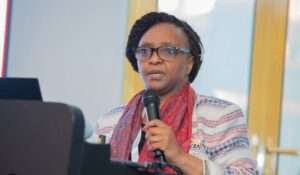
Dr. Anne Kihara is a force for women’s health across Africa and beyond. As a professor of obstetrics and gynecology, she has dedicated her career to improving maternal and reproductive health outcomes. Her journey has taken her from university classrooms to the highest levels of international advocacy. She is the current President of the International Federation of Gynecology and Obstetrics (FIGO).
Dr. Kihara’s work is rooted in the belief that healthcare is a human right. She has led campaigns for safer childbirth, access to family planning, and better training for healthcare professionals. Her leadership has influenced policy at national and global levels, ensuring that women’s health is prioritized in discussions about Africa’s future.
Like many African women in STEM, Dr. Kihara has had to navigate not only scientific challenges but also cultural barriers and gender bias. She is known for her mentorship and advocacy, often working behind the scenes to support young doctors, scientists, and community health workers.
Her example demonstrates the impact that one person can have not only in their field but in the lives of women and families across continents. At African Women in STEM, we share Dr. Kihara’s commitment to transforming health and opportunity for everyone, everywhere.
The Power of Support: How These Women Beat the Odds
What do these leaders have in common? None of them succeeded alone. Every story of triumph includes moments of doubt, setbacks, and times when the path forward was unclear. What made the difference? Support, mentorship, and community.
The Role of Mentorship
Mentorship is a recurring theme in the lives of successful African women in STEM. Having someone to offer guidance, share hard-earned wisdom, and open doors can make all the difference. That is why African Women in STEM’s Mentorship Program is grounded in small, supportive circles. One mentor and two to three mentees where women can ask questions, celebrate wins, and navigate tough environments together.
The Power of Community
Isolation is one of the greatest barriers to persistence and success in STEM, especially for women who are often the only ones in their department, lab, or team. Our Free STEM Community offers a safe space to connect, collaborate, and be inspired. Here, you can find collaborators, share resources, and know that you are not alone.
IGNITE Membership: Growing Leaders
For mid-career women ready to lead, our IGNITE Membership provides regular sessions for skill-building, leadership training, and career support. Affordable and accessible, IGNITE Membership connects you with expert-led resources and a network of ambitious African women.
Thrive Hub Accelerator: Building Momentum
For those poised for their next big move, the Thrive Hub Accelerator is a 12-week premium program designed to help you land your dream role or promotion. It combines career coaching, visibility strategy, and network-building so you can lead with confidence, clarity, and impact.
Why Visibility Changes Everything
Representation is more than just numbers. When we see women like Dr. Nyokong, Dr. Leke, Dr. Maathai, Dr. Okeke, and Dr. Kihara, we see what is possible. Their stories shatter stereotypes, inspire ambition, and create pathways for others. They prove that African women in STEM are not just breaking barriers, they are building new worlds.
When African women are visible in science and technology, it changes how girls see themselves. It challenges the assumptions of teachers, employers, and policymakers. It shows that Africa’s future will be shaped by all its talent, not just a privileged few.
That is why African Women in STEM works tirelessly to raise the profiles of its members, to celebrate every win, and to tell the stories that too often go untold.
How African Women in STEM Is Building the Next Generation
The journey is not easy, but it is possible and it is happening every day. Our mission is to make sure no woman has to walk it alone. Here’s how we are helping:
- Mentorship Program: Small circles that offer real guidance, confidence, and career navigation. No gatekeeping, just support.
- Free Community: A safe space to connect, ask questions, and find collaborators. Regular events, networking, and shared experiences.
- IGNITE Membership: Designed for mid-career women, offering visibility training, career strategy, and masterclasses, so you can transition, grow, and lead.
- Thrive Hub Accelerator: For founders, innovators, and those ready to lead, this 12-week program provides coaching, funding readiness, and strategic scaling.
We believe every African woman in STEM should have access to the resources, networks, and mentorship she needs to build her legacy.
Conclusion
The five women highlighted here did not just beat the odds, they changed them. They remind us that brilliance thrives when it is seen, supported, and celebrated. Their legacies are not just in their research or awards, but in the countless women and girls who will follow in their footsteps.
If you are an African woman in STEM know that you do not have to do it alone. That is exactly why African Women in STEM exists: to connect, to empower, and to help you build a future where your impact can be as great as your ambition.
Visit africanwomeninstem.com to learn more about our programs, connect with mentors, and become part of the next generation of African women in STEM leaders.