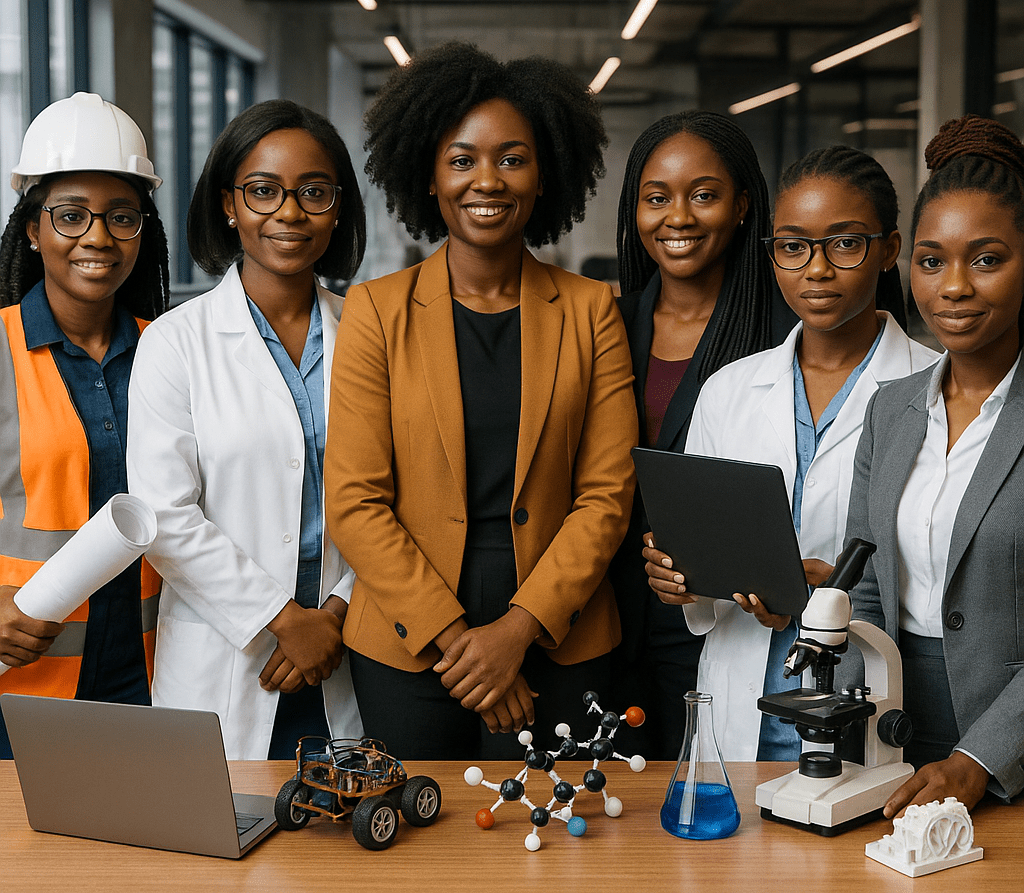
Did you know that less than 30 percent of the world’s researchers are women? When you narrow that number down to Africa, the gap grows even wider. The number of African women in STEM; Science, Technology, Engineering, and Mathematics is even smaller. Yet, as the world faces complex challenges, from climate change to health crises to digital transformation, the voices and talents of African women in STEM are not just important. They are absolutely essential.
This is not just an issue of fairness. It is about unlocking creativity, solving the continent’s most urgent problems, and building a future where all Africans can thrive. When African women are missing from STEM, we lose out on solutions, insights, and innovations that could change lives. When African women in STEM are seen, supported, and empowered, the ripple effects are felt in families, communities, and economies across the continent—and beyond.
In this article, we will explore why African women in STEM matter more than ever, what barriers they face, and how organizations like African Women in STEM are working to close the gap and build a stronger, more innovative, and more inclusive future for all.
The Global Problem: Underrepresentation in STEM
Across the world, STEM fields are the engines powering the next wave of discovery and progress. Yet, women remain underrepresented at every level. Globally, only about 30percent of researchers in STEM are women, according to UNESCO. The gender gap is even more pronounced in leadership roles. Women are less likely to hold patents, lead research teams, direct innovation labs, or secure venture capital funding for technology start-ups. The numbers are even more discouraging when you look for African women in STEM at the highest levels, whether it is university leadership, technology boards, or international research collaborations.
The African Context
Africa faces unique challenges when it comes to gender equity in STEM. Infrastructure gaps, unreliable electricity, limited internet access, and underfunded schools present obstacles for all students, but especially for girls. Cultural beliefs about what is “appropriate” for women and girls further restrict access to STEM education and careers. Girls are often steered toward the humanities or social sciences, or even encouraged to leave school early for marriage or caregiving roles.
For those who do pursue STEM, the road can be lonely. African women in STEM often find themselves as the only woman or the only African woman in their classrooms, research labs, or workplaces. Without mentors, networks, or visible role models, many talented young women lose confidence or leave the field altogether.
Why This Matters for Innovation and Progress
When women are missing from STEM, everyone loses. Research shows that diverse teams are more innovative. When only a narrow slice of the population is designing technology, doing research, or making decisions, blind spots grow. In Africa, this means many critical challenges like maternal health, clean energy, sustainable agriculture, and digital access—do not get the attention or culturally relevant solutions they deserve.
The lack of African women in STEM does not just hold back individual dreams. It slows down the continent’s development, limits economic opportunities, and makes it harder for Africa to compete on the global stage.
Why Representation of African Women in STEM Is Needed
Representation is not just a buzzword. It is the key to unlocking new ways of thinking, creating, and leading. Here’s why African women in STEM matter more than ever:
1. Diverse Innovation
African women bring unique cultural, local, and contextual knowledge to problem-solving. They see needs and opportunities that may be invisible to outsiders. For example, a woman who grew up in a rural village may design a solar-powered water purifier that works without electricity. A scientist who understands local farming could lead research on drought-resistant crops that actually benefit smallholder farmers.
Diversity in STEM is not about quotas. It is about making sure the people building tomorrow’s technologies and systems reflect the realities and needs of the communities they serve. African women in STEM are uniquely positioned to drive innovation that is sustainable, relevant, and transformative.
2. Better Outcomes
Research consistently shows that gender-diverse teams produce better results. This is true in research, technology development, and healthcare interventions. When African women are part of the conversation, solutions are more holistic and effective. For example, teams working on maternal health technology are more likely to succeed when women with lived experience are involved in design and testing.
Diverse teams also tend to communicate better, anticipate risks more effectively, and adapt more quickly to changing circumstances. In fields where the stakes are high—such as public health, climate science, or digital security—these advantages can be the difference between success and failure.
3. Inspiration and Role Models
Visibility creates possibility. When girls and young women see African women succeeding in STEM, it changes what they believe is possible for themselves. Role models do not just inspire; they open doors, provide guidance, and help the next generation navigate obstacles. Every African woman in STEM who is visible and vocal is lighting the way for those who follow.
Representation also challenges stereotypes. It shows boys and men that women are equal partners in discovery, leadership, and innovation. It helps teachers, employers, and policymakers recognize and nurture female talent.
4. Economic Growth
Closing the gender gap in STEM is not just the right thing to do; it is also an economic imperative. According to the World Economic Forum, increasing women’s participation in STEM could unlock billions in GDP growth for African countries. STEM jobs tend to be better paid, more stable, and more future-proof than many other fields. When African women enter and lead in STEM, they lift up not only themselves but also their families and communities.
The ripple effects are enormous: higher household incomes, better health outcomes, more resilient economies, and societies that are better equipped to solve complex challenges.
The Real Barriers Women Face
Despite the clear benefits, the path to STEM is rarely smooth for African women. The barriers are real, persistent, and often systemic, not just personal.
1. Cultural Expectations and Stereotypes
From a young age, girls are often told, directly or indirectly that STEM is not for them. Stereotypes about “girls’ subjects” versus “boys’ subjects” limit ambition and self-belief. In some cultures, girls may be discouraged from spending time on computers, participating in science fairs, or pursuing higher education at all.
Even for those who make it into STEM fields, the expectation to prioritize family and caregiving roles can be overwhelming. Balancing professional and personal responsibilities is a challenge for women everywhere, but African women often face extra scrutiny and pressure.
2. Lack of Access to Mentorship, Networks, and Funding
Mentorship is critical for navigating the unspoken rules of STEM careers, yet many African women struggle to find mentors who understand their unique challenges. Networks, which are pathways to jobs, funding, and research collaborations, are often closed to outsiders. Funding whether for research, start-ups, or professional development is even harder to access for women, especially those who lack connections or come from underrepresented backgrounds.
3. Isolation and Bias in Male-Dominated Workplaces
Being the “only one” in a team or department can be lonely and exhausting. Women may be overlooked for leadership roles, sidelined in meetings, or given “helper” tasks instead of high-profile projects. Implicit bias, the unconscious preferences people hold leads to women’s ideas being dismissed, their achievements undervalued, and their mistakes magnified.
4. Limited Visibility and Recognition
Even when African women in STEM are highly qualified and accomplished, they may not get the recognition they deserve. Awards, promotions, and invitations to speak at conferences often go to men, or to people with more “traditional” backgrounds. This lack of visibility makes it harder for women to build their reputations, attract funding, or become role models for others.
5. Systemic Challenges, Not Personal Failings
It is important to recognize that these barriers are not about individual shortcomings. They are the result of systems that were not built with women, especially African women in mind. Changing the numbers and the culture requires collective action, not just individual grit.
How We’re Closing the Gap at African Women in STEM
At African Women in STEM, our mission is simple but ambitious: to help African women not just enter STEM, but lead, grow, and thrive in it. We believe that when women support each other and have access to the right tools, networks, and opportunities, extraordinary things happen. Here’s how we are making a difference:
Mentorship Program
Mentorship is a game changer for career growth and resilience. Our program connects early- and mid-career women with seasoned STEM professionals who have walked the same path and understand the unique challenges African women face.
- Goal setting: Mentors help you clarify your vision, set achievable goals, and map out practical steps.
- Personal growth: Real conversations about confidence, imposter syndrome, and building resilience.
- Navigating workplace politics: Learn how to handle bias, advocate for yourself, and turn obstacles into opportunities.
- Real relationships: Our mentor-mentee circles are designed for genuine connection, not just a checklist.
Our Supportive Community
No one should feel like the “only one.” Our free, active community is a safe space for African women in STEM to share ideas, ask questions, and access opportunities.
- Monthly learning sessions: Workshops, webinars, and Q&As on technical skills, leadership, and personal growth.
- Job boards and opportunities: Curated listings for internships, fellowships, grants, and jobs.
- Peer-to-peer accountability groups: Stay motivated, share progress, and celebrate wins together.
- Support and encouragement: Honest conversations, shared resources, and a network that has your back.
IGNITE Membership
IGNITE is for women ready to take their careers to the next level, whether that means a promotion, a career transition, or a leap into leadership.
- Exclusive workshops: Skill-building sessions on negotiation, public speaking, management, and more.
- Growth challenges: Push yourself beyond your comfort zone in a supportive environment.
- Career templates and resources: Practical tools for resumes, cover letters, and personal branding.
- Access to leaders: Network with women who are breaking barriers and building legacies.
- No burnout: Strategies for sustainable growth, work-life balance, and self-care.
Thrive Hub Accelerator
For those seeking big career moves, our Thrive Hub Accelerator is a 12-week premium program designed to position you for your ideal job or promotion.
- Career clarity sessions: Define your strengths, passions, and goals.
- Visibility strategies: Learn how to get noticed by decision-makers, recruiters, and industry leaders.
- Advanced networking tools: Build meaningful connections that open doors.
- Proven results: Women with strong networks are up to 12 times more likely to be promoted or hired.
The Bigger Picture: When African Women Thrive, So Does STEM
It is important to remember that supporting African women in STEM is not just about gender equity or personal success. It is about transforming entire systems, industries, and futures. Here is what is at stake:
1. Stronger Research and Solutions
When African women are involved in STEM, research is more robust and solutions are more relevant. Local expertise means that technologies and policies are designed for real-world challenges not just theoretical problems.
2. More Relevant Technology
African women in STEM are designing apps, devices, and systems that address everything from healthcare access to financial inclusion to environmental sustainability. Their insights lead to technology that actually works for African users.
3. Sustainable Development
From clean energy to climate adaptation, many of Africa’s development goals hinge on STEM talent. Women’s perspectives ensure that solutions are inclusive, sustainable, and scalable.
4. A More Inclusive Future
Diversity in STEM sends a powerful message: everyone belongs. This changes classroom dynamics, workplace cultures, and societal norms. When African women thrive, it opens the door for all underrepresented groups, creating a future where innovation and opportunity know no bounds.
Conclusion
The world is changing fast, and Africa is at the center of many of the most important conversations about the future. But the continent will only reach its full potential if all its talent is valued, supported, and empowered.
African women in STEM matter more than ever, not just because they deserve a seat at the table, but because everyone benefits when they are there. From classrooms to boardrooms, from research labs to start-up hubs, it is time to amplify their voices, recognize their achievements, and invest in their growth.
At African Women in STEM, we are committed to making this vision a reality. Through mentorship, community, skill-building, and career acceleration, we are helping women close gaps, seize opportunities, and lead the way. If you are an African woman in STEM, or if you want to support this movement, now is the time to get involved:
Visit africanwomeninstem.com to learn more, get involved, and start building your legacy today.