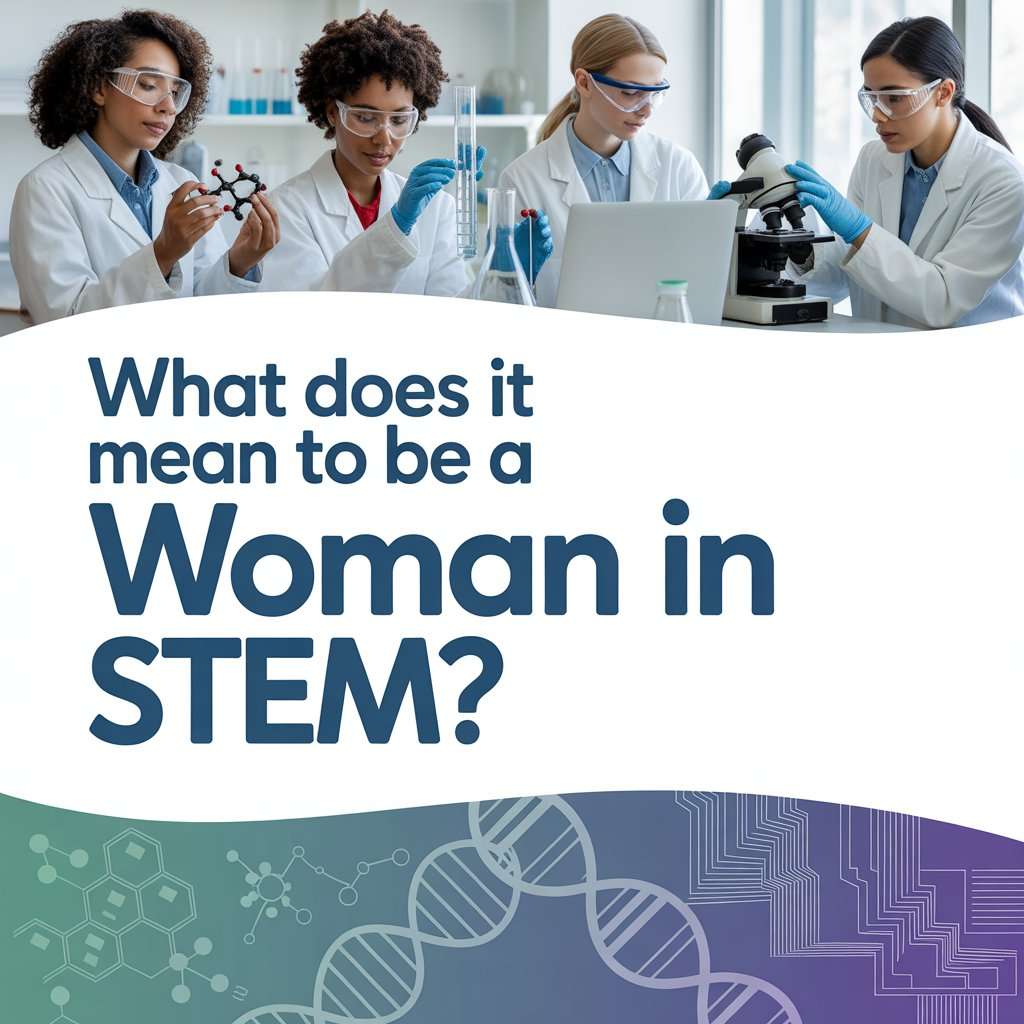
Being a woman in STEM is much more than choosing a career path. It is a personal journey shaped by curiosity, resilience, creativity, and determination. Many women pursue STEM because they enjoy solving problems and exploring how things work, but the path is not always easy.
Women are still underrepresented in many science and technology fields. This often leads to challenges such as bias, feeling isolated in teams, or not having enough role models to look up to. These experiences can make the journey feel heavier than it should be.
Even with these challenges, women continue to influence and reshape the worlds of technology, engineering, research, health, and innovation. Their ideas, leadership, and unique perspectives push entire fields forward.
In this post, we will explore what it truly means to be a woman in STEM. We will look at identity, common challenges, personal strengths, and the powerful contributions women bring to the STEM space.
The Curiosity That Starts the Journey
For many women in STEM, the journey begins with simple curiosity. It is the desire to understand why things work the way they do, how problems can be solved, and what happens when ideas are tested in real life. This natural curiosity often becomes the driving force that shapes their entire path.
Curiosity usually starts early. It can come from:
- Childhood moments of taking things apart to see what was inside
- Enjoying math or science classes and wanting to learn more
- A teacher who encouraged questions and exploration
- Watching a woman in a STEM role and thinking, “I want to do that too”
These small moments add up and often spark lifelong interest.
Nurturing curiosity in girls from a young age is very important. When girls are encouraged to explore, build, experiment, and imagine solutions, they gain confidence in their abilities. They begin to see STEM not as something difficult or unreachable but as a space where their ideas and talents belong.
Curiosity does more than inspire learning. It builds leadership, creativity, and innovation. Women who stay curious tend to ask better questions, propose fresh ideas, and develop solutions that move their fields forward. Curiosity also strengthens confidence because every new discovery shows them that they are capable.
In many ways, curiosity is the spark that becomes a career, a passion, and sometimes a mission to change the world.
Breaking Through Barriers and Stereotypes
Being a woman in STEM often means navigating spaces where assumptions and stereotypes still exist. Many women face comments, doubts, or expectations that question their abilities, leadership potential, or technical skills. These stereotypes do not reflect their true talent, but they often shape the environment they work in.
Common stereotypes women encounter include:
- The assumption that STEM fields are “too technical” or “too difficult” for women
- Being overlooked during discussions or decision making
- Being judged more harshly or needing to prove competence repeatedly
- Being expected to take on supportive roles instead of leadership roles
These experiences can be frustrating, but they also build a strong sense of persistence. Many women learn to speak up more, advocate for themselves, and stay committed even when others doubt them. Over time, these challenges strengthen courage and self-belief.
There are countless examples of women who pushed through barriers and changed the landscape of STEM:
- Katherine Johnson, whose calculations helped NASA send astronauts into space
- Dr. Wangari Maathai, who combined science and activism to create environmental change
- Dr. Fei-Fei Li, a leader in artificial intelligence who continues to transform the field
- Gitanjali Rao, a young inventor proving that innovation has no age limit
Their stories remind us that women have always been capable, brilliant, and innovative, even when the world hesitated to see it.
It takes emotional strength to remain committed in male-dominated fields. Women often carry the extra weight of proving themselves while also trying to excel in their work. Yet many continue to show resilience, support one another, and create change that benefits everyone.
Breaking through stereotypes is not just about overcoming obstacles. It is about transforming the narrative so that future generations of girls grow up knowing they belong in STEM just as much as anyone else.
The Double Work: Skill and Visibility
For many women in STEM, the journey is not only about building strong technical skills. It also involves a second layer of effort: staying visible, being recognized, and making sure their contributions are not overlooked. This is often referred to as “double work,” because women must excel at what they do and consistently prove that they belong.
Many women feel pressure to:
- Demonstrate their expertise more than their male peers
- Repeatedly show that they can lead, innovate, or take on complex tasks
- Speak up in rooms where their voices are not always heard
- Share their achievements without feeling like they are bragging
Visibility is a powerful tool. When women confidently speak about their work or share their results, it helps them build credibility. People begin to see them as leaders, experts, and valuable contributors. This kind of visibility opens doors to promotions, invitations to collaborate, speaking roles, and new opportunities.
But staying visible can be challenging. Modern issues like imposter syndrome make many women doubt whether they are qualified enough or doing “too much.” Lack of recognition from colleagues or supervisors can also make achievements feel invisible. This combination often leaves women working harder just to be seen.
Yet visibility matters. It allows women to:
- Showcase their impact
- Build strong professional reputations
- Attract mentors, sponsors, and collaborators
- Create role-model visibility for younger women entering STEM
When women own their achievements and talk confidently about their contributions, they shift the culture. They show others what is possible, strengthen their leadership presence, and open pathways for the next generation.
Visibility is not self-promotion. It is clarity. It is allowing the world to see the value you already bring.
Why Support Systems Matter
The journey of being a woman in STEM can be demanding, but it becomes lighter and more empowering when it is shared with others who understand the path. Sisterhood plays a big role in helping women feel confident, supported, and less alone in environments where they may be one of the few.
A strong community reminds women that they do not have to navigate challenges on their own. Sisterhood provides emotional support when work gets overwhelming, encouragement when self-doubt shows up, and honest feedback that helps women grow. It also creates safe spaces to talk about experiences, ask questions, and celebrate wins without judgment.
Support systems make a powerful difference because:
- They help women stay confident during difficult moments
- They reduce isolation by connecting women with others who share similar experiences
- They offer motivation to keep going, even in male-dominated spaces
- They open doors to career-changing opportunities
If you want a space where you can grow, collaborate, and feel supported, join African Women in STEM. Our community is designed to help you build meaningful connections, share knowledge, and gain the support system you need to thrive in your STEM journey.
What Women Contribute Uniquely to STEM
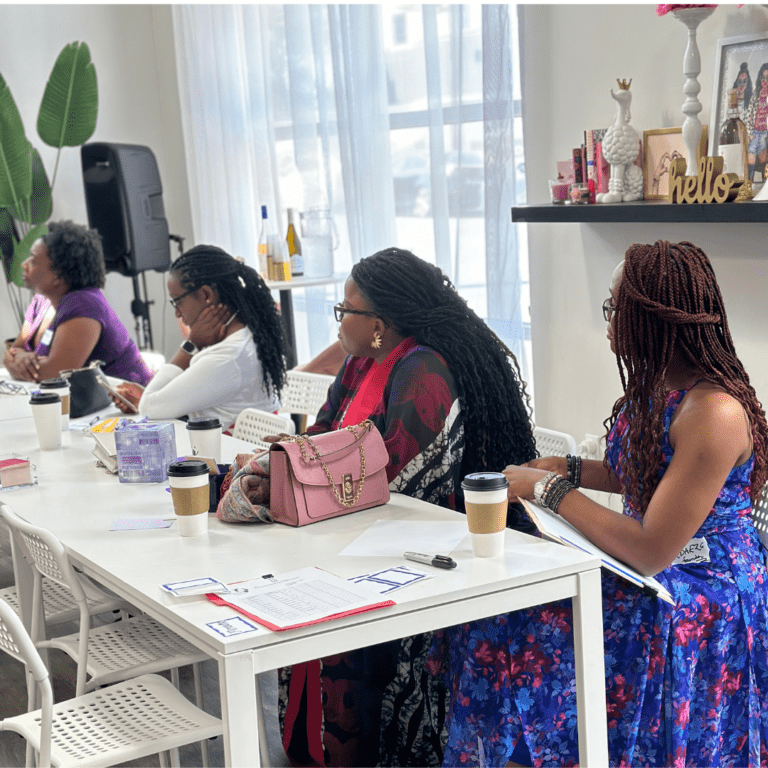
Women bring a set of strengths that don’t just “fit into” STEM, they actively elevate it. Collaboration, empathy, creativity, systems thinking, and attention to detail are often undervalued in technical spaces, yet they are the exact qualities that push innovation forward.
Women tend to approach problems holistically, looking at how one change affects the entire system. This kind of thinking leads to solutions that are more sustainable, more human-centered, and more efficient. Also, their empathy introduces design that truly considers user experience. Women’s creativity sparks breakthroughs that disrupt old ways of thinking. Their attention to detail often catches what others miss — the pattern, the glitch, the insight that changes everything.
You see these strengths reflected in real-world breakthroughs led by women:
- The foundational work of Katherine Johnson, whose calculations sent astronauts into orbit.
- Dr. Gladys West, whose mathematical models made GPS possible.
- Frances Arnold, whose creativity in bioengineering won her a Nobel Prize.
- Dr. Treasure M. L, a Nigerian scientist advancing AI-driven health diagnostics.
- Countless African women building tools, startups, research labs, and solutions that solve real problems on the continent.
These contributions aren’t the exception, they are proof of what happens when women are given space, support, and visibility. STEM becomes more innovative, more inclusive, and more impactful.
The Power of Mentorship for Women in STEM
Mentorship isn’t just helpful for women in STEM, it is often the defining factor that shapes confidence, career growth, and long-term success. In fields where women are still underrepresented, mentorship becomes a lifeline. It’s the space where questions are safe, direction becomes clearer, and the journey feels less lonely.
A mentor helps you see possibilities you may not have considered. They offer guidance based on lived experience, support you through uncertainty, and help you avoid mistakes they once made. But mentorship is not only about answers, it’s also about emotional grounding. It reminds women that they don’t have to figure everything out alone.
There’s also a difference between formal mentorship and informal peer support:
- Formal mentorship provides structured guidance, accountability, clarity, and personalized career direction.
- Informal peer support builds confidence through shared experiences, friendships, real-time problem-solving, and the encouragement that comes from women uplifting each other.
Both are powerful, and both are needed.
This is why we have a 6-month mentorship program, designed specifically to help women gain clarity, strengthen their confidence, and navigate their STEM careers with guidance that actually understands their reality. Inside the program, women receive personalized support, career strategy sessions, technical development pathways, and a community that walks with them every step of the way.
Conclusion
Being a woman in STEM is about more than a job or a degree. It is about showing courage, using creativity, and navigating challenges while making your mark in science, technology, engineering, or math. It is about building connections, lifting others up, and contributing to a future where women thrive equally.
Every story matters. Every small win, every breakthrough, and every supportive action helps shape a more inclusive and innovative STEM world. You don’t have to do it alone—visibility, mentorship, and community make the journey easier and more rewarding.
Join African Women in STEM to connect with a supportive, global community of women who share your goals and experiences.