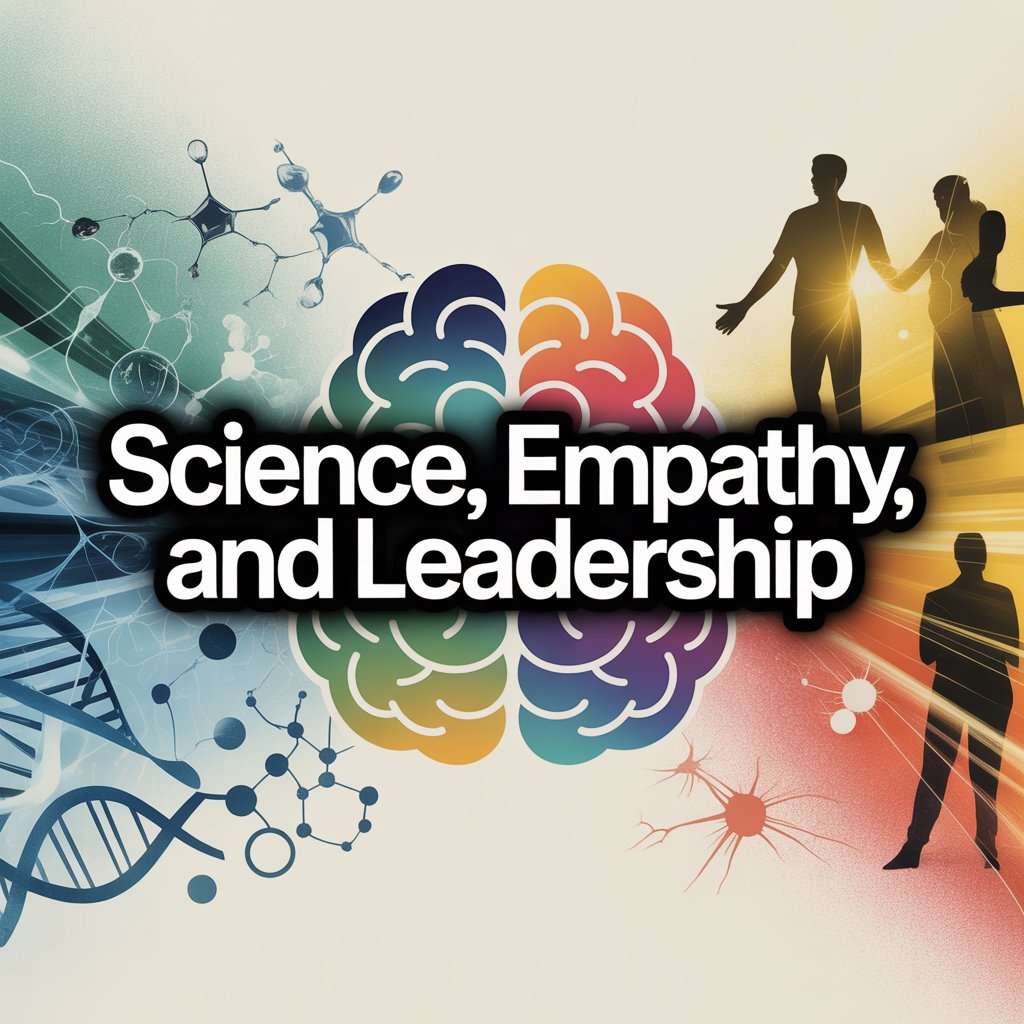
What happens when you combine rigorous science with deep human empathy? For Dr. Seema Handu, this question has guided an extraordinary career spanning global health, entrepreneurship, and digital innovation. In a recent episode of the Lunch with Leaders podcast, she shared how this intersection has shaped her work, her failures, and her most meaningful successes.
This isn’t a story about choosing between data and people. It’s about understanding that real change happens when both work together. Dr. Handu’s experiences reveal how systemic problems require more than technical solutions—they require trust, dignity, and genuine human connection.
Whether you’re working in healthcare, leading a team, navigating a career transition, or simply trying to make meaningful impact in your field, this conversation offers insights that go far beyond theory. It’s grounded in real stories from labor rooms in Bihar, entrepreneurial ventures with the FDA, and the day-to-day work of creating change in complex systems.
Listen to the full conversation with Dr. Seema Handu
The Question That Shaped a Career
Early in the episode, Dr. Seema Handu introduces the question that has guided her professional journey: “How can science and empathy work together to save lives?” This isn’t just a philosophical musing. It’s a practical framework that has informed every major decision she’s made.
For many professionals, career paths are defined by titles, promotions, or industries. But Dr. Handu’s approach centers on a core question that transcends specific roles or organizations. This kind of clarity creates a throughline that connects seemingly disparate experiences into a coherent whole.
The beauty of this guiding question is its flexibility. It applies whether you’re working in a hospital in rural India, starting a pharmaceutical data company, or advising on digital health policy. The contexts change, but the fundamental commitment remains the same.
If you’re struggling to find direction in your own career, listening to how Dr. Handu developed and maintained this clarity might offer a valuable template. The episode explores not just what her question is, but how it functions as a decision-making tool and source of resilience.
Hear Dr. Handu explain her guiding question in her own words.
A Case Study in Systemic Change
One of the most powerful segments of the conversation centers on Dr. Handu’s work strengthening labor room practices in Bihar, India. This wasn’t a simple technical intervention. It was a complex effort to change deeply embedded systems and behaviors around maternal health.
The breakthrough came not from introducing new protocols or technologies, but from recognizing that trust and dignity had to be at the center of any solution. Healthcare workers weren’t resisting change because they lacked knowledge. They were operating within systems that hadn’t earned their trust or respected their expertise.
Dr. Handu describes how the team shifted their approach from top-down instruction to genuine collaboration with local practitioners. Instead of telling healthcare workers what to do, they asked questions, listened to challenges, and co-created solutions that actually fit the reality on the ground.
This story illustrates a broader principle that applies far beyond healthcare. Systemic change rarely succeeds through force or mandate. It succeeds when people feel seen, heard, and respected as partners in the solution.
The labor room project in Bihar demonstrates what happens when empathy isn’t just a nice add-on but a strategic necessity. When you take time to understand people’s actual working conditions, constraints, and motivations, you design better interventions. You also build the trust necessary for those interventions to be sustained over time.
The Three P’s for Resilience
Around the midpoint of the episode, Dr. Handu shares her framework for sustaining vision across career pivots and challenges. She calls it the “three P’s”: Purpose, Partnerships, and Perspective.
Purpose keeps you anchored when external circumstances shift. It’s the reason you do what you do, beyond compensation or recognition. For Dr. Handu, purpose has always circled back to that central question about science and empathy working together.
Partnerships remind you that meaningful work is never done alone. Throughout the conversation, Dr. Handu emphasizes how collaboration with local practitioners, co-founders, mentors, and communities has been essential to every success she’s experienced.
Perspective allows you to reframe setbacks and maintain long-term vision even when short-term results disappoint. Dr. Handu talks about career pauses not as failures but as “recalibrations”—necessary moments of reflection and redirection that ultimately strengthen your path.
This framework offers practical guidance for anyone navigating uncertainty. It’s not about having all the answers or following a perfect trajectory. It’s about maintaining clarity on what matters most, building relationships that sustain you, and developing the mental flexibility to adapt without losing sight of your core commitments.
Finding Your Voice as a Woman in STEM
Dr. Handu addresses a question many women in technical fields grapple with: how do you find your voice in spaces that weren’t designed with you in mind?
Her advice is both empowering and pragmatic. She encourages women not to wait for existing spaces to make room for them, but to create their own spaces of influence. This doesn’t mean abandoning traditional institutions, but it does mean being strategic about where you invest your energy and how you build community.
Building community, she emphasizes, is essential to shifting systems. Individual achievement matters, but systemic change requires collective effort. Women in STEM need to support each other, mentor emerging professionals, and actively work to change the cultures and structures that create barriers.
The conversation also touches on the reality that visibility and voice-finding are ongoing processes, not one-time achievements. Even accomplished professionals continue to navigate these challenges. The difference is in developing strategies, building support networks, and maintaining confidence in your own expertise.
Digital Intelligence and the Human Role in AI
In one of the more forward-looking segments, Dr. Handu discusses what she calls “digital intelligence”—the capacity to use AI and digital tools wisely, ethically, and effectively. She describes it beautifully as “empathy translated into the digital world.”
This framing challenges the common narrative that AI is somehow separate from or opposed to human values. For Dr. Handu, the question isn’t whether to use AI, but how to ensure human judgment, emotional awareness, and ethical considerations remain central.
She emphasizes that technology should augment human capabilities, not replace them. In healthcare especially, algorithms can process data and identify patterns, but they can’t replace the human interpretation, contextual understanding, and emotional intelligence that practitioners bring.
The episode explores why human supervision remains critical even as digital tools become more sophisticated. Someone needs to ask whether the data being used is representative, whether the conclusions being drawn make sense in context, and whether the outcomes being optimized actually serve human wellbeing.
This perspective is relevant far beyond healthcare. As AI becomes more prevalent across industries, the professionals who thrive will be those who can combine technical literacy with strong human judgment and ethical clarity.
Explore Dr. Handu’s insights on AI and digital health: Listen to the full episode
Mentoring Through Self-Doubt and Transitions
Dr. Handu shares two particularly valuable mentoring insights that address common career challenges.
The first addresses the question “Am I ready?” This is something almost everyone asks themselves before taking on a new challenge, applying for a stretch opportunity, or making a significant pivot. Dr. Handu’s perspective is clear: you don’t need to feel 100% prepared to start. In fact, waiting until you feel completely ready often means missing the opportunity entirely.
She encourages starting before you feel fully prepared, trusting that you’ll learn and grow through the experience itself. This doesn’t mean being reckless or unprepared, but it does mean not letting perfectionism or self-doubt prevent you from taking meaningful action.
The second insight addresses mid-career transitions, particularly the shift from what she calls “success to significance.” Many professionals reach a point where traditional markers of success—title, compensation, recognition—feel less motivating than making meaningful impact.
This transition can be disorienting. It often requires letting go of established identities and venturing into less certain territory. Dr. Handu emphasizes that empathy is irreplaceable during these transitions. Technical skills and credentials matter, but the ability to connect with people, understand their needs, and work collaboratively becomes increasingly central to creating the kind of impact that feels significant.
Character, Resilience, and the Imperfect Path
Toward the end of the conversation, Dr. Handu reflects on how character and resilience have shaped her journey. She reframes career pauses not as failures or gaps, but as recalibrations—necessary periods of reflection and adjustment that ultimately strengthen your path.
This perspective is particularly valuable in a culture that often treats any deviation from a linear trajectory as problematic. The reality is that meaningful careers rarely follow straight lines. There are detours, pauses, unexpected opportunities, and moments of uncertainty.
What matters is maintaining your sense of purpose, staying connected to your values, and viewing each experience as contributing to your larger story. The professionals who create lasting impact aren’t necessarily those with the most linear resumes. They’re often those who’ve learned to navigate uncertainty with clarity and resilience.
Dr. Handu’s final takeaway centers on this truth: purpose doesn’t require a perfect path. You don’t need to have everything figured out from the beginning. You need clarity on what matters to you, willingness to learn and adapt, and the courage to keep moving forward even when the way isn’t entirely clear.
Why This Conversation Matters
This episode offers more than career advice or professional insights. It provides a model for how to think about work, impact, and meaning in ways that integrate technical excellence with human values.
By listening, you’ll gain:
- A framework for developing your own guiding question that can anchor career decisions
- Practical strategies for creating systemic change through trust and collaboration
- Tools for navigating uncertainty, self-doubt, and career transitions
- A vision for how AI and digital tools can enhance rather than replace human judgment
- Permission to pursue purpose through an imperfect, non-linear path
Dr. Seema Handu’s story demonstrates what becomes possible when you refuse to separate science from empathy, when you value relationships as much as results, and when you maintain clarity on what truly matters even as circumstances change.
Conclusion
Whether you’re early in your career or well-established, working in healthcare or another field entirely, this conversation offers insights worth considering. Dr. Handu’s journey isn’t presented as a template to copy, but as an invitation to think more deeply about how you approach your own work and impact.
Take time to listen, reflect on which parts resonate most strongly with your current challenges, and consider what it might look like to bring more empathy into your professional life.
Listen to the complete conversation with Dr. Seema Handu: https://www.listennotes.com/podcasts/lunch-with-leaders/