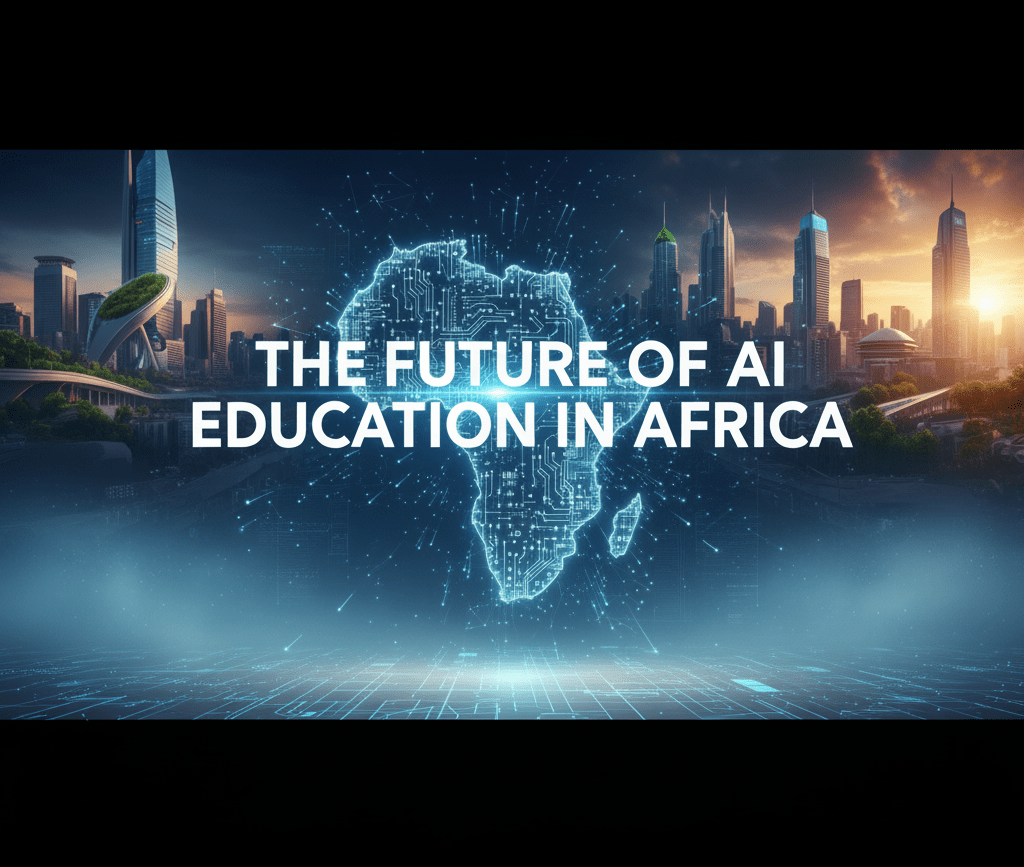
Artificial Intelligence is changing the world in powerful ways. From improving healthcare systems and modernizing education to transforming how we farm and manage finances, AI is shaping the future of every industry.
Across Africa, a new wave of innovators, educators, and young learners are beginning to explore what this technology can do. The continent is not just catching up—it has the creativity, talent, and local insight needed to shape how AI is used to solve both regional and global challenges.
This moment matters because the choices made today about AI education will define Africa’s place in the global economy tomorrow. When young people gain the right knowledge, tools, and mentorship, they can create solutions that drive progress for communities and industries across the continent.
In this post, we’ll explore how AI education is growing in Africa, what opportunities are emerging, and what steps can help prepare the next generation of thinkers, builders, and leaders to thrive in the age of artificial intelligence.
Understanding AI Education
When we think of AI education, it’s easy to imagine learning to write lines of code. But in reality, teaching and learning AI is much broader. It includes machine learning, data ethics, robotics, and preparing for real-world problem solving in every field from agriculture to healthcare.
Defining AI Education
AI education means giving learners the tools to understand how machines can learn and make decisions. It is not just writing code, it’s about knowing how to gather quality data, how models work, how to deal with ethics and bias, and how to use AI for solving real challenges. Learners explore how sensors, data pipelines, algorithms, and robotics can make systems smarter and more adaptive.
The Importance of Contextual Learning in Africa
For AI education to succeed in Africa, it must respond to local realities. That means designing programs that address the challenges of the continent—climate change, food security, digital access, health infrastructure, and more. For example:
- In agriculture, students learn to use image recognition and data analytics to detect crop diseases early.
- In education, they may build AI tools to adapt to local languages and low-bandwidth conditions.
- In healthcare, they train models to analyze regional disease patterns with limited data access.
The Scale of the Opportunity
The market for AI in Africa is growing fast. Projections indicate the AI market size in Africa will reach US$4.51 billion by 2025 and grow at a compound annual rate of about 26%, reaching around US$18.27 billion by 2031. (Statista)
Meanwhile, the global AI-in-education market is expected to climb to US$32.27 billion by 2030, growing at roughly 31% annually. (Resourcera). These figures show that Africa is poised for significant growth and that means learners who build AI skills today are positioning themselves for tomorrow’s opportunities.
In short, AI education in Africa is about more than learning to code. It’s about equipping people with the knowledge, context, and tools to solve real problems. Bringing that education into communities, classrooms, labs, and remote places will shape who leads the next wave of innovation across the continent.
Challenges Facing AI Education on the Continent
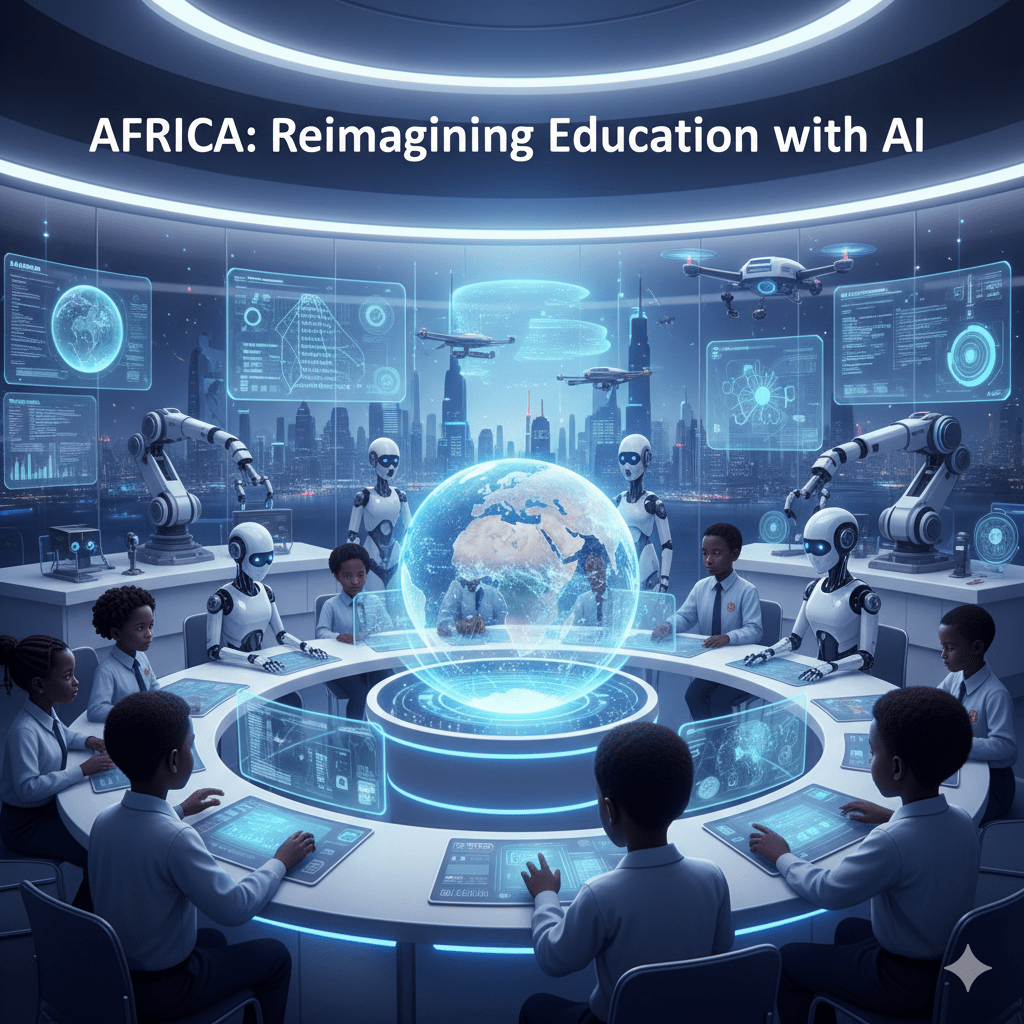
AI has the power to open up incredible opportunities across Africa, but the road to building strong AI education systems is not without obstacles. Many of these challenges come from long-standing issues in infrastructure, policy, and access. Let’s look at some of the main barriers slowing down progress and how they affect learners and educators.
1. Limited Access to Training and Technology
A lot of schools and universities across Africa still do not have the equipment or funding needed to teach AI properly. Computers are often outdated, and internet connections can be unreliable or too expensive. Many students have never worked with real AI tools, datasets, or labs. Without access to proper resources, it becomes difficult to move from theory to hands-on learning.
2. Brain Drain
Many talented graduates who study AI or related fields end up leaving the continent in search of better-paying jobs or research opportunities abroad. This creates a gap where Africa invests in education, but the benefits are often realized elsewhere. To keep talent at home, there needs to be more investment in local research centers, innovation hubs, and industry partnerships that make staying in Africa worthwhile.
3. Gender Gap
Women are still underrepresented in AI and technology-related fields. This is due to a mix of cultural expectations, lack of encouragement, and limited visibility of female role models in STEM. Encouraging girls to take up AI studies, providing mentorship, and building supportive communities can help close this gap. When more women participate, the diversity of ideas and solutions in AI grows stronger.
4. Low Awareness and Exposure
In many regions, AI still feels like a distant or overly complex topic. Students may think it is only for experts or people in advanced countries. The truth is that AI is already part of everyday life—from mobile apps to farming tools. Creating awareness through workshops, school programs, and media storytelling can make AI feel more accessible and inspire young minds to explore it.
5. Infrastructure and Policy Gaps
Strong AI education also depends on supportive systems. Unfortunately, many African governments are still developing policies around AI ethics, data privacy, and education standards. Without clear national frameworks, schools and institutions often work in isolation. Building consistent policies and investing in digital infrastructure will make it easier for AI programs to grow and align with global best practices.
In summary, Africa’s AI education journey is full of promise, but these challenges must be addressed with practical solutions and collaboration between governments, private organizations, and communities. Overcoming them will create a stronger, more inclusive foundation for the next generation of African innovators.
Key Opportunities for Growth
Even with the challenges, Africa is in a strong position to lead a new wave of innovation through AI education. The continent’s youthful energy, growing tech ecosystem, and creative problem-solving culture make it an exciting place for AI growth. Here are some of the biggest opportunities driving this momentum.
1. Youth Population Advantage
Africa has the youngest population in the world, with over 60% of people under the age of 25. This means there is a large pool of curious, tech-savvy, and adaptable minds ready to learn new skills. With the right guidance and resources, this generation can become the next wave of AI developers, data scientists, and innovators shaping the future of technology both locally and globally.
2. Local Problem-Solving
One of Africa’s biggest strengths is its ability to create homegrown solutions for real challenges. AI can be applied to improve areas like smart farming, healthcare access, climate adaptation, and education. For instance, AI models can predict crop diseases, support remote medical diagnosis, or personalize learning for students in rural areas. When AI education is linked to solving local problems, it becomes more meaningful and impactful for students and communities alike.
3. Global Partnerships
Africa is increasingly attracting attention from major tech players and global institutions. Partnerships with organizations like Google AI, Microsoft, IBM Research Africa, and UNESCO are helping to train teachers, set up innovation hubs, and support AI startups. These collaborations bring not only funding but also mentorship, research access, and international exposure that can help scale African AI education programs faster.
4. Affordable Learning Opportunities
Learning AI has never been more accessible. Thanks to online platforms like Coursera, Udemy, Zindi Africa, and DataCamp, anyone with an internet connection can start learning the fundamentals of AI, data science, or machine learning. Many of these platforms also offer scholarships or free beginner courses. Combined with local bootcamps and community-led learning groups, they are making AI education more inclusive and affordable for students across the continent.
In summary, Africa’s greatest opportunity lies in combining its youthful population with technology, creativity, and collaboration. If nurtured well, these opportunities can position the continent not just as a consumer of AI technologies but as a key contributor to the global AI revolution.
Reimagining the Future: AI Education in 2030 and Beyond
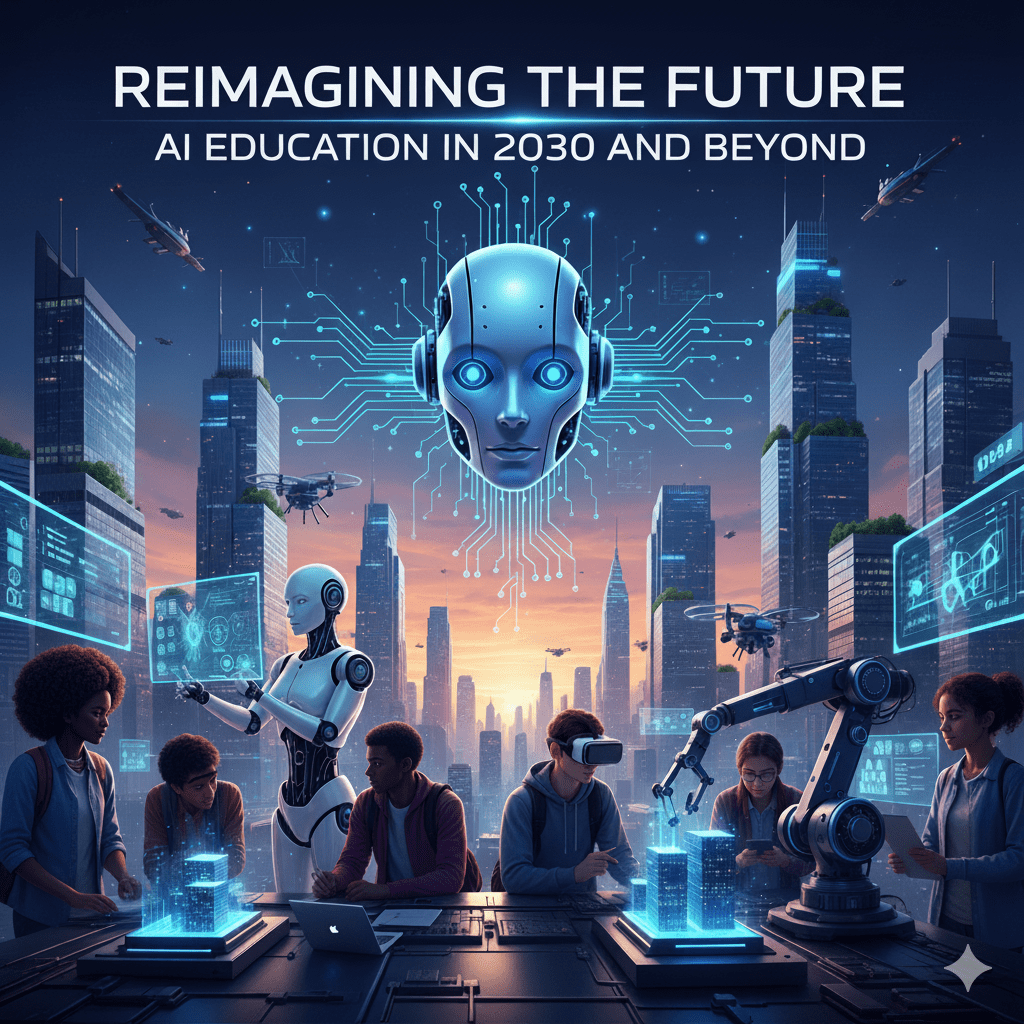
Looking ahead, the future of AI education in Africa is bright and full of potential. By 2030, we could see a major shift, one where Artificial Intelligence becomes a natural part of learning across the continent, from high schools to universities and research institutions.
Vision for 2030
In the near future, AI could be taught as a core subject, just like math or science. Students would not only learn how AI works but also how to use it to solve real-world problems, from predicting weather patterns to improving public health systems. Universities and research centers would play a key role in developing local talent and driving innovation through hands-on learning and collaboration.
Trends to Watch
- Expansion of AI-Focused Degree Programs
More African universities are expected to launch AI and data science programs. Institutions like the University of Cape Town and Ashesi University have already introduced AI-related courses, setting the stage for others to follow. By 2030, we could see AI degrees becoming more specialized, covering areas like ethics, robotics, and machine learning for local industries.
- Growth of Local Research Hubs
Across Africa, innovation labs and AI research hubs are already taking shape. Countries like Nigeria, Kenya, and Rwanda are investing in centers where students, researchers, and startups can collaborate. These hubs will not only support learning but also turn African ideas into scalable, global solutions.
- Greater Inclusion of Women and Underrepresented Groups
The future of AI in Africa must be inclusive. Programs that encourage more women and marginalized communities to join STEM and AI fields are key. Initiatives like African Women in STEM are leading the way by providing mentorship, training, and networking opportunities that empower women to take leadership roles in technology.
- Industry-Academia Partnerships Driving Innovation
The connection between education and industry will grow stronger. More partnerships between universities and companies will give students practical experience and help align learning with real market needs. This means graduates will be better prepared for AI-driven careers and entrepreneurship.
The Result
By 2030, Africa could move from being a consumer of AI technologies to a creator of AI innovations that shape global industries. The continent’s unique mix of challenges, creativity, and youthful energy makes it the perfect testing ground for new ideas.
If this vision becomes reality, Africa won’t just be participating in the AI revolution — it will be leading parts of it, creating homegrown solutions that inspire and impact the world.
What Needs to Happen Next
For Africa to fully unlock the power of Artificial Intelligence, action must go beyond inspiration — it requires intentional investment, strong policies, and collaboration across every level of society. The progress so far is promising, but to make AI education accessible and impactful for all, a few key steps need to happen next.
1. Policy and Investment
Governments play a critical role in shaping the future of AI education. They need to include AI education in national development and digital transformation plans, ensuring it becomes part of formal curricula in schools and universities.
Funding should also be directed toward building well-equipped AI labs, training teachers, and supporting innovation hubs. Countries like Kenya and Ghana have already begun integrating AI into their digital strategies, but broader adoption across the continent is essential to maintain momentum.
2. Private Sector Engagement
The private sector can be a game-changer. Tech companies, startups, and industry leaders should invest in training programs, mentorship opportunities, and hackathons that expose students to real-world AI applications.
By sponsoring AI labs and innovation challenges, companies not only help nurture local talent but also benefit from a stronger, future-ready workforce. Partnerships between universities and organizations like Google AI, IBM, or Microsoft can bring cutting-edge knowledge and tools directly to African classrooms.
3. Inclusion and Access
For AI education to be truly transformative, everyone must have access, not just those in major cities or elite universities. Efforts should be made to reach students in rural and underserved communities by providing affordable online learning platforms, community tech centers, and mobile-based learning tools. Bridging the digital divide will ensure that AI education empowers the next generation of innovators across the entire continent, not just a select few.
4. Collaboration and Standardization
Finally, collaboration is key. Universities, NGOs, and tech organizations should come together to create a shared framework for AI education. This means agreeing on what core skills, ethics, and competencies every AI learner should have, from coding and data literacy to understanding the social impact of AI.
Shared curricula and regional partnerships can help ensure quality and consistency across countries, making Africa a stronger collective force in global AI innovation. If these steps are taken, Africa will not only prepare its youth for the jobs of the future but also position itself as a leader in responsible, inclusive, and impactful AI development.
Conclusion
The future of AI education in Africa depends on innovation, inclusion, and intentional investment in people. The continent has the creativity, energy, and talent needed to lead the next wave of global innovation, but it starts with giving more people access to quality AI learning opportunities.
Every young person who chooses to explore AI today is shaping Africa’s tomorrow. Whether through research, community impact, or building new technologies, these learners are laying the foundation for a future where Africa doesn’t just adopt AI, it defines it.
If you’re passionate about growing in STEM and being part of Africa’s AI future, join our community of African Women in STEM.