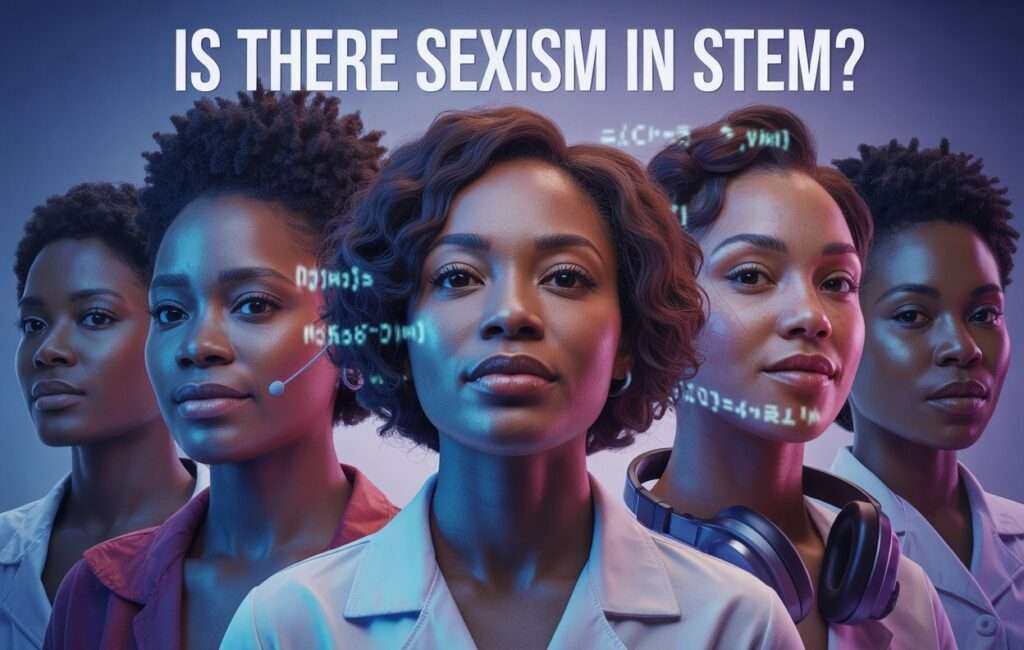
You have probably seen the word “STEM” everywhere. STEM stands for Science, Technology, Engineering, and Mathematics. These fields are shaping the world, building our cities, improving healthcare, driving innovation, and creating tomorrow’s jobs. Yet, as the world talks about progress and opportunity in STEM, one question lingers quietly, sometimes unspoken: Is there sexism in STEM today?
It is a tough question, but a necessary one. Many believe that with each new program or diversity policy, the problem is shrinking. But if you are a woman, and especially if you are an African woman, you may see a very different reality. You may see the numbers that do not add up. You may feel the weight of being “the only one” in the room. Also, you might wonder if the challenges you face are just part of the job or if they are something more.
Progress has been made, and that deserves to be celebrated. But, the unique challenges facing women and especially African women in STEM are real, persistent, and too often ignored. This article will examine what sexism in STEM really looks like today, why it matters, and how communities like African Women in STEM are working to change the story.
Sexism in STEM: What It Looks Like

When many people hear the word “sexism,” they imagine obvious, blatant discrimination: a woman being told she cannot apply for a job, or being paid less because of her gender. But in STEM, as in many professional fields, sexism is often subtle, woven into daily interactions, workplace cultures, and unspoken assumptions.
Subtle, Everyday Sexism
Sexism in STEM rarely announces itself. Instead, it creeps in quietly, shaping experiences and careers in ways that are easy to miss and hard to challenge. Here are some of the most common ways it shows up:
- Being Interrupted in Meetings: Studies show that women are interrupted far more often than men, even when they are the expert in the room. This can make it harder to share ideas, be heard, and gain recognition for your contributions.
- Getting Passed Over for Leadership Roles: Women often find themselves encouraged to “wait their turn,” while less-experienced men are promoted based on potential rather than proven results.
- Colleagues Assuming You’re Not the Expert: Even after years of education and experience, women, particularly African women, are often mistaken for assistants, students, or support staff, rather than recognized as engineers, scientists, or leaders.
- Assignment of Routine or “Helper” Tasks: Women are often asked to take notes, organize meetings, or handle office “housework.” These tasks are important but do not lead to promotions or high-visibility projects.
The Impact on Confidence and Careers
Over time, these subtle forms of bias can take a heavy toll. They erode confidence, make it harder to build strong networks, and limit opportunities for advancement. For many women, the message is clear: no matter how hard you work or how qualified you are, you will have to fight for every step forward.
Data Doesn’t Lie: The Numbers Behind the Bias
It is easy for some to dismiss stories of sexism as isolated incidents. But the data tells a different story, a story of persistent gaps, missed opportunities, and ongoing bias at every level.
Representation: The STEM Gender Gap
- Globally, women make up just 28% of the workforce in science, technology, engineering, and math. In sub-Saharan Africa, the numbers are even more stark, with women comprising less than 20% of STEM professionals in many countries.
- Leadership remains overwhelmingly male: In engineering, for instance, less than 10% of top leadership roles are held by women. In technology, the numbers are even lower.
- Pipeline problems start early: Girls are less likely to enroll in advanced STEM classes in high school, and fewer still go on to study STEM in college or university. Those who do are more likely to switch out or leave before graduation.
- Promotion rates lag behind: Women are promoted more slowly in STEM, often forced to “prove it again” for each new role, while men are trusted to take on new challenges based on potential.
- Hostile environments: Studies show that women, and especially women of color, report higher rates of bias, harassment, and exclusion in STEM fields.
African Women in STEM: The Numbers Are Even Lower
When you layer on race, the numbers fall even further. In many African countries, women represent less than 10% of engineers, physicists, or computer scientists. Black women in the US hold less than 3% of STEM jobs, despite making up a much larger share of the population.
These numbers are not just statistics. They represent lost potential, missed innovation, and the silencing of countless voices.
The Added Layer: Race and Gender Combined
For African women in STEM, sexism is rarely the only barrier. The intersection of race and gender creates a double burden, one that is often invisible to those who have not lived it.
Double Discrimination: Gender Plus Race
- Stereotypes multiply: African women are often assumed to be less competent or less qualified, no matter their credentials. These assumptions show up in hiring, promotions, and daily interactions.
- Isolation: It is common to be the “only one” in the room—not just the only woman, but the only African, the only Black person, or the only person of color on a team or in a department. This isolation can create enormous pressure to perform, represent, and never make mistakes.
- Microaggressions: Comments about hair, accent, or “fitting in,” questions about where you are “really from,” or assumptions about your family or background, all serve to mark you as an outsider.
Cultural Expectations and Family Roles
- Family pressures: In many African cultures, women are expected to prioritize family, caregiving, or traditional roles over careers. Pursuing STEM often means pushing back against these expectations.
- Community skepticism: Some communities still see science and technology as “male” fields, making it harder for girls to imagine themselves as innovators or leaders.
- Responsibility to succeed: Many African women in STEM feel a responsibility to open doors for those who come after them, which can create extra stress and pressure.
The “Invisible Tax” of Being First
Being the first or only one in a space means carrying the burden of representation. Every mistake is magnified; every success is scrutinized. This “invisible tax” can lead to burnout and drive talented women out of the field.
Data Doesn’t Lie: The Numbers Behind the Bias
The numbers are clear: sexism in STEM is real, and it is compounded for African women. But why do these numbers matter so much?
- Because data drives policy. When we track who is missing and why, we can build better programs, scholarships, and support systems.
- Because numbers reveal what stories alone cannot. When the pipeline leaks, or the leadership remains unchanged, the numbers push us to ask hard questions.
Ignoring or downplaying this data allows bias to hide in plain sight. That is why it is so important to keep asking: who is missing, and why?
Why Talking About This Still Matters
Some people say, “Things are getting better. Isn’t it enough?” Others point to the few women who have reached the top and suggest that the problem is solved. But pretending sexism in STEM is over does not make it true. In fact, pretending the problem is solved is part of the problem.
Acknowledging Bias Is the First Step
- You cannot fix what you will not name. If companies, universities, and organizations do not admit there is still bias, they cannot create real change.
- Silence protects the status quo. When women are told to “just work harder” or “be grateful for opportunities,” it shuts down honest conversation.
- Listening is powerful. Creating space for women to share their stories, frustrations, and dreams is the first step to building cultures where everyone can thrive.
Why It Matters for African Women
For African women, talking about sexism in STEM is not about complaining—it is about creating a future where every girl can dream big and every woman can bring her full self to work. It is about making sure the next generation does not have to fight the same battles over and over.
Encouraging Workplaces to Evaluate Culture
Workplaces need to look honestly at their hiring, promotion, and retention practices. Are women being heard, seen, and supported? Are African women being given the same opportunities, mentorship, and visibility as others? If not, what needs to change?
What Can Help? A Community That Gets It

Sexism in STEM will not be fixed by one policy or a single training session. Real change comes from building communities that understand the unique barriers women face and work together to break them down. This is exactly why African Women in STEM was created.
Too many African women are asked to navigate tough environments alone. They are told to “be strong,” “figure it out,” or “wait their turn,” but what they really need is a tribe a network of support, encouragement, and opportunity.
Why Community Matters
- Reduces isolation: It is easier to keep going when you know you are not alone.
- Builds confidence: Sharing wins and setbacks with others who understand makes all the difference.
- Opens doors: Communities connect women to mentors, networks, and resources that are otherwise out of reach.
How African Women in STEM Is Creating Change
African Women in STEM is committed to changing the numbers, shifting the culture, and building a future where every African woman in STEM can thrive. Our programs are built on four key support pillars:
Mentorship Program
- Connects women at different career levels: Whether you are just starting out or moving into leadership, our mentorship program pairs you with women who have been in your shoes.
- Facilitates real conversations: Mentors and mentees share knowledge, advice, and encouragement, creating relationships that last well beyond the program.
- Helps navigate tough environments: With guidance from someone who understands your journey, you are better equipped to face challenges and seize opportunities.
Free STEM Community
- A safe, supportive space: Our online community is a place where you can ask questions without judgment, celebrate your wins, and find collaborators for new projects.
- Reduces isolation: Connecting with other African women in STEM makes it easier to stay motivated, even when the going gets tough.
- Builds confidence: Shared experiences remind you that you are not alone—and that you belong.
IGNITE Membership
- Monthly sessions for skill-building: Leadership workshops, technical deep-dives, and career planning sessions keep you growing.
- Affordable access to resources: Expert-led trainings, networking events, and career support are available to all members.
- Support for career transitions: Whether you are aiming for a promotion, a new field, or an international move, IGNITE gives you the tools and support you need.
Thrive Hub Accelerator
- 12-week premium accelerator: Designed to help you land your dream job or secure your next promotion.
- Career coaching: Personalized guidance from experts who know what it takes to succeed in STEM.
- Visibility strategy: Learn how to get noticed for high-impact projects and leadership roles.
- Network-building: The accelerator connects you to sponsors, allies, and industry leaders who can help you advance.
- Leads with clarity: You will graduate from the program with a plan, a network, and the confidence to lead.
Conclusion
Sexism in STEM is real, and it continues to shape the experiences of women, especially African women, at every stage of their careers. But so does support. The answer is not to give up or to go it alone. The answer is to join communities, seek out mentors, and demand better from workplaces and institutions. You do not have to figure it all out by yourself. Whether you are just starting out in STEM or are a seasoned leader, there is a place for you in this movement.
Visit africanwomeninstem.com to learn more about our programs, connect with other African women in STEM, and start building the future you deserve.