
The world is in the middle of a digital and scientific revolution. From artificial intelligence and biotechnology to renewable energy and advanced engineering, the global demand for STEM talent has never been higher. Countries around the world are seeking bright, innovative minds to help solve complex challenges that go beyond borders; climate change, health crises, digital transformation, and more.
Across Africa, women are earning STEM degrees, leading research, founding startups, and breaking barriers in fields once closed to them. Yet, for many, the dream of landing an international STEM job can feel distant or overwhelming. The prospect of relocating, competing in a global job market, and adapting to new cultures may seem daunting, especially without guidance and support.
But with the right strategies, information, and network, international STEM opportunities are not just possible, they are within your reach. This article provides a practical roadmap for African women looking to break into international STEM careers, covering every step from building in-demand skills to nailing the interview and settling into a new country. Along the way, you’ll see how mentorship, community, and programs like those at African Women in STEM can make the journey smoother and more successful.
Why International STEM Opportunities Matter
Stepping into a STEM role abroad is more than just a career move, it’s a transformative life experience. Here’s why pursuing international STEM jobs matters, especially for African women:
Career Growth
International experience is a powerful accelerator for professional development. Working in a different country exposes you to advanced technologies, world-class research facilities, and multidisciplinary teams. You’ll learn new ways of thinking, problem-solving, and collaborating. Many global organizations invest heavily in employee training, leadership development, and innovation. You will have the chance to work on large-scale projects, often with greater resources and impact than in local settings.
In addition, international work experience looks impressive on your resume. It signals adaptability, cross-cultural competence, and ambition—qualities that employers everywhere value. For African women, who sometimes face glass ceilings at home, global exposure can unlock faster promotions, wider professional networks, and more influential leadership roles.
Global Impact
The problems facing our world—pandemics, climate change, food security, digital inclusion—are shared across continents. By working internationally, African women bring much-needed perspectives and expertise to these challenges. You become part of diverse teams designing solutions that can make a difference on a global scale.
African scientific and technological perspectives are essential for truly inclusive innovation. Whether you’re developing AI for health, engineering sustainable infrastructure, or advancing agricultural science, your work abroad can both shape global solutions and bring new knowledge back to Africa.
Financial and Personal Development
Let’s be honest—international STEM jobs often come with better compensation packages, more comprehensive benefits, and opportunities for financial stability. Many countries offer higher pay scales for STEM professionals, along with relocation support, health insurance, and educational stipends.
Beyond the paycheck, working abroad is a chance for personal growth. You’ll experience new cultures, learn new languages, and expand your worldview. Living and working in a different country builds confidence, resilience, and cross-cultural communication skills. These are assets for your career and your life.
Challenges African Women Face in Going Global

The rewards are real, but so are the hurdles. African women in STEM encounter unique obstacles when pursuing international opportunities. Understanding these challenges is the first step to overcoming them.
Visa and Relocation Barriers
Immigration policies can be complex and intimidating. Many countries require STEM workers to secure job offers before applying for work visas. The paperwork, legal requirements, and waiting periods can be overwhelming. Additionally, some employers may be hesitant to sponsor international candidates, preferring local talent to avoid extra costs and bureaucracy.
Relocating also means navigating logistics: finding housing, understanding healthcare, adjusting to new climates, and sometimes bringing family along. For those with dependents or caregiving responsibilities, the challenge is even greater.
Limited Access to International Job Information
Many African women do not have easy access to information about global job openings, especially those not widely advertised. Top international positions may be filled through referrals, alumni networks, or niche recruitment firms. Without inside knowledge, it is easy to miss out on key opportunities.
Furthermore, some recruitment platforms or job boards may not be widely used in Africa, making it difficult for candidates to know where to look. Language barriers and different application processes also create obstacles.
Lack of Representation and Role Models
When you don’t see people like you in international roles, it’s hard to imagine yourself there. African women remain underrepresented in global STEM leadership, conference panels, and research teams. The absence of visible role models can fuel self-doubt and limit aspirations.
This lack of representation also means fewer mentors who understand your background, challenges, and strengths. Without a support system, it’s easy to feel isolated or unwelcome in foreign workplaces.
Self-Doubt and Impostor Syndrome
Even the most accomplished African women in STEM can be plagued by impostor syndrome—the feeling of not being “good enough” or “qualified enough” for international roles. This is often fueled by subtle biases, microaggressions, or the pressure to prove oneself in unfamiliar territory.
Self-doubt can lead to missed opportunities, reluctance to apply for jobs, or second-guessing one’s abilities. It can also be magnified by cultural expectations or family responsibilities, which sometimes discourage women from pursuing bold moves.
Steps to Land International STEM Jobs
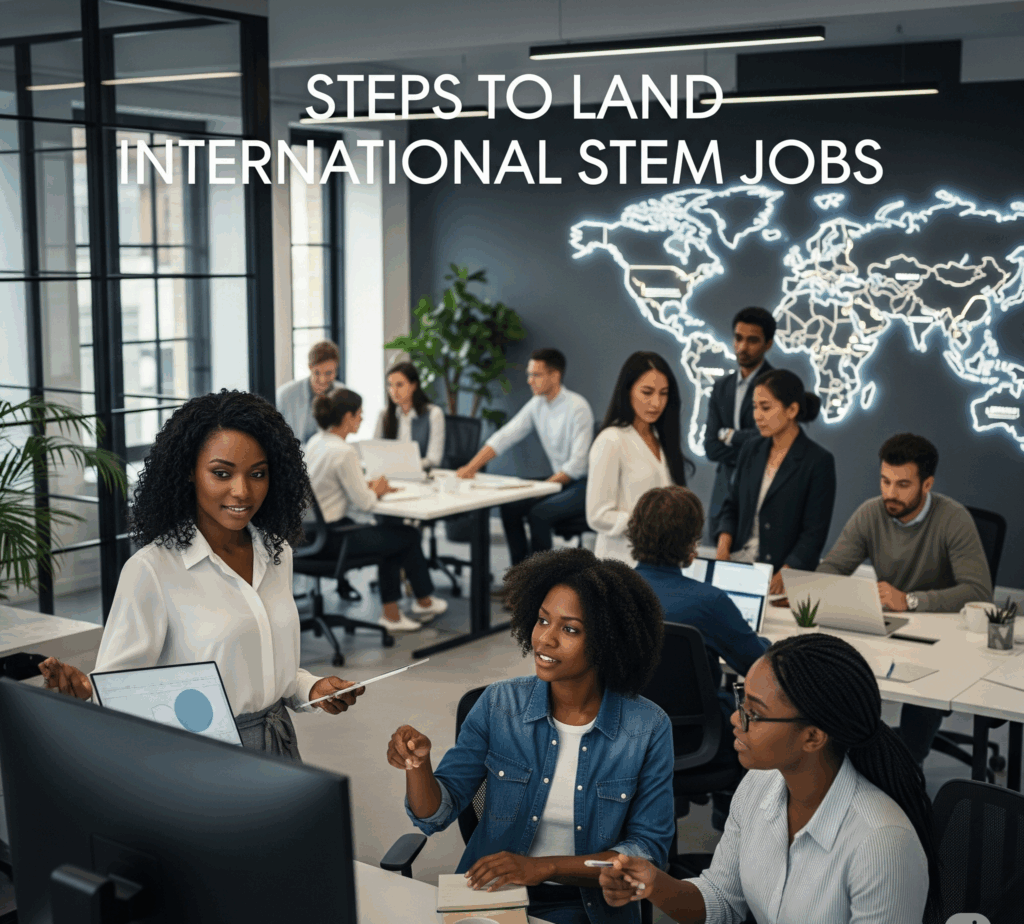
Despite these challenges, thousands of African women have successfully launched international STEM careers. Here are practical steps to help you do the same, no matter your field or career stage.
1. Build Global Skills
The first step is to ensure you have the in-demand skills global employers are seeking. This goes beyond your degree or current job title—think about certifications, current trends, and soft skills that set you apart.
a) Pursue Certifications and Online Courses
International employers often look for globally recognized certifications in areas like data science, cloud computing, project management, cybersecurity, or renewable energy. Platforms such as Coursera, edX, Udemy, and LinkedIn Learning offer affordable courses taught by experts from top institutions. Many courses are self-paced and can be completed from anywhere.
Examples of in-demand certifications include:
- AWS Certified Solutions Architect (cloud computing)
- Google Data Analytics Professional Certificate
- PMP (Project Management Professional)
- Microsoft Azure Fundamentals
- Cisco Certified Network Associate (CCNA)
- Certified Ethical Hacker (CEH)
- Autodesk Certified Professional (engineering/design software)
b) Stay Updated with Global Industry Trends
Subscribe to international STEM journals, newsletters, and podcasts. Join online forums and professional associations to keep up with the latest research, technologies, and job requirements. Being able to discuss current trends in interviews shows employers you are proactive and globally minded.
c) Build Soft Skills
Global employers value technical skills, but they also look for strong communication, teamwork, adaptability, and leadership. Volunteer for cross-functional projects, lead local STEM initiatives, or participate in hackathons and competitions. Practice public speaking, conflict resolution, and intercultural communication.
2. Polish Your Resume and LinkedIn Profile
Your resume is your ticket to international opportunities. It must be clear, concise, and tailored for global audiences.
a) Highlight Transferable Skills
Showcase skills that are valuable across borders—such as problem-solving, project leadership, technical proficiency, and language abilities. Quantify your achievements (for example, “increased data processing efficiency by 40%” or “led a research team of 10”).
b) Use International-Friendly CV Formats
Different countries have different resume standards. For example, U.S. and Canadian resumes are typically one to two pages, concise, and achievement-focused. European CVs may include more detail, while some Asian countries expect a photo or personal information. Research the norms for your target country and adapt accordingly.
Avoid local jargon or acronyms that may not be understood globally. Use clear, action-oriented language.
c) Optimize Your LinkedIn Profile
LinkedIn is a powerful tool for global job searches. Use a professional photo, write a compelling headline, and fill out all sections. Join international STEM groups, follow global companies, and engage with content relevant to your field. Ask colleagues and mentors for recommendations.
3. Target the Right Platforms
Applying directly to company websites is important, but don’t stop there. Cast a wide net across multiple platforms.
a) Global Job Boards
Major job boards like LinkedIn, Glassdoor, Indeed, and Monster have thousands of international STEM listings. Use filters to search by location, job title, and company. Set up job alerts for new postings.
b) Specialized STEM Recruitment Platforms
Explore niche job boards focused on STEM, such as:
- EuroJobs (for opportunities in Europe)
- Nature Careers (for scientists and researchers)
- STEM Women (focus on female STEM talent)
- Engineering.com (engineering roles worldwide)
- ResearchGate (academic and research positions)
- Devex (international development and tech roles)
c) International Company Career Pages
Identify global companies with a strong presence in your field (Google, Microsoft, Siemens, Unilever, Novartis, etc.). Visit their career pages regularly, and consider reaching out to recruiters directly.
d) Leverage Alumni and Professional Associations
Many universities and professional organizations have career portals or mailing lists for international openings. Reach out to alumni who have worked abroad for inside tips and referrals.
4. Leverage Professional Networks
Networking is often the key to landing international roles. Many jobs are filled through referrals and word-of-mouth before they are ever advertised.
a) Connect with STEM Professionals Abroad
Use LinkedIn to connect with African women and other professionals working in your target countries. Introduce yourself, share your interests, and ask for advice. Most people are happy to offer guidance, especially to those who share their background or field.
b) Attend International STEM Conferences
Look for conferences, symposiums, and workshops that welcome African participation. Many offer travel grants or virtual attendance options. Events like the Grace Hopper Celebration, Women in Engineering conferences, or the African Women in Science and Engineering annual meeting are excellent places to meet recruiters and peers.
c) Join Online Communities
Participate in online forums, Slack groups, and social media communities for international STEM professionals. These groups often share job postings, visa resources, relocation tips, and personal experiences.
d) Volunteer or Collaborate Internationally
Offer to collaborate on remote research projects, open-source software, or global health initiatives. These experiences build your network and can lead to job offers.
5. Ace the Interview
Once you land an interview, preparation is key.
a) Prepare for Cultural Differences
Research the work culture and communication norms of your target country. For example, interviewers in the U.S. may prefer concise, confident responses, while those in Germany may value thoroughness and technical depth. In Japan, humility and respect are vital. Adapt your answers and body language accordingly.
b) Practice Common International Interview Questions
Typical questions include:
- “Tell me about yourself.”
- “Describe a challenging project and how you managed it.”
- “How do you handle working in diverse teams?”
- “Why do you want to work in this country/company?”
Use the STAR method (Situation, Task, Action, Result) to structure your answers. Practice with a friend, mentor, or in front of a mirror.
c) Showcase Global Mindset
Highlight experiences where you worked with people from different backgrounds, adapted to new environments, or learned quickly. Show enthusiasm for cultural exchange and learning.
d) Prepare Questions to Ask
Interviews are a two-way street. Prepare thoughtful questions about the team, work culture, support for international employees, and career development opportunities.
6. Seek Mentorship and Guidance
Mentors are invaluable on your international job search journey.
a) Find Mentors with International Experience
Look for African women who have successfully landed STEM roles abroad. Ask about their journey, challenges, and tips. Many are eager to “pay it forward” and help others navigate the process.
b) Join Formal Mentorship Programs
Programs like the African Women in STEM Mentorship Program match you with experienced professionals who offer personalized advice, feedback on your application materials, and interview prep.
c) Attend Webinars and Information Sessions
Many organizations host webinars on international job searches, visa processes, and relocation tips. Take advantage of these resources to learn from experts and ask questions.
The Power of Community in Going Global
Landing a global STEM job is rarely a solo achievement. Almost every successful international career story involves a network of supporters; friends, mentors, colleagues, and professional groups.
Referrals and Recommendations
A referral from someone inside your target company can move your application to the top of the pile. Community members can share job openings before they go public, recommend you to hiring managers, or even act as references.
Job Application Tips
Communities are a goldmine of practical advice: how to tailor your application, what to expect in interviews, and how to negotiate offers. Members share sample resumes, cover letters, and stories of what worked (and what didn’t).
Relocation Advice
The logistics of moving to a new country can be overwhelming. Community members provide real-world advice on visas, housing, banking, healthcare, and schools. They can recommend neighborhoods, help you avoid scams, and even meet you at the airport.
Emotional Support
The journey to an international career is filled with highs and lows. Having a support system to celebrate successes, offer encouragement, and provide a listening ear during setbacks makes all the difference. Community helps you stay motivated, resilient, and connected to your roots.
African Women in STEM: Your Pathway to Global Careers
The journey to international STEM success is easier—and far more rewarding—with the right community by your side. African Women in STEM is dedicated to supporting women like you, every step of the way.
Mentorship Program
The African Women in STEM Mentorship Program connects you with accomplished STEM professionals who have walked the international path. Your mentor will help you:
- Set clear career goals and identify target countries or companies
- Strengthen your resume and online presence for global audiences
- Prepare for interviews, including mock sessions and feedback
- Navigate visa applications, relocation, and settling in
- Build resilience and confidence for new challenges
Mentorship is personalized and flexible, matching you with someone who understands your dreams and unique context. You’ll gain not just professional advice, but a lifelong advocate.
Thrive Hub Accelerator
The Thrive Hub is a career accelerator specifically designed for African women ready to launch or advance international STEM careers. As a member, you’ll access:
- Exclusive workshops on personal branding, interview preparation, and negotiation
- Group coaching sessions to build leadership, communication, and cross-cultural skills
- A powerful network of African women in STEM living and working worldwide, ready to share opportunities, advice, and support
- Job matching and referrals to companies that value diversity and inclusion
Whether you’re an early-career professional or a seasoned expert, Thrive Hub helps you position yourself as a top candidate in the global market.
What Makes African Women in STEM Different?
- African Focus, Global Reach: Every program is rooted in an understanding of African women’s realities, challenges, and strengths.
- Peer-to-Peer Learning: You learn not just from mentors, but from a vibrant community of peers at every career stage.
- Holistic Support: The network supports your personal and professional growth, from technical skills to emotional well-being.
- Advocacy and Visibility: Your successes are celebrated and amplified, inspiring the next generation.
Conclusion
International STEM jobs are not just for a privileged few, they are achievable for any African woman with the right skills, mindset, and community. The world needs your perspective, your expertise, and your leadership. By building global skills, strategically networking, and leveraging mentorship, you can break into international opportunities and thrive.
Start your journey now. Update your skills, connect with mentors, and find your tribe. Remember, every global STEM leader started with one bold step. With African Women in STEM by your side, you will go further, faster, and with greater confidence.