Have you ever felt like your career in STEM has hit a pause button? You’re doing your work, meeting deadlines, and things seem fine, but deep down, you know you’re not learning or growing like you used to. If that sounds familiar, it might be a sign that it’s time to upskill.
In STEM, things change quickly. New tools, technologies, and methods are being developed every day. The skills that helped you last year might not be enough to keep you competitive tomorrow. That’s why continuous learning isn’t just an option anymore, it’s part of building a long-lasting and fulfilling career.
Upskilling simply means improving the skills you already have or learning new ones that help you stay relevant. It’s what turns good professionals into great ones. But the tricky part is knowing when to start and what to focus on next.
In this post, we’ll walk through the clear signs that it’s time to upskill, how to choose the right skills for your career goals, and practical ways to keep learning without feeling overwhelmed.
What Does “Upskilling” Really Mean?
Let’s start with the basics, what exactly does upskilling mean?
Upskilling simply means improving or expanding the skills you already have so you can stay relevant and confident in your work. It’s about learning new techniques, tools, or ways of thinking that make you better at what you do. Think of it as upgrading your current skill set rather than starting over.
For example, if you’re a data analyst who learns how to use a new programming language like Python, that’s upskilling. You’re building on what you already know to stay sharp and effective in your role.
Now, it’s important to understand that upskilling is not the same as reskilling. While upskilling helps you grow within your current path, reskilling prepares you to move into a completely new area or career. For instance, if a civil engineer decides to switch to software development, that’s reskilling.
So why is upskilling so important in STEM?
Because technology never stands still. New tools, techniques, and research methods are constantly emerging. What’s cutting-edge today might become outdated tomorrow. If you stop learning, it’s easy to fall behind.
By continuously improving your skills, you make your career future-proof. You stay ready for new opportunities, adapt to changes in your industry, and position yourself as someone who can lead rather than just follow.
In short, upskilling isn’t just about keeping up, it’s about staying ahead.
Signs It’s Time to Upskill
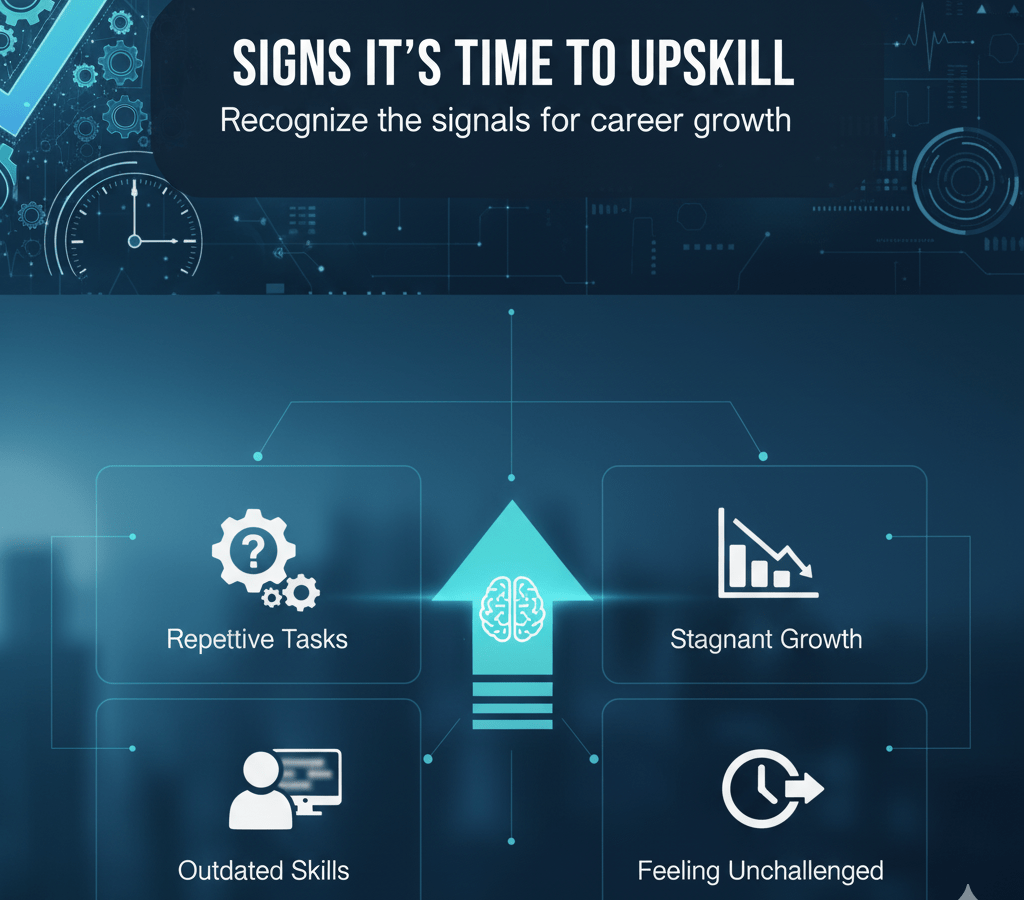
Sometimes, the signs that it’s time to learn something new are right in front of us — we just don’t always notice them. Upskilling doesn’t have to wait until you feel stuck. In fact, recognizing the right time to grow can make all the difference in your STEM journey. Here are a few clues that it might be time to take that next step.
1. You feel left behind in conversations
If you often find yourself hearing new tools, methods, or terms that sound unfamiliar, that’s a clear signal. It doesn’t mean you’re behind, it just means your field is evolving. A quick course, certification, or mentor chat can help you catch up and feel confident again.
2. You’re doing well but not growing
You might be performing well at work or school, but something feels off. Maybe your tasks have become repetitive or you’re not learning anything new. That’s your cue to upskill. Learning a new programming language, research method, or management skill can reignite your motivation and open doors to more exciting roles.
3. Your career goals have shifted
As you grow, your goals may change. You might want to move into leadership, explore data analytics, or focus on sustainability-focused tech. Upskilling helps bridge the gap between where you are and where you want to be.
4. Your field is changing rapidly
STEM industries like artificial intelligence, biotechnology, and renewable energy are evolving fast. What worked yesterday may not be enough tomorrow. Keeping up with new developments ensures you remain valuable and ready for whatever comes next.
5. You’re missing out on opportunities
If you notice job listings or promotion requirements that include skills you don’t yet have, that’s a sign it’s time to learn. Upskilling equips you with the knowledge and confidence to say “yes” when the next big opportunity appears.
At African Women in STEM, we believe every learning moment counts. Our mentorship program is designed to help you identify what skills to learn next and how to apply them in real-world projects. If you’re ready to stay ahead and grow your career with guidance and support, join our community today. You’ll connect with mentors, learn from other STEM professionals, and gain the confidence to take on new challenges.
How to Choose What to Learn Next
Once you’ve realized it’s time to upskill, the next question is simple but important: What should I learn next? With so many new tools, courses, and technologies out there, it’s easy to feel overwhelmed. The key is to choose skills that align with your goals, your field, and your curiosity. Here’s how to make that decision with confidence:
1. Start with your goals
Think about where you want to be in the next one to three years. Do you want to move into a leadership role? Switch to a more technical position? Or work on global sustainability projects? Having a clear vision helps you choose learning paths that actually move you closer to your dream career.
2. Look at market trends
Take a moment to explore what’s happening in your industry. What new tools or technologies are becoming popular? Which skills are most in demand? Reading industry reports, following thought leaders on LinkedIn, or joining professional communities can help you spot trends early. For example, fields like artificial intelligence, data science, and renewable energy are growing rapidly, and professionals with up-to-date technical skills are highly valued.
3. Ask for feedback
You don’t have to figure it all out alone. Ask mentors, supervisors, or even trusted peers for their honest input. They can often see gaps or strengths in your skill set that you might overlook. A quick feedback conversation can guide you toward the skills that will make the biggest difference in your career growth.
4. Balance soft and technical skills
In STEM, it’s not just about mastering the latest software or programming language. Strong communication, teamwork, and problem-solving skills are just as valuable. The most successful professionals know how to blend both. For example, a data scientist who can clearly explain insights to a non-technical audience stands out much more than one who only knows the technical side.
5. Test your interests
Before committing to a full certification or degree, start small. Take a short online course, attend a workshop, or join a community project. This helps you discover what truly excites you and whether it fits your long-term goals.
Example: If you’re a biologist, learning data visualization or Python for data analysis can open new doors in research, environmental studies, or biotech innovation.
Finding the Right Learning Resources
Once you know what skills you want to build, the next step is finding the best way to learn them. Thankfully, there are more options today than ever before, from online courses to mentorship programs and communities that make learning interactive and fun. The goal is to find what fits your learning style, schedule, and career goals.
1. Online Courses
Online learning platforms have made education more flexible and accessible. Sites like Coursera, edX, and LinkedIn Learning offer thousands of industry-recognized programs that you can take at your own pace. Many of these courses are taught by top universities and industry professionals, so you’re learning from experts who actually work in your field.
If you prefer hands-on learning, look for project-based courses where you can practice what you learn. For example, coding challenges, data analysis projects, or lab simulations help you apply knowledge instead of just memorizing it.
2. Mentorship and Coaching
Sometimes, the best learning comes from personal guidance. Having a mentor or coach can make a huge difference because they help you stay focused, accountable, and motivated. Mentors can also help you identify which skills are most valuable for your career stage and show you how to apply them in real-world situations.
At African Women in STEM, mentorship is at the heart of what we do. Our 6-month mentorship program is designed around mentor circles, one mentor with two or three mentees, creating a supportive environment for shared learning, diverse perspectives, and steady growth.
3. Workplace Learning
Don’t overlook opportunities to learn where you already work or study. Many companies and institutions offer internal training programs, workshops, and webinars that help employees develop new skills. Volunteering for a new project or cross-department collaboration can also be a powerful way to upskill while showing initiative.
If you’re still a student, look for research projects, student groups, or hackathons that allow you to apply what you learn in a practical setting. Every experience adds to your skillset.
4. Community-Based Learning
Learning is always better when you do it with others who share your passion. Joining professional or peer communities gives you the chance to exchange ideas, find collaborators, and learn from people at different stages in their careers.
Communities like African Women in STEM offer mentorship, global networking, and real-world projects that help you grow both personally and professionally. You don’t just learn new skills, you also build confidence, friendships, and opportunities.
Tracking Your Progress and Staying Motivated
Upskilling is not just about learning new things, it’s also about seeing how far you’ve come. Tracking your progress helps you stay focused, while celebrating your wins keeps you motivated along the way. Growth happens step by step, and when you can see that progress, it becomes easier to keep going even when things get challenging.
1. Keep a Learning Journal or Portfolio
Documenting your learning journey is one of the best ways to stay organized and self-aware. A simple journal or digital portfolio can help you track what you’ve learned, the courses you’ve completed, and the projects you’ve worked on. Write down what went well, what was challenging, and what you’d like to improve next.
Over time, this record becomes a powerful reflection tool and something you can share with potential employers or mentors to showcase your growth.
2. Share Milestones Online
When you complete a certification, finish a course, or launch a small project, don’t keep it to yourself. Share it on LinkedIn, Twitter, or within your professional community. Posting your milestones builds credibility, increases visibility, and inspires others who are also trying to grow.
Sharing your progress publicly also opens doors to new opportunities, people might reach out for collaborations, mentorship, or even job offers simply because they see your consistency and passion.
3. Celebrate Small Wins
It’s easy to overlook small achievements when you’re focused on big goals. But celebrating the small steps, finishing a module, mastering a new tool, or applying a new concept successfully, gives you the motivation to keep learning.
Remember, progress doesn’t always come in leaps; sometimes it’s in steady, consistent steps. Each skill learned is another building block in your career foundation.
4. Stay Connected with Peers
Learning alone can feel overwhelming at times. That’s why staying connected with peers is so valuable. Being part of a learning community helps you stay accountable, share tips, and get encouragement when you hit a plateau.
The Role of Mentorship in Upskilling
Upskilling can sometimes feel overwhelming, especially when there are so many directions you could take. That’s where mentorship comes in. A good mentor doesn’t just teach you, they help you see the bigger picture, stay focused, and turn your learning into real growth.
Mentorship adds clarity and confidence to your journey, helping you move from “I want to grow” to “I know exactly how to grow.”
1. Mentors Help You Focus on What Matters Most
When you’re learning new skills, it’s easy to get distracted by trends or feel unsure about where to start. A mentor helps you cut through the noise. They guide you toward skills that truly align with your career goals and long-term vision.
For example, if you’re passionate about data science but work in environmental research, a mentor might suggest you start with Python and data visualization before moving into more advanced analytics tools. That kind of focused direction can save you time and energy.
2. They Provide Honest, Constructive Feedback
Mentors aren’t just cheerleaders, they’re truth-tellers. Their feedback helps you identify what’s working and what needs improvement. Whether you’re sharing a project, preparing for a presentation, or learning a new tool, a mentor’s perspective helps you refine your approach and grow faster.
Sometimes, the most valuable feedback is the kind that challenges you. It pushes you to stretch beyond your comfort zone and reach your full potential.
3. They Connect You to Real Opportunities
One of the greatest benefits of mentorship is access. Mentors often open doors to internships, collaborations, research projects, or professional networks where you can apply what you’ve learned. These real-world experiences make your new skills stick and help you build credibility in your field.
Upskilling isn’t just about learning in theory, it’s about putting knowledge into action. Mentors help you find those spaces to do exactly that.
4. Mentorship at African Women in STEM
At African Women in STEM, mentorship is more than just guidance, it’s transformation. Through the 6-month mentorship program, participants work closely with experienced professionals who help them identify skill gaps, develop personalized learning plans, and gain the confidence to apply new knowledge in real-world settings.
By the end of the program, many participants not only feel more equipped for their careers but also become mentors themselves, passing on what they’ve learned to the next generation of women in STEM.
Conclusion
Upskilling isn’t just about keeping up with the job market or adding new certifications to your resume. It’s about staying curious, confident, and ready for what’s next. The world of STEM is always changing, and the more you learn, the more opportunities you create for yourself.
Every new skill you gain, whether it’s technical or personal, becomes an investment in your future. It shows your commitment to growth, adaptability, and excellence. Even small steps forward count. Over time, they add up to something powerful: a career built on purpose and progress.
So, keep learning, keep asking questions, and keep evolving. The journey never really ends, and that’s what makes it exciting.