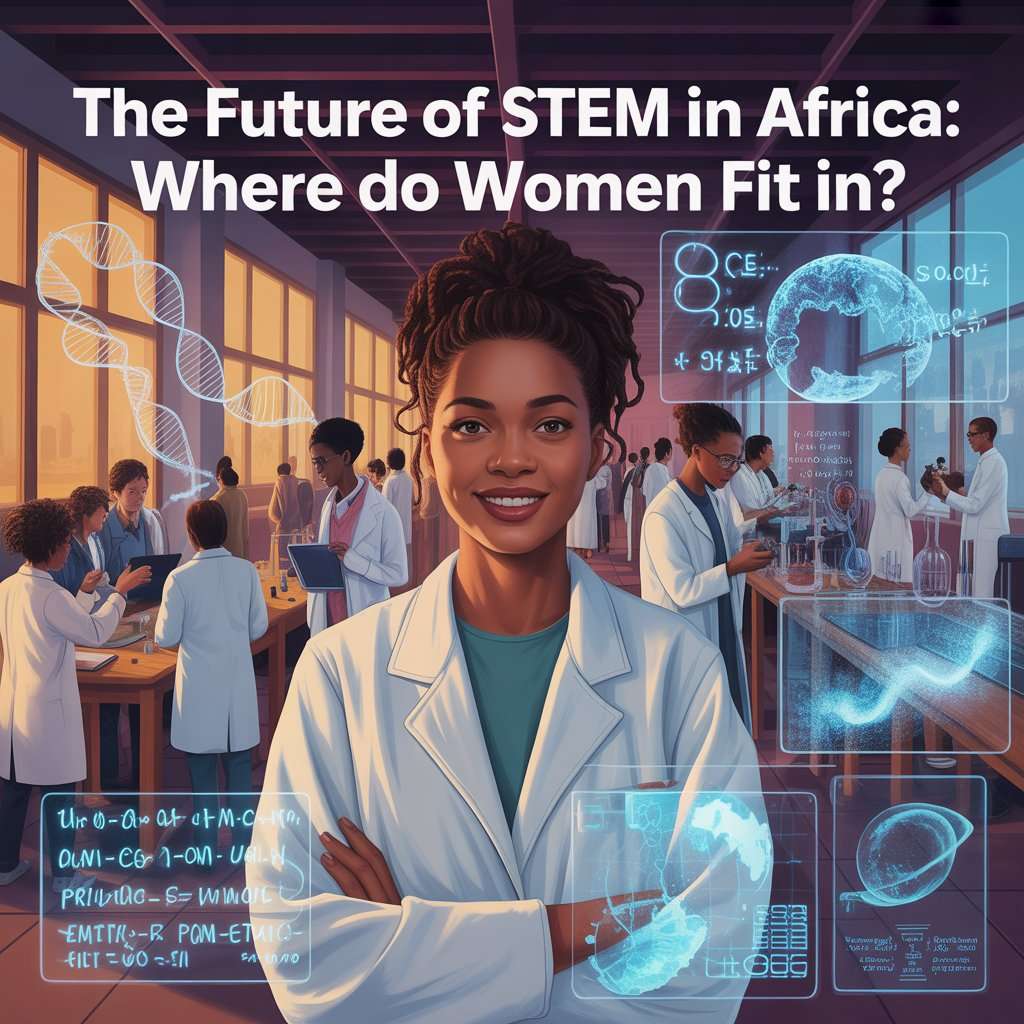
STEM—an acronym for Science, Technology, Engineering, and Mathematics—has become the backbone of progress in today’s world. These fields drive the innovations that power industries, connect societies, and solve urgent problems, from healthcare to climate change. In recent years, Africa has made remarkable strides in STEM, recognizing it as a key to economic development, technological innovation, and sustainable solutions for the continent’s challenges.
With governments, private sectors, and grassroots organizations investing more in STEM, there’s a sense of optimism about Africa’s future. New tech hubs are springing up in Nairobi, Lagos, Kigali, and Kampala. AI, biotechnology, fintech, and renewable energy are no longer outliers but central to development conversations.
But as the STEM landscape across Africa evolves at lightning speed, a critical question remains: As STEM in Africa expands, where do African women fit into this future? Are women being invited to shape the continent’s innovations, or are they still standing at the margins? This article digs into the current reality, the challenges, and the immense potential of African women in STEM, and how organizations like African Women in STEM are working to create a more inclusive, powerful future.
Current State of STEM in Africa
Africa’s STEM revolution is real. The continent is seeing more investment, more institutions, and more young people drawn to careers in science, technology, engineering, and mathematics. Key industries and sectors, ranging from agriculture technology and artificial intelligence to fintech, clean energy, and healthcare innovation—are blossoming in ways that would have seemed impossible even a decade ago.
The Rise of Tech Hubs and Innovation Centers
Major African cities are now home to hundreds of tech hubs and incubators. According to a 2023 report by GSMA, there are over 700 active tech hubs across Africa, with Nigeria, Kenya, South Africa, and Egypt leading the pack. These hubs provide critical infrastructure for startups, entrepreneurs, and researchers to collaborate, prototype, and scale their ideas.
Key Investments and Government Initiatives
African governments are increasingly aware that STEM is not a luxury, it’s a necessity. Countries like Rwanda and Morocco have invested heavily in coding bootcamps, research institutions, and digital literacy programs for youth. Ghana has established the Ghana STEM Academy, while South Africa’s Department of Science and Innovation supports research grants and public-private partnerships. The African Union’s Agenda 2063 places STEM at the center of its vision for a prosperous, integrated, and sustainable continent.
STEM in Sectors: AI, Agriculture Tech, Fintech, Energy, and Health
- Artificial Intelligence: AI startups are emerging across Africa, solving local problems in healthcare, agriculture, and financial services. For instance, AI is being used to detect crop diseases, predict market trends, and even deliver telemedicine.
- Agriculture Technology (AgriTech): Digital platforms connect farmers to markets, weather data, and affordable credit. Drones and IoT devices monitor soil health and increase yields.
- Fintech: Mobile money platforms like M-Pesa have revolutionized banking, giving millions access to financial services for the first time.
- Energy: Solar energy startups are lighting up rural communities, while engineers work on mini-grids and renewable solutions to address Africa’s power challenges.
- Health Innovation: Telehealth platforms, mobile clinics, and locally-produced medical devices are transforming healthcare delivery.
Africa’s STEM landscape is vibrant, dynamic, and full of promise. Yet, beneath this optimism lies a persistent gender gap.
Where Are the Women?

Despite the progress, African women remain underrepresented in the STEM workforce, especially at senior and leadership levels.
The Numbers: Women in STEM in Africa
- According to UNESCO, women constitute about 30% of the world’s STEM researchers. In sub-Saharan Africa, the figure is even lower, often around 18%.
- In higher education, women make up only 35% of STEM students in African universities, and the numbers drop sharply in fields like engineering, computer science, and mathematics.
- Leadership representation is even more concerning: in most African countries, women hold less than 10% of top academic, research, and tech leadership roles.
- In the tech start-up ecosystem, less than 15% of founders are women, and funding for women-led ventures lags far behind male-led counterparts.
Sectors: Where Women Are Most and Least Represented
- Most represented: Life sciences (biology, pharmacy, medicine) and education, where women make up closer to 40% of practitioners.
- Least represented: Engineering, computer science, physics, energy, and advanced technology, where the female presence can be as low as 5 to 10%.
Common Barriers
1. Cultural and Gender Norms
From an early age, many African girls are subtly or overtly discouraged from pursuing STEM. Stereotypes like “math is for boys” persist in homes and classrooms. In some communities, early marriage and family responsibilities take precedence over education, especially in rural areas.
2. Limited Access to Mentorship or Female Role Models
Without visible women in STEM, it’s hard for girls to imagine themselves as engineers, scientists, or tech founders. A lack of mentorship leaves young women without the guidance, encouragement, and practical advice that is crucial for navigating male-dominated fields.
3. Unequal Opportunities in Education and Employment
Girls often have less access to quality STEM education, especially in rural or underserved areas. Gender bias in hiring and promotion limits women’s opportunities to advance. Even when women are qualified, they may be overlooked for leadership roles or high-impact projects.
4. The “Leaky Pipeline”
Many women who enter STEM fields leave before reaching senior positions, often due to workplace cultures that do not support them, lack of flexible work options, or the cumulative impact of bias and isolation.
Why Women Are Crucial to the Future of STEM in Africa
The future of STEM in Africa cannot be fully realized without the participation and leadership of women. Here’s why:
1. Diverse Teams Drive Better Problem-Solving and Innovation
Research consistently shows that diverse teams outperform homogeneous ones. They bring a wider range of perspectives, challenge assumptions, and develop more creative solutions. In Africa, where innovation must address local realities, from water scarcity to public health, women’s insights are invaluable.
2. Women Bring Unique Perspectives
Women, especially African women, are often closest to community health, education, food security, and family well-being. Their lived experiences inform better solutions in sectors like health tech, education innovation, and community technology. For example, women-led teams have designed maternal health apps, water purification systems, and agricultural tools that specifically meet the needs of African women and families.
3. Economic Growth: Empowering Women Boosts Everyone
When women thrive in STEM, the benefits ripple outwards. Studies by McKinsey and the World Bank show that closing the gender gap in STEM could add billions to Africa’s GDP. Women reinvest more of their income in their families and communities, leading to higher household incomes, better education outcomes, and improved health indicators.
4. Closing the Talent Gap
Africa needs all its talent to tackle the big challenges ahead. By excluding women, countries are missing out on half their potential STEM workforce. Empowering women in STEM is not just about fairness, it is about building a stronger, more resilient continent.
False Narratives and Real Solutions
As conversations about women in STEM gain traction, several myths and “easy fixes” are often repeated. It’s time to set the record straight and focus on what truly works.
Myth 1: “Just Learn to Code and Everything Will Change”
Coding bootcamps and digital skills programs are valuable, but they are not magic bullets. Technical skills matter, but they do not address the deeper structural issues—like bias in hiring, lack of workplace support, and limited access to professional networks.
Myth 2: “Tech Will Fix Bias Automatically”
Technology is not neutral. Algorithms, apps, and platforms can reinforce existing biases if the teams building them are not diverse. For example, health apps designed without women’s input may not address women’s needs. AI systems trained on biased data can amplify discrimination.
Real Solutions
1. Access
Girls and women need early, sustained access to quality STEM education, from primary school to university. This means investing in schools, teachers, and learning materials, especially in underserved areas.
2. Policy
Governments and companies must set clear policies for gender equity in STEM. This includes diversity targets, family-friendly work policies, and zero-tolerance for discrimination and harassment.
3. Funding
Women-led startups and research teams need access to capital, grants, and scholarships. Funding must be earmarked specifically for women, with transparent selection processes.
4. Networks
Mentorship, sponsorship, and professional networks are essential for career growth. Women need spaces where they can connect, share experiences, and support each other.
How African Women in STEM Is Helping Shape This Future

At African Women in STEM, we believe that the future of STEM in Africa must be inclusive. Our mission is to amplify the voices, talents, and leadership of African women in STEM. We are building a community where women are seen, supported, and empowered to lead.
Mentorship Program
Our Mentorship Program is the heart of our work. We match young women and early-career professionals with experienced STEM leaders from across Africa and the diaspora. Our mentors help build confidence, share practical advice, and help mentees set and achieve career goals.
- Personalized Pairing: We match mentees with mentors who understand their chosen field and cultural background.
- Goal-Setting: Mentors help women clarify their career ambitions and map out actionable steps.
- Navigating Challenges: From workplace politics to balancing family and career, our mentors provide real-world guidance.
Supportive Community
No one should have to navigate STEM alone. Our community is a safe space for African women at all stages of their journey, from high school students to industry leaders.
- Connection: Members connect through online forums, local meetups, and digital events.
- Collaboration: We encourage joint projects, peer learning, and resource sharing.
- Growth: Regular workshops, book clubs, and knowledge-sharing sessions help members stay inspired and informed.
IGNITE Membership
IGNITE is our growth-focused space for women who are actively building or transitioning their STEM careers.
- Monthly Trainings: Expert-led sessions on topics like leadership, technical skills, entrepreneurship, and work-life balance.
- Actionable Roadmaps: Members receive personalized career planning tools and templates.
- Exclusive Access: Early invites to events, job opportunities, and masterclasses.
Thrive Hub Accelerator
Our Thrive Hub Accelerator is a 12-week, high-impact program designed to help African women in STEM land promotions, secure their dream jobs, and build influence.
- Career Strategy: Intensive coaching on personal branding, interview skills, and negotiating promotions.
- Network Building: Participants connect with industry leaders, recruiters, and potential sponsors.
- Leadership Development: Training in project management, public speaking, and decision-making.
These initiatives are not just about individual success—they are about changing the entire ecosystem so that African women are not just participants in STEM, but leaders, innovators, and changemakers.
What Needs to Happen Next
Africa cannot afford to leave women out of STEM’s future. The progress made so far is just the beginning. For the continent to reach its full potential, coordinated action is needed.
What Governments Should Do
- Invest in Gender-Inclusive STEM Education: Support girls from primary school onward with scholarships, STEM clubs, and safe learning environments.
- Enforce Gender Equity Policies: Require companies and institutions to set and track diversity targets. Enact laws that support parental leave, flexible work, and zero tolerance for harassment.
- Fund Women-Led Ventures: Create grant programs and innovation funds targeted at women in STEM.
Things Schools and Universities Should Do
- Highlight Female Role Models: Invite women scientists and engineers to speak, mentor, and lead workshops.
- Build Inclusive Curricula: Ensure that STEM materials reflect the contributions of African women and diverse innovators.
- Support Student Networks: Foster women-in-STEM societies, peer mentoring, and leadership training.
How the Private Sector Can Help
- Hire and Promote Women: Set targets for recruitment, retention, and advancement of women in STEM roles.
- Fund Women-Led Innovation: Invest in startups and research led by women, and sponsor scholarships and fellowships.
- Partner with Organizations: Collaborate with groups like African Women in STEM to reach and empower female talent.
What Individuals Can Do
- Join the Movement: Become a member of African Women in STEM. Engage in our programs, attend events, and contribute your voice.
- Become a Mentor: Experienced professionals can make a world of difference by guiding the next generation.
- Donate or Partner: Fund scholarships, sponsor programs, or create internships for African women in STEM.
- Share the Story: Use your platform to amplify the achievements and needs of African women in STEM.
Conclusion
The future of STEM in Africa is bright, but it is not complete without the full participation and leadership of African women. From the classrooms of Lagos and Nairobi to the innovation labs of Cape Town and Accra, women must be at the center of the continent’s scientific and technological transformation.
African women in STEM are already breaking barriers, designing solutions, and leading change. But imagine what is possible when every girl knows she belongs in science and technology, when every woman in STEM is supported to lead, and when the continent’s brightest minds, no matter their gender, are empowered to shape Africa’s future.
This is the future African Women in STEM is building. But we cannot do it alone. Visit africanwomeninstem.com to join, learn more, or partner with us for a more inclusive STEM future in Africa.