The question of whether women outperform men in STEM fields surfaces repeatedly in conversations about diversity, hiring practices, and leadership representation. It’s a question that reveals our collective discomfort with gender imbalance in technical fields and our search for explanations.
But here’s the truth: this question often misses the point entirely. Performance in STEM isn’t determined by gender, it’s shaped by access to opportunities, quality of support systems, and the environments in which people work and learn. When we focus solely on comparing outcomes between men and women, we ignore the systemic factors that influence who gets to participate, who gets recognized, and who advances.
This post explores what research actually tells us about women’s performance in STEM, examines the context behind the numbers, and reframes the conversation toward what really matters: creating conditions where talent can thrive regardless of gender.
Understanding What “Outperform” Really Means
Before we can answer questions about performance, we need to define what performance actually means. In STEM fields, success isn’t one-dimensional, yet we often measure it in narrow ways.
Performance can include:
- Academic results and technical proficiency
- Innovation and creative problem-solving
- Leadership and the ability to guide teams
- Collaboration and cross-functional communication
- Long-term impact on projects and communities
Traditional metrics tend to emphasize individual achievements like grades, publications, and promotions. These measures often overlook equally valuable contributions such as mentoring junior colleagues, facilitating team cohesion, improving processes, and ensuring projects consider diverse user needs.
When we define performance too narrowly, we miss the full picture of what makes someone excellent in STEM. Success in science, technology, engineering, and mathematics requires both technical skill and human insight—and both matter equally in creating meaningful outcomes.
What Research and Data Say About Women in STEM
The evidence is clear: when girls and women have equal access to education and resources, they perform just as well as, and often better than their male peers in STEM subjects.
Studies consistently show that:
- Girls achieve equal or higher grades in mathematics and science throughout primary and secondary education
- Women graduate from STEM programs at rates comparable to men when they persist through initial barriers
- Female students demonstrate strong performance in challenging courses including advanced mathematics, physics, and computer science
Where performance gaps do appear, research points to external factors rather than inherent ability. These factors include stereotype threat (the anxiety that comes from being aware of negative stereotypes about one’s group), lack of same-gender role models, implicit bias in evaluation, and limited access to advanced coursework or research opportunities.
A landmark study published in Psychological Science found that when teachers were unaware of students’ gender, girls’ performance in mathematics was rated higher. When gender was known, unconscious bias affected evaluation. This reveals that perceived performance gaps often reflect bias in assessment rather than differences in actual competence.
Strengths Women Often Bring to STEM Environments
While individual variation always exceeds gender-based differences, research identifies certain strengths that women commonly demonstrate in STEM settings:
Collaborative approach: Women often excel at building consensus, facilitating teamwork, and ensuring all voices are heard—skills that strengthen research teams and product development.
Attention to detail and thoroughness: Many women bring methodical approaches to problem-solving that reduce errors and improve project outcomes.
Communication across disciplines: The ability to translate technical concepts for diverse audiences improves stakeholder engagement and makes science more accessible.
Systems thinking: Women frequently demonstrate strength in understanding how components interact within larger systems, leading to more holistic solutions.
These aren’t gender-exclusive traits, but they represent valuable capabilities that enhance STEM work. Teams with diverse approaches consistently outperform homogeneous ones in innovation metrics, problem-solving effectiveness, and market success.
When organizations recognize and value these varied contributions, they unlock better outcomes for everyone.
Barriers That Affect Performance and Recognition
Women’s performance in STEM cannot be separated from the obstacles they navigate daily. These barriers don’t diminish ability—they diminish opportunity and visibility.
Workplace bias manifests in multiple ways: women receive less constructive feedback, are interrupted more frequently in meetings, and must provide more evidence of competence to receive the same recognition as male colleagues. Research shows that identical resumes receive different evaluations depending on whether the name appears male or female.
Unequal opportunities start early and compound over time. Girls receive less encouragement to pursue advanced STEM courses. Women are offered fewer high-visibility projects, leadership opportunities, and sponsorship from senior leaders.
Lack of mentorship leaves many women without guidance on navigating unwritten rules, building networks, and advocating for their contributions.
Attribution bias means women’s successes are often credited to external factors like luck or team effort, while men’s successes are attributed to skill and intelligence. Conversely, women’s failures are more likely to be seen as personal shortcomings.
These barriers don’t affect ability—they affect how ability is perceived, supported, and rewarded. When women’s performance appears lower, we must ask: what systemic obstacles are we measuring instead of talent?
Performance Thrives Where Support Exists
Excellence doesn’t emerge in a vacuum—it develops in environments that nurture potential and remove unnecessary obstacles.
Women in STEM perform exceptionally when they:
- Have access to mentors who provide guidance and advocacy
- Work in teams where their contributions are valued and credited appropriately
- Receive constructive feedback that helps them grow
- See representation in leadership that signals belonging
- Participate in communities that offer solidarity and shared learning
Research on women in technology companies shows that those with access to strong peer networks report higher job satisfaction, faster skill development, and greater career advancement. Mentorship specifically increases retention rates and promotion likelihood for women in technical roles.
Inclusive leadership matters enormously. Teams led by managers who actively address bias, ensure equitable work distribution, and recognize diverse contributions see better performance across all team members, not just women.
When support systems are strong, women don’t just meet expectations, they exceed them.
Why the Question Should Shift From Comparison to Equity
Asking whether women outperform men frames the conversation as a competition where one group must prove superiority. This framing is both unhelpful and inaccurate.
The real question isn’t about comparison, it’s about equity. Do all talented individuals have equal access to education, resources, opportunities, and fair evaluation? When they don’t, we’re not measuring ability; we’re measuring privilege and access.
Gender equity in STEM means:
- Girls and boys receive equal encouragement and resources in STEM education
- Hiring and promotion decisions are based on consistent, transparent criteria
- Work environments are free from harassment and bias
- Leadership actively works to identify and remove barriers
- Success is defined broadly enough to recognize diverse contributions
When we create equitable systems, talent flourishes regardless of gender. The goal isn’t to prove one group is better, it’s to ensure everyone with aptitude and interest can contribute fully.
Shifting from comparison to equity changes everything. It moves us from asking “who’s better?” to asking “what’s fair?” and “what’s possible when we remove obstacles?”
The Role of Community in Unlocking Excellence
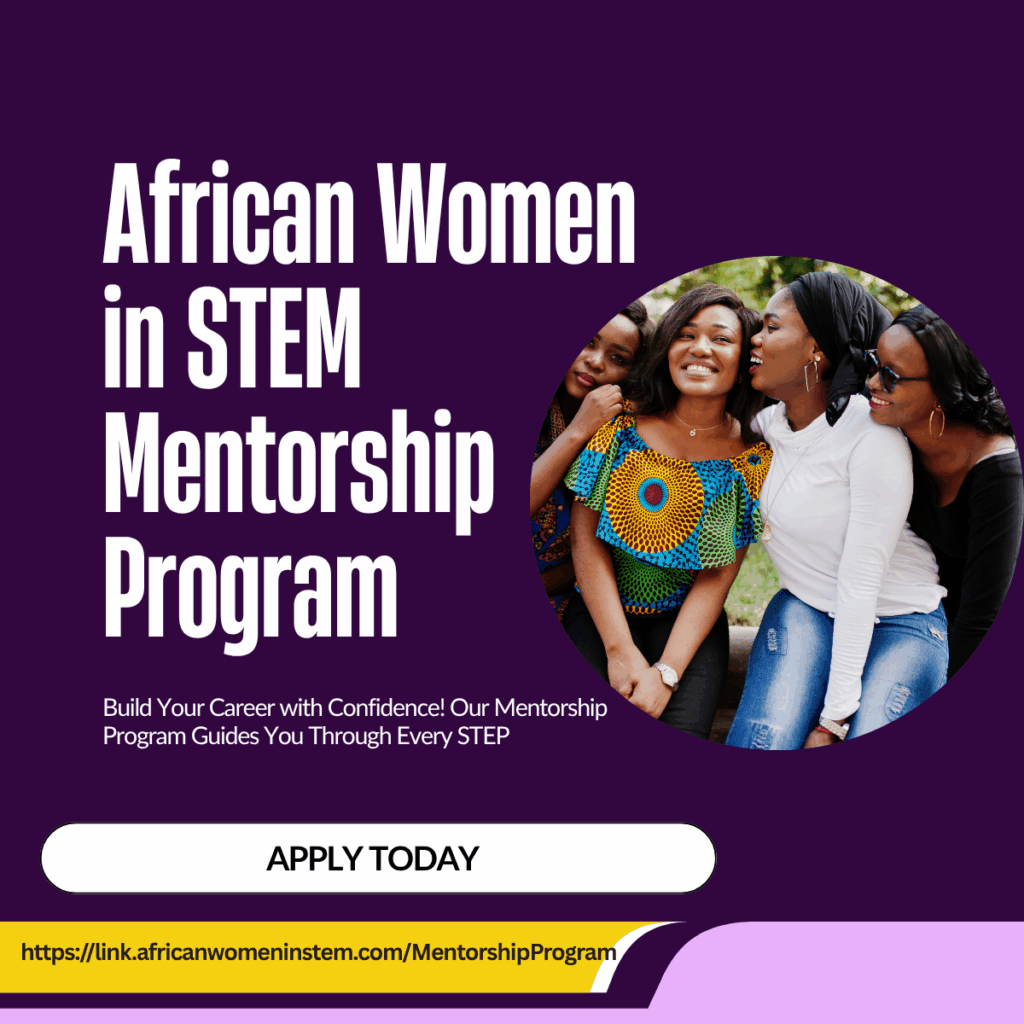
Individual talent needs collective support to reach its full potential. This is where community becomes transformative.
Strong professional communities provide:
- Skill-sharing and learning: Members exchange technical knowledge, career strategies, and problem-solving approaches
- Visibility and amplification: Communities help members showcase their work and receive appropriate credit
- Mentorship and sponsorship: More experienced professionals guide newer members through challenges
- Emotional support: Shared experiences reduce isolation and build resilience
- Accountability and encouragement: Peers motivate consistent growth and celebrate achievements
For women in STEM, communities specifically designed to address their unique challenges offer additional benefits. They provide spaces to discuss navigating bias, balancing multiple demands, and building confidence in environments where women are underrepresented.
African Women in STEM exists precisely for this purpose—to create a community where African women in science, technology, engineering, and mathematics can connect with peers, access resources, share experiences, and grow together. Join us to be part of a network that champions your success and amplifies your impact.
Conclusion
Women don’t need to outperform men to deserve a place in STEM. The question itself implies that women must constantly prove their worth through exceptional achievement—a standard applied to no other group.
The evidence shows clearly that women already demonstrate excellence when given equal opportunity and support. Academic performance, innovation contributions, leadership capabilities—women deliver across all measures of success in STEM fields.
What holds women back isn’t ability. It’s systemic barriers, bias in evaluation, limited access to opportunities, and lack of support structures. Address these factors, and women’s performance speaks for itself.
For women pursuing STEM careers: your talent is real, your contributions matter, and you belong in these fields. Seek out communities and allies who recognize your value. Build networks that support your growth. Join African Women in STEM today and become part of a community that celebrates women’s achievements in STEM.