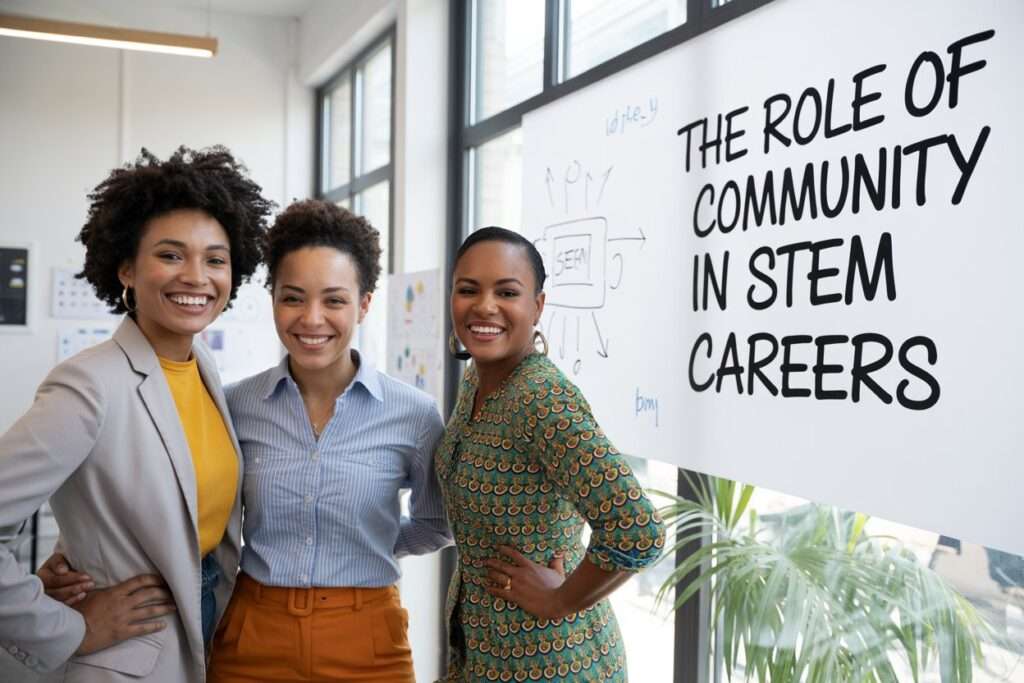
For African women in STEM fields, the importance of community becomes even more pronounced. Across Africa and around the world, women from the continent are often underrepresented in classrooms, research labs, boardrooms, and conferences. The statistics tell a clear story: despite immense talent and ambition, African women face unique challenges in breaking into STEM and advancing their careers. In this context, strong networks and supportive communities are not just helpful, they are essential.
This article will explore why community is important for African women in STEM, delving into the ways it shapes careers, nurtures confidence, and opens doors. We will examine the barriers faced without community, the transformative power of belonging, and the practical benefits that come from connecting with others. Finally, you will see how African Women in STEM is building a vibrant space for growth, mentorship, and leadership, one where every African woman in STEM can find her place, her voice, and her power.
Why Community Matters in STEM Careers
Knowledge Sharing
One of the most significant advantages of being part of a STEM community is the sharing of knowledge. In a field that advances rapidly, staying up-to-date on the latest research, emerging technologies, and best practices is crucial. Communities act as living libraries, where ideas, articles, resources, and opportunities flow freely. Whether it is through formal channels like online forums, webinars, and conferences, or informal ones like group chats and coffee meetups, community members pass on what they have learned. This collective wisdom accelerates everyone’s growth.
For African women, having access to a community means tapping into a wellspring of insights tailored to their unique context. Community members can recommend scholarships, share job openings, flag conferences that welcome African speakers, or even alert each other to funding opportunities. When one woman learns something new, the entire network benefits. This spirit of generosity and reciprocity shortens the learning curve and ensures no one gets left behind.
Collaboration and Innovation
STEM breakthroughs rarely happen in silos. The most exciting innovations, whether in medical research, software development, renewable energy, or data science are the result of collaboration. Teams bring together people with diverse skills, experiences, and perspectives to solve complex problems. In these environments, community is not just a support system—it is a catalyst for creativity.
Communities foster environments where brainstorming is encouraged and feedback is constructive. Imagine a young engineer in Nairobi brainstorming a new app with a data scientist in Accra, a mathematician in Johannesburg, and a biologist in Cairo, all connected through a STEM network. By pooling their expertise, they can tackle challenges that none could solve alone. Such collaborations lead to solutions that are more innovative, resilient, and relevant to African realities.
Visibility and Advocacy
In STEM, visibility is power. Too often, the achievements of African women go unnoticed, overlooked in publications, left out of panels, or underrepresented in leadership roles. Communities work to change this by amplifying individual voices and advocating for greater representation.
When one woman achieves a milestone, the community celebrates and shares her story widely. When another faces bias or exclusion, the network rallies to support her and push for change. Through advocacy, communities also influence policies, curriculum, and funding to be more inclusive. They become platforms for African women to speak up, be seen, and shape the future of STEM.
Challenges African Women Face Without Community
Isolation and Burnout
Many African women in STEM know what it feels like to be the “only one” in a classroom, laboratory, or workplace. This isolation can be daunting and emotionally draining. Without a supportive network, it is easy to feel invisible or like you do not belong. Over time, this takes a toll, leading to burnout, self-doubt, and sometimes even the decision to leave STEM altogether.
The loneliness of being a pioneer is real. When there are few or no colleagues who share your background or experiences, it can be hard to find encouragement or understanding. Simple questions, like how to navigate a difficult supervisor, balance family responsibilities, or push back against bias become much harder when you are alone.
Lack of Mentorship
Mentorship is one of the most powerful tools for career advancement in STEM. Yet, African women often struggle to find mentors who look like them or understand their unique journey. Without mentors, it is easy to lose sight of what is possible. Role models show us the way forward, give advice based on lived experience, and open doors that might otherwise stay closed.
A lack of mentorship means missing out on guidance about career paths, research opportunities, and strategies for overcoming obstacles. It also means missing the confidence boost that comes from seeing someone who looks like you succeed. For many, the absence of mentors slows down progress and makes the road lonelier.
Systemic Barriers
Beyond individual challenges, African women in STEM face systemic barriers that can be hard to overcome alone. Gender bias, unequal access to funding, and limited professional opportunities are persistent issues. In some cases, institutional policies and workplace cultures favor men, making it difficult for women to advance.
Without a community to share stories, organize, and push for change, these barriers can feel insurmountable. Women may be overlooked for promotions, denied leadership roles, or excluded from important projects. Overcoming these obstacles requires collective effort—a united voice demanding equity and inclusion.
The Power of Belonging
Emotional Support
Perhaps the most profound benefit of community is emotional support. Knowing you are not alone, that others share your struggles and dreams, can make all the difference. When African women connect with peers who understand the specific challenges they face, it creates a foundation of trust and empathy.
Emotional support can be as simple as a reassuring message, an encouraging phone call, or a shared laugh after a tough day. It can also mean having a safe space to vent frustrations, celebrate wins, or ask for help. This sense of belonging reduces stress and builds resilience, ensuring women stay in STEM and continue to thrive.
Confidence Building
Confidence is fundamental to success in any career, and it grows stronger in the community. Seeing other African women succeed, whether by publishing research, leading teams, or launching startups proves that you can, too. These visible successes help counteract impostor syndrome, which disproportionately affects women and minorities in STEM.
Communities create opportunities for women to showcase their work, receive validation, and develop leadership skills. Whether it is speaking at an event, leading a workshop, or mentoring others, each experience builds confidence and prepares women for bigger challenges ahead.
Celebrating Success
All too often, the achievements of African women in STEM are overlooked or undervalued. Community ensures that every milestone is recognized and celebrated, no matter how big or small. Celebrating success is not just about recognition, it is about inspiring others and creating a culture where excellence is expected and rewarded.
When one woman is celebrated, it signals to others that their hard work will be seen and valued. This positive reinforcement fuels ambition and motivates the entire community to aim higher.
Practical Benefits of a STEM Community

Networking and Career Growth
Professional growth is rarely a solo journey. Networking within a STEM community opens doors to new jobs, research opportunities, and career advancement. When community members refer each other for positions or recommend one another for projects, everyone benefits.
Networking is not just about collecting business cards or connecting on LinkedIn, it is about building genuine relationships. These connections lead to collaborations, invitations to speak at conferences, and introductions to influential leaders in the field. For African women in STEM, networks can be the bridge to international opportunities and global recognition.
Mentorship Opportunities
A strong community provides a rich pool of mentors and mentees. Early-career women can learn directly from those further along the path, gaining insights into navigating academia, industry, or entrepreneurship. Mentorship programs within communities pair seasoned professionals with newcomers, ensuring knowledge is passed down and everyone has a chance to grow.
Mentorship goes both ways. While experienced women provide guidance, younger members bring fresh perspectives, energy, and new ideas. These relationships are mutually beneficial, strengthening the entire community.
Skill Development
STEM is a field that never stands still. Continuous learning is essential to keep up with new technologies, research methods, and industry trends. Communities offer workshops, training sessions, and knowledge exchange forums where members can upskill and stay ahead.
Skill development is not limited to technical expertise. Communities also help women build soft skills, like public speaking, negotiation, leadership, and project management—that are critical for advancing in STEM. These opportunities ensure members are well-rounded and prepared for any challenge.
Visibility and Opportunities
One of the most tangible benefits of community is increased visibility. When community members promote each other’s work, nominate each other for awards, and share success stories, it raises the profile of African women in STEM as a whole. This collective visibility attracts new opportunities, partnerships, and funding.
Communities also advocate for members, ensuring they are considered for speaking engagements, media features, and leadership positions. When women uplift each other, the entire ecosystem becomes more inclusive and dynamic.
African Women in STEM: Building That Community
Mentorship Program
African Women in STEM is deeply committed to building a robust mentorship ecosystem. The mentorship program matches early-career women with experienced professionals in their fields. These mentors provide guidance on everything from research techniques to navigating workplace dynamics. They share hard-earned wisdom, offer encouragement, and act as sounding boards for ideas and challenges.
The mentorship program is designed to be accessible and flexible. Women can connect virtually or in person, across countries and time zones. This structure ensures that no one is left out due to geography or schedule. The result is a dynamic, supportive network where every woman can find guidance tailored to her journey.
Events and Workshops
Learning is at the heart of African Women in STEM. The community organizes regular events, workshops, and conferences that bring together members from across Africa and the diaspora. These gatherings provide opportunities to learn from experts, share research, and develop new skills.
Events range from technical workshops on coding, data analysis, and laboratory techniques to sessions on leadership, negotiation, and public speaking. Conferences offer a platform for members to present their work, network with peers, and build confidence. Social mixers and informal meetups foster friendships and deepen connections.
Networking and Storytelling
Storytelling is a powerful tool for connection and inspiration. African Women in STEM provides a platform for members to share their journeys, challenges, and victories. By telling their stories, women motivate others, break down stereotypes, and create a sense of shared purpose.
Networking events connect members across countries, sectors, and career stages. These connections lead to new collaborations, joint research projects, and professional growth. The power of networking within this community cannot be overstated—it is the engine that drives opportunity and change.
Global Reach, African Focus
African Women in STEM is unique in its ability to connect women across the continent and beyond, while keeping African perspectives and priorities at the center. The community is a safe, empowering space where African voices are heard and valued. It highlights the achievements of African women, addresses the challenges they face, and advocates for policies that support their success.
With members in academia, industry, entrepreneurship, and government, the community brings together a rich tapestry of experiences. This diversity fuels innovation and ensures that solutions are relevant to the African context.
Join the Community
No STEM career thrives in isolation. Success in science, technology, engineering, and mathematics is built on collaboration, support, and shared growth. For African women, joining a community like African Women in STEM is an investment in your future and the future of the continent.
Whether you are a student, researcher, entrepreneur, or industry professional, there is a place for you in this community. Here, you will find mentors who have walked the path before you, peers who understand your journey, and opportunities that match your ambition.
Your career is not just about what you know, but who walks alongside you. When you join African Women in STEM, you become part of a movement, one that is redefining what it means to be a woman in STEM in Africa and beyond.
Conclusion
Community is more than just a group of people; it is a source of strength, resilience, and inspiration. For African women in STEM, community means access to knowledge, career growth, mentorship, and visibility. It means having a safe space to share challenges, celebrate victories, and lift each other up.
If you are an African woman in STEM, do not wait to find your community, be a part of building it. Whether you need support, want to develop your skills, or are ready to mentor others, African Women in STEM welcomes you. The future of STEM in Africa is bright, and it is powered by women who work together.Join us today and be part of a community dedicated to your success.