
Sarah had been passed over for promotion three times. She was dedicated, reliable, and consistently delivered excellent work. Yet when she asked her manager about advancement, he dismissed her request without even mentioning a raise.
Sarah’s experience isn’t unique. It’s a pattern that countless high-performing women in STEM recognize all too well.
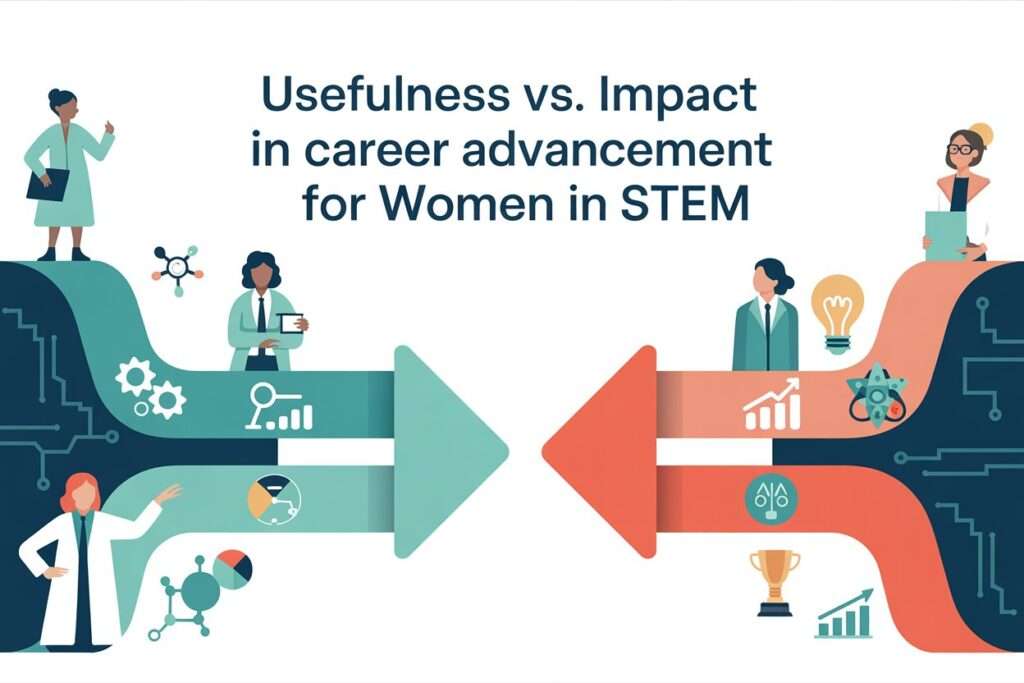
In this solo reflection episode of Lunch with Leaders, host Adaeze Iloeje-Udeogalanya addresses why hard work and reliability no longer lead to advancement for many women in STEM. She breaks down the critical difference between being “useful” and being “impactful,” and reveals why optimizing for usefulness traps professionals in career plateaus.
This isn’t about working harder or becoming more competent. It’s about understanding that the rules have changed without anyone telling you, and that continuing to play by the old rules will keep you exactly where you are.
If you’ve ever felt like your effort no longer yields the career returns you expect, this episode offers the clarity you need to break through.
1. When Effort Stops Yielding Career Returns
High-performing women often reach a specific point in their careers where something shifts. The formula that brought them success early on—work hard, be reliable, deliver excellent results—suddenly stops producing advancement.
This isn’t about underperformance. It’s about the rules changing without clear communication.
The Confusion of Career Stagnation
What makes this particularly frustrating is that nothing obvious has changed in your performance. You’re still working hard, maybe even harder than before. Also, you’re still delivering quality results ane deven the person everyone relies on.
But promotions go to others. Opportunities pass you by. Recognition doesn’t translate to advancement.
The natural response is to assume you need to do more. Work longer hours. Take on additional projects. Prove yourself even more thoroughly.
But this response is based on a misunderstanding of what’s actually happening.
Why the Old Formula Stops Working
The formula that created early career success was designed for entry and mid-level roles where execution and reliability are the primary differentiators.
At more senior levels, competence is assumed. Everyone is reliable. Everyone delivers quality work. Usefulness stops being a differentiator and becomes table stakes.
The system has shifted to rewarding something different—impact—but many professionals continue optimizing for usefulness because that’s what they’ve been trained to do.
2. Stagnation Is a Misalignment Problem, Not a Capability Issue
Here’s the core insight that changes everything: career stagnation at this stage is not a capability problem. It’s a misalignment problem.
The system rewards impact. You’re optimizing for usefulness. That gap is what keeps you stuck.
Understanding the Misalignment
You have the capability to create a significant impact. You have the skills, the experience, and the intelligence. The problem isn’t what you can do; it’s what you’re choosing to focus on.
You’ve been trained—through early career success and organizational reinforcement—to optimize for being useful. To be the reliable person who solves problems, meets deadlines, and keeps things running smoothly.
This made you valuable. It earned you trust and responsibility. But it didn’t position you for advancement because usefulness and impact are fundamentally different things.
The System Rewards Impact
Organizations promote people who create impact, not people who are merely useful. Impact means changing outcomes, shaping priorities, and making decisions that move the organization forward.
Usefulness means executing well within your current role. It’s valuable, but it’s not what gets you promoted to leadership.
Until you recognize this misalignment and adjust what you’re optimizing for, you’ll remain stuck regardless of how hard you work.

3. The “Fixer” Trap: When Being Reliable Works Against You
One of the most common patterns among stagnant high-performers is becoming “the fixer”—the person everyone turns to when problems arise.
Being the fixer feels like success. It means you’re trusted and valued. But it often serves the organization more than it serves your career progression.
How the Fixer Role Develops
Early in your career, solving problems and being reliable creates opportunities. You get noticed. You earn more responsibility. The formula works.
So you keep doing it. You become known as the person who can handle difficult situations. The go-to problem solver. The one who never drops the ball.
Organizations love this. They get exceptional execution without the expense or complexity of promoting you to a leadership position. They have you exactly where they want you.
Why This Traps Your Career
The problem is that being positioned as the fixer doesn’t lead to being positioned as a leader. These are different roles with different perceptions.
Fixers execute. Leaders set direction. Fixers solve problems that come to them. Leaders decide which problems matter most. Fixers reduce risk. Leaders take strategic bets.
When you’re seen primarily as a fixer, decision-makers struggle to imagine you in leadership roles. You’ve been so valuable in your current position that moving you up feels risky.
This is how you become “over-leveraged and under-positioned”—the organization is extracting maximum value from your work while keeping you in place.
In the episode, Adaeze explains exactly how this dynamic operates and why recognizing it is the first step to breaking free. You’ll learn how to identify whether you’ve fallen into the fixer trap and what to do about it.
4. What Impact Actually Looks Like
Many professionals optimize for usefulness because they don’t have a clear picture of what impact actually means in practice.
Adaeze provides specific clarity: impact is not what you do, but what changes because of what you do.
Three Components of Impact
Connecting work to organizational priorities and outcomes. Impact means your work clearly advances what the organization cares about most. You’re not just completing tasks; you’re driving outcomes that matter to leadership.
Making decisions that move initiatives forward. Rather than waiting for direction or executing someone else’s decisions, you’re making the calls that keep important work progressing.
Reducing ambiguity so others can execute confidently. Impact means creating clarity for others, not just following clear instructions yourself. You’re the person who makes it possible for others to move forward with confidence.
The Fundamental Shift
Notice how different this is from usefulness. Usefulness is responsive, supportive, and execution-focused. Impact is proactive, strategic, and outcome-focused.
Usefulness answers the question “Can you do this well?” Impact answers the question “What changed because you were here?”
When you shift from optimizing for usefulness to optimizing for impact, you fundamentally change how decision-makers perceive you and what opportunities become available.
5. The Wrong Hill Problem: Why Doubling Down Doesn’t Work
Adaeze introduces a powerful metaphor: many professionals are climbing the wrong hill in their careers.
You’re working hard, making progress and getting better at what you do. But you’re climbing a hill that doesn’t lead where you want to go.
Understanding the Metaphor
Imagine you want to reach the peak of career success. You can see it in the distance. So you start climbing the nearest hill—the hill of usefulness—with dedication and excellence.
You’re making steady progress. You’re working harder than most people around you. By every measure of effort, you’re succeeding.
But this hill doesn’t connect to the peak you’re trying to reach. It’s a separate hill entirely. No amount of effort climbing the wrong hill will get you to your destination.
Meanwhile, others are climbing the hill of impact. They might not be working as hard or as excellently as you are, but they’re on the right hill. So they reach the peak while you remain stuck on a different summit.
When to Change Strategy
The instinct when things aren’t working is to double down on current strategies. Work harder. Be more reliable. Solve more problems.
But if those strategies are fundamentally misaligned with what the system rewards, doubling down just keeps you stuck more efficiently.
The solution isn’t to climb your current hill faster. It’s to recognize you’re on the wrong hill and make the strategic shift to the hill of impact.
6. The Key Question: What Am I Optimizing For?
This brings us to the most important question Adaeze poses in the episode: “What am I optimizing for—usefulness or impact?”
This single question cuts through all the complexity and gets to the heart of why you might be stuck.
The Power of This Question
When you honestly assess what you’re optimizing for, you often discover that most of your time and energy goes toward being useful. Being responsive, available or being the person who solves problems and keeps things running smoothly.
Very little of your time and energy goes toward creating strategic impact. Shaping priorities. Making decisions that move initiatives forward. Positioning yourself as a leader rather than an exceptional executor.
This isn’t a moral judgment. Usefulness is valuable. But if you’re optimizing for usefulness while the system rewards impact, you’ve identified the source of your stagnation.
Awareness Is Leverage
The episode emphasizes that questioning your approach already puts you ahead. Many professionals never realize they’re optimizing for the wrong thing. They just keep working harder, feeling more frustrated, and wondering why effort doesn’t equal advancement.
Once you see the misalignment clearly, you can take intentional action to correct it. You can shift what you focus on, how you position yourself, and what you say yes to.
Awareness doesn’t solve the problem immediately, but it’s the essential first step. You can’t fix a misalignment you don’t recognize.
7. Designing Your Career Intentionally
The episode makes clear that advancement at this stage requires strategic positioning, not just hard work.
You need to design your career intentionally rather than hoping that excellence will automatically be recognized and rewarded.
What Intentional Career Design Looks Like
Intentional career design means making strategic choices about where you invest your time and energy. It means saying no to some opportunities that keep you in execution mode so you can say yes to opportunities that position you strategically.
Also, it means changing how you talk about your work, emphasizing the impact and outcomes rather than just the quality of execution.
It means seeking visibility with decision-makers for your strategic contributions, not just your reliability.
Taking Action
Adaeze invites listeners who are ready to make this shift to work with her. There’s an application in the show notes for those who want personalized guidance on repositioning from usefulness to impact.
This isn’t about working with a coach because something is wrong with you. It’s about recognizing that major career transitions benefit from expert guidance, especially when you’re navigating unwritten rules and trying to break through plateaus.
The professionals who advance fastest aren’t necessarily the most capable. They’re the ones who recognize when they need outside perspective to see their blind spots and navigate strategic shifts.
Adaeze’s work with women in STEM focuses specifically on this transition from high-performing executor to strategic leader. If you’re experiencing the patterns described in this episode, her guidance could be exactly what you need to break through.
8. Leadership Is About Impact, Not Just Excellence
The episode concludes with a powerful reframe: “You’re ready for your work to create more impact—that is leadership.”
Leadership isn’t about having a certain title or years of experience. It’s about creating impact through strategic decisions and influence.
Transitioning to Leadership
The transition from execution to leadership requires a fundamental shift in how you think about your role. You move from “How do I do this task excellently?” to “What impact does this work need to create?”
You move from being responsive to being proactive. From following clear instructions to reducing ambiguity for others. From completing assigned work to shaping what work matters most.
You’re Already Ready
One of the most encouraging messages in the episode is that if you’re experiencing this plateau, it’s not because you lack capability. It’s because you’ve outgrown your current optimization strategy.
You have what it takes to create strategic impact. You just need to redirect your considerable talents and work ethic toward impact rather than usefulness.
The skills that made you an exceptional executor—attention to detail, reliability, problem-solving—are still valuable. But they need to be applied to leadership challenges rather than execution challenges.
Key Takeaways for Women in STEM
This episode offers essential insights for high-performing women in STEM experiencing career plateaus:
- Usefulness and impact are fundamentally different. Being reliable and productive differs from creating change and shaping organizational priorities.
- The old career formula has an expiration date. Hard work and excellence matter early on, but impact becomes the differentiator at senior levels.
- Stagnation signals misalignment, not inadequacy. The system rewards impact; many professionals optimize for usefulness.
- The fixer role can trap your career. Being the go-to problem-solver often serves the organization more than your advancement.
- Impact means creating change. Focus on outcomes that advance organizational priorities and decisions that reduce ambiguity for others.
- Climbing the wrong hill wastes effort. If current strategies aren’t working, change your approach rather than working harder at the same things.
- Intentional career design is essential. Advancement requires strategic positioning and conscious choices about where to invest your energy.
- Leadership is defined by impact. You transition to leadership by creating influence through strategic decisions, not by accumulating years of excellent execution.
Transform Your Career Strategy
It reflects a misalignment between what you’re optimizing for and what the system rewards at your career stage.
The professionals who break through aren’t necessarily more talented or harder working. They’re the ones who recognize this misalignment and make the strategic shift from usefulness to impact.
This shift isn’t always comfortable. It requires letting go of strategies that served you well in the past and embracing new approaches that feel less familiar.
But it’s absolutely necessary if you want your considerable talents to translate into the advancement, recognition, and leadership opportunities you’ve earned.
The good news is that once you see the pattern clearly, you can take intentional action to realign your career strategy with what actually creates advancement.
Get the complete framework for shifting from usefulness to impact and positioning yourself for the leadership roles you deserve: Listen now and start transforming your career strategy.