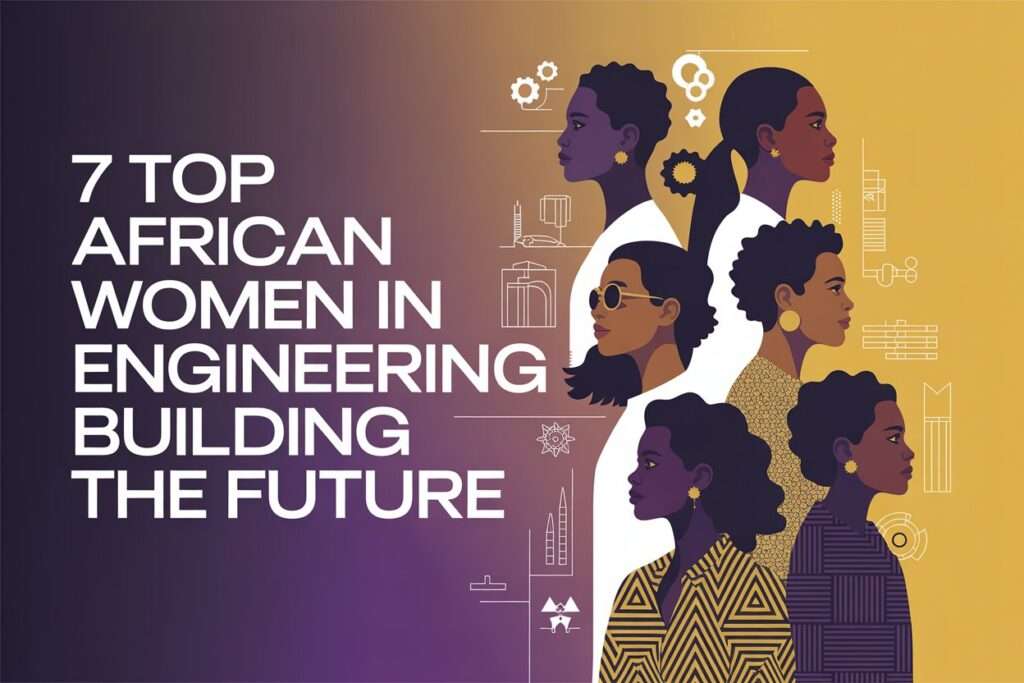
This International Women’s Day 2026, we celebrate seven extraordinary African women engineers who are transforming their communities through innovation. These women saw challenges that affected real people and applied engineering principles to create solutions that save lives, improve livelihoods, and build sustainable futures.
Their work spans agriculture, healthcare, renewable energy, waste management, and aerospace engineering. What unites them is a commitment to using their technical skills to address Africa’s most pressing challenges while proving that engineering excellence knows no gender boundaries.
When girls across Africa see these women designing life-saving devices, winning international engineering prizes, and leading companies that create real impact, it expands what they believe is possible for their own lives. Representation in engineering matters because you cannot become what you cannot see.
Let’s honor these brilliant engineers who are building Africa’s future, one innovation at a time.

Esther Kimani – Image: Woman Kenya Network
1. Esther Kimani: Revolutionizing Pest Detection to Save Crops
Kenyan agricultural engineer Esther Kimani won the 2024 Africa Prize for Engineering Innovation for creating Agri-AI, a smartphone-based solution that helps farmers detect crop pests and diseases early, potentially saving millions of dollars in agricultural losses.
As co-founder and Chief Technology Officer of Shamba Pride, Esther developed technology that addresses a critical challenge facing African farmers: identifying crop threats before they destroy entire harvests. The Agri-AI system uses artificial intelligence and machine learning to analyze images of crops, detecting pests and diseases with remarkable accuracy.
Farmers simply photograph their crops using a smartphone, and the system identifies the problem and recommends treatment options. This democratizes access to agricultural expertise that was previously available only to large commercial farms with dedicated agronomists.
The technology has been deployed across Kenya, Uganda, and Tanzania, helping thousands of smallholder farmers protect their crops and improve yields. By catching problems early, farmers can apply targeted treatments rather than losing entire crops or using excessive pesticides.
For women engineers looking to create similar impact, understanding how to advance to leadership positions in STEM becomes crucial as your innovations gain traction and you build teams around your vision.

Juveline Ngum Ngwa – Image: The Benchmark
2. Juveline Ngum Ngwa: Engineering Sustainable Waste Management Solutions
Cameroonian engineer Juveline Ngum Ngwa founded BleagLee, a company that transforms waste management in Cameroon while creating economic opportunities for waste collectors and promoting environmental sustainability.
Juveline identified a critical problem in Cameroonian cities: inadequate waste management infrastructure leading to environmental pollution and health hazards. Rather than waiting for government solutions, she engineered a comprehensive system that addresses multiple aspects of the waste problem.
BleagLee operates a waste collection and recycling service that works with individual waste collectors, providing them with tools, training, and a structured system for collecting and processing recyclable materials. This engineering approach transforms informal waste picking into an organized, efficient operation.

Carol Ofafa – Image: carolofafa.com
3. Carol Ofafa: Engineering Kenya’s Electric Mobility Future
Kenyan engineer Carol Ofafa is pioneering electric mobility in East Africa through E-Safiri, a company providing battery swapping infrastructure for electric motorcycles, addressing both transportation costs and environmental pollution.
Electric vehicles face a critical adoption barrier in Africa: charging infrastructure. Carol engineered a solution that sidesteps this problem entirely. Instead of requiring motorcycles to charge for hours, E-Safiri’s battery swapping stations allow riders to exchange depleted batteries for fully charged ones in minutes.
This engineering innovation makes electric motorcycles practical for commercial riders like motorcycle taxi operators who cannot afford hours of downtime for charging. They simply swap batteries and continue working, maintaining the convenience of traditional fuel-powered bikes while enjoying lower operating costs.
Carol’s innovation directly addresses the economic pressures facing motorcycle taxi operators, who represent a significant portion of urban transportation in Kenyan cities. By reducing fuel costs through electric power and eliminating charging downtime through battery swapping, E-Safiri improves operators’ profitability while reducing urban air pollution.
The battery swapping stations themselves represent sophisticated engineering, managing battery charging, monitoring battery health, and ensuring reliable supply of charged batteries throughout operating hours.
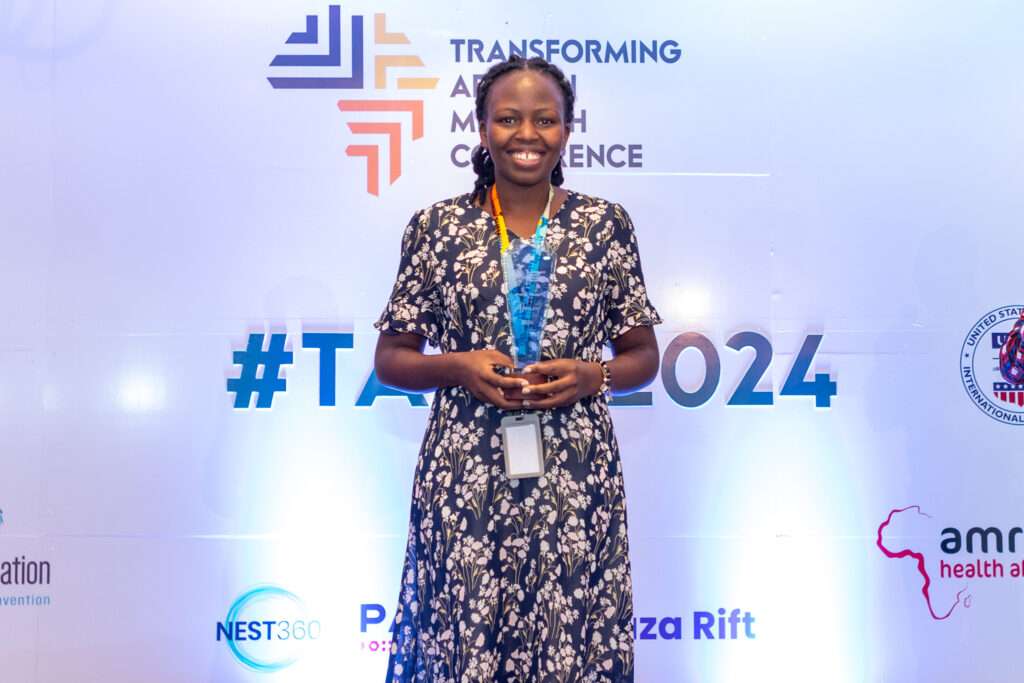
Vivian Arinaitwe: Image – Villgro Africa
4. Vivian Arinaitwe: Biomedical Engineering Saving Newborn Lives
Ugandan biomedical engineer Vivian Arinaitwe co-founded WAGA Engineering Concepts, which created NeoNest, an affordable neonatal warming device that helps premature babies survive in resource-limited healthcare settings.
Premature babies cannot regulate their body temperature effectively, making them vulnerable to hypothermia, which significantly increases mortality risk. While incubators exist, they are expensive, require reliable electricity, and need specialized maintenance, making them impractical for many African healthcare facilities.
Vivian engineered NeoNest as an affordable, portable, and robust alternative that maintains newborns at safe temperatures without requiring constant electricity. The device uses phase change materials that store heat and release it gradually, maintaining stable temperature for hours even during power outages.
NeoNest has been deployed in healthcare facilities across Uganda and other East African countries, helping hundreds of premature babies survive their critical early weeks. The device costs a fraction of traditional incubators while providing the essential temperature regulation that saves lives.
Many women engineers find that as their innovations scale, learning how to optimize for strategic impact becomes essential for transitioning from engineer to engineering leader.
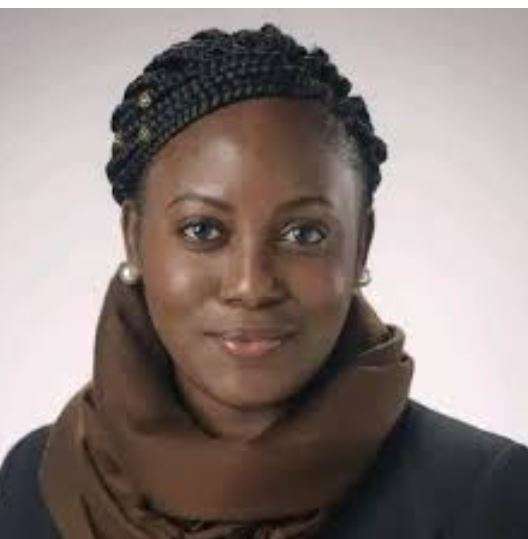
Dr. Awatef Hamed
5. Dr. Awatef Hamed: Pioneering African Woman in Aerospace Engineering
Egyptian aerospace engineer Dr. Awatef Hamed has built a distinguished career advancing turbomachinery and propulsion systems, becoming one of Africa’s most accomplished women in aerospace engineering.
Dr. Hamed’s research focuses on turbine and compressor aerodynamics, critical components of aircraft engines and power generation systems. Her work at the University of Cincinnati’s Gas Dynamics and Propulsion Laboratory has contributed to more efficient, reliable turbomachinery designs.
Aerospace engineering remains one of the most male-dominated engineering fields globally, making Dr. Hamed’s achievements particularly significant. She has not only excelled technically but also opened doors for other African women interested in aerospace careers.
Her research on turbomachinery aerodynamics has applications beyond aircraft engines, extending to power generation and industrial systems. The engineering principles she advances help create more efficient engines that use less fuel and produce fewer emissions.
Dr. Hamed’s work demonstrates that African engineers can contribute at the highest levels of aerospace engineering, one of the most technologically sophisticated fields. Her presence in this space challenges stereotypes about who belongs in aerospace and where aerospace innovation happens.
Her career path shows that African women can pursue any engineering field, including those traditionally dominated by Western men, and make significant contributions that advance global knowledge.
For more insights on how women engineers are breaking barriers across STEM fields globally, research shows that diverse engineering teams create more innovative and effective solutions.
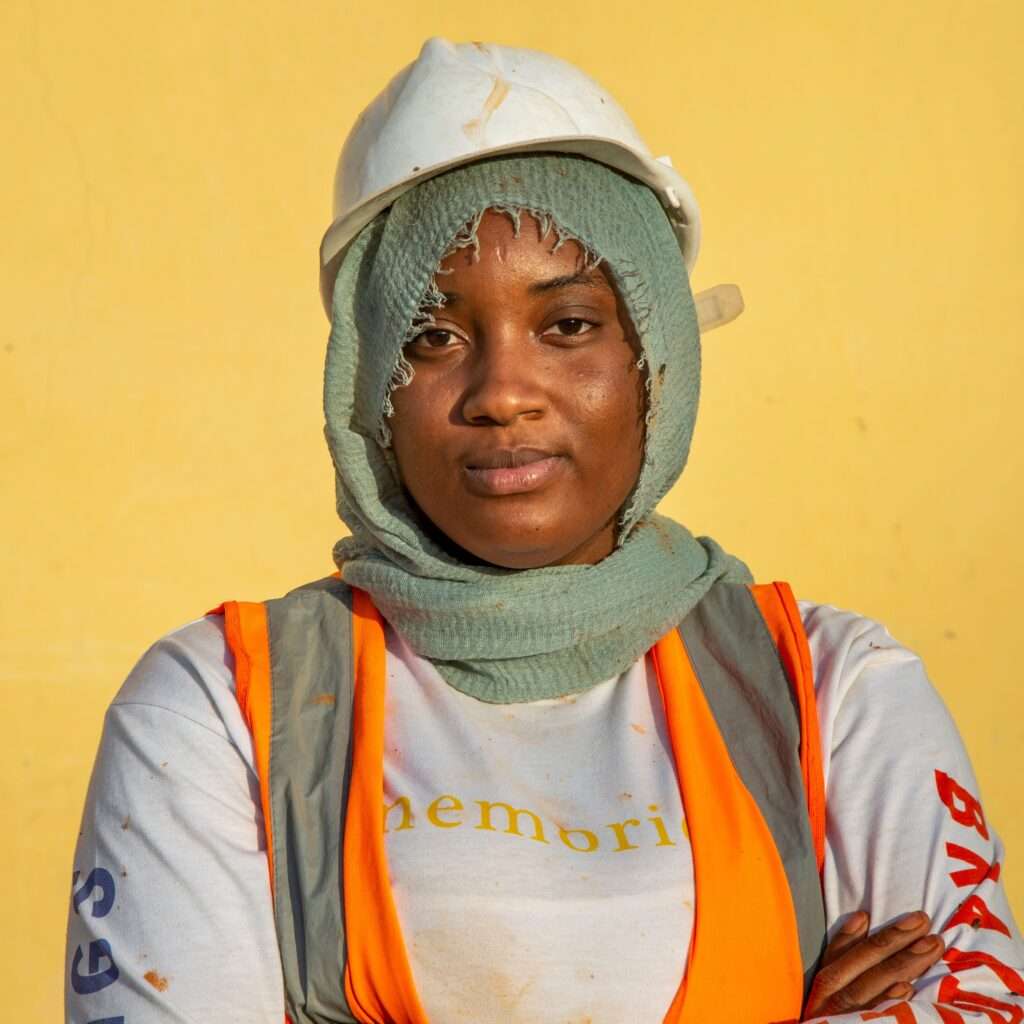
Marie Ndieguene – Image: African Prize
6. Marie Ndieguene: Engineering Agricultural Storage Solutions
Senegalese engineer Marie Ndieguene won the 2024 Africa Prize for Engineering Innovation for developing I3S, an innovative storage solution that preserves agricultural produce without electricity, helping farmers reduce post-harvest losses across West Africa.
Post-harvest losses represent one of Africa’s biggest agricultural challenges. Farmers grow crops successfully but lose significant portions to spoilage before reaching markets, resulting in lost income and wasted resources. Traditional storage methods often fail in hot, humid conditions, while refrigeration requires reliable electricity that many farming communities lack.
Marie engineered I3S as an electricity-free storage system that uses evaporative cooling and improved airflow to extend produce shelf life significantly. The innovation allows farmers to store fruits, vegetables, and other perishables for longer periods without refrigeration.
I3S has been adopted by farming cooperatives across Senegal and is expanding to other West African countries. By reducing post-harvest losses, the innovation increases farmers’ income, improves food security, and reduces the environmental impact of wasted agricultural production.
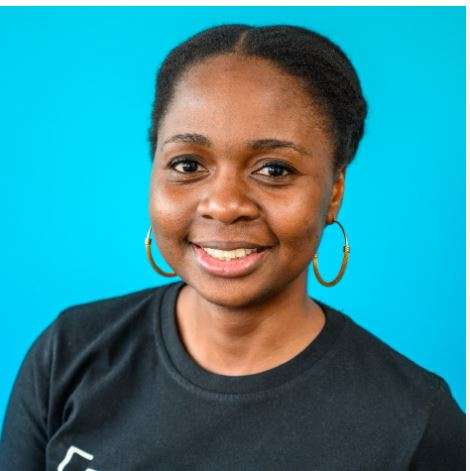
Aisha Raheem – Image: African Prize
7. Aisha Raheem: Engineering Agricultural Transformation Through Technology
Nigerian agricultural engineer Aisha Raheem founded Farmz2U, a digital platform that connects farmers directly with buyers, reducing waste, improving farmer income, and increasing food security across Nigeria.
Aisha identified inefficiencies in Nigeria’s agricultural supply chain where farmers struggled to find reliable markets for their produce, leading to waste and lost income, while urban consumers faced high food prices and limited access to fresh produce.
She engineered Farmz2U as a comprehensive platform that connects farmers directly with buyers, eliminating middlemen who capture most of the value. The platform handles logistics, quality control, and payment processing, creating a complete system that benefits both farmers and consumers.
While Farmz2U is a technology platform, it represents agricultural engineering thinking: analyzing the entire agricultural value chain, identifying bottlenecks and inefficiencies, and engineering solutions that optimize the system.
The platform doesn’t just facilitate transactions; it provides farmers with market information, helps them plan production based on demand, and gives buyers reliable access to quality produce. This systems-level engineering approach addresses multiple problems simultaneously.
Why These Engineering Stories Matter This International Women’s Day
These seven women represent the breadth of engineering innovation happening across Africa. From agricultural systems to biomedical devices, from waste management to aerospace, African women engineers are contributing to every field while addressing challenges that directly affect their communities.
Engineering Transforms Communities
Notice how each of these women focused on real problems affecting real people. They didn’t pursue engineering in the abstract; they applied engineering principles to challenges they witnessed in their communities.
This approach creates solutions that work in African contexts because they are designed specifically for those contexts. It also ensures that engineering talent addresses the problems that matter most to African development.
Women Bring Essential Perspectives to Engineering
Research consistently shows that diverse engineering teams create better solutions. When women engineers work on agricultural problems, they often consider factors that male engineers might overlook. When they design medical devices, they understand challenges that affect mothers and babies in ways that change design priorities.
The engineering profession benefits from including women’s perspectives, experiences, and approaches to problem-solving. These seven engineers prove that point through their innovative solutions.
Representation Creates Possibility
Every girl who sees Esther Kimani winning engineering prizes, Vivian Arinaitwe saving babies’ lives, or Carol Ofafa building electric mobility infrastructure learns that engineering is for her too. She learns that African women can excel in technical fields and that engineering can be a tool for creating the change she wants to see.
This representation matters because career choices are shaped by visible possibilities. The more African women see themselves reflected in engineering success stories, the more will pursue engineering education and careers.
Engineering Advances Leadership and Impact
These women started as engineers solving specific problems. As their innovations succeeded, they became company founders, team leaders, and voices shaping engineering conversations across Africa and globally.
Their journeys show how engineering excellence creates opportunities for leadership and amplified impact. Technical skills open doors, but understanding how to position yourself strategically determines how wide those doors open and what you can accomplish through them.
Join the African Women in STEM Community
If these engineering stories inspire you, whether you’re an engineering student, early-career engineer, or established professional, you don’t have to navigate your journey alone.
The African Women in STEM community exists specifically to support women building careers and creating impact through science, technology, engineering, and mathematics. When you join, you become part of a network of professionals committed to supporting each other’s success.
Join the African Women in STEM Membership Today
Together, we’re building a future where every African girl knows she belongs in engineering, and every African woman engineer has the support she needs to reach her full potential and create maximum impact.
Your Journey Matters
This International Women’s Day 2026, we celebrate not just these seven engineers, but every African woman studying engineering, designing solutions, starting companies, or working to make engineering more inclusive and impactful.
The next generation of African girls is watching.
Happy International Women’s Day 2026. The future of African engineering is female, and it includes you.
Follow on Social Media
- Follow African Women in STEM on LinkedIn
- Follow African Women in STEM on Instagram
- Follow Adaeze Iloeje-Udeogalanya on LinkedIn