Look up at the night sky. Those satellites orbiting Earth, transmitting communication signals across Africa? Some are managed by African women. The climate data helping farmers predict weather patterns? African women scientists are analyzing it from space. The next generation of rocket scientists and astronomers? African women are training them.
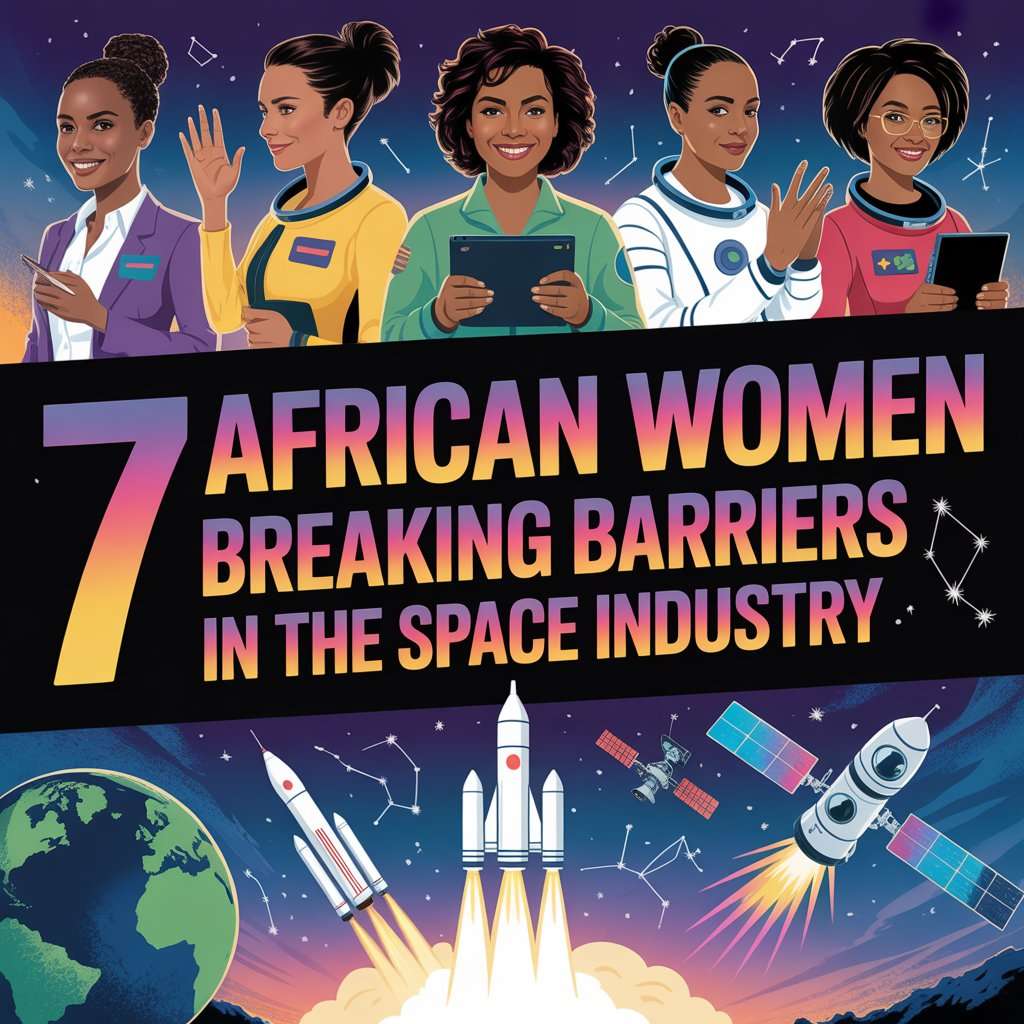
Africa’s space industry is growing rapidly, with countries launching satellites, building ground stations, and developing space programs. At the forefront of this transformation are remarkable women who refuse to let gender barriers limit their reach beyond Earth’s atmosphere.
This International Women’s Day 2026, we celebrate seven pioneers in Africa’s space sector who are designing satellites, shaping space policy, conducting astronomical research, and inspiring future generations to pursue careers among the stars.
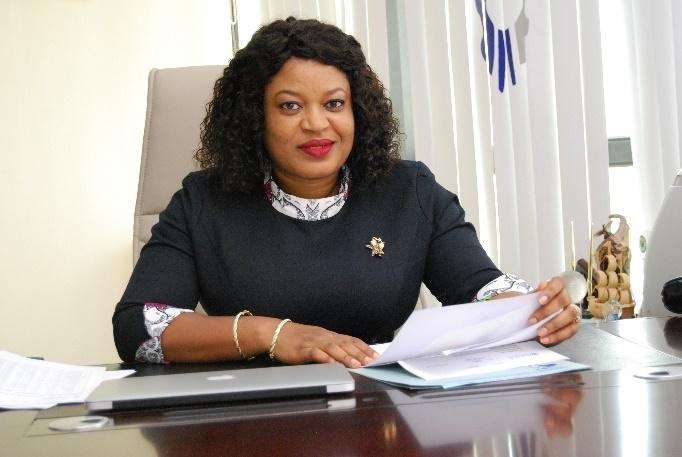
Dr. Abimbola Alale – Image: SpaceinAfrica
1. Dr. Abimbola Alale: Nigeria’s Satellite Communications Leader
Dr. Abimbola Alale broke significant ground as the only female CEO of a major satellite company across Africa, Europe, and the Middle East when she led Nigerian Communication Satellite Limited (NIGCOMSAT).
Her space journey began at Nigeria’s National Space Research and Development Agency (NASRDA), where she served as NigComSat-1 Project Secretary for the project that launched Africa’s first communication satellite. This project eventually evolved into NIGCOMSAT Ltd.
She holds a postgraduate degree in Space Studies and an MBA from the International Space University in Strasbourg, France. In February 2014, President Goodluck Jonathan appointed her as Managing Director and CEO of NIGCOMSAT, making her the first woman to lead a major satellite operator on the continent.
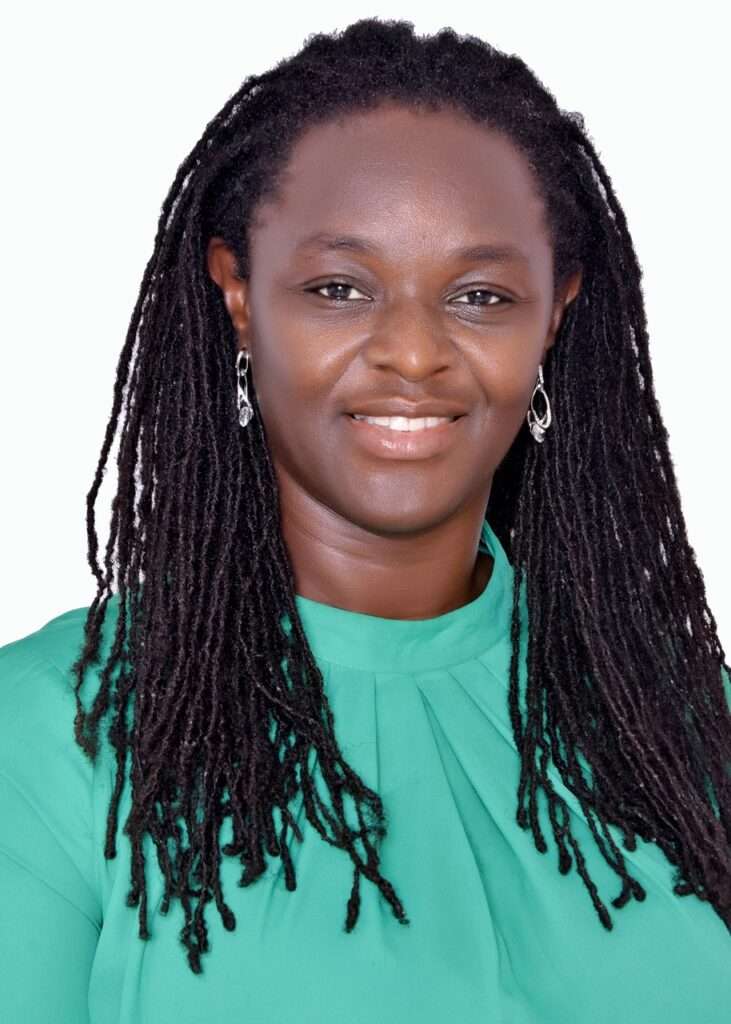
Prof. Nana Ama Browne Klutse – Image: University of Ghana
2. Prof. Nana Ama Browne Klutse: Ghana’s Climate and Space Scientist
Prof. Nana Ama Browne Klutse combines space technology with climate science to address one of Africa’s most pressing challenges: understanding and adapting to climate change.
As a Research Scientist at Ghana’s Space Science and Technology Institute and Manager of the Remote Sensing GIS and Climate Centre, she uses satellite data to model climate patterns and assess their impacts on health, energy, environment, and gender issues across Ghana and West Africa.
She holds a PhD from the University of Cape Town, South Africa, specializing in climatology. Her research focuses on climate modeling and impact assessments, contributing to both national and international projects including the global CORDEX experiment that produces climate projections for Africa.
Prof. Klutse currently serves as Managing Director of Ghanasat Ltd, overseeing satellite applications and services in Ghana. She coordinates space science and astronomy outreach programs, bringing space technology awareness to communities across the country.
Beyond her scientific work, she co-founded an NGO supporting children with learning disabilities, demonstrating her commitment to using her expertise for broader social impact. She has received multiple international and national awards and published extensively in academic journals.
Prof. Klutse’s work exemplifies how technical expertise combined with strategic vision creates lasting impact. Like other African women revolutionizing technology across sectors, she uses innovation to address critical challenges facing the continent.

Carle Sharpe – Image: SpaceinAfrica
3. Carle Sharpe: South Africa’s Space Business Development Expert
Carle Sharpe represents the intersection of space science, business development, and advocacy in South Africa’s growing space sector.
She holds an MBA from the International Space University and has pursued doctoral studies in Space Studies at the University of Cape Town. Her academic foundation in both business and space science positions her uniquely to advance commercial space applications in Africa.
Likewise, Carle co-founded the South African Space Association and serves on the Management Committee of both this organization and Women in Aerospace Africa. These leadership roles allow her to shape policy discussions and create networks supporting women entering the space industry.
Her professional work focuses on business development for the Square Kilometre Array (SKA), Africa’s largest science undertaking. The SKA is a revolutionary radio telescope project that will be the world’s largest and most sensitive, with significant infrastructure located in South Africa’s Karoo region.
Furthermore, through her business development work, Carle helps ensure that this massive international project creates opportunities for African scientists, engineers, and businesses. Her advocacy through Women in Aerospace Africa creates pathways for more women to participate in Africa’s space future.
Lulu Makapela
4. Lulu Makapela: South Africa’s Young Space Leader
Lulu Makapela earned recognition as one of the International Astronautical Federation’s Young Space Leaders in 2015, acknowledging her significant contributions to Africa’s space sector at a relatively early career stage.
In addition, She serves as the CSIR’s representative on the South African Council for Space Affairs and holds the position of Project and Contract Manager for Aerospace and Composites at the Council for Scientific and Industrial Research (CSIR). In this role, she manages complex aerospace projects while ensuring South Africa’s space activities comply with international regulations.
As co-chair of the Africa Leadership Youth Forum, she actively promotes space science among African young professionals and students. She understands that Africa’s space future depends on inspiring and training the next generation of space scientists and engineers.
Also, Lulu serves on the South African Council for Space Affairs (SACSA), the regulatory body responsible for overseeing space activities. She chairs the committee reviewing national space legislation, directly shaping the legal framework that will govern South Africa’s space activities for years to come.
Her passion for space law led her to become a Member of the International Institute of Space Law (IISL) and serve as Africa Regional Coordinator for the Manfred Lachs Space Law Moot Court competition, which introduces law students across Africa to space law careers.

Dr. Timiebi Aganaba-Jeanty – Image: Rocket Women
5. Dr. Timiebi Aganaba-Jeanty: Nigeria’s Space Policy and Law Expert
Dr. Timiebi Aganaba-Jeanty has built an impressive career at the intersection of space law, environmental governance, and international policy.
She holds a Doctor of Civil Law and an LL.M. in aviation and space law from McGill University. Her doctoral research on the concept of “common benefit” in space law won the prestigious George S. and Ann K. Robinson Space Law Prize for advanced research and original contribution to space jurisprudence. She also earned an M.Sc. in space management from the International Space University in Strasbourg, France.
Before entering academia, she served as Executive Director of the World Space Week Association (WSWA), coordinating the global response to the UN declaration celebrating World Space Week annually from October 4 to 10. This work earned her the International Astronautical Federation’s Young Space Leaders 2017 Award.
Likewise, she previously worked as a space policy consultant with Montreal-based Euroconsult and as a legal and international cooperation officer at the Nigerian Space Research and Development Agency. She is called to the Nigerian Bar.
Her current research examines governance structures addressing global commons environmental issues, analyzing how technology solutions and evolving legal principles regulate emerging technologies in fighting climate change. Through her work, she ensures African perspectives shape international space law and policy discussions at the highest levels.
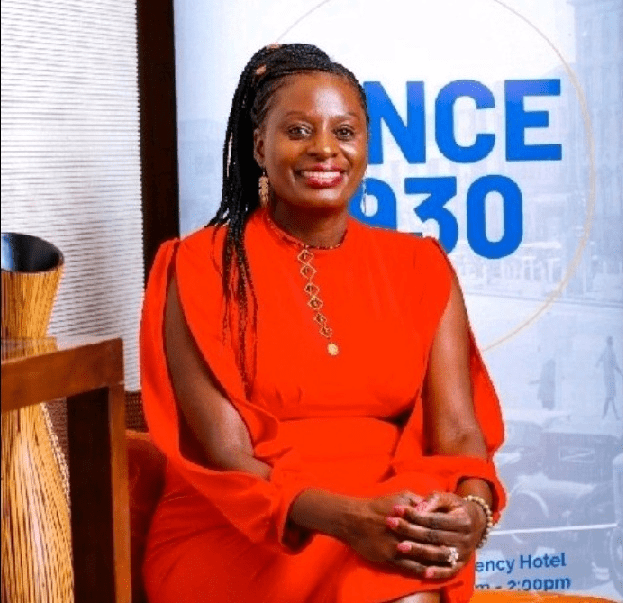
Susan Murabana – Image: Linkedin
6. Susan Murabana: Kenya’s Astronomy Educator and Outreach Pioneer
Susan Murabana co-founded The Travelling Telescope, an organization dedicated to promoting science and technology through astronomy education across Kenya and East Africa.
Her approach is beautifully simple yet profoundly impactful: bring telescopes to communities, especially schools, where children have never looked through one. Let them see the moon’s craters, Saturn’s rings, and Jupiter’s moons with their own eyes. Then watch as their understanding of the universe and their place in it transforms.
Futhermore, the Travelling Telescope reaches thousands of students annually, traveling to schools across Kenya with portable telescopes and astronomy education programs. For many children, especially those in rural areas, this represents their first direct experience with astronomical observation.
Through The Travelling Telescope, Susan has inspired thousands of students across Africa, raising a new generation of potential astronomers, space scientists, and engineers. Her work proves that space exploration begins with wonder, and wonder begins with access to tools that reveal the cosmos.
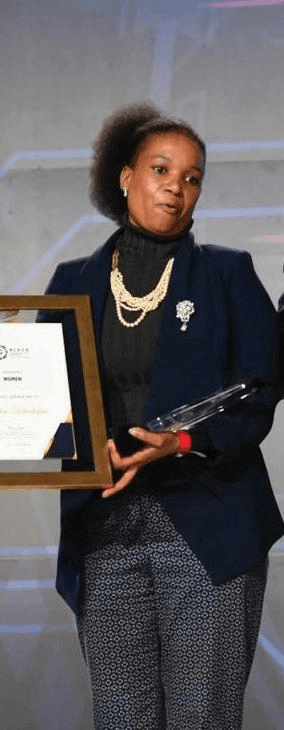
Jessie Ndaba – Image: Issuu
7. Jessie Ndaba: South Africa’s First Female Rocket Scientist
Jessie Ndaba holds the distinction of being one of South Africa’s first female rocket scientists, breaking into one of the most male-dominated areas of aerospace engineering.
She earned her degree in Electrical Engineering from the University of the Witwatersrand, South Africa, and is an alumnus of the International Space University. This combination of electrical engineering expertise and specialized space education positioned her perfectly for rocket science work.
Jessie previously worked as an engineer at Sunspace and Information Systems, a South African company specializing in satellite and space systems development. This experience gave her hands-on exposure to the technical challenges of designing and building space systems.
Additionally, She currently serves as Space Solutions Manager at Space Commercial Services and Programme Manager at Astrofica Technologies in South Africa. In these roles, she manages complex aerospace programs and develops commercial space solutions for African and international clients.
Her work in rocket science involves understanding propulsion systems, trajectory calculations, structural engineering, and the countless technical challenges involved in launching objects into space. As one of the first African women in this field, she navigates technical complexity while also breaking gender barriers.
Also, Jessie’s presence in rocket science creates a pathway for other African women interested in aerospace engineering, proving that African women can excel in even the most technically demanding space industry roles.
Why These Space Stories Matter This International Women’s Day
These seven women represent different facets of Africa’s growing space industry. Together, they demonstrate that African women are not just participating in space but leading critical aspects of satellite operations, space policy, climate research, education, and rocket science.
Africa’s Space Industry Is Growing Rapidly
According to Space in Africa research, the continent’s space industry is experiencing unprecedented growth. African countries are increasingly investing in space capabilities. Nigeria, South Africa, Ghana, Kenya, Egypt, and others have launched satellites, established space agencies, and developed space programs.
This growth creates opportunities for African scientists and engineers to work on cutting-edge space technology without leaving the continent. The women featured here are capitalizing on these opportunities while creating more openings for others.
Space Technology Addresses African Challenges
These women aren’t pursuing space exploration as an abstract goal. They’re using space technology to address real African challenges: improving telecommunications, monitoring climate change, managing natural resources, and inspiring STEM education.
Dr. Klutse uses satellite data to understand climate patterns affecting African agriculture. Dr. Alale managed satellite communications connecting remote African communities. Susan Murabana uses astronomy to inspire students who will solve tomorrow’s challenges.
Representation Creates Possibility
Every girl who sees these women managing satellite companies, researching space law, or building rockets learns that space careers are available to her. This representation matters profoundly in fields where women remain significantly underrepresented.
The space industry globally employs far fewer women than men, particularly in technical roles. African women face additional barriers accessing space education and careers. These seven pioneers prove those barriers can be overcome while also working to lower them for the next generation.
Join the African Women in STEM Community
If these space pioneers inspire you, whether you’re studying aerospace engineering, pursuing space science research, working in satellite operations, or simply fascinated by space exploration, you don’t have to navigate your journey alone.
The African Women in STEM community exists specifically to support women building careers and creating impact in science, technology, engineering, and mathematics, including the growing African space sector.
Join the African Women in STEM Membership Today
Together, we’re building a future where African girls know they belong in the space industry, and African women space professionals have the support they need to reach for the stars.
Follow on Social Media
- Follow African Women in STEM on LinkedIn
- Follow African Women in STEM on Instagram
- Follow Adaeze Iloeje-Udeogalanya on LinkedIn