When a girl in Lagos dreams of curing diseases, when a young woman in Nairobi imagines engineering solutions for her community, when a student in Cairo envisions discovering something no one has seen before, they need to see proof that their dreams are possible.
They need to see women who look like them, who come from places like theirs, who have navigated similar challenges and emerged as leaders in science.
This International Women’s Day 2026, we celebrate seven extraordinary African women scientists who are doing exactly that. They are developing life-saving vaccines, unraveling climate mysteries, pioneering biomedical innovations, and solving energy crises. But perhaps more importantly, they are proving that African women belong at the highest levels of scientific discovery and leadership.
Let’s honor these brilliant minds who are shaping the future of science.
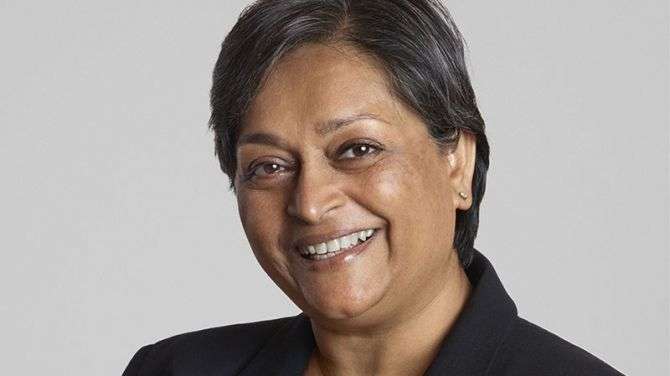
Professor Quarraisha Abdool Karim – Image: UNIAIDS
1. Professor Quarraisha Abdool Karim: Championing Women’s Health and HIV Prevention
Professor Quarraisha Abdool Karim exemplifies what it means to advance women’s rights through science. Her groundbreaking HIV research has directly empowered millions of African women and girls to protect themselves from infection.
Transforming HIV Prevention for Women
As an infectious diseases epidemiologist and Associate Scientific Director of the Centre for the AIDS Programme of Research in South Africa (CAPRISA), Professor Abdool Karim’s work has transformed global HIV prevention strategies. Her landmark CAPRISA 004 tenofovir gel trial proved for the first time that antiretroviral medicines can prevent sexually transmitted HIV infection in women.
This breakthrough was recognized by Science magazine as one of the top 10 scientific breakthroughs in 2010. More importantly, it led to the creation of Pre-Exposure Prophylaxis (PrEP), now endorsed by the World Health Organization and protecting women worldwide.
Building Scientific Leadership Across Africa
Since 1998, Professor Abdool Karim has trained over 600 scientists across southern Africa through the Columbia University Southern African Fogarty AIDS International Training and Research Programme. This commitment to mentorship and capacity building embodies the IWD 2025 call to prioritize opportunities for young women to lead and innovate.
Recognition That Honors Africa
Her contributions have earned the 2024 Lasker Bloomberg Public Service Award, the African Union’s Kwame Nkrumah Prize for Science and Technology, and South Africa’s highest honor, the Order of Mapungubwe. As UNAIDS Special Ambassador for Adolescents and HIV, she continues advocating for the most vulnerable populations.
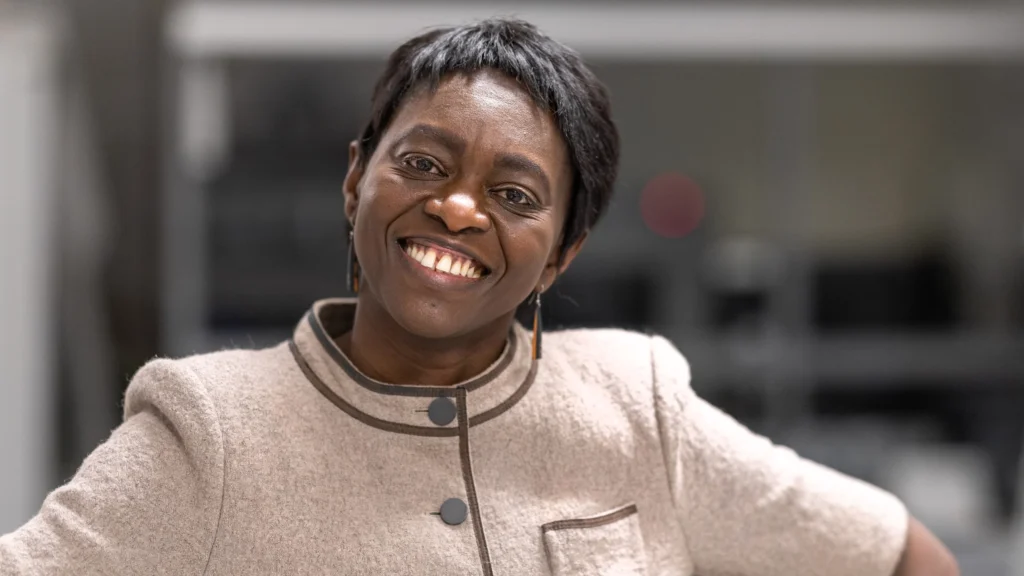
PRofessor Faith Osier – Image: Imperial College London
2. Professor Faith Osier: Bringing Vaccine Manufacturing Home to Africa
Professor Faith Osier is leading a revolution that speaks directly to African women’s empowerment: ensuring the continent can produce its own life-saving vaccines.
From Clinical Reality to Research Mission
Born in Kenya in 1972, Professor Osier’s path to immunology began with clinical experiences treating children with malaria. She now serves as Professor of Malaria Immunology at the University of Oxford while maintaining active research groups in Kenya and the UK.
Chanjo Hub: Africa’s Vaccine Independence
The COVID-19 pandemic exposed Africa’s dangerous dependence on imported vaccines. In response, Professor Osier founded Chanjo Hub, an Africa-led vaccine manufacturing initiative that embodies true empowerment through self-sufficiency.
Currently piloting an mRNA malaria vaccine, she aims to transfer complete vaccine manufacturing technology to Africa. The Kenya BioVax Institute and Kenya Medical Research Institute are collaborating to ensure African scientists can produce vaccines from scratch, on African soil.
This is empowerment in action: giving Africans control over their health destinies rather than depending on external solutions.
Innovation Rooted in African Research
Professor Osier pioneered KILchip, a custom protein microarray that enabled her team to analyze antibody responses to over 100 malaria proteins in blood samples from 15 African locations. Her methodology demonstrates that cutting-edge scientific innovation can and should happen on the continent.
Named a 2018 TED Fellow and recipient of the Royal Society Africa Prize, Professor Osier was recognized by the BBC as one of seven trailblazing women in science in 2017. She serves as Vice President of the International Union of Immunological Societies, ensuring African voices shape global scientific policy.
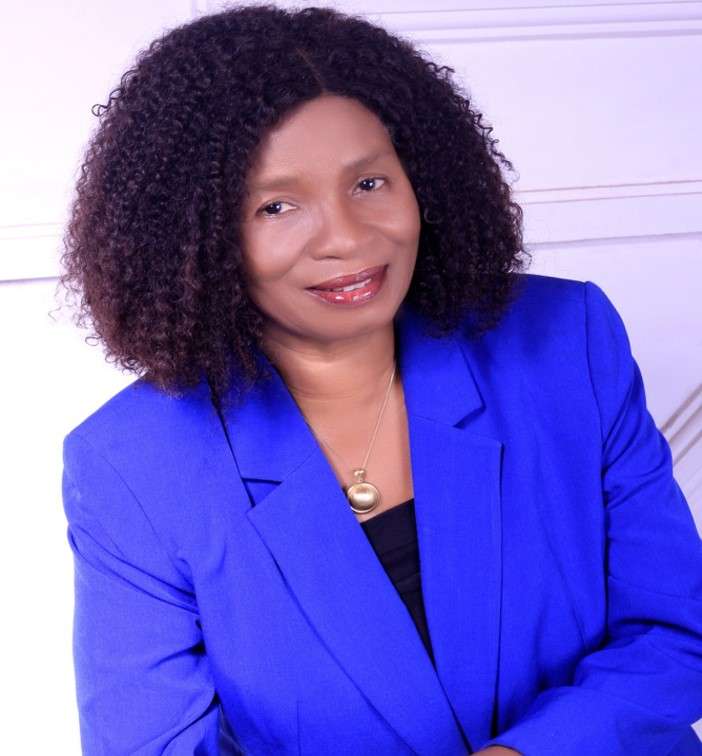
Professor Francisca Nneka Okeke – Image: the United Nation
3. Professor Francisca Nneka Okeke: Breaking Barriers in Nigerian Physics
Professor Francisca Nneka Okeke’s career is a testament to what becomes possible when women refuse to accept limits on their potential.
First Female Professor in Science at University of Nigeria
Born in Onitsha, Nigeria, Professor Okeke became the first female indigenous Professor in Science and Engineering at the University of Nigeria, Nsukka. She was also the first female Professor in Eastern Nigeria, the first female Head of Department of Physics and Astronomy, and the first female Dean of the Faculty of Physical Sciences.
Every “first” she achieved opened doors for the women who followed.
Climate Research With Global Impact
Professor Okeke’s research on the equatorial electrojet and ion currents in the upper atmosphere has significant implications for understanding climate change, natural disasters, and space weather. Her work connects local Nigerian research to global climate challenges.
Throughout her career, she published over 100 papers in international journals, 20 minor articles, and 15 books. She supervised 36 Masters students and 23 PhD students, multiplying her impact through mentorship.
Recognition That Inspires
In 2013, Professor Okeke received the L’Oréal-UNESCO For Women in Science Award for Africa and Arab States. That same year, New African magazine listed her among the Top 100 most influential Africans. The International Astronomical Union honored her with asteroid 149831 Okeke, a permanent celestial tribute to her contributions.
Championing Women in Physics
Professor Okeke married renowned physicist Professor Pius Nwankwo Okeke at 18 and raised six children, all pursuing science. Her life proves that women can excel in physics while building families, challenging the false choice society often presents to women scientists.

Dr. Adeola Olubamiji – Image: Wikipedia
4. Dr. Adeola Olubamiji: Overcoming Barriers in Biomedical Engineering
Dr. Adeola Olubamiji’s story embodies resilience and the power of education to transform lives, core themes of International Women’s Day.
Breaking Historical Barriers
Growing up in Ibadan, Nigeria, Dr. Olubamiji became the first Black person to earn a PhD in Biomedical Engineering from the University of Saskatchewan, Canada. This achievement matters because representation in leadership positions remains a critical barrier to women’s advancement in STEM.
Persistence Through Hardship
Her journey wasn’t easy. Facing significant financial struggles, she worked various manual jobs while pursuing her degree. Her persistence demonstrates that talent exists everywhere, but opportunity does not. This is why systems must change to support talented women regardless of their starting circumstances.
Creating Pathways for Others
As a trailblazer in biomedical engineering, Dr. Olubamiji’s visibility opens doors for the next generation. When African girls see someone who looks like them achieving in highly technical fields, it expands their sense of what’s possible for their own lives.
The work of women like Professor Abdool Karim and Dr. Olubamiji shows why advancing women’s leadership in STEM fields requires both individual excellence and systemic change. We must celebrate achievers while dismantling barriers.
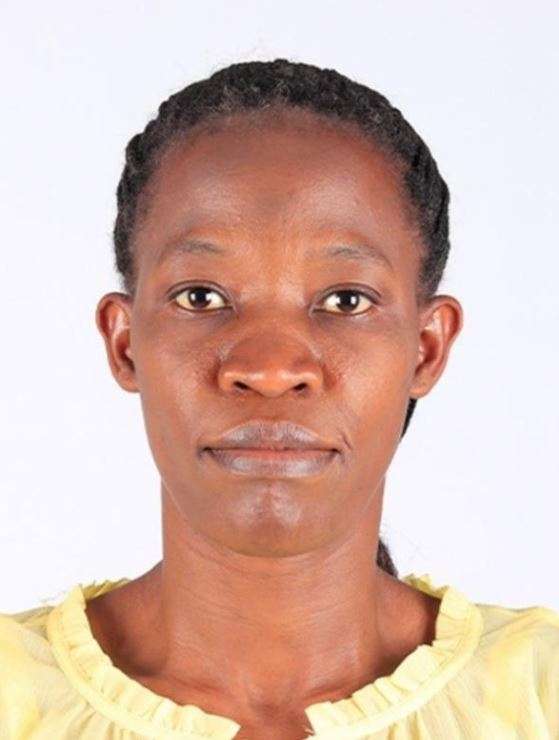
Dr. Tabitha Awuor Amollo
5. Dr. Tabitha Awuor Amollo: Powering Africa Through Solar Innovation
Dr. Tabitha Awuor Amollo is bringing cutting-edge solar technology to the communities that need it most, proving that African scientists can lead the global clean energy revolution.
2026 OWSD-Elsevier Foundation Award Winner
Just announced ahead of International Women’s Day 2026, Dr. Amollo received the prestigious OWSD-Elsevier Foundation Award for Early-Career Women Scientists, recognizing her groundbreaking work in sustainable energy. She was selected from hundreds of applicants across the global South for her exceptional contributions to advancing UN Sustainable Development Goal 7: ensuring access to affordable, reliable, and sustainable energy for all.
From Laboratory to Community Impact
As a physicist and materials scientist from Kenya specializing in solar energy conversion and thin film technology, Dr. Amollo’s research focuses on developing cost-effective, high-performance solar cells. But her work doesn’t stop in the laboratory. She translates these innovations into real community solutions, such as solar-powered refrigeration for rural health centers.
This practical application of science directly saves lives. When rural health centers have reliable solar-powered refrigeration, they can store vaccines and medicines that would otherwise spoil, bringing life-saving healthcare to communities that have been historically underserved.
Leading Africa’s Photovoltaics Research
Dr. Amollo leads a photovoltaics research lab at Egerton University in Kenya and collaborates internationally to drive affordable, clean energy solutions specifically designed for Africa. Her work represents the kind of innovation that addresses both environmental sustainability and social equity.
Mentorship and Building Scientific Capacity
Beyond her research, Dr. Amollo actively mentors women and students in STEM, ensuring that the next generation of African scientists has the support and guidance to pursue careers in renewable energy and physics. Her commitment to mentorship multiplies her impact far beyond her personal research contributions.
Why These Stories Matter This International Women’s Day
These seven scientists represent the spirit of International Women’s Day 2025: women claiming their rights, demanding equality, and creating empowerment for themselves and others.
Lessons That Transcend Borders
Their journeys share common threads that offer lessons for women everywhere:
Education remains the most powerful tool for empowerment. Each of these women prioritized learning and sought opportunities to develop their expertise, often overcoming significant obstacles to do so.
Mentorship multiplies impact exponentially. Professors Abdool Karim and Osier have trained hundreds of younger scientists, creating ripple effects that extend far beyond their personal research.
Community focus creates relevant solutions. These scientists aren’t pursuing abstract knowledge. They’re addressing real challenges affecting African communities, from HIV and malaria to climate change and energy access.
Advocacy transforms systems for everyone. Beyond their research, many of these women actively work to dismantle barriers and create pathways for the next generation of women scientists.
Your Journey Matters
This International Women’s Day, we celebrate not just the seven scientists featured here, but every African woman pursuing science, technology, engineering, or mathematics. Your curiosity, research questions matters. Also, your perspective brings unique insights that science desperately needs.
You are part of this movement whether you realize it or not. Every experiment you run, every student you mentor, every barrier you push against is contributing to a future where gender equality in STEM is reality, not aspiration.
Join the African Women in STEM community and become part of the collective force accelerating this change. Together, we’re building a future where the phrase “African women in science” is no longer remarkable because it’s so beautifully common.
Start Your Journey With African Women in STEM
Happy International Women’s Day 2026.The future of African science is female. And it starts with you.
Follow on Social Media
- Follow African Women in STEM on LinkedIn
- Follow African Women in STEM on Instagram
- Follow Adaeze Iloeje-Udeogalanya on LinkedIn